
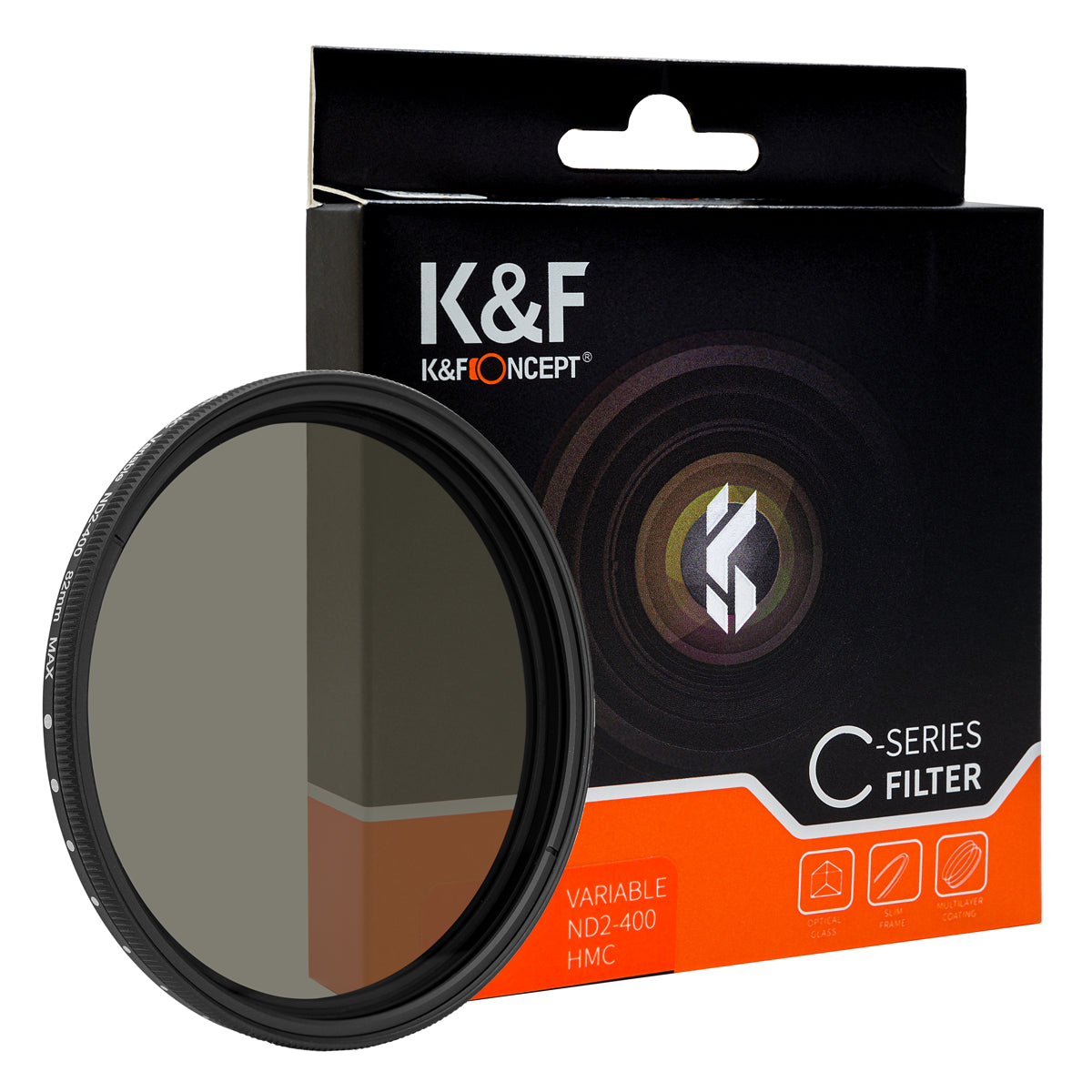
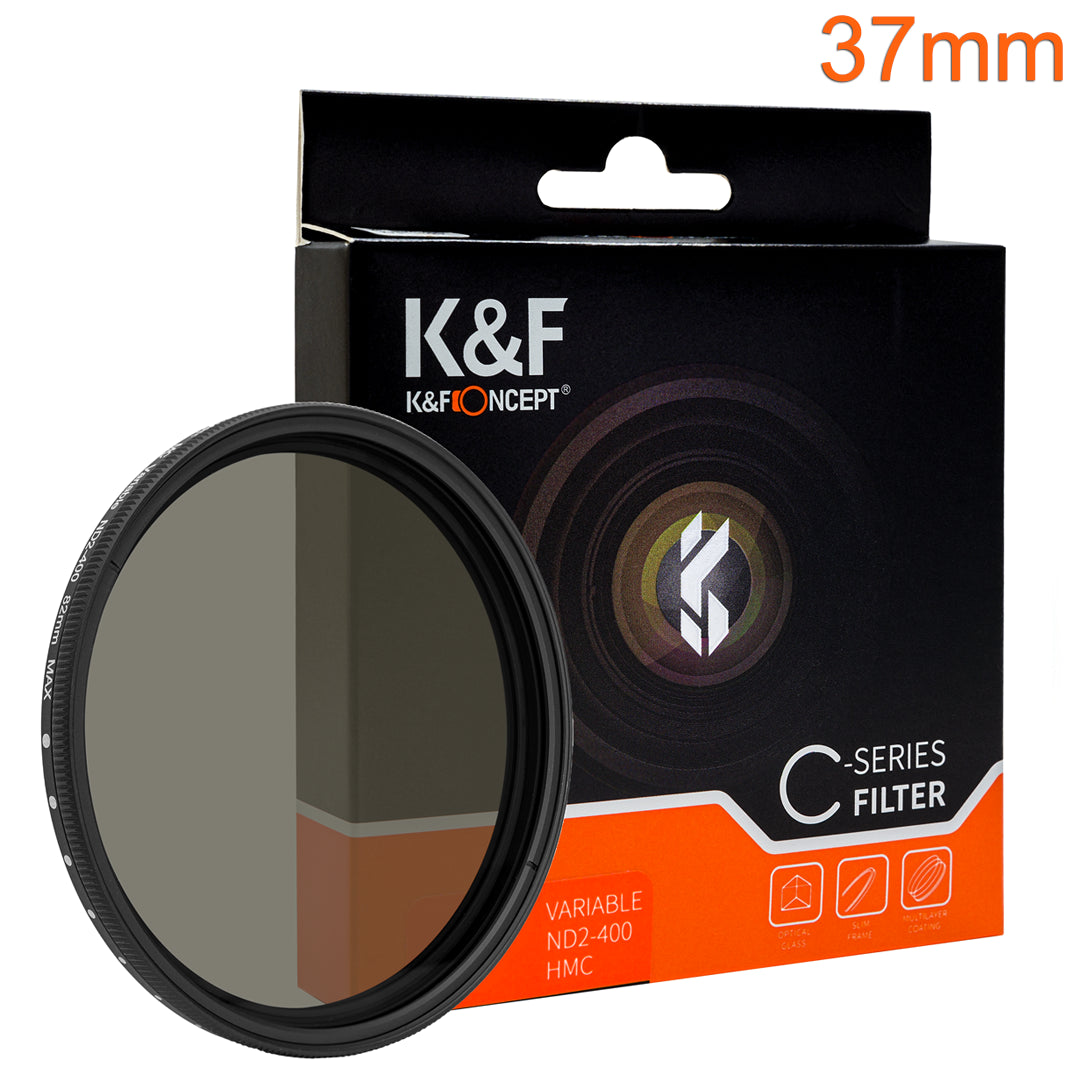
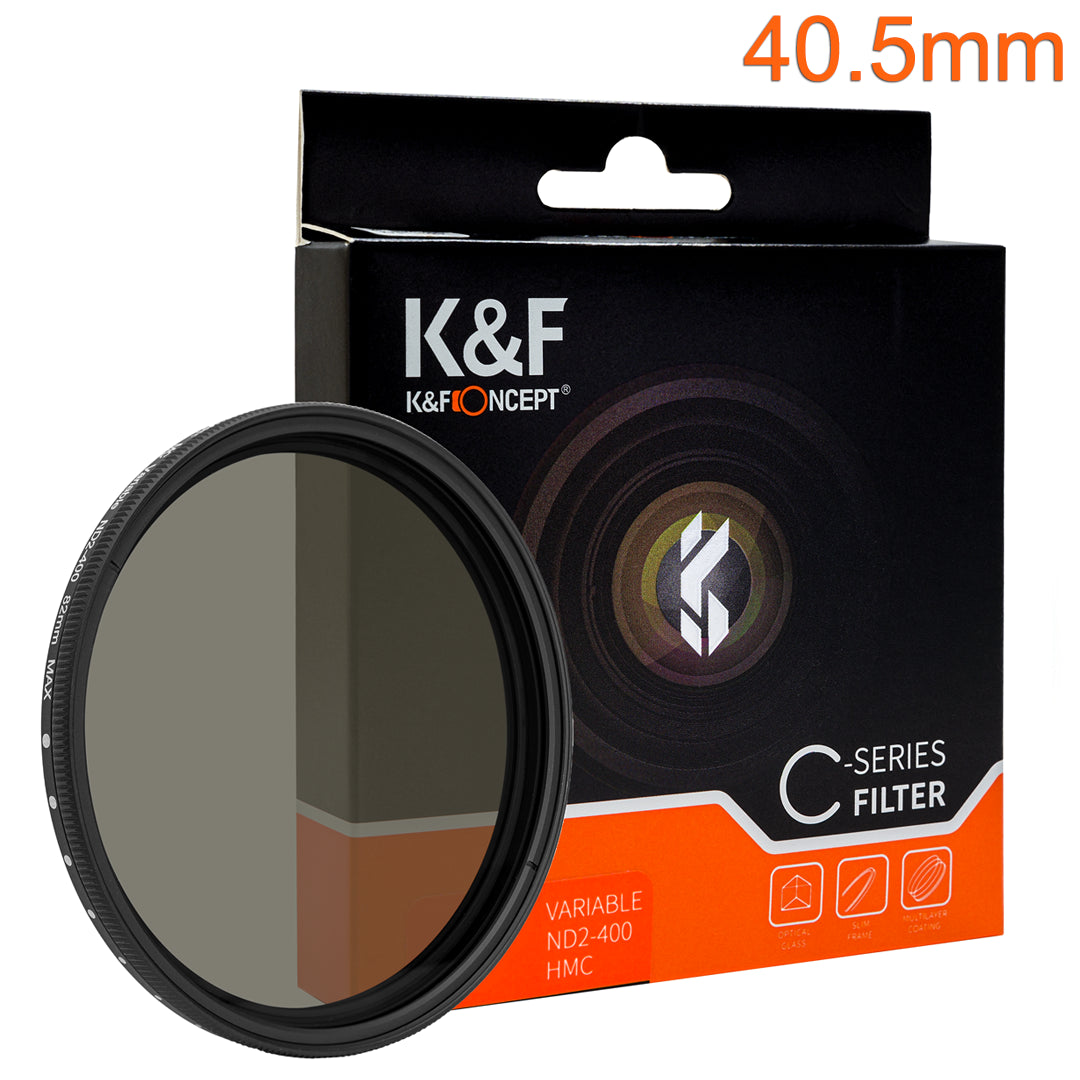
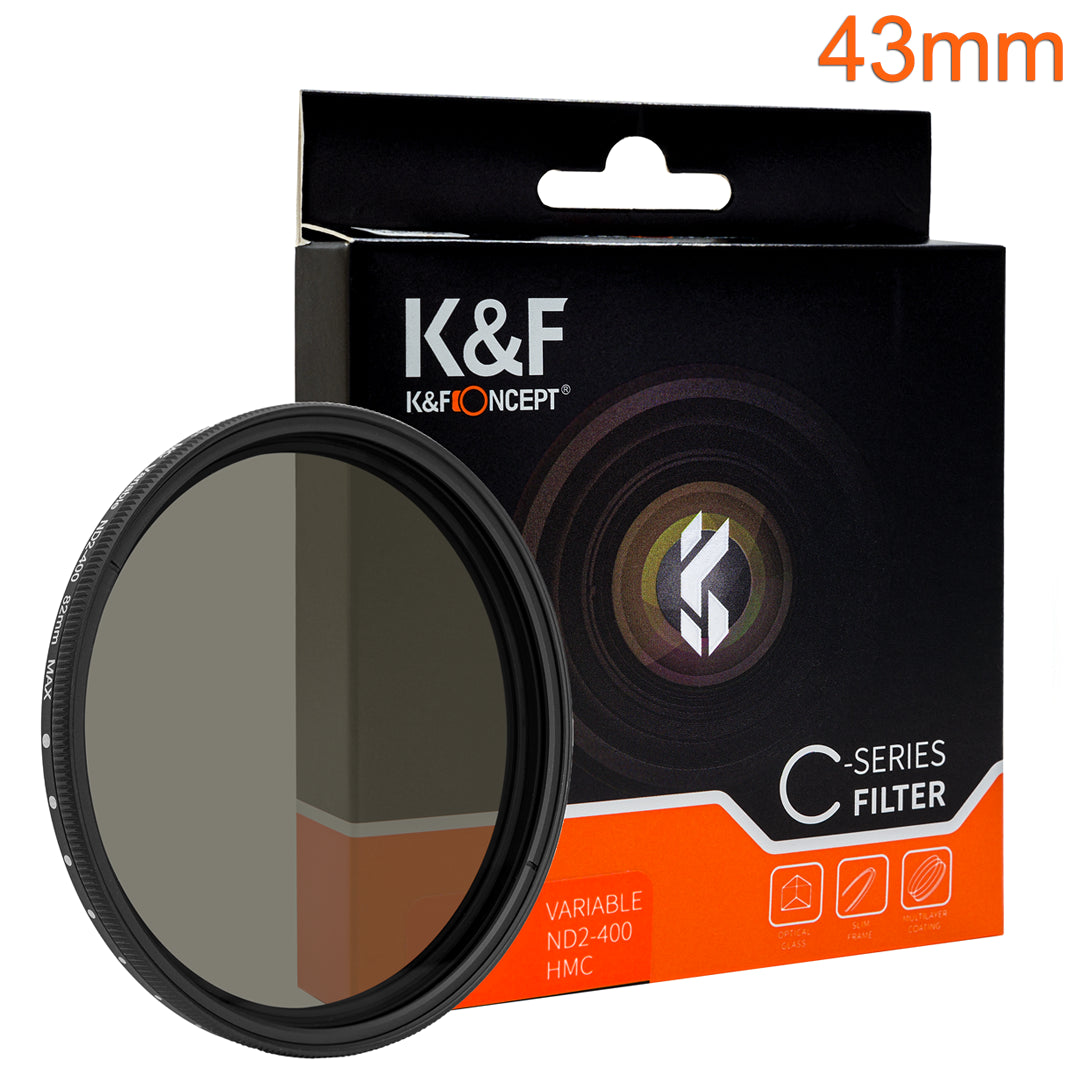
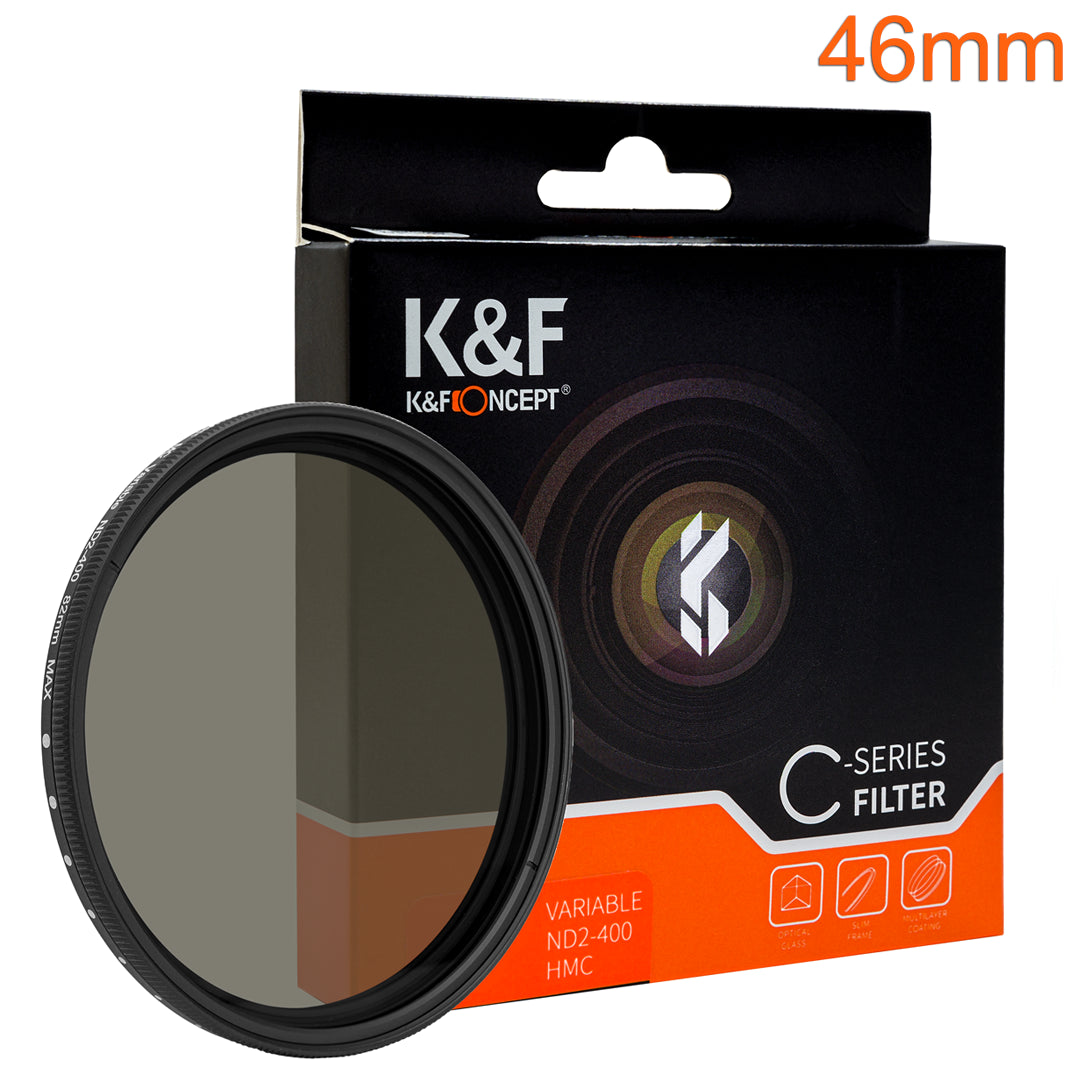
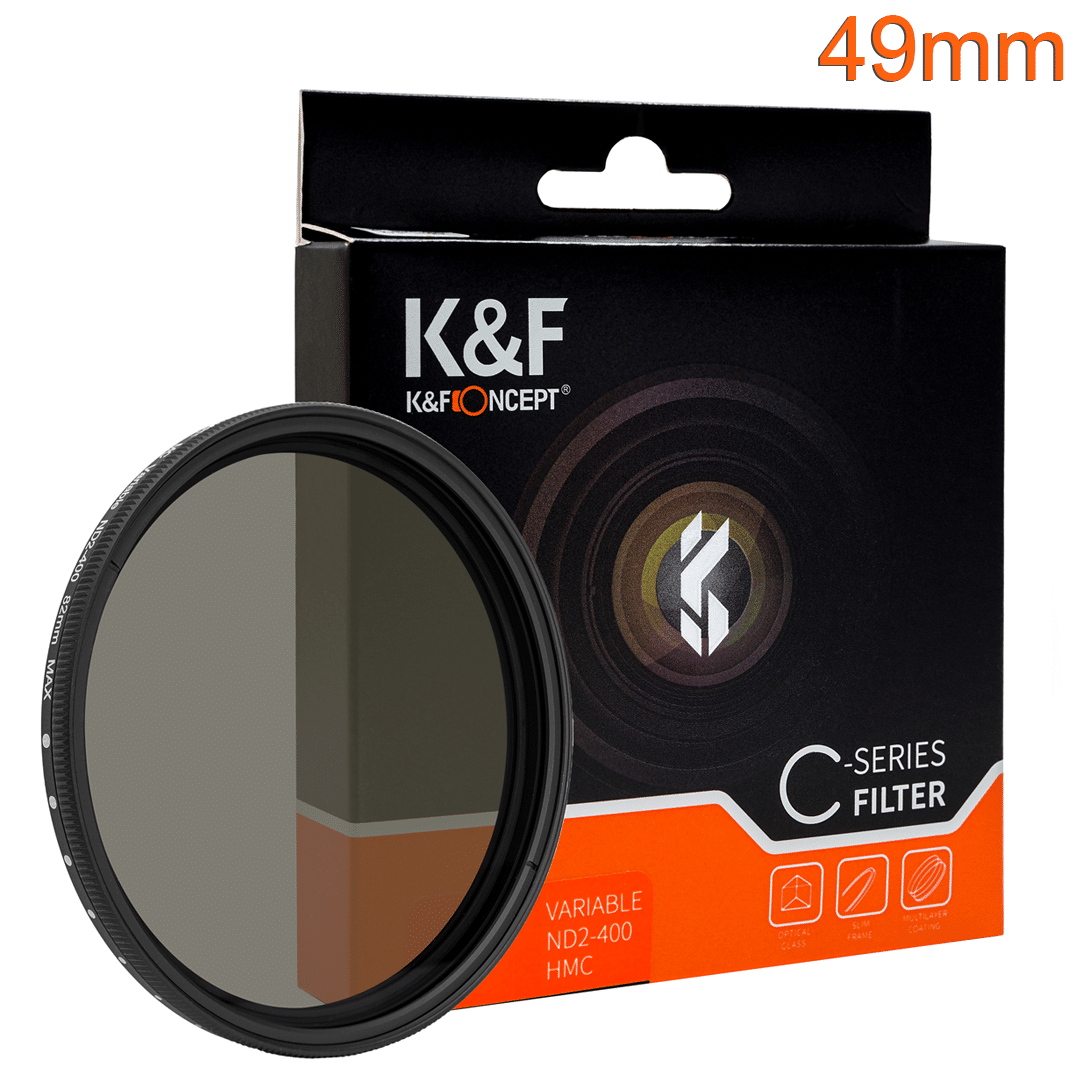
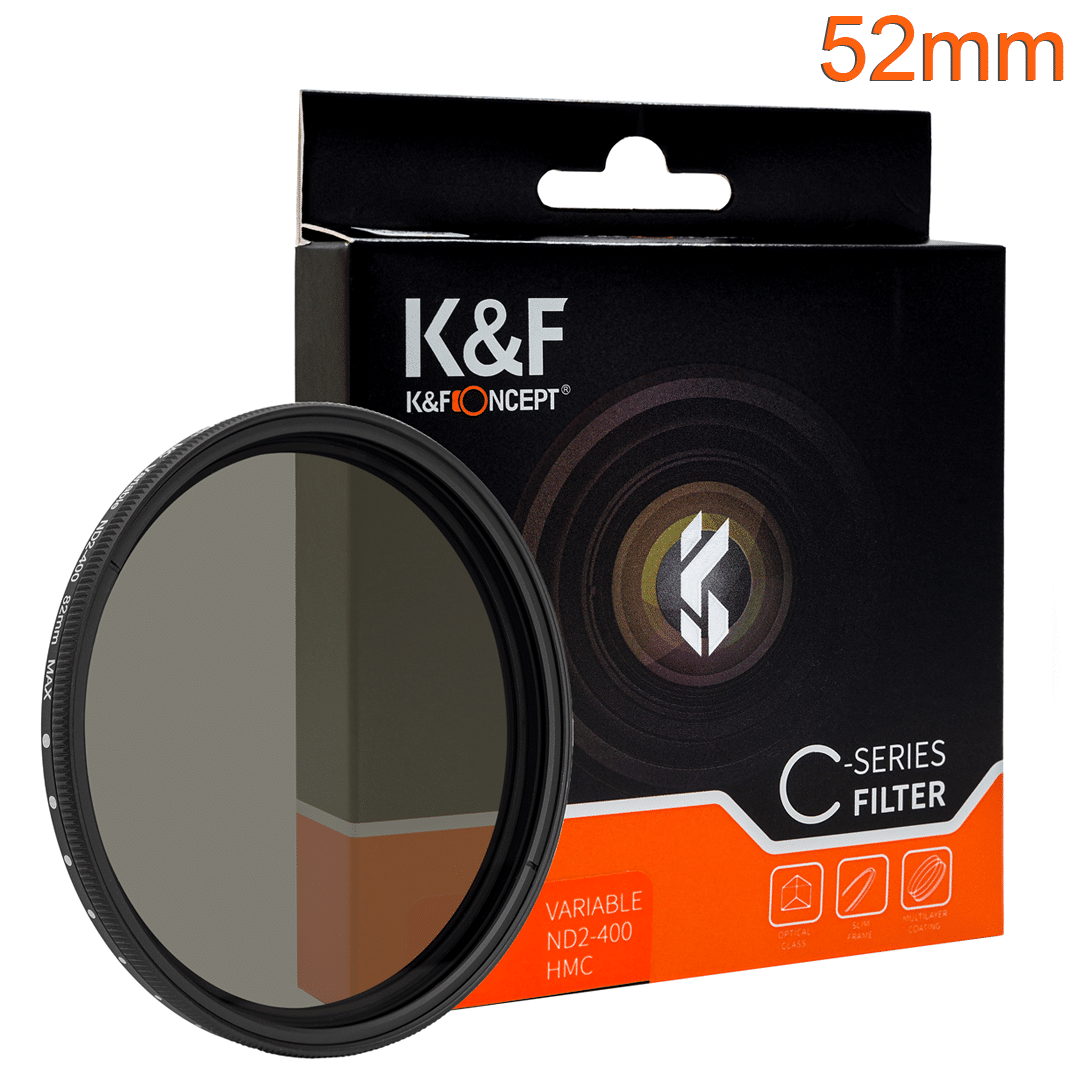
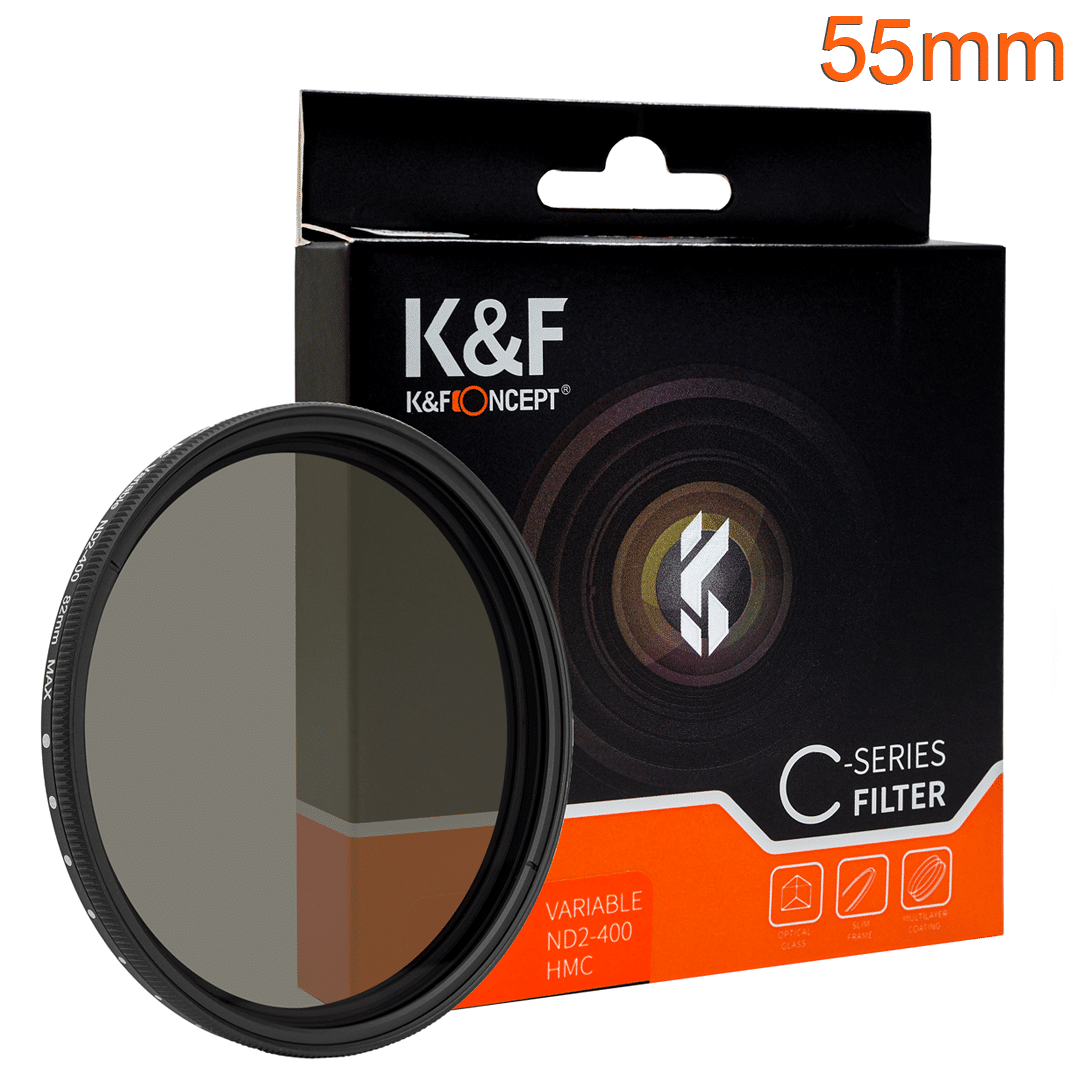


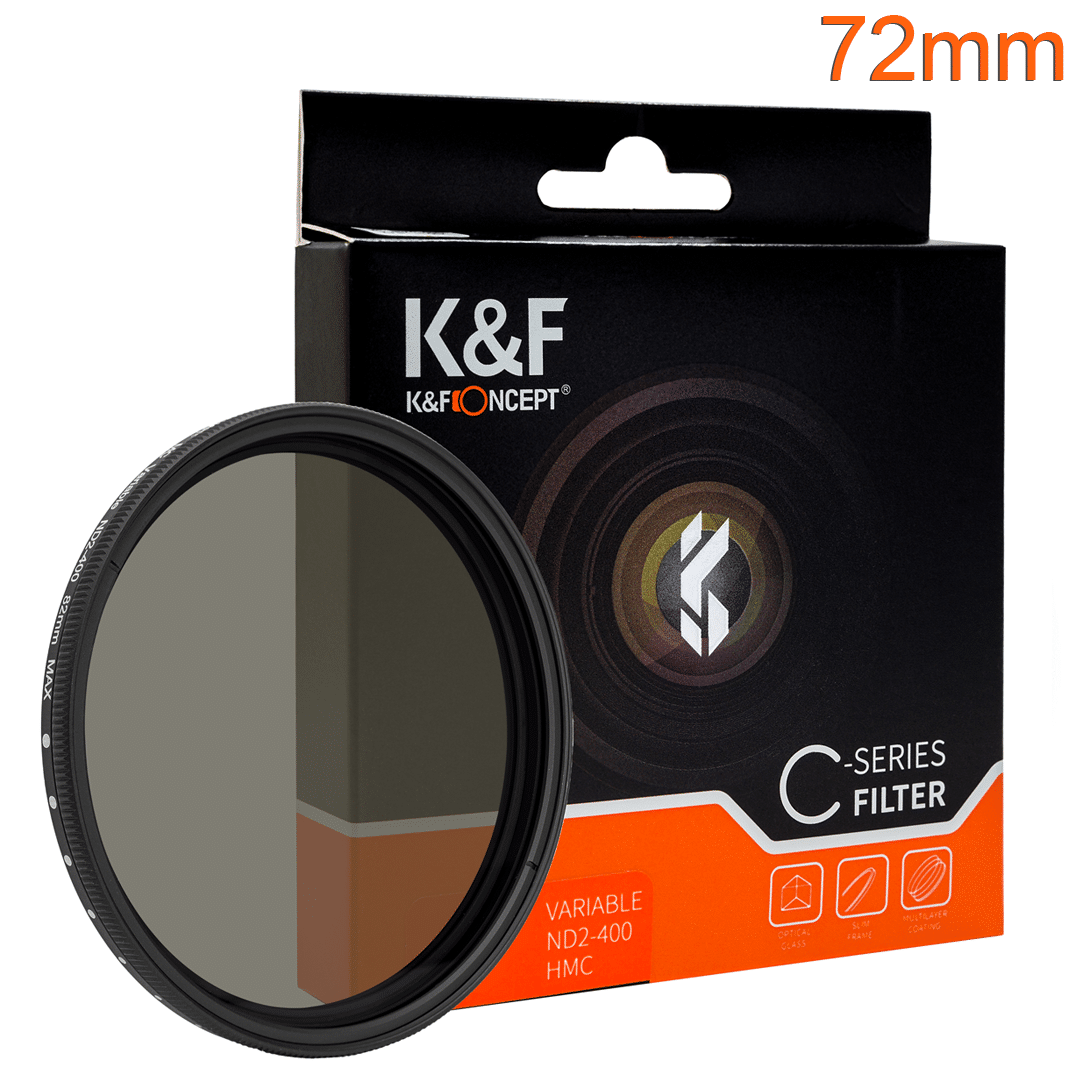


K&F ND2-ND400 Variable ND Filter (VND) 1-8 F-Stops Classic Series
When daylight forces your camera into settings you didn't choose, shutter speed maxed out, aperture stopped down, creative control gone, this variable ND brings your options back. Rotating the outer ring darkens the image by anywhere from one to eight stops, letting you open up or slow down without clipping highlights. It's polariser-based dimming you dial in by eye, no filter swaps, no guessing which density you need before you leave the house.
Think of it as exposure headroom. Bright sand, snow, midday concrete, conditions where your sensor would normally force you into f/16 and 1/4000th just to avoid blowing out the frame. Screw this on and you get back the aperture and shutter latitude you'd have at dusk. Shoot f/2.8 portraits at noon without turning your subject into a silhouette against a white sky. Hold the shutter open long enough to turn a waterfall into silk or blur pedestrians into ghosts, all in full sun. The filter becomes a fourth exposure control alongside aperture, shutter and ISO, one that doesn't introduce noise or diffraction.
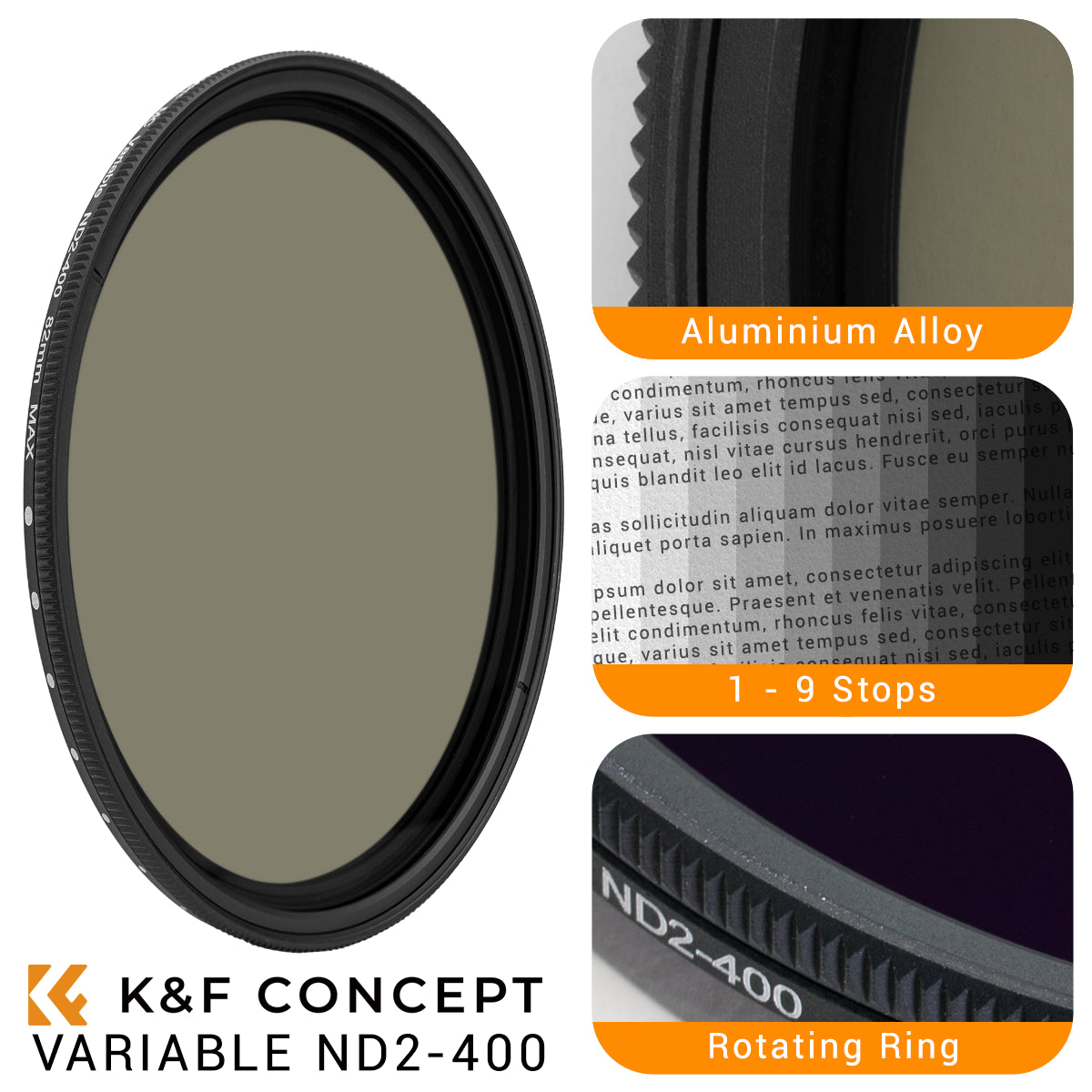
Construction starts with Japanese optical glass, double-sided polished to maintain resolution through 8K capture. Eighteen coating layers reduce internal reflections and flare, critical when you're stacking polarising elements that can bounce light between surfaces. The outer hydrophobic layer sheds water and resists fingerprints; the anti-reflection treatment underneath cuts ghosting when shooting into backlight. Glass diameter exceeds the thread size to minimise vignetting on wide lenses, and the element is pressure-fused into the aluminium frame so it won't rattle loose after months in a bag.
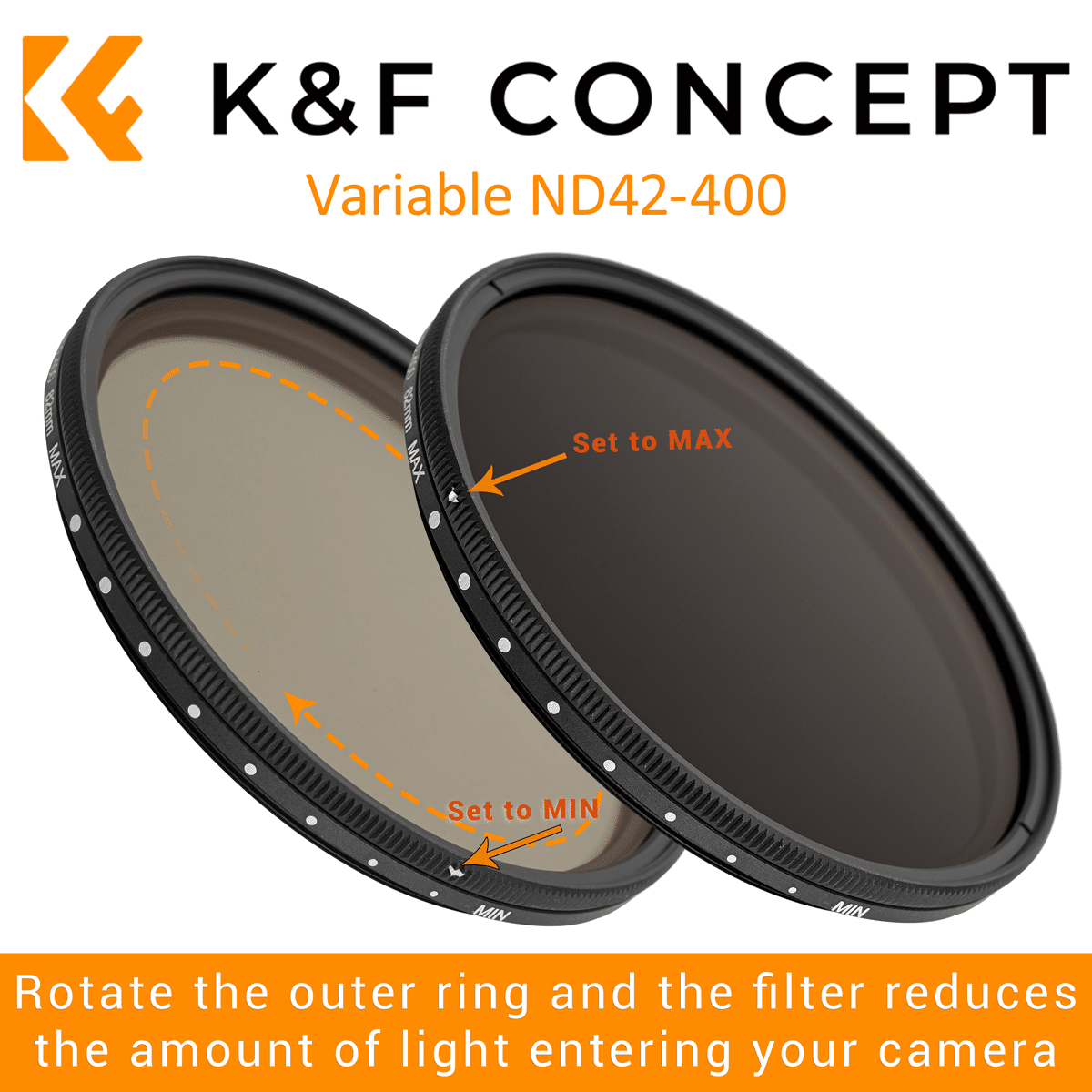
Frame design is slim-profile aircraft aluminium, knurled for grip when your hands are cold or wet. Double-threaded so you can stack a circular polariser or UV filter on top if the shot calls for it. Rotation is smooth with no detents, you're adjusting by looking through the viewfinder, not counting clicks. Calibration dots and an arrow on the outer ring let you return to a setting you liked on the previous frame. The final dot marks maximum density; rotating past it starts to introduce cross-polarisation artifacts (an X-pattern darkening at frame edges), so you back off half a turn and you're clean.
Landscape work is where the long-exposure capability shows up most. Clouds streaking across a ridge, waves smoothing into mist against rocks, rivers turning glassy, all shots that need multi-second exposures in daylight. Without the ND you'd be at ISO 50, f/22, and still overexposing. With eight stops of reduction you're at ISO 100, f/8 for sharpness, and a ten-second shutter that renders motion as blur while static elements stay crisp. The difference between a snapshot and an image with atmosphere.
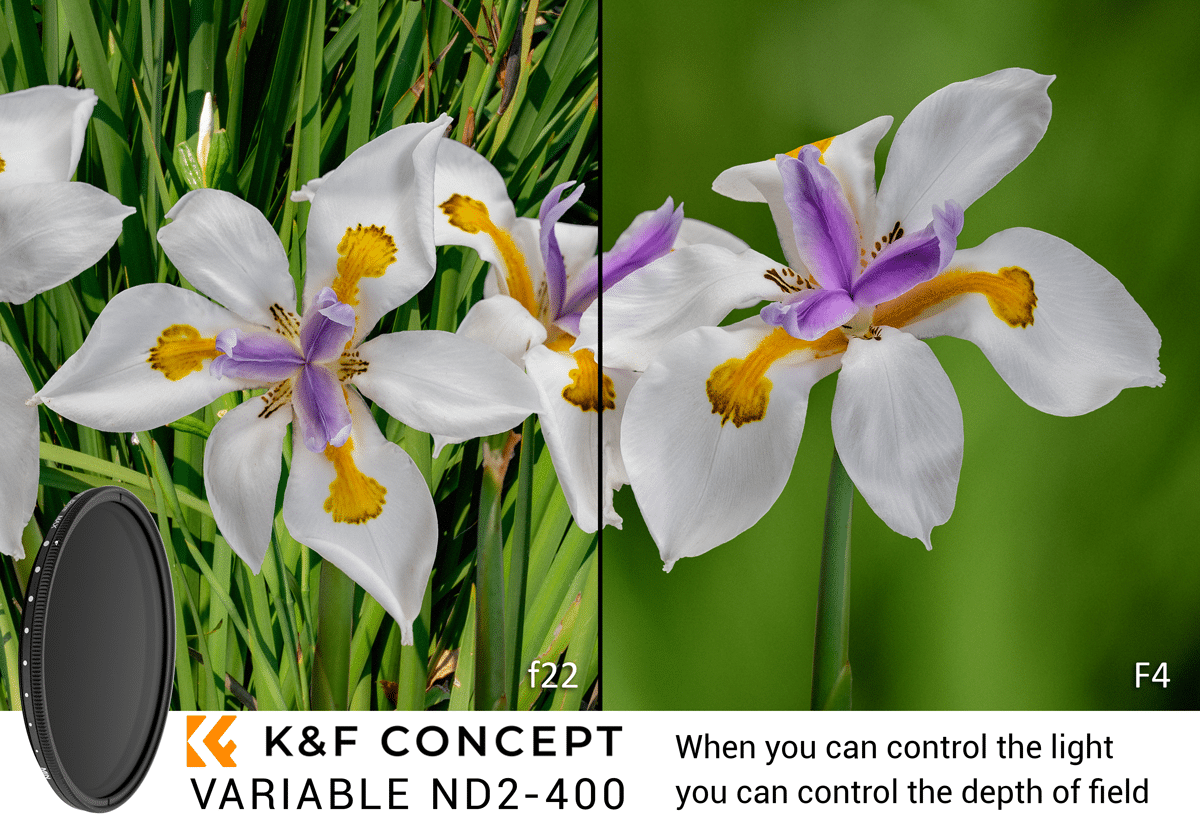
Portrait and product shooters use it to control depth of field in harsh light. You want f/1.4 subject isolation outdoors at midday, normally impossible without turning the background into a white void. Dial in three or four stops of ND and you're shooting wide open with the background properly exposed, subject sharp, everything behind them falling into soft bokeh. Same principle applies to product shots on location: isolate the item in the foreground, let the environment go out of focus, no need to wait for golden hour or drag the setup indoors.
For video the filter acts as a manual aperture ring. Many DSLRs and mirrorless bodies lock aperture changes during recording, which makes exposure adjustments mid-take impossible. Rotating the ND gives you real-time exposure control without touching camera settings, essential for run-and-gun documentary work or any scenario where light changes faster than you can stop recording. It also lets you maintain the 180-degree shutter rule (shutter speed double your frame rate) in bright conditions without stopping down so far you lose the shallow focus that separates video from smartphone footage.
Practical advantage over fixed-density filters: you're not carrying a set of ND2, ND4, ND8, ND64 and swapping them as light changes. One filter covers the range. When you're hiking to a location or moving between setups on a paid shoot, less gear in the bag and no time lost threading filters on and off means you're ready when the shot is. The variable design does introduce a slight colour shift at maximum density (common to all dual-polariser NDs), but it's correctable in post and rarely visible below six stops.
Thread sizes cover most common lens diameters. Match the filter thread to your lens barrel and screw it on, the knurled edge gives you purchase even with gloves. Rotate clockwise to darken, counter-clockwise to lighten. If you see an X forming in the frame you've gone past maximum range; rotate back until it clears. For repeatable results, note the arrow position against the dots when you find a density you like, then return to that mark on the next frame.
Frame thickness is 3mm, which matters on ultra-wide lenses where even a few millimetres of filter edge can intrude into the frame corners. This stays out of the way on most lenses down to 16mm full-frame equivalent. If you're stacking it with another filter (polariser, UV, step-up ring), check for vignetting at your widest focal length before the shoot.
The coating package is where build quality separates this from cheaper alternatives. Uncoated or single-coated variable NDs can flare badly when the sun is in or near the frame, and they often produce a colour cast that shifts as you rotate. Multi-layer coatings here keep transmission neutral and flare under control, so you're not spending time in post correcting a magenta shift or cloning out purple spots. Water beads and rolls off instead of smearing, which matters in coastal or waterfall environments where spray is constant.
Durability comes from the aluminium frame and the way the glass is seated. It's not a disposable filter. You'll screw it on and off hundreds of times; the threads won't strip. You'll rotate it constantly; the action stays smooth. It'll sit in a bag with other gear; the coatings won't scratch off in a month. For the price point it's built like something twice the cost, which is the point, accessible doesn't mean fragile.
If you're shooting in conditions where you'd normally be fighting the light instead of using it, or you're tired of choosing between the shutter speed you want and the aperture you need, this filter gives you both. It's a practical tool that expands what's possible in bright environments without adding complexity. Dial in the density, take the shot, move on. The KF01.1394-1406 handles the physics; you handle the framing.