
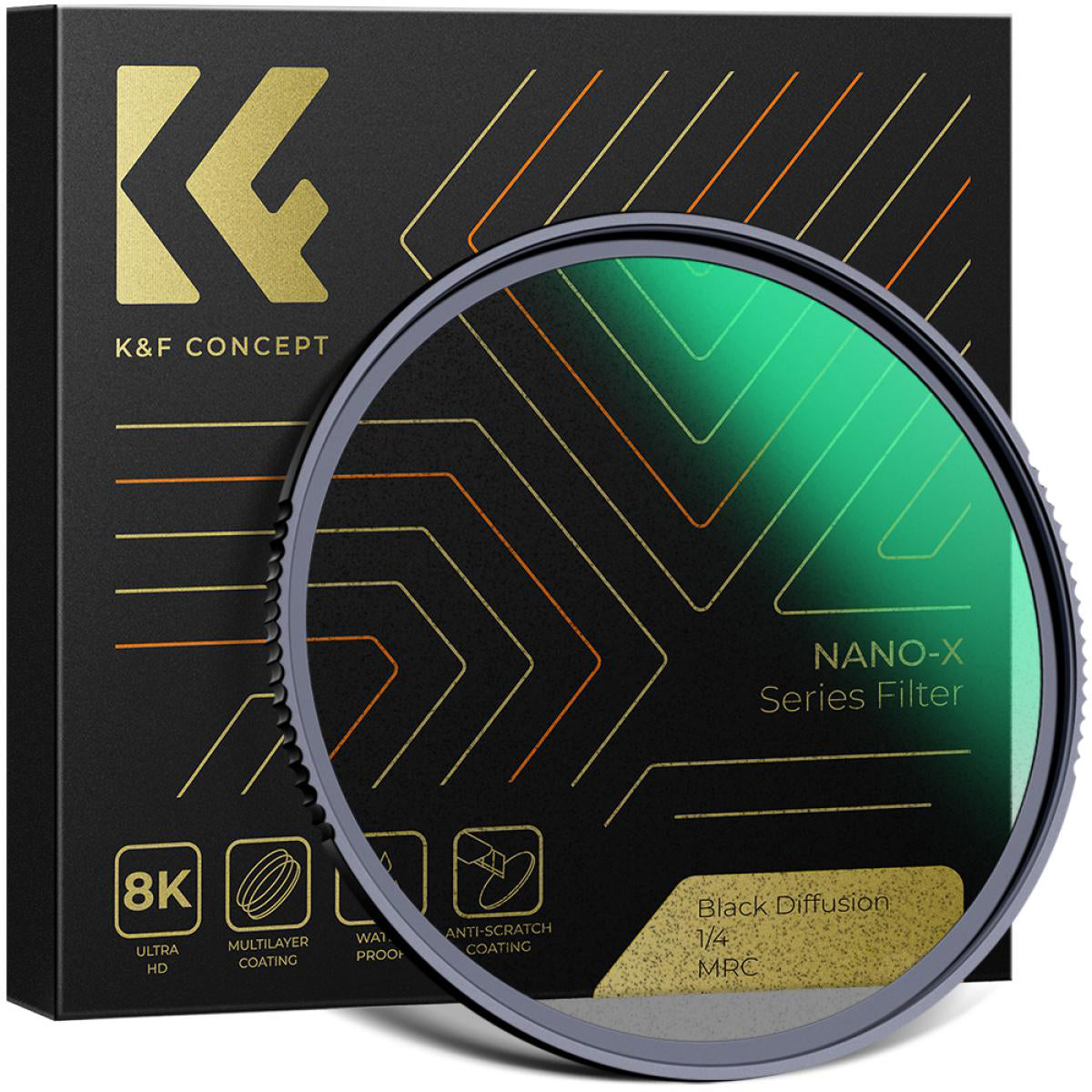
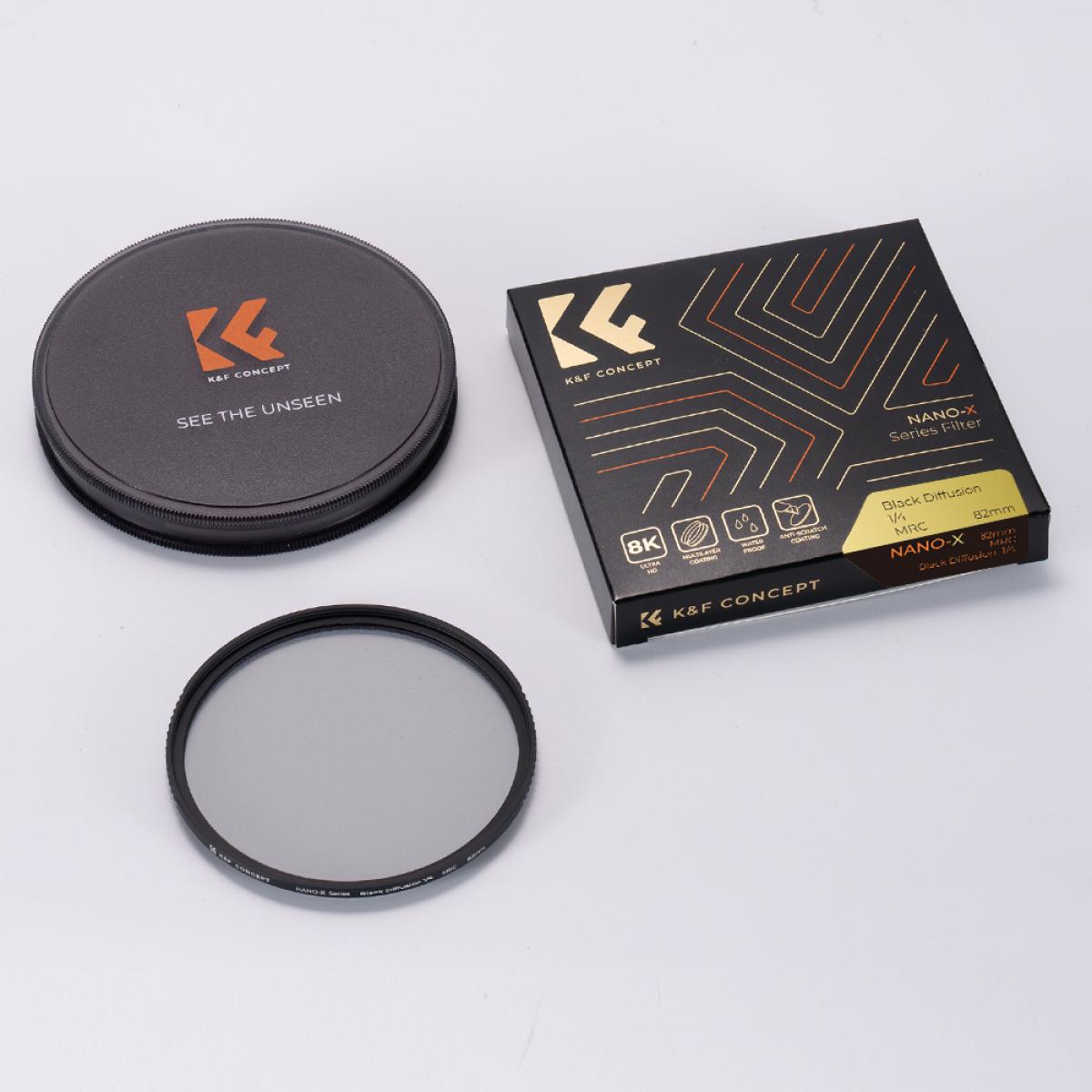



K&F Black Mist Diffusion Effect Filter 1/4 Nano-X Series
Shooting Film Aesthetics on Digital Sensors
Modern mirrorless and DSLR bodies excel at clinical reproduction, edge-to-edge sharpness, wide dynamic range, precise colour science. That technical accuracy is ideal for documentation, but it leaves little room for mood. A black diffusion filter bridges that gap by introducing controlled optical characteristics that digital sensors can't produce natively: gentle halation around practical lights, reduced micro-contrast in skin tones, and a tonal graduation that recalls celluloid rather than silicon. The result sits somewhere between a straight capture and heavy post-processing, you're shaping the image at the point of exposure, which preserves highlight roll-off and luminance transitions that software struggles to replicate convincingly after the fact.
How Diffusion Alters the Image
This filter works through a surface treatment that scatters a fraction of incoming light before it reaches the sensor. That scattering has two visible effects. First, it lowers micro-contrast, the transition between adjacent tonal values softens without destroying resolving power, so a face retains its structure but loses the digital harshness that makes pores and texture distracting. Second, it creates bloom around bright sources: streetlights, neon signage, candle flames and practicals all develop a halo that bleeds into surrounding shadows. The combination drops perceived contrast across the frame, which lets you underexpose for richer blacks while keeping highlights from clipping abruptly. The tonal curve compresses in a way that feels organic rather than processed.
Where the Effect Earns Its Keep
Night exteriors and low-key interiors show the filter at its most dramatic. A cityscape shot at blue hour gains atmosphere as point sources glow and hard edges relax; the same scene without filtration reads flat and documentary. Portrait work benefits when you want forgiveness in skin rendering, the filter doesn't erase blemishes, but it minimises their prominence by blending micro-texture, which is why beauty and fashion shooters have relied on diffusion for decades. Narrative and editorial projects gain a cinematic quality that separates them from standard social content. Product photography can use the effect selectively: diffusion adds elegance to glassware, jewellery and cosmetics by softening specular highlights, though it's less appropriate for technical subjects where detail documentation matters more than mood.
Daylight shooting produces a subtler result because the effect scales with light intensity, overcast conditions or evenly lit scenes won't show much bloom, and the softening may read as a slight reduction in bite rather than a pronounced stylistic choice. That makes the filter less versatile in bright midday work unless you're deliberately chasing a pastel or hazy aesthetic. It's not suited to genres that prioritise factual accuracy: product reviews, architectural documentation, news coverage and scientific imaging all require the unmodified sharpness this filter deliberately reduces.
Understanding 1/4 Strength in Context
Black diffusion filters are graded in fractions: 1/8, 1/4, 1/2 and 1. The denominator indicates intensity, a smaller number means a stronger effect. The 1/8 variant is the most restrained, producing a whisper of softness that many viewers won't consciously notice but will register as a more flattering image. The 1/4 option, which this filter represents, sits in the middle of the range: the diffusion is visible without overwhelming the frame, making it the most commonly deployed strength across cinema and stills work. It's strong enough to establish a look but controlled enough to use across an entire shoot without the effect becoming repetitive or distracting. The 1/2 and 1 grades push into stylised territory, they're effective for dream sequences, music videos, or any scenario where you want the filtration to announce itself, but they risk overpowering the subject if applied indiscriminately. Starting with 1/4 gives you a usable effect that remains flexible across varied lighting conditions.
Why In-Camera Beats Post-Processing
Digital editing tools attempt to mimic diffusion through techniques like the Orton Effect, which layers a blurred duplicate over the base image and adjusts opacity. That approach can approximate the softening but fails to replicate authentic highlight bloom because it's working with data the sensor has already clipped or compressed. A physical filter scatters light before it hits the photosite array, which means the bloom interacts with the scene's actual luminance values rather than being painted on top afterward. The tonal transitions stay smooth, and the effect integrates with lens characteristics like bokeh and flare in ways that software compositing can't match. You also gain efficiency: the look is baked into the raw file, so you're not spending time in post trying to dial in a convincing approximation or managing layer stacks that slow down your workflow.
Frame and Optical Construction
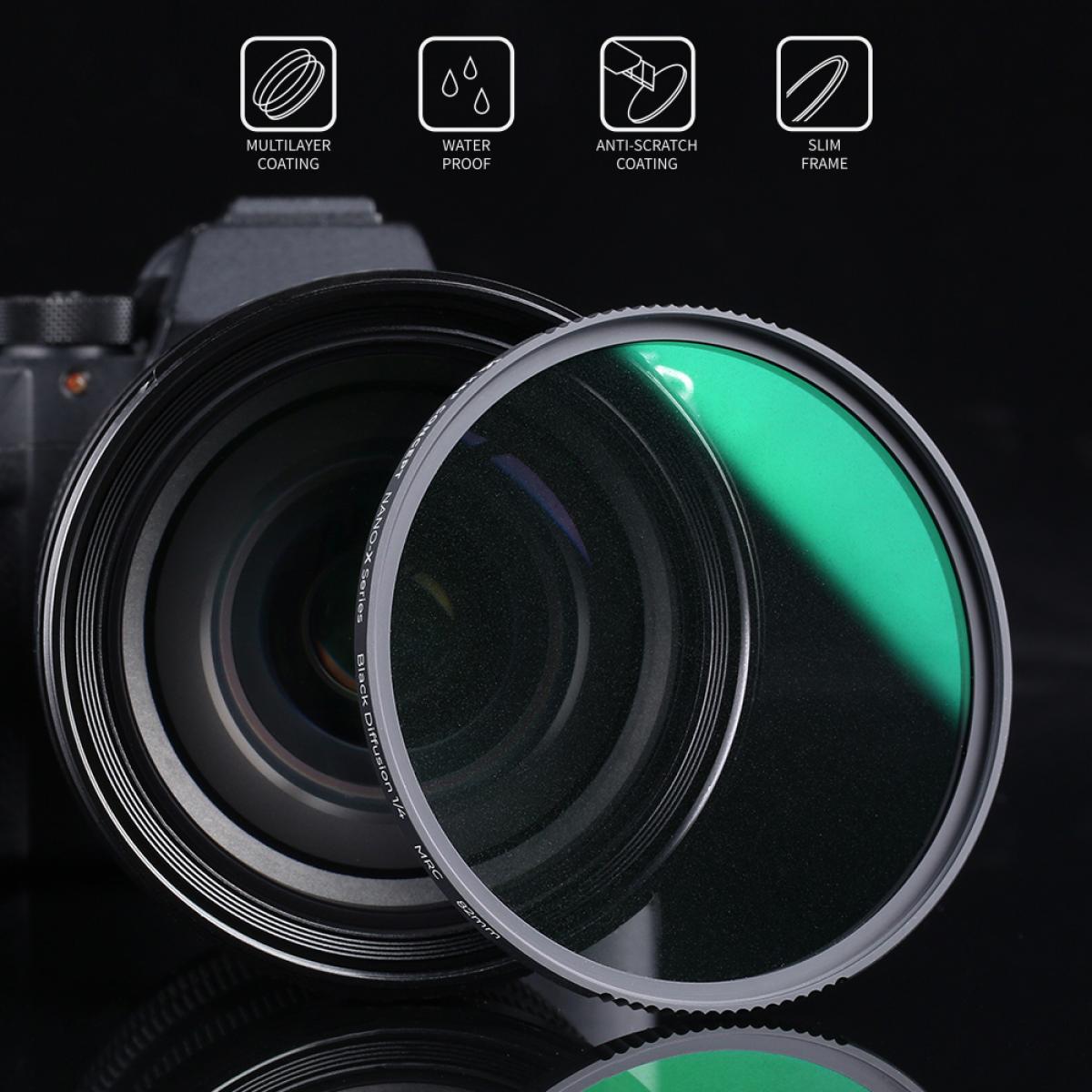
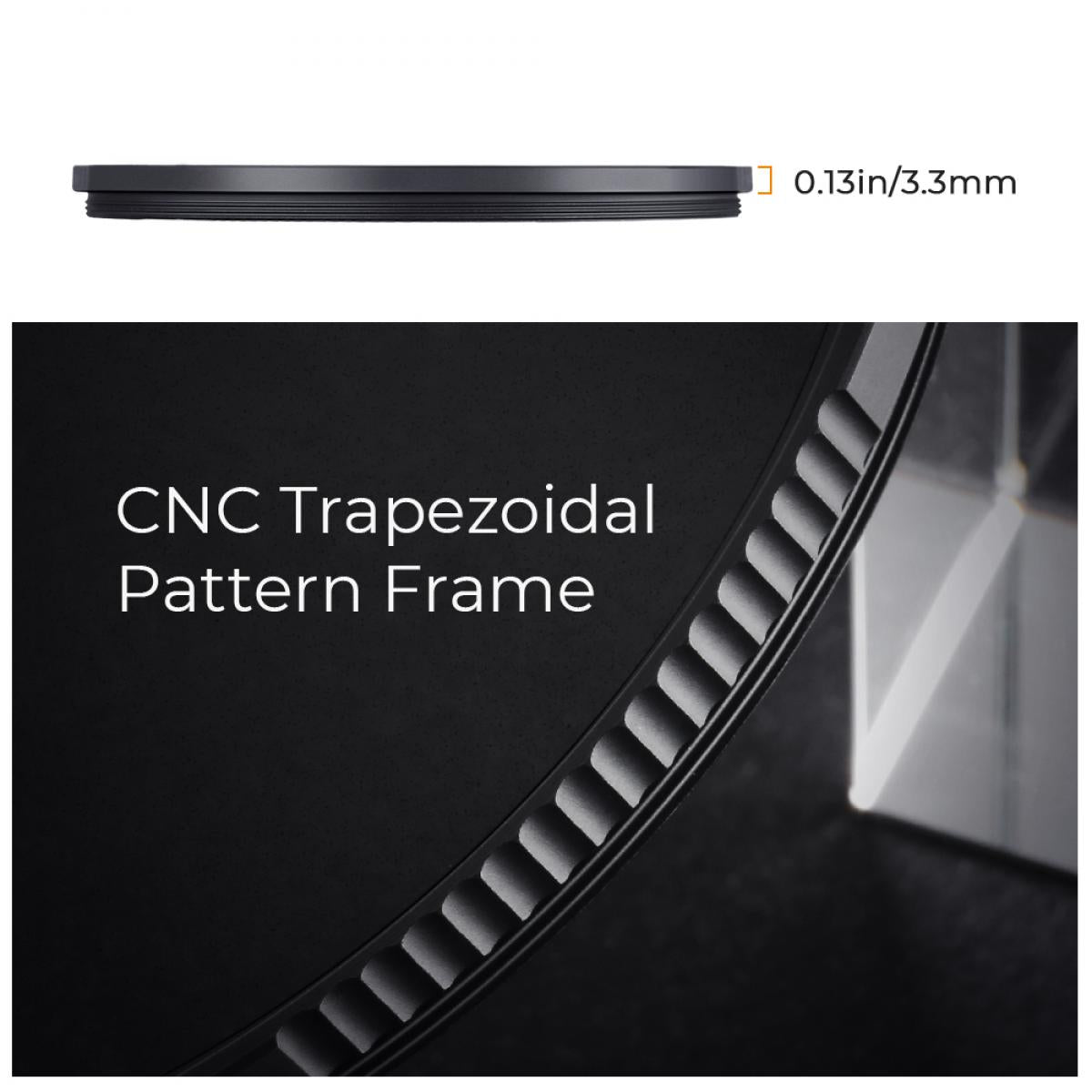
The filter uses a 3.3mm aluminium frame, which keeps the front element close to the lens's filter thread and reduces the chance of vignetting on wide-angle glass. Aluminium offers durability without adding noticeable weight to the front of the lens, which matters during handheld work or when the camera is rigged on a gimbal where every gram affects balance. The frame is double-threaded, so you can stack a second filter, a circular polariser or variable ND, without needing a step-up ring or separate holder system. That stacking capability is useful when you want to combine diffusion with glare control or exposure management, though be aware that adding a second filter increases the risk of internal reflections if you're shooting into strong light sources.
The glass itself is Japanese optical material with 28 layers of multi-coating applied to both surfaces. Those coatings serve two purposes: they reduce internal reflections that would otherwise create ghosting or veiling flare, and they improve light transmission so the filter doesn't introduce a colour cast or noticeably reduce exposure. The coatings also provide scratch and water resistance, which extends the filter's working life when you're shooting in weather or environments where the front element is exposed to dust, moisture or accidental contact. A storage case is included, so the filter travels protected when it's not mounted.
Compatibility and Sizing
This filter fits any lens with the corresponding filter thread diameter. That thread size is printed on the lens barrel, usually near the front element or inside the lens cap, and is marked with a ø symbol followed by a millimetre measurement. Verify your lens's thread size before ordering, common diameters range from 49mm to 82mm, and there's no universal fit. If you own multiple lenses with different thread sizes, you can use step-up rings to adapt a larger filter down to smaller lenses, though you'll need to buy the filter in the largest diameter you intend to use to avoid vignetting on wider glass.
Who This Filter Serves
This tool is for photographers and videographers who want to establish a visual signature that separates their work from the default digital look. If you're shooting narrative content, editorial portraits, or stylised commercial work where mood matters as much as technical precision, the filter gives you a practical way to introduce atmosphere without relying on post-production. It's equally useful for hybrid shooters who need their stills and motion work to share a cohesive aesthetic. The 1/4 strength makes it approachable for first-time diffusion users while remaining strong enough to satisfy shooters who've already experimented with lighter grades and want more presence. It won't suit every project, but for the work where it fits, it delivers a look that's difficult to achieve any other way.