






K&F Black Mist Diffusion Effect Filter 1/8 Nano-X Series
Modern digital sensors excel at one thing: clinical accuracy. Edge sharpness, wide dynamic range, pixel-level detail, all engineered to reproduce exactly what sits in front of the lens. That technical precision is ideal for documentation, but it leaves little room for mood. Highlights clip hard, skin texture records every pore, streetlights render as pinpoint dots rather than atmospheric halos. If your work leans toward narrative, portraiture, or anything that benefits from a softer emotional register, you're fighting the sensor's default character in post rather than shaping it at capture.
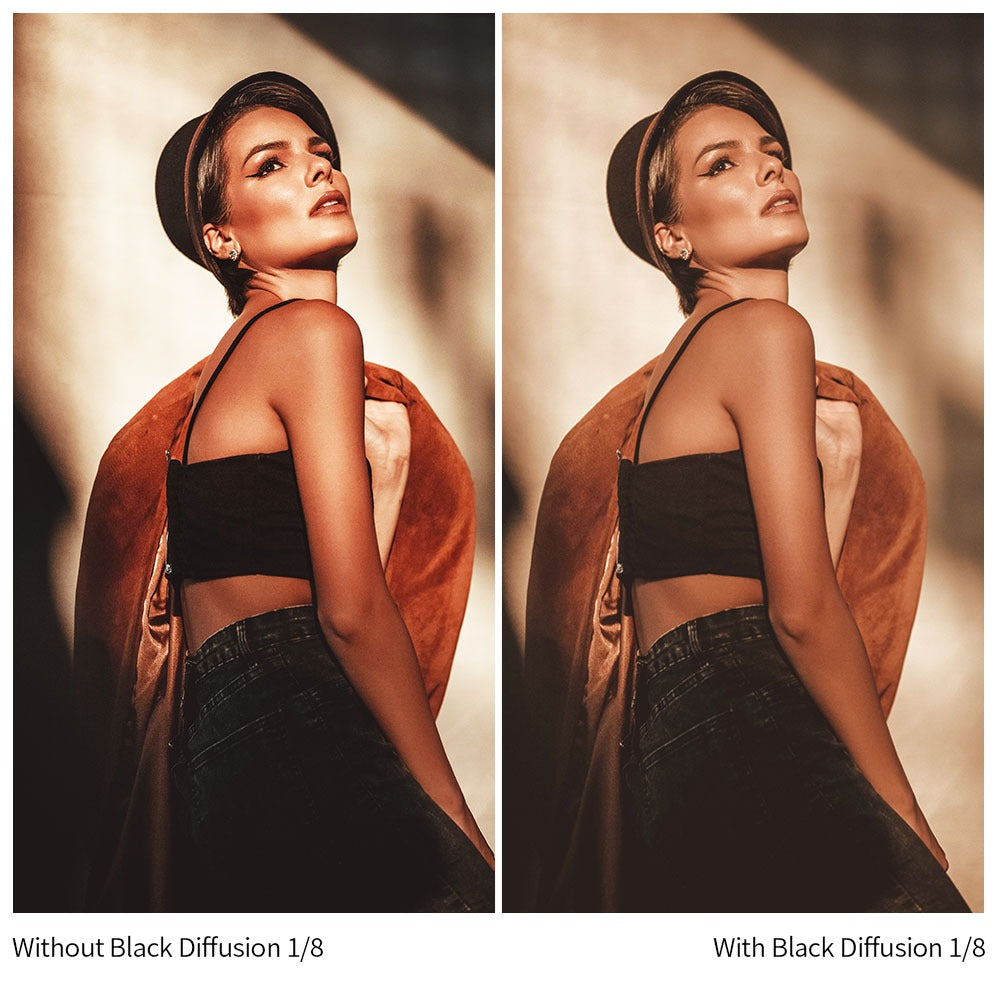
This black diffusion filter changes the rendering at the point of exposure. It introduces two simultaneous effects that together shift the image away from digital clarity and toward a more cinematic, filmic aesthetic. First, it applies controlled diffusion across the frame, not defocus, but a subtle reduction in micro-contrast that preserves subject sharpness while smoothing fine texture. Skin appears more forgiving, product surfaces take on a slightly dreamlike quality, and the overall impression softens without losing definition where it matters. Second, it blooms light sources. Any practical light in the frame, neon signage, streetlamps, candles, window highlights, develops a gentle halo that graduates smoothly into surrounding tones. The combination lowers perceived contrast and introduces tonal roll-off that reads as vintage or filmic rather than digitally processed.
The 1/8 strength sits at the subtle end of the range. The effect is present but restrained, enough to notice a shift in character without dominating the frame. It works well in situations where you want the filter's influence to feel organic rather than stylised, or where you plan to layer the look with grading in post and need the in-camera effect to provide a foundation rather than the entire aesthetic. A 1/4 strength would push the diffusion and bloom further; 1/2 and full-strength versions create pronounced, overtly dreamlike results suited to specific creative briefs. Starting at 1/8 gives you the core character of black diffusion while leaving headroom to adjust exposure, white balance, and contrast without the filter overwhelming those decisions.
Night work and low-light environments show the filter at its most effective. Urban scenes with mixed practical lighting, storefronts, traffic signals, interior spill through windows, gain immediate atmosphere as each source blooms and the overall contrast compresses into something closer to pushed film stock. Underexposing slightly deepens shadow areas while the bloomed highlights maintain smooth tonal transitions, avoiding the hard clip typical of unfiltered digital capture. Daylight shooting is more subdued; the diffusion remains active, but without strong point sources to bloom, the effect centres on texture softening and micro-contrast reduction. Portraiture benefits in any light, the filter takes the edge off skin texture and eyelash detail without introducing the obvious glow of a traditional soft-focus filter.
Applications where this approach works: editorial portraiture, lifestyle and fashion where a slightly elevated or nostalgic mood supports the concept, narrative or cinematic stills, product work that benefits from a less clinical rendering, and street photography where atmosphere outweighs documentary accuracy. It is less appropriate for technical, documentary, or review work where fidelity to the subject's actual appearance is the priority. The filter introduces a look; if your brief requires neutral reproduction, you would not use it.
The effect has been popular enough that post-processing techniques attempt to replicate it, the Orton Effect being the most common. Blending a blurred duplicate layer over the sharp original approximates diffusion, and artificial glow can be painted around highlights. The in-camera result differs in two ways: it affects the entire optical path before demosaicing, so the diffusion interacts with the sensor's response rather than being applied after the fact, and it requires no additional workflow steps. You either have the look baked in or you spend time building it later with less organic results.
Filter strengths are expressed as fractions: 1/8, 1/4, 1/2, and 1. Each step increases both diffusion intensity and the prominence of highlight bloom. The 1/8 version is the most transparent, the effect is visible on close inspection but does not announce itself. The 1/4 is the most commonly chosen strength because it delivers an obvious shift in character without feeling heavy-handed. The 1/2 and full-strength options create pronounced stylisation suited to specific creative concepts where a dreamlike or heavily atmospheric quality is the intent. If you are uncertain which strength to start with, 1/8 offers the safest entry point; you can always move up if you find the effect too restrained.
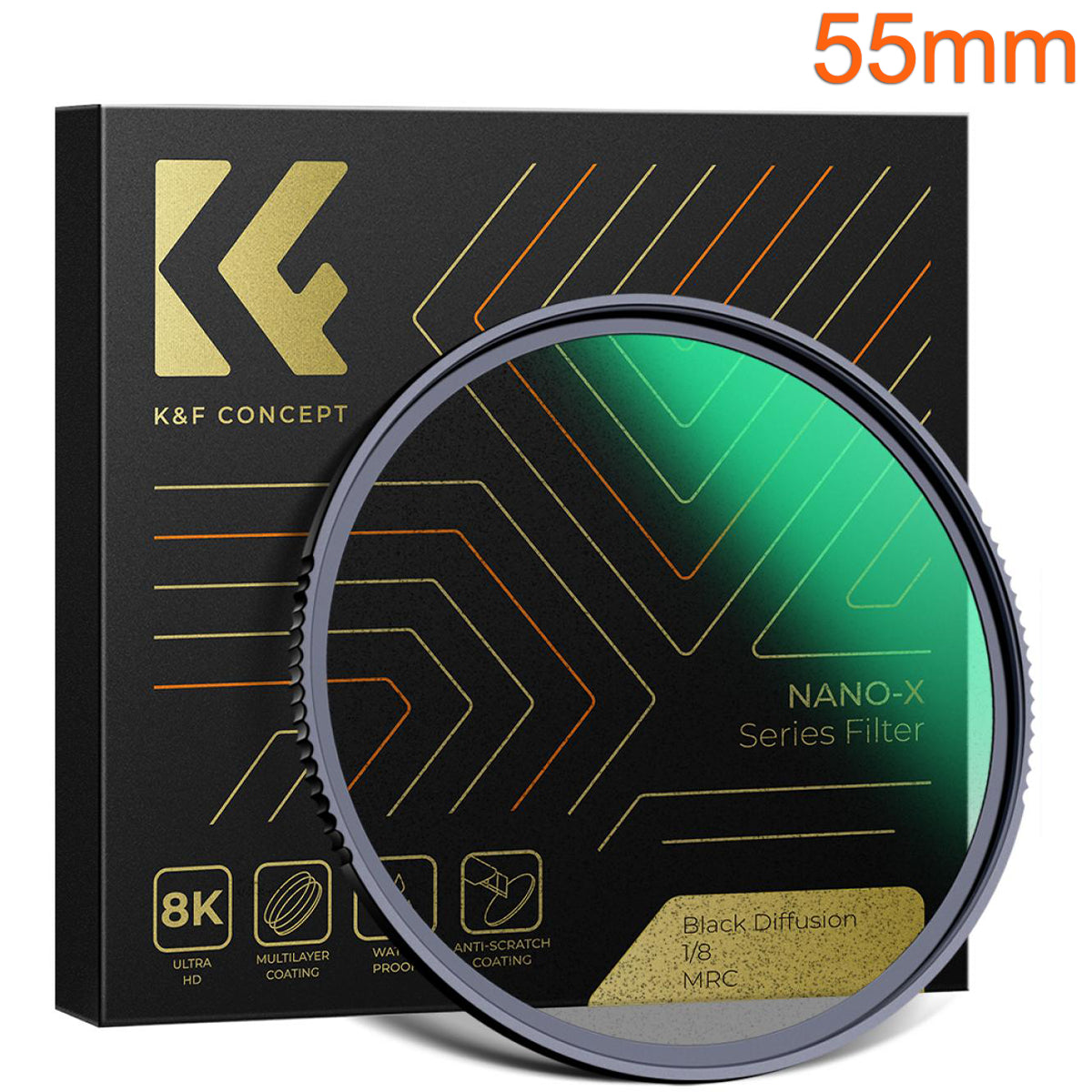
The frame is machined from aircraft-grade aluminium and measures 3.3 millimetres in thickness once mounted. That slim profile avoids vignetting on wide-angle lenses where thicker filter rings would intrude into the image circle and cast shadows in the frame corners. The frame is double-threaded, allowing you to stack a second filter, a circular polariser to manage reflections, or a variable ND to control exposure, without requiring a step-up ring or separate adapter. The threads are cut cleanly enough that cross-threading is unlikely even when mounting in low light or without looking.
The glass itself is Japanese optical glass, double-sided polished to maintain resolution up to 8K capture. Twenty-eight layers of multi-coating are applied to both surfaces. The coatings serve three functions: anti-reflection treatment reduces internal flare and ghosting when shooting into light sources, hydrophobic and oleophobic layers repel water and fingerprints so the filter can be wiped clean without leaving residue, and scratch-resistant hardening protects the surface from incidental contact with lens caps, bag interiors, or cleaning cloths. Light transmission remains high, the coatings are designed to maximise the amount of light passing through while minimising reflections that would degrade contrast or introduce artefacts.
A fabric pouch is included for storage when the filter is not mounted. The pouch prevents the glass surfaces from contacting other gear in your bag and keeps dust off the coatings between uses.
Compatibility is universal across any lens with the corresponding filter thread diameter. The filter thread size is marked on the lens barrel, usually near the front element, and is always preceded by the diameter symbol. Common sizes range from 49 millimetres on compact primes to 82 millimetres on professional zooms. Verify your lens thread before ordering; the filter must match exactly as there is no adapter included.
If your work would benefit from a rendering that sits somewhere between clinical digital sharpness and the softer, more atmospheric character of film stocks or vintage glass, this filter provides that shift at the point of capture. It does not replace lighting, composition, or exposure discipline, but it changes the way the sensor interprets those elements, and that change can be the difference between a technically correct frame and one that carries the mood you intended. K&F Concept Black Diffusion Filter, 1/8 strength, reference KF01.1624-1493.