
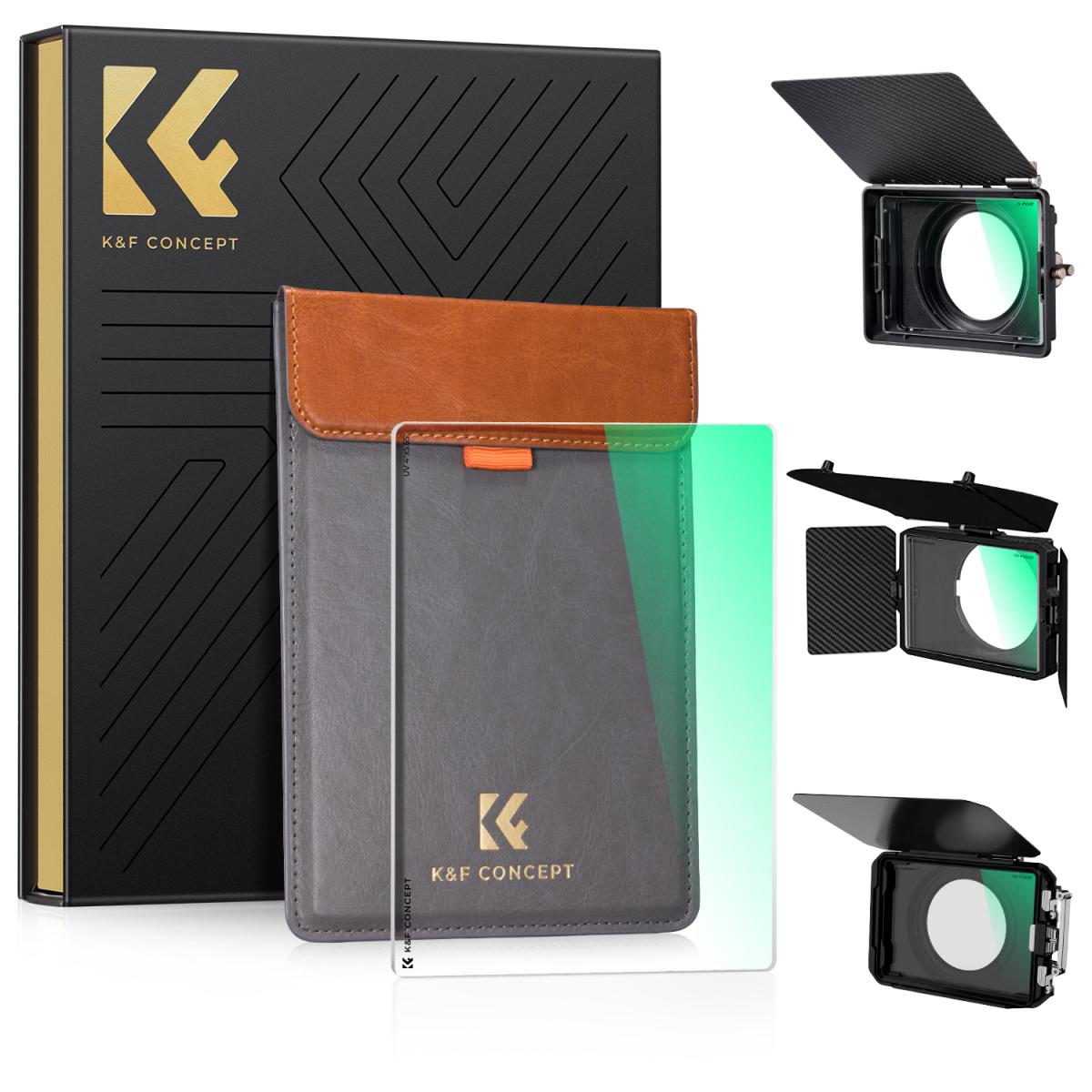





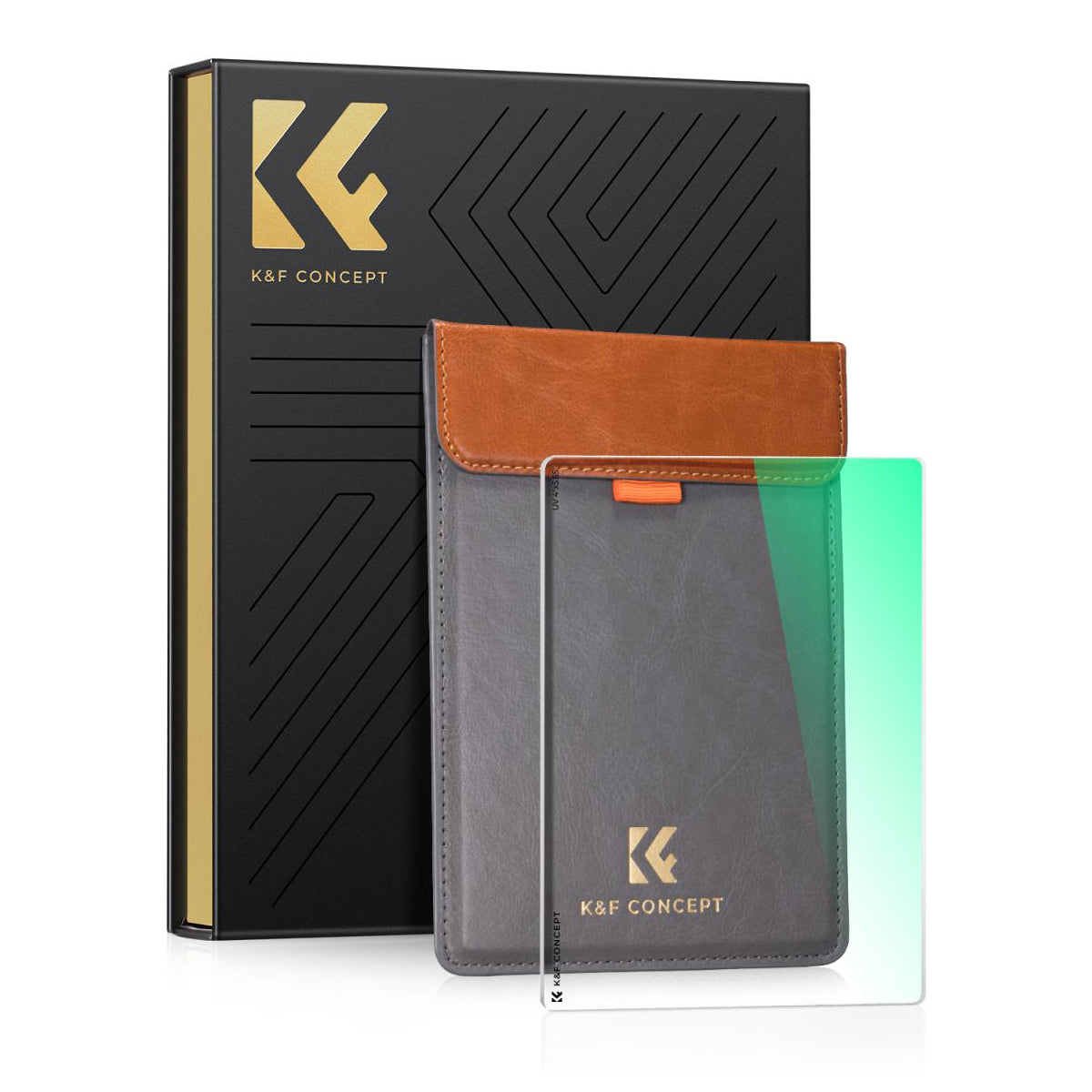
K&F UV Rectangular Glass Filter for K&F Matte Boxes Nano-X
The K&F Concept Nano-X 4x5.65" Multi-Coat UV Filter arrives as a precision optical tool built to address two fundamental challenges in professional image capture: atmospheric interference and lens vulnerability. Ultraviolet light frequencies, though invisible to the human eye, scatter through the atmosphere and introduce haze that softens distant detail and shifts colour balance toward blue. This filter blocks those frequencies at the glass surface, restoring contrast and allowing your sensor to record the scene as your eye perceives it. The result is immediately visible in outdoor work,mountain ranges hold their definition against the sky, coastal scenes retain separation between water and horizon, and midday shoots no longer carry the washed-out quality that forces corrective grading later. For creators working across varied locations, this UV filtration becomes a baseline optical correction that saves time in post-production and delivers more accurate source files.
The filter's construction centres on high-grade optical glass, selected for its clarity and dimensional stability under temperature variation. This material choice matters because cheaper alternatives introduce micro-distortions that degrade sharpness at the frame edges, particularly noticeable when shooting wide-angle or when pixel-peeping 4K and 6K footage. The glass itself is ground flat to sub-micron tolerances, ensuring the optical path remains undisturbed,your lens's resolving power reaches the sensor without compromise. That precision manufacturing extends to the 4x5.65" dimension, which aligns with the industry-standard matte box slot without requiring shims or adapters. The fit is exact, allowing rapid filter changes during multi-setup shoots where lighting conditions shift and you need to swap between UV, ND, and polarising filters without fumbling with thread mounts or risking cross-threading under time pressure.
Twenty-eight discrete nanometer-scale coating layers cover both surfaces of the glass, engineered to manage light behaviour at the molecular level. Each layer is deposited in a controlled-atmosphere chamber, building up a stack that targets specific wavelengths for transmission or rejection. The cumulative effect is a measured reflectivity of 0.2%,meaning 99.8% of incident light either passes through or is absorbed, with virtually none bouncing back toward the lens. That near-total suppression of internal reflections eliminates ghosting when shooting into practicals, LED panels, or direct sun. A common failure mode in lesser filters is the appearance of phantom images,faint duplicates of bright sources that float across the frame and ruin otherwise usable takes. The Nano-X coating stack prevents that entirely, which matters acutely in commercial work where a single flare artifact can render an expensive setup unusable. The coatings also shift the surface energy of the glass, making it hydrophobic. Water beads and rolls off rather than spreading into a film, so a light rain or sea spray doesn't blind the lens mid-shot. Fingerprints, which are oil-based, similarly refuse to adhere,when they do occur, a single wipe with a microfibre cloth lifts them cleanly without leaving residue.
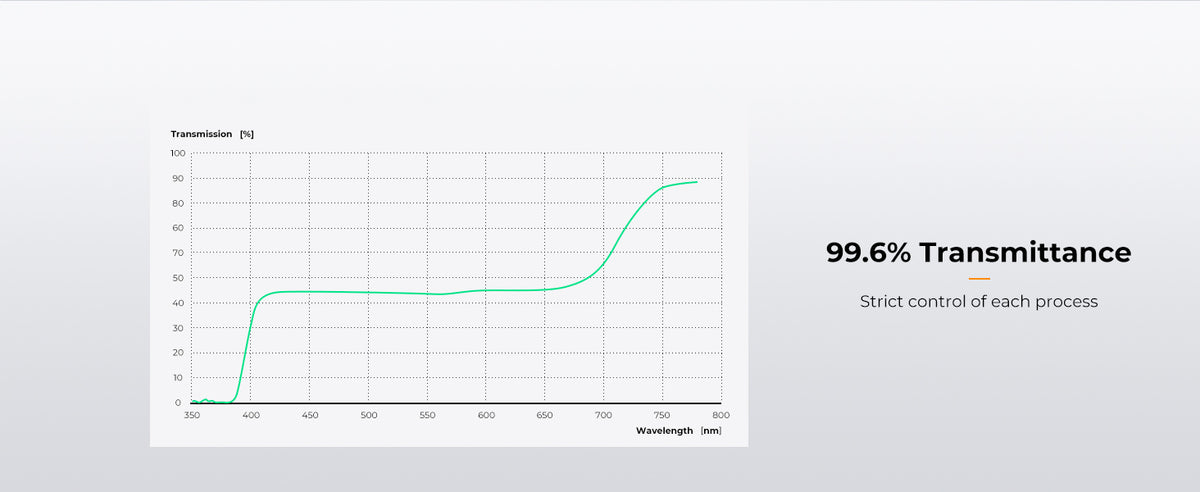
Light transmittance measures 99.6%, a figure that sits at the upper limit of what current coating technology can achieve. The practical consequence is zero exposure penalty,your camera's metering reads the scene as if the filter weren't present, so you maintain native ISO performance and avoid the incremental noise increase that comes from compensating for light loss. Colour rendition remains neutral across the visible spectrum, with no shift toward warm or cool that would require a corrective LUT. This is critical when matching footage across multiple cameras or when cutting between filtered and unfiltered shots within the same sequence. The filter doesn't introduce a look; it preserves the optical signature of your lens, which is exactly what's required when that lens was chosen for its specific rendering characteristics. For stills photographers working in raw, this means white balance remains consistent across a shoot, and for video operators working in log profiles, it means your colour science remains predictable through the grade.
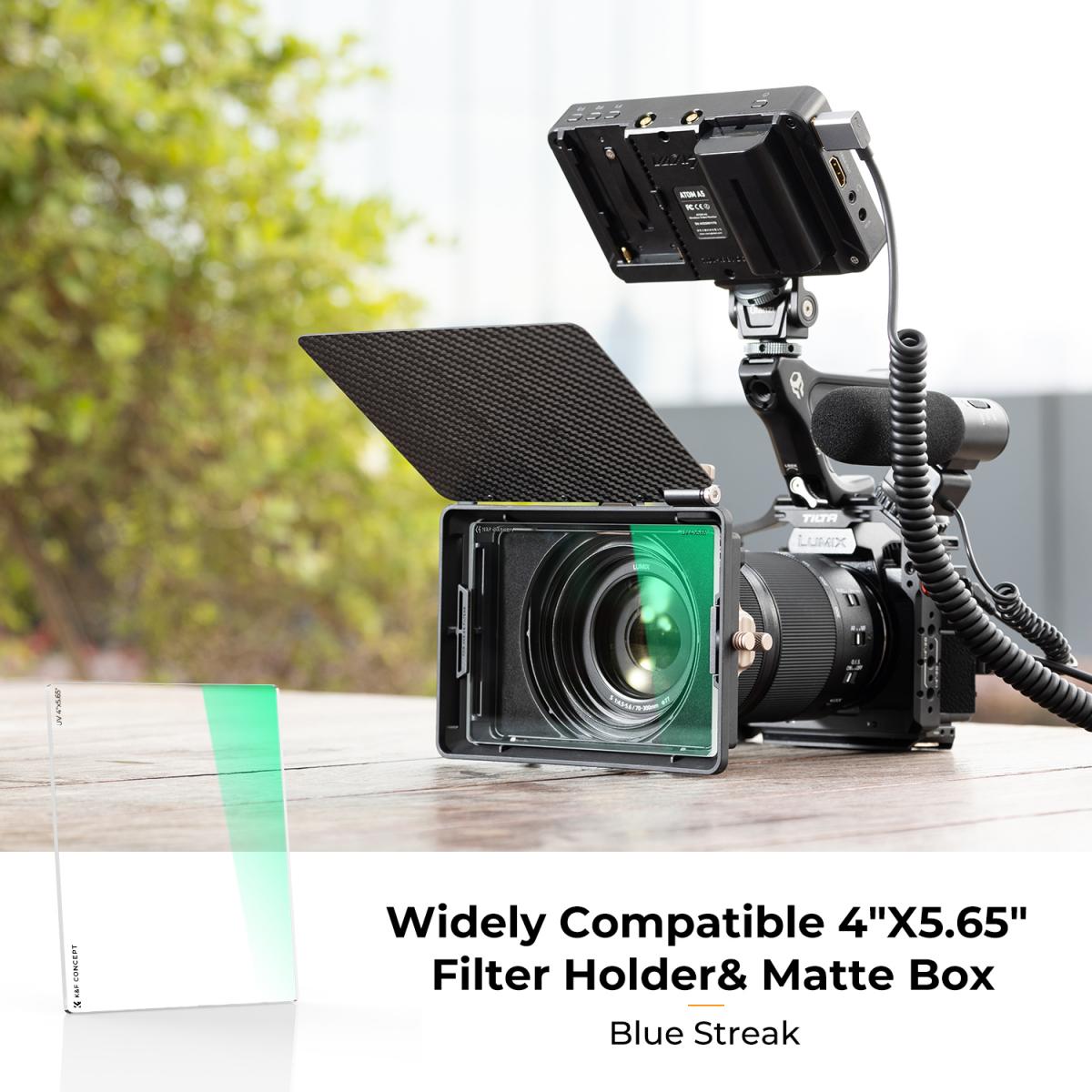
The 4mm thickness is calculated to fit within the depth budget of a standard matte box tray while leaving clearance for stacking additional filters. Most professional matte boxes accommodate two to four filter stages, and the Nano-X UV occupies one stage without encroaching on the others. This allows you to run UV filtration as a permanent baseline layer, then add variable ND or a polariser in front of it as the scene demands, all without mechanical vignetting even on lenses as wide as 16mm full-frame equivalent. The rectangular form factor eliminates the vignetting problem inherent in stacked circular filters, where each additional ring of threads moves the glass further from the lens and progressively clips the image circle. With a matte box system, every filter sits at the same distance from the front element, so stacking is optically neutral. The workflow advantage is substantial,on a documentary shoot where lighting changes unpredictably, you can slide filters in and out of the matte box in under two seconds, maintaining continuous shooting rather than stopping to unscrew and re-thread circular filters between setups.
Durability in the field comes from both the glass substrate and the coating architecture. The optical glass resists flexing under the clamping pressure of matte box trays, which cheaper resin filters cannot, and it maintains its flatness across temperature swings from sub-zero mountain shoots to desert midday heat. The nanometer coatings are chemically bonded to the glass surface, not merely deposited on top, so they don't delaminate or scratch off with repeated cleaning. That said, the coatings are not invincible,abrasive particles like sand will still score the surface if dragged across it, which is why the included leatherette pouch is not optional. The pouch provides a padded enclosure that isolates the filter from the hard edges of other gear in your bag, preventing the contact damage that occurs when filters jostle against tripod plates or lens barrels during transport. The pouch's interior lining is soft enough to avoid scratching the coatings, and the closure is secure enough to prevent the filter from sliding out if the bag tips over.
Cleaning protocol matters because improper technique will undo the coating's protective benefits. Begin with a rocket blower to lift loose dust,never wipe dry, because even fine dust particles act as abrasive grit when dragged across the surface. For oils and smudges, apply a single drop of optical-grade cleaning fluid to a fresh microfibre cloth, never directly to the filter, because excess fluid can seep into the edge seal and create internal fogging. Wipe in a spiral motion from centre to edge, using light pressure, then inspect under angled light to confirm no streaks remain. Avoid household glass cleaners, which contain ammonia or alcohol concentrations that can degrade the nanometer coatings over time. A properly maintained filter will deliver optical performance indistinguishable from new across thousands of shooting days, whereas a neglected one will show progressive degradation in contrast and flare resistance as the coatings accumulate micro-scratches and residue.
The Nano-X designation within the product line signals a specific engineering standard,multi-layer coatings, premium glass, and dimensional precision,that differentiates these filters from entry-level alternatives. For a creator evaluating options, the distinction is between a filter that protects the lens without optical compromise and one that introduces enough softness or colour shift to become the weakest link in the imaging chain. The latter category is common in budget offerings, where cost reduction happens at the glass and coating stages, and the resulting image degradation is subtle enough that it's often attributed to the lens or camera rather than the filter. The Nano-X series eliminates that ambiguity by meeting the optical tolerances required for professional work, which means the filter can remain in place for an entire production without second-guessing whether it's affecting image quality.
Integration into a professional rig assumes a matte box is already part of the setup, which is standard practice for cinema cameras, high-end mirrorless bodies, and any configuration where lens changes are frequent and filter requirements vary by scene. The 4x5.65" size is the de facto standard for matte boxes from manufacturers like Tilta, SmallRig, and Bright Tangerine, so compatibility is broad. If your matte box uses a different slot dimension, this filter will not fit,verify your tray size before ordering. For shooters currently using circular screw-on filters, transitioning to a matte box system represents a workflow shift, but one that pays dividends in speed and flexibility once the initial setup is complete. The UV filter becomes a permanent resident in the first stage, and you stop worrying about thread compatibility across lenses with different filter diameters.
The K&F Concept Nano-X 4x5.65" Multi-Coat UV Filter,catalogued as KF01.2450,delivers measurable optical performance and field-proven durability for creators who require both. It solves the UV haze problem, protects the front element, and integrates cleanly into matte box workflows without introducing artifacts or exposure penalties. For professional image capture where every element of the signal chain must perform to specification, this filter meets the requirement.