



K&F Clip-On 52mm Circular Polariser Filter for any Brand Phone
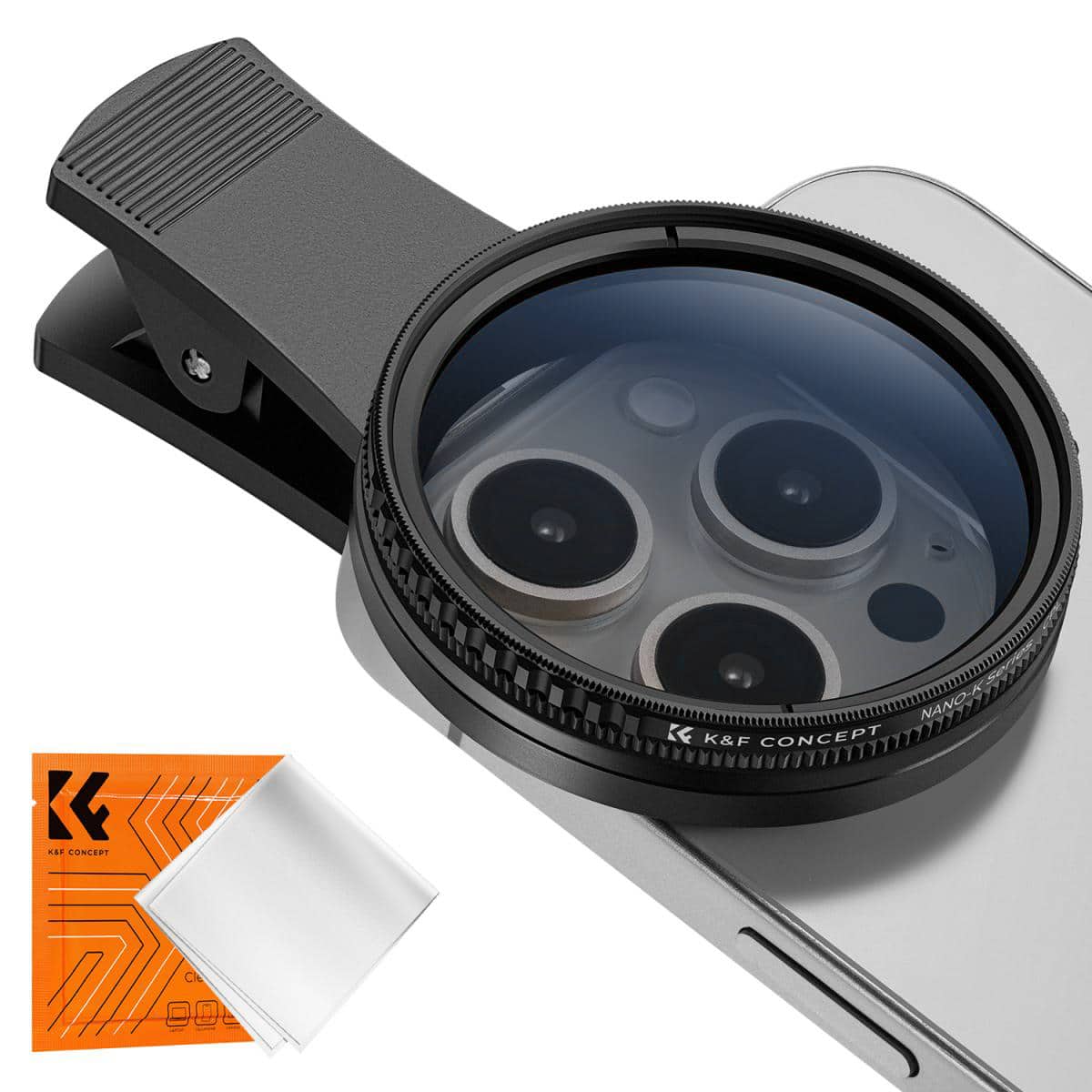
Mobile photography has matured to the point where sensor quality alone no longer defines the ceiling of what you can capture. The bottleneck has shifted: computational processing can only do so much when the light entering the lens is already compromised by glare, haze, or washed-out colour. A circular polariser addresses the problem at the source, before the sensor ever sees it. The K&F Concept Clip-On 52mm CPL Filter, model KF01.2676 from the Nano-Klear series, is built to give smartphone shooters the same optical control that DSLR and mirrorless users have relied on for decades, in a form factor that fits in a jacket pocket.
How Polarisation Changes What Your Sensor Sees
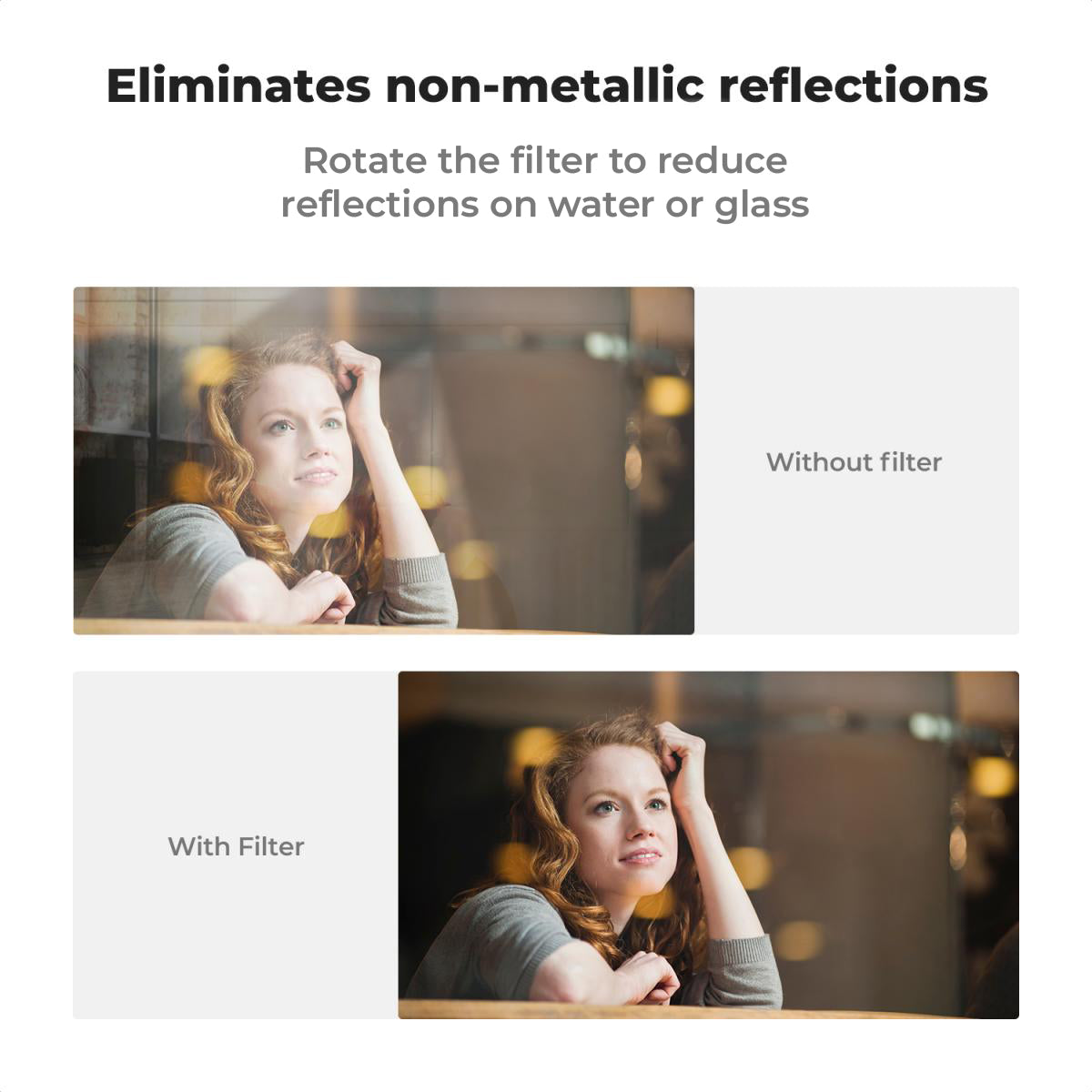
Light reflected off non-metallic surfaces, water, glass, painted metal, wet foliage, becomes polarised, meaning the waves align in a single plane. That alignment creates glare and desaturates colour. A circular polariser blocks those aligned waves while letting the rest of the spectrum through. The result is immediate: reflections on a lake vanish, revealing the rocks beneath. Glare on a shop window disappears, exposing the interior. Wet leaves stop throwing hotspots and show their true green. The effect is not subtle. It is the difference between a snapshot that looks like every other phone photo and an image that reads as intentional.
The filter rotates in its mount, which means you control the angle and intensity of the effect in real time. Twist it one way and the sky deepens to a saturated blue; twist it further and reflections on water drop away entirely. This iterative control matters because polarisation is directional, the optimal angle changes with your position relative to the sun and the surface you are shooting. Being able to dial it in on the fly, while framing the shot, is what separates a working tool from a fixed-effect gimmick.
Colour and Contrast Without Post-Processing
Atmospheric haze scatters light and flattens contrast, especially in landscape and architectural work. A CPL cuts through that scatter, sharpening the distinction between sky and subject. Colours that would otherwise wash out under midday sun hold their saturation. Greens stay vivid, blues stay deep, and the overall image gains a tonal richness that no amount of slider adjustment in post can replicate convincingly. The difference is in the data: when the sensor captures clean, unsaturated light from the start, you have more latitude in editing and a cleaner final file. When it captures polluted light and you try to fix it later, you are working with degraded information.
This is particularly relevant for video. Colour grading can push footage in post, but it cannot recover detail that was never captured. Shooting with a CPL means your b-roll arrives with the contrast and saturation already dialled in, which accelerates your edit and keeps the footage looking natural rather than over-processed.
Nano-Klear Coating: Durability in Real Conditions
The Nano-Klear coating is a multi-layer treatment that addresses the practical realities of outdoor shooting. It is scratch resistant, which matters when the filter lives in a bag with keys, lens caps, and other hard objects. It is water repellent, so rain beads up and rolls off rather than spreading into a film that ruins the shot. It is oil and fingerprint resistant, which means smudges from handling wipe away cleanly with the included microfibre cloth, leaving no residue. These are not luxury features; they are baseline requirements for gear that gets used rather than babied.
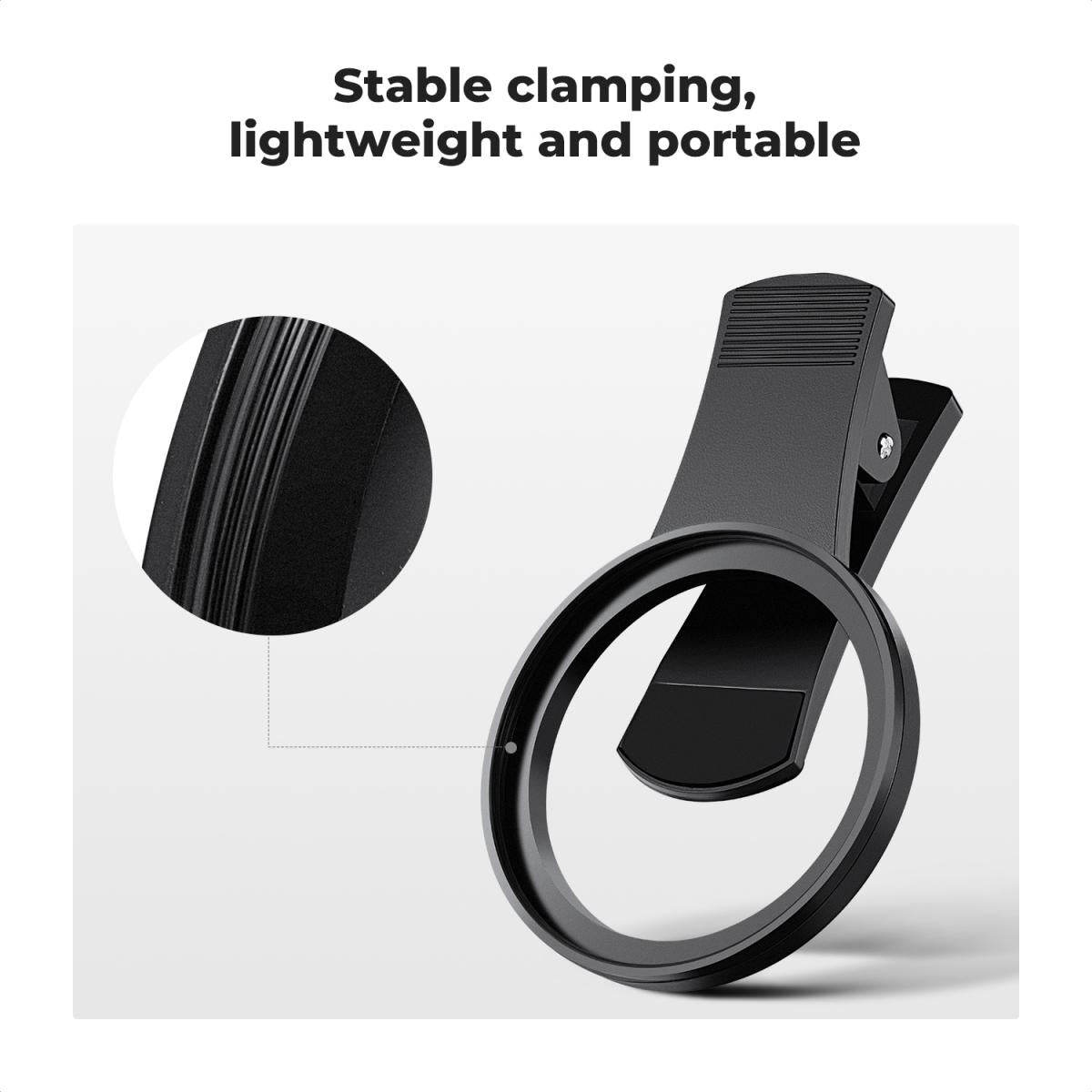
The frame is machined from aluminium alloy, which keeps the weight at 29 grams while providing enough rigidity to protect the optical glass. The construction is straightforward: a rotating outer ring holds the polarising element, and the inner ring threads onto the 52mm mount or clips onto your phone. No moving parts to fail, no electronics to drain a battery. It is a mechanical solution to an optical problem, and that simplicity is an asset.
Clip-On Design and Alignment
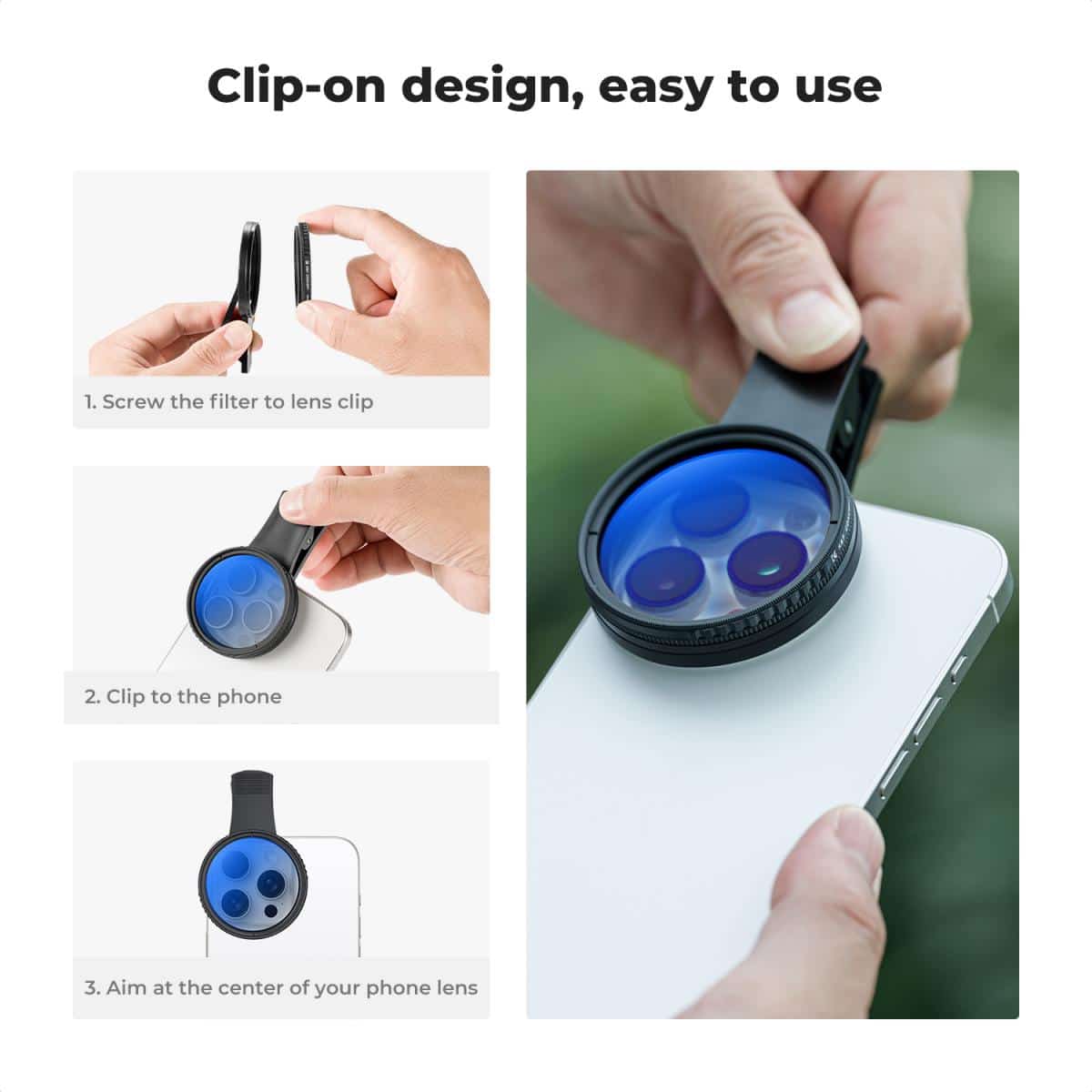
The universal clip attaches to any smartphone via a spring-loaded clamp lined with non-slip rubber pads. The pads grip without scratching, and the clamp opens wide enough to accommodate most phone cases. Alignment is manual: you position the filter over the primary lens and adjust until it is centred. This matters more on multi-lens phones, where misalignment can cause vignetting or soft edges. The process takes five seconds once you have done it a few times, and the rubber pads hold the filter stable once it is in place.
One constraint: the 52mm diameter works for most current and recent-generation smartphones, but the very latest models with oversized lens arrays, iPhone 16 and newer, may require the larger 67mm version for full coverage. If you are shooting on a phone released in the past two years that is not a flagship with a triple-lens cluster, the 52mm will cover the lens completely. If you are on the cutting edge of phone hardware, check the lens diameter before ordering.
The 52mm thread is a standard size in the camera world, which means this filter is not limited to phone use. Screw it onto any DSLR or mirrorless lens with a 52mm filter thread and it performs identically. For shooters who work across devices, phone for social content, mirrorless for client work, this cross-compatibility eliminates redundancy. One filter, multiple systems. That is efficient kit management.
Stacking and Modular Workflow
The 52mm thread also enables filter stacking. Screw the CPL onto an ND filter and you can cut glare while also reducing light transmission for long-exposure effects in bright conditions. Stack it with a UV filter for lens protection plus polarisation. The thread pitch is standard, so it mates cleanly with other 52mm filters without binding or cross-threading. This modular approach gives you the flexibility to combine effects without carrying a separate filter for every scenario.
Stacking does add thickness, which can cause vignetting on wide-angle lenses. On a phone, where the lens is typically equivalent to a 24-28mm field of view, stacking two filters is usually fine. Three or more and you risk seeing the filter edge in the frame. Test it before the shoot if you are planning to stack.
What is Included
The package contains the filter, a rigid plastic carry case, and a microfibre cleaning cloth. The case is not padded, but it is rigid enough to prevent the filter from being crushed in a bag. The cloth is standard microfibre, soft enough not to scratch the coating, effective enough to remove oils and dust. These are not premium accessories, but they are functional, and they ship with every unit. No separate purchases required to start using the filter.
Dimensions are 90 × 58 × 27mm when the clip is attached, which means it fits in a cargo pocket or the side pocket of a camera bag. At 29 grams, it adds no perceptible weight. You can carry it on every shoot without thinking about it, which is the point. Gear that stays home because it is too bulky or too fragile does not get used.
When It Matters Most
A CPL is not a universal fix. It does nothing for artificial light, and it has minimal effect on metallic reflections. Its value is highest in outdoor shooting where natural light dominates: landscapes with water or wet surfaces, architecture with glass facades, foliage under midday sun, any scene where haze or glare is flattening the image. If you shoot indoors under controlled lighting, you will rarely need it. If you shoot outdoors in variable conditions, it becomes a go-to tool.
The rotational adjustment is critical because polarisation is angle-dependent. At 90 degrees to the sun, the effect is strongest. Shooting directly into or away from the sun, the effect is minimal. This is not a limitation of the filter; it is how polarised light works. Knowing this means you can predict when the filter will help and when it will not, which saves time on location.
For video shooters, the CPL solves the same problems it solves for stills: glare on water, washed-out skies, haze in wide shots. The difference is that you cannot fix these issues in post without introducing artefacts or unnatural colour shifts. Capturing clean footage from the start is faster and yields better results, especially if you are delivering content on a tight turnaround.
The K&F Concept Clip-On 52mm Circular Polariser Nano-Klear Filter KF01.2676 is a field-proven solution for mobile shooters who need optical control beyond what software can provide. It cuts glare, deepens colour, and sharpens contrast at the point of capture, which means less time in post and cleaner final files. The Nano-Klear coating keeps it usable in real conditions, the 52mm thread makes it cross-compatible with traditional camera systems, and the clip-on design ensures it works with virtually any smartphone. If your workflow involves outdoor shooting and you have hit the ceiling of what computational photography can deliver, this filter is the next logical step.