




K&F Clip-On 67mm Variable ND2–32 Filter for Mobile Phones
Modern smartphone imaging has reached impressive technical heights, yet one core photographic challenge remains: you cannot reduce the amount of light entering the lens before it hits the sensor. This clip-on variable neutral density filter addresses that limitation directly, delivering the kind of exposure flexibility that professional camera systems have relied on for decades. By controlling light optically rather than computationally, you gain the ability to shoot with slower shutter speeds or wider apertures in bright conditions without overexposing your frame. The result is cleaner footage, more natural motion rendering, and creative latitude that software adjustments simply cannot replicate.
How Variable Density Changes Your Shooting
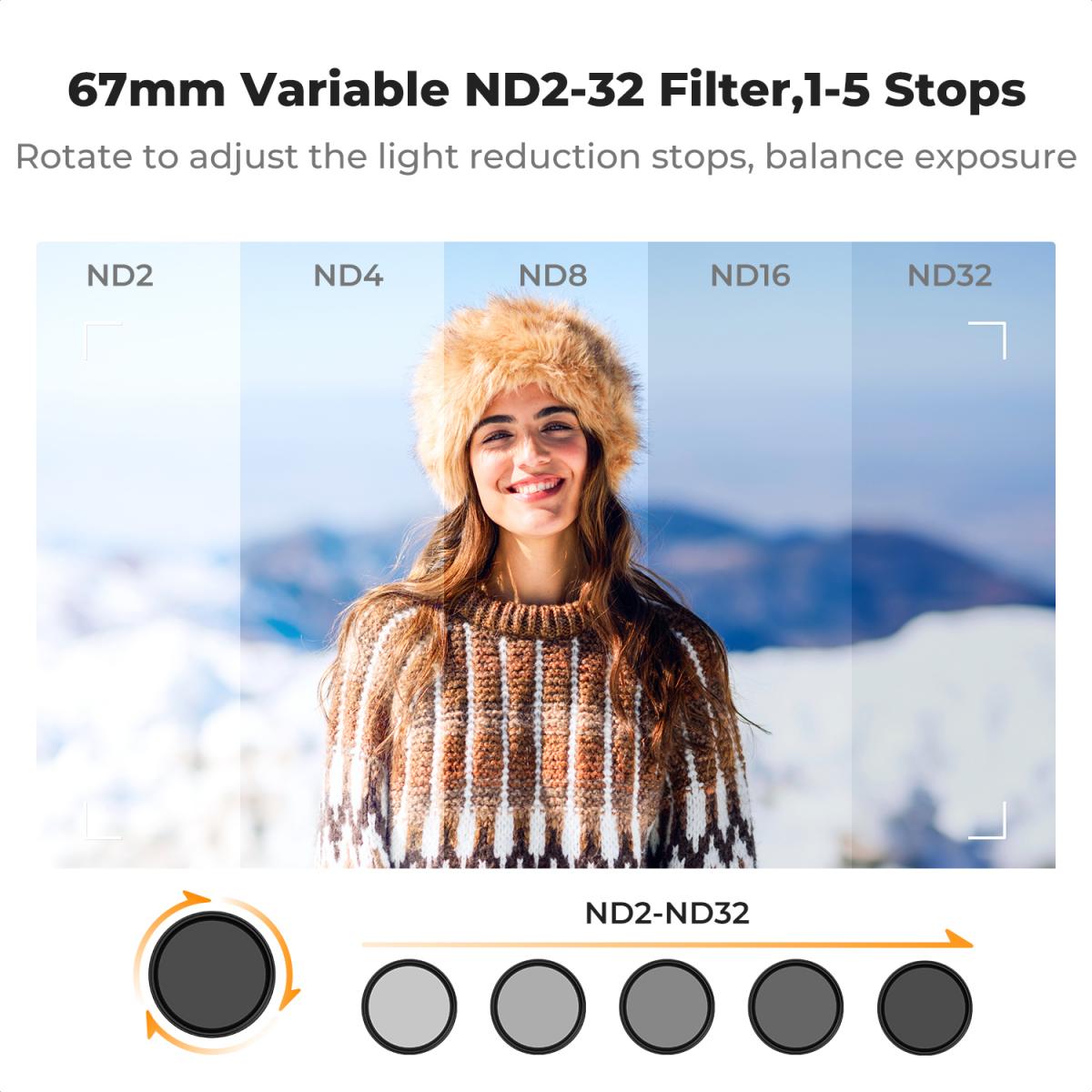
A variable ND filter operates by rotating two polarising elements to progressively reduce light transmission. The ND2-32 range offered here translates to between one and five stops of light reduction, adjustable in real time as you monitor your screen. For video work, this becomes essential when following the 180-degree shutter rule, which dictates that your shutter speed should be roughly double your frame rate to achieve smooth, cinematic motion. Under harsh midday sun, your phone's automatic exposure often forces shutter speeds far too fast, creating staccato, unnatural movement. Dialling in ND16 or ND32 brings your shutter back into the correct range, restoring the fluid motion characteristic of professional footage. Still photographers benefit equally: waterfalls rendered as silky flows, cloud movement softened across the sky, or pedestrians blurred into streaks of motion all require longer exposures that bright daylight would otherwise prohibit. By managing light before it reaches the sensor, you preserve your phone's dynamic range and avoid the noise or artefacts that aggressive digital compensation introduces.
Engineered for Multi-Lens Camera Arrays
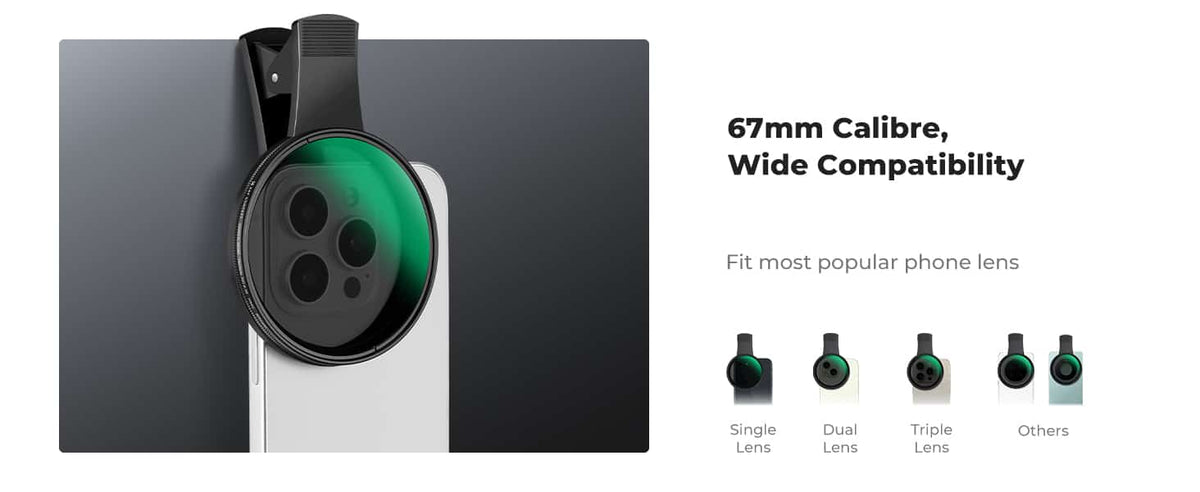
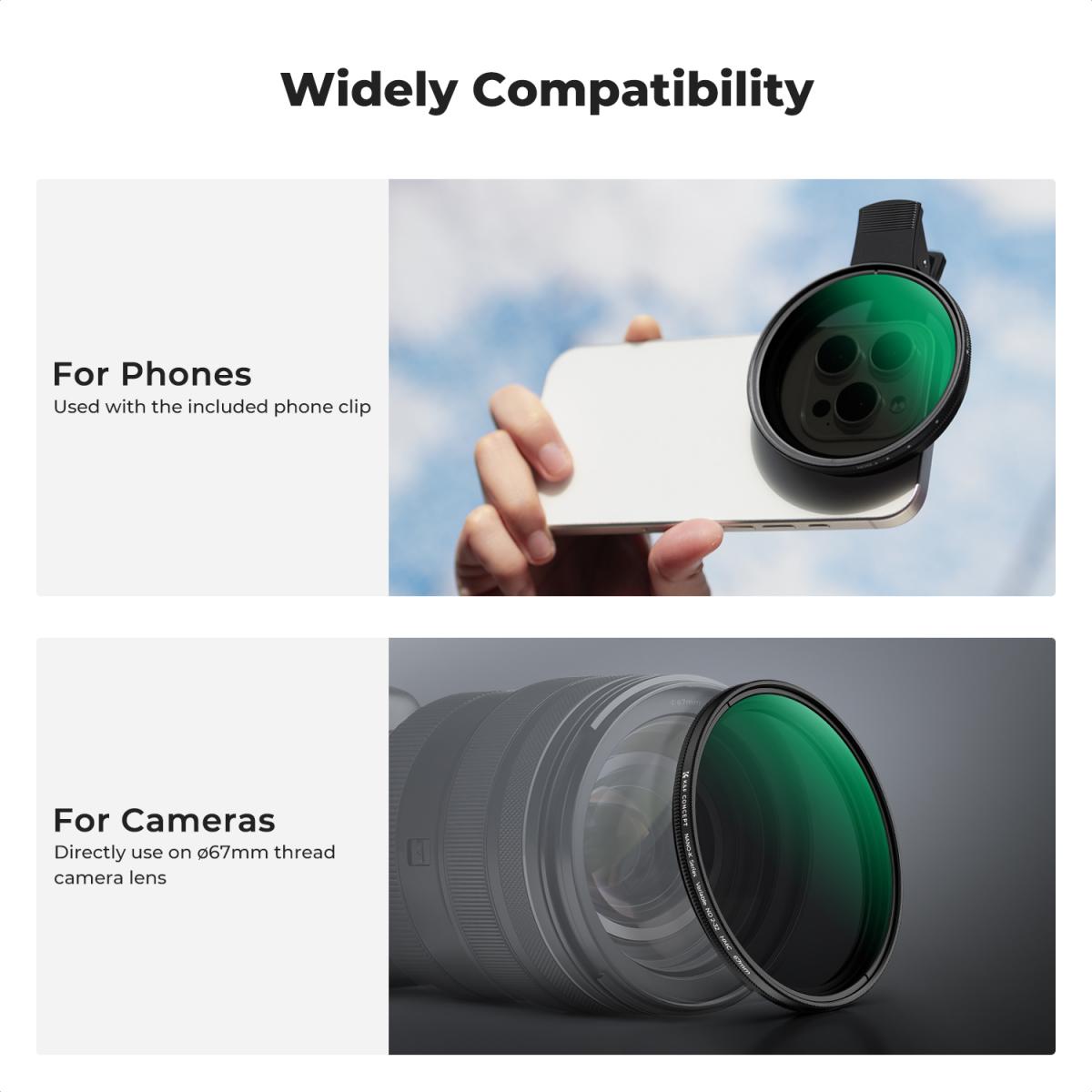
The 67mm diameter is not arbitrary. Modern flagship phones house increasingly complex camera modules with ultra-wide, main, and telephoto lenses arranged in tight clusters. A smaller filter risks vignetting or partial coverage, forcing you to reposition the clip every time you switch lenses mid-shoot. This larger format covers the entire array cleanly, allowing seamless transitions between focal lengths without interrupting your workflow. The universal clip mechanism accommodates virtually any smartphone, from current releases to older models, with rubber padding that protects the device surface while maintaining secure contact. The clip's tension is calibrated to hold the filter flat and parallel to the lenses, preventing edge softness or misalignment that would degrade image quality. Whether you are filming a travel vlog, capturing architectural details, or shooting run-and-gun documentary content, the filter stays stable and unobtrusive.
Optical Construction and Surface Treatment
Japanese optical glass forms the filter's foundation, chosen for its neutral colour transmission and high resolving power. Inferior glass introduces colour casts or softens fine detail, undermining the very sharpness modern phone sensors are capable of capturing. The Nano-K multi-layer coating applied to both surfaces serves two functions: it minimises internal reflections that cause veiling flare and washed-out contrast, and it repels moisture, dust, and fingerprints. This matters particularly when shooting near water, in humid environments, or during extended sessions where you frequently adjust the density ring. The coating keeps the glass cleaner longer and makes maintenance simpler, ensuring consistent optical performance across varied conditions.
Practical Handling and Field Use
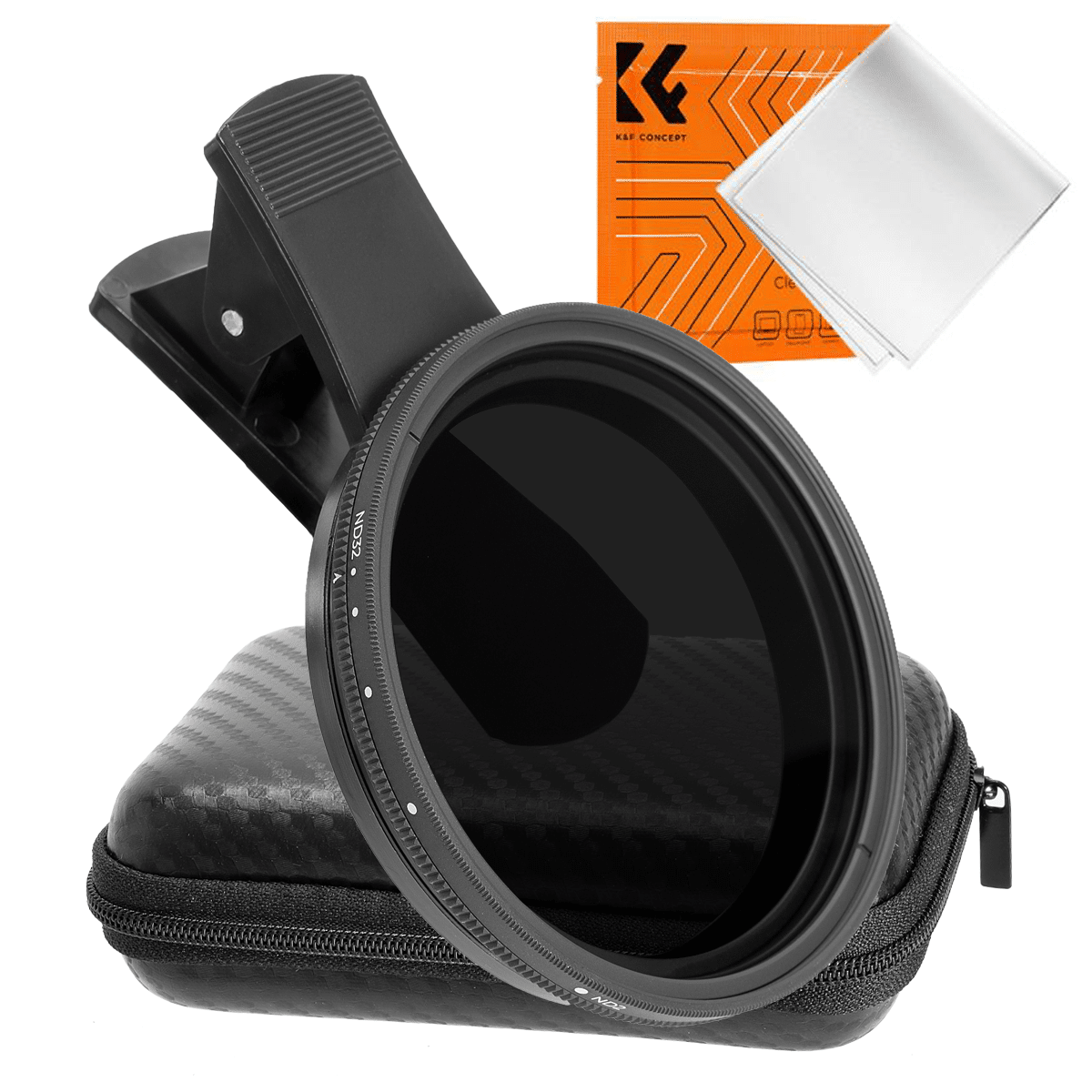
Despite its 67mm size, the filter remains light enough to carry without adding noticeable bulk to your mobile kit. The rotating ring turns smoothly with enough resistance to hold your selected density setting, yet not so stiffly that fine adjustments become awkward. This balance is critical when you are making exposure corrections on the fly or responding to shifting light as clouds move across the sun. The clip mechanism is built from durable materials designed to withstand repeated attachment and removal, with stable tension that does not weaken over time. A hardshell carry case protects the filter during transport, preventing scratches or impact damage to the glass surfaces. These details collectively ensure the filter remains a reliable tool rather than a fragile accessory requiring constant care.
Setting Up and Adjusting Density
Attachment is straightforward: position the clip over your phone's camera module, confirm all lenses sit within the filter's coverage area, and rotate the front ring to select your desired light reduction. For video shooters working under bright sunlight, start around ND8 or ND16 and adjust until your shutter speed aligns with your frame rate for natural motion rendering. Still photographers tackling long exposures should experiment with ND16 or ND32, observing how water, clouds, or moving subjects respond to extended shutter times. Because the filter controls light optically, your phone's image stabilisation and HDR processing continue to function normally, preserving the computational benefits of modern smartphone imaging while adding manual control over exposure.
Creative Possibilities Beyond Basic Exposure
Variable neutral density unlocks creative techniques that smartphone cameras rarely explore. Urban photographers can introduce motion blur to pedestrian traffic, conveying energy and movement within static architectural frames. Coastal shooters smooth wave action into glassy surfaces while retaining sharp detail in rocks and shoreline textures. Landscape work benefits from balanced exposures that prevent blown highlights in skies without crushing shadow detail, even under harsh midday conditions. Content creators filming outdoors gain the ability to maintain shallow depth of field and cinematic motion rendering without overexposing their subjects. The variable nature of the filter encourages experimentation: you can dial density up or down in response to changing light, exploring subtle gradations of exposure that fixed-density filters cannot offer. This fluidity transforms the filter from a problem-solving tool into a creative instrument.
Why Optical Control Matters
Smartphone computational photography has made remarkable advances, yet it operates within inherent constraints. Digital ND simulations or post-processing exposure adjustments cannot replicate the clean, artefact-free results of optically controlled light reduction. When you cut light before it reaches the sensor, you preserve the full tonal range and colour accuracy your phone's imaging pipeline is designed to deliver. Noise remains low, dynamic range stays intact, and fine detail survives processing. The difference becomes particularly visible in challenging scenes: bright skies with intricate cloud detail, reflective water surfaces, or high-contrast environments where computational methods struggle to balance extremes. By managing exposure optically, you work with your phone's strengths rather than pushing its processing limits.
Long-Term Value and Expandability
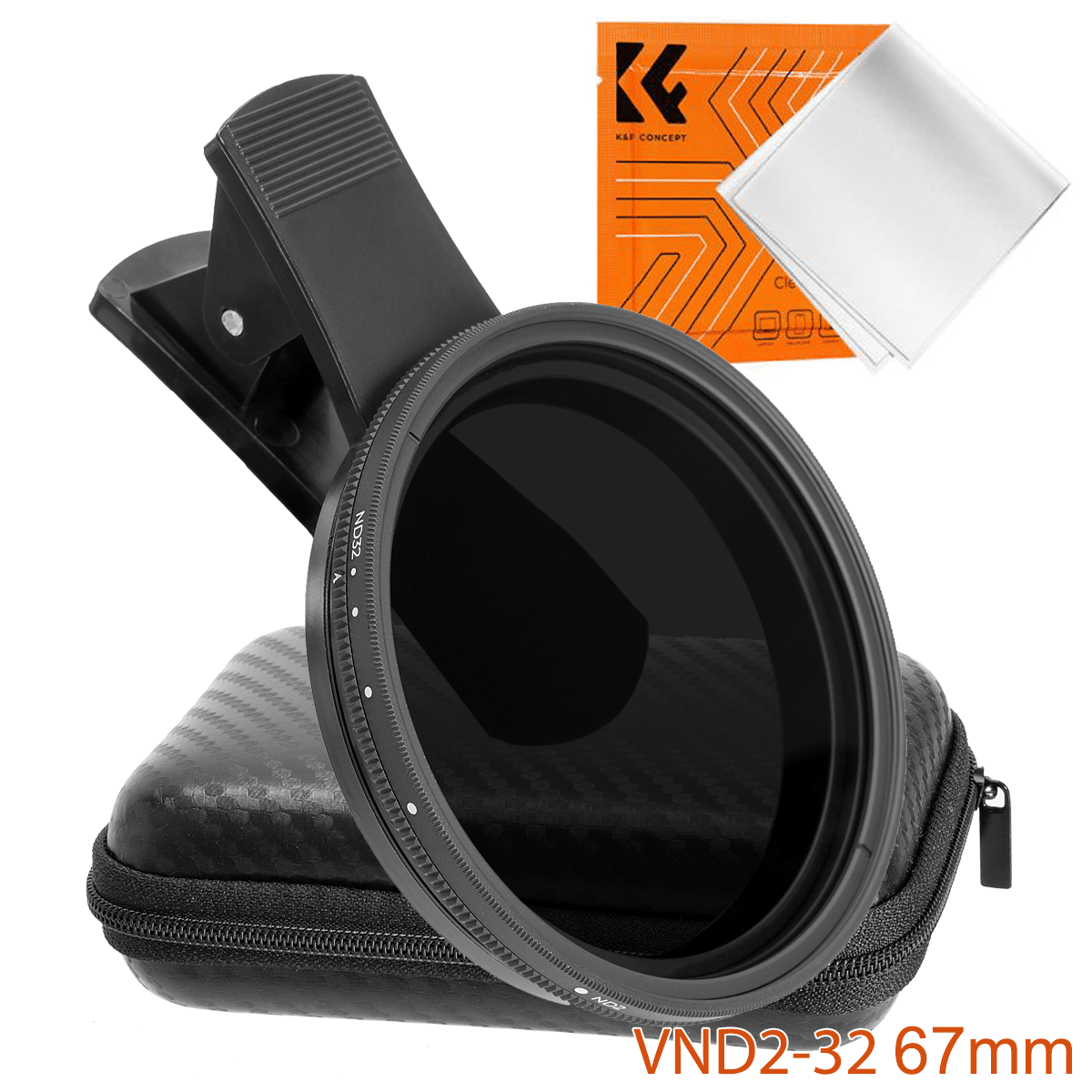
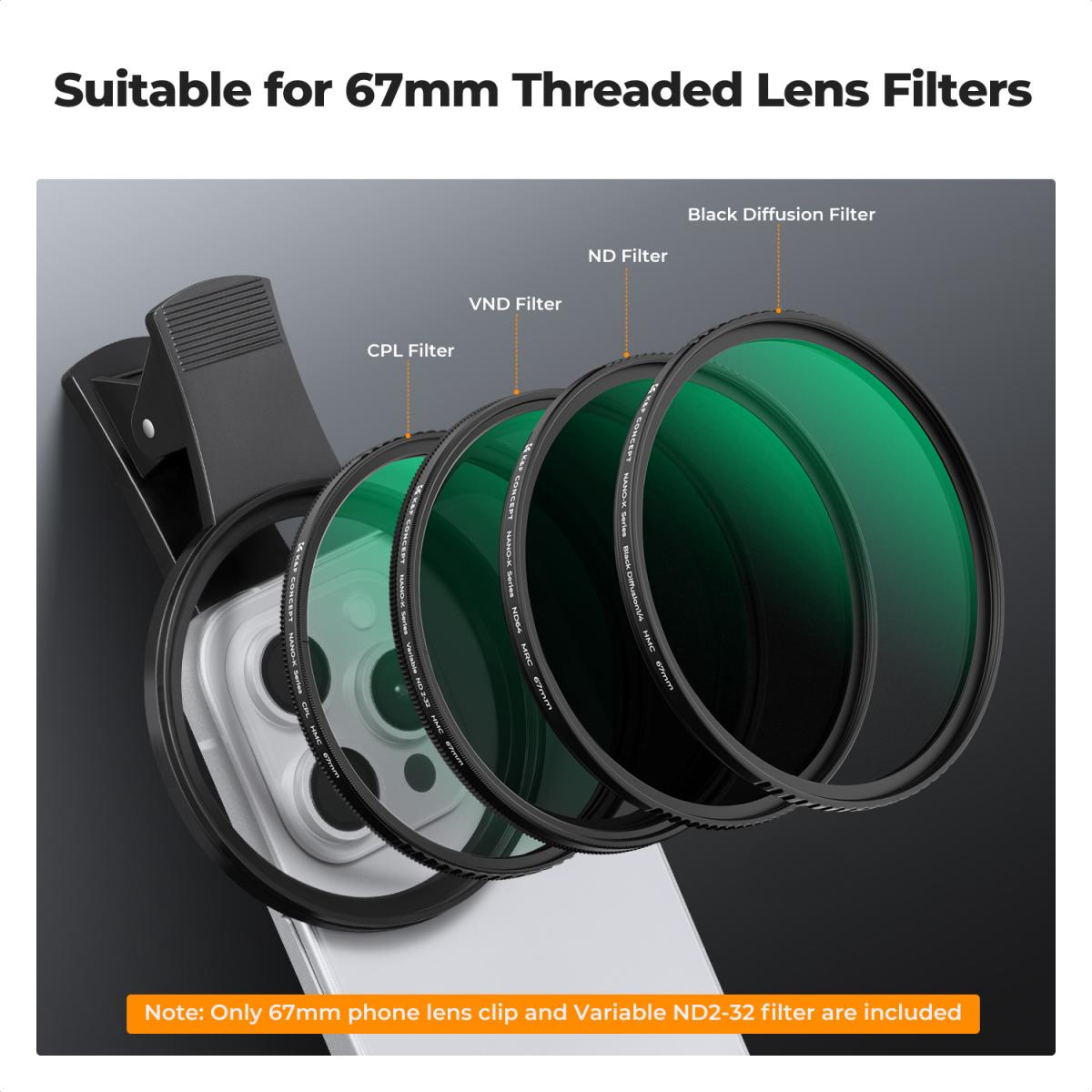
This system is built for sustained use rather than disposable convenience. The optical glass and coating are designed to maintain clarity across years of regular shooting, and the clip mechanism's durability ensures reliable attachment through countless sessions. The 67mm thread also accepts any additional 67mm filter, allowing you to expand your mobile kit with polarisers, graduated filters, or other optical tools as your needs evolve. The included protective case and cleaning cloth support practical field use, preventing damage during transport and simplifying maintenance. These elements collectively position the filter as a long-term investment in your mobile imaging capability rather than a single-use accessory.
Who Benefits Most
This filter serves anyone who treats smartphone photography and videography as a serious creative pursuit. Travel filmmakers gain consistent exposure control across unpredictable lighting conditions. Landscape photographers achieve the long-exposure effects that define their aesthetic. Social media content creators maintain professional-looking footage without relying on post-production fixes. Even casual shooters who simply want better-looking daylight video will appreciate the immediate improvement in motion rendering and highlight control. The barrier to entry is low, the learning curve is gentle, and the results are immediately visible.
The K&F Concept Clip-On Variable ND2-32 Filter brings proven professional technique into the mobile space with thoughtful engineering and solid optical performance. It addresses a genuine limitation of smartphone imaging, expands your creative options, and delivers results that computational methods cannot match. For anyone seeking greater control over exposure and motion rendering, it represents a practical, immediately useful addition to your mobile kit. Add the KF01.2901V2 to your order and discover what your smartphone camera can achieve with proper optical control.