




K&F Clip-On 67mm Circular Polariser Filter for Mobile Phones
Mobile phone cameras have become powerful enough to rival dedicated equipment in many situations, yet they still lack one crucial advantage: optical control over reflected light. That's where this clip-on circular polarising filter changes the equation. By mounting genuine optical glass directly over your phone's lens cluster, you gain the same glare-cutting, colour-enhancing capability that landscape and architectural photographers have relied on for decades, without carrying a separate camera body.
How Polarisation Transforms What Your Phone Sees
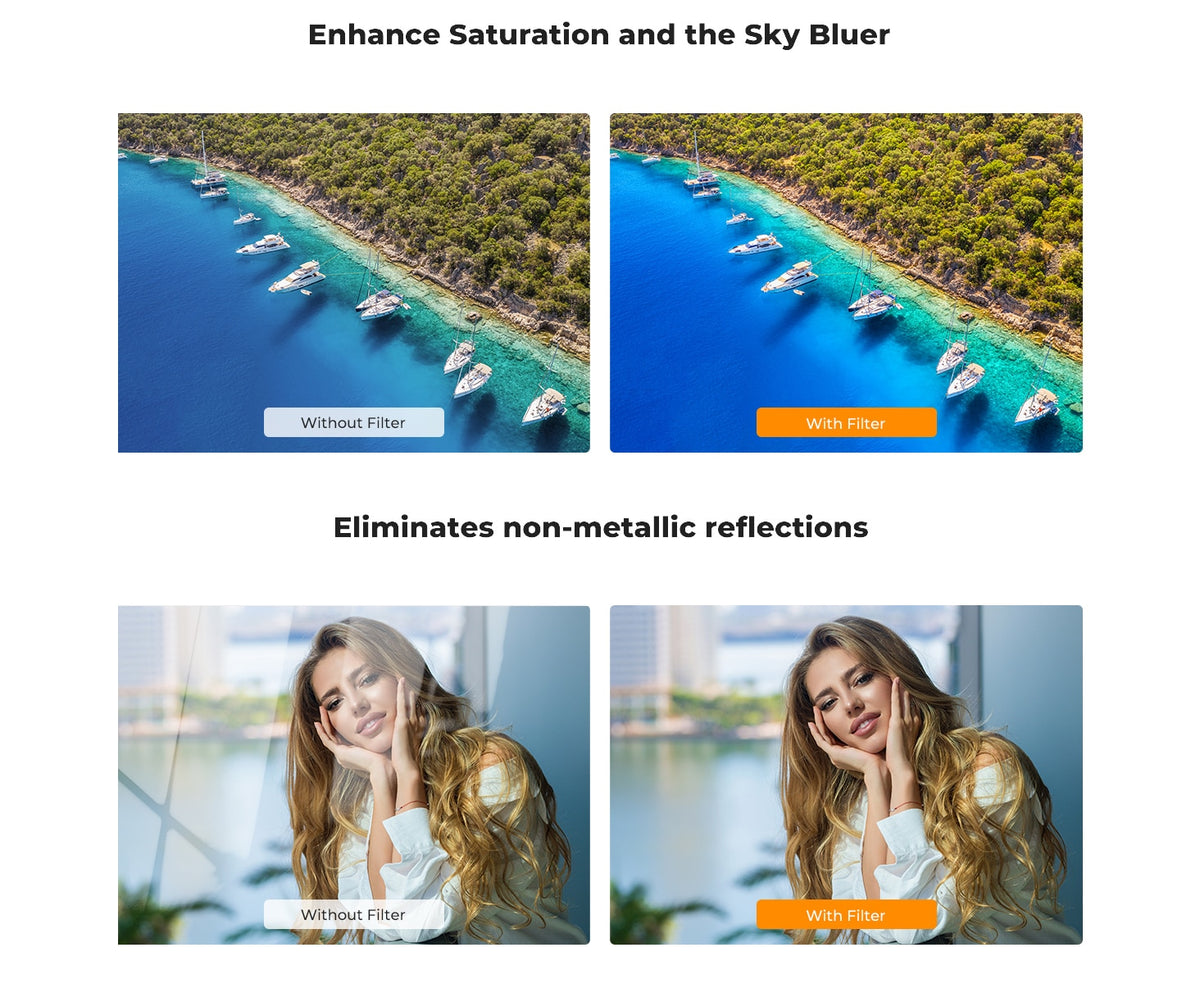
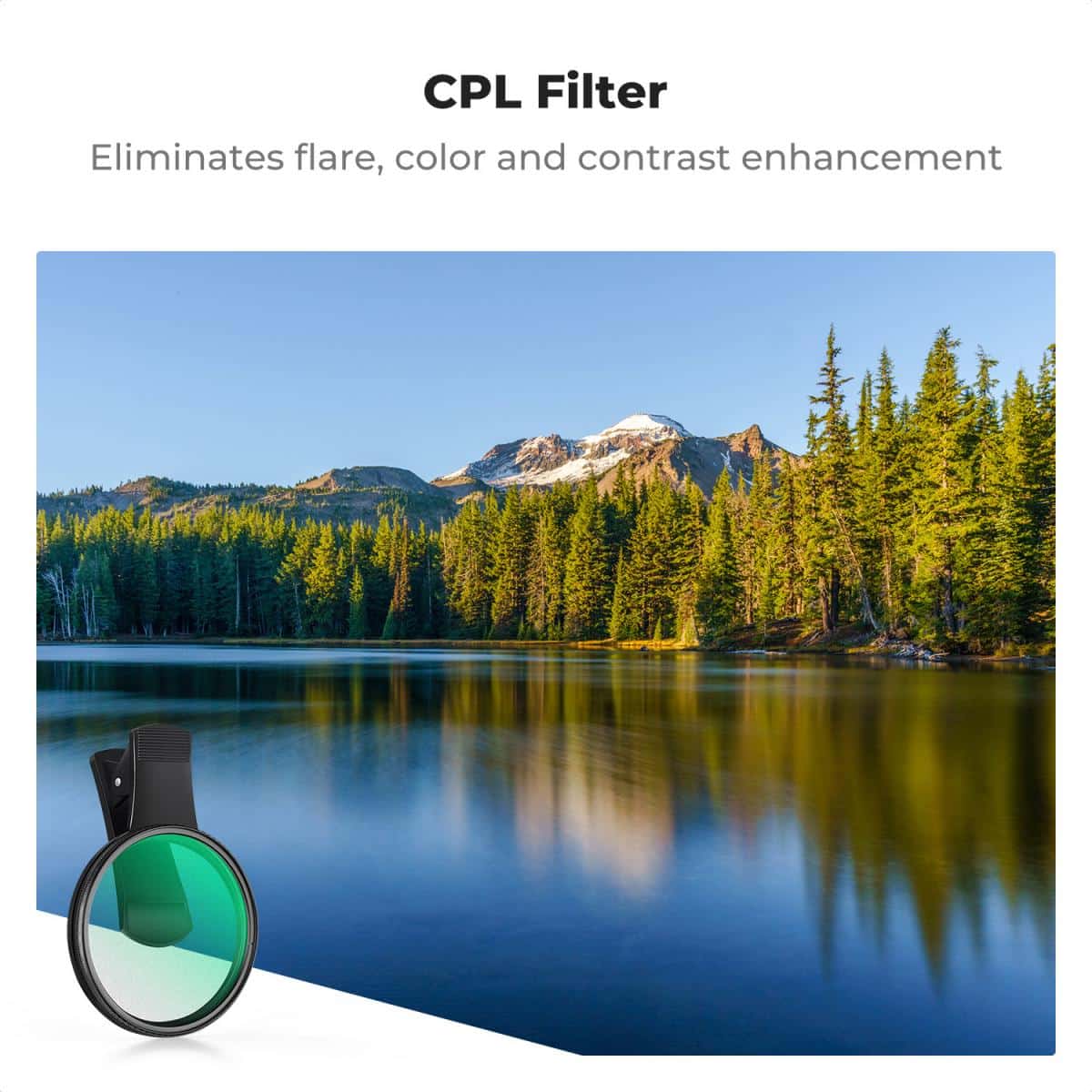
Light reflecting off non-metallic surfaces, water, glass, painted metal, wet leaves, polished stone, becomes polarised, creating glare that washes out colour and obscures detail. A circular polariser blocks that polarised light selectively, letting you see through reflections rather than being stopped by them. Rotate the outer ring while watching your phone's screen and you'll see reflections fade, skies deepen, and colours intensify in real time. The effect is immediate and cannot be replicated in post-processing because the information lost to glare simply isn't captured by the sensor. This filter preserves it at the point of capture.
The difference is most dramatic in high-contrast outdoor scenes. Shoot a lake or river and the surface transforms from a blown-out mirror into a window showing rocks and plant life beneath. Photograph a building with large windows and the interior becomes visible instead of reflecting the sky. Point your phone at a forest after rain and foliage shifts from dull green to saturated, three-dimensional texture. Blue skies turn a deeper, more dramatic shade while clouds gain definition and separation. These aren't subtle tweaks, they're structural improvements to how the image reads.
Optical Glass Built to Professional Standards
The filter itself is constructed from Japanese optical glass, ground and polished to maintain edge-to-edge sharpness without introducing distortion or colour casts. A 28-layer multi-coating ensures high light transmission so your phone's sensor receives the full tonal range it's designed to capture, while internal anti-reflective layers prevent flare and ghosting when shooting into bright light sources. The outer Nano-K coating repels water, oil and dust, which matters when you're working in humid conditions, near spray, or handling the filter between shots. A single wipe with a microfibre cloth clears smudges without streaking, keeping the glass clean enough for the next frame.
Unlike cheap acrylic alternatives that soften detail and introduce chromatic fringing, this glass maintains the resolving power of modern phone sensors. If your device shoots 48MP or 108MP files, you'll still see that resolution in the final image. If you're recording 4K or 8K video, the filter won't degrade sharpness or introduce unwanted colour shifts during pans.
Designed for Multi-Lens Phone Arrays
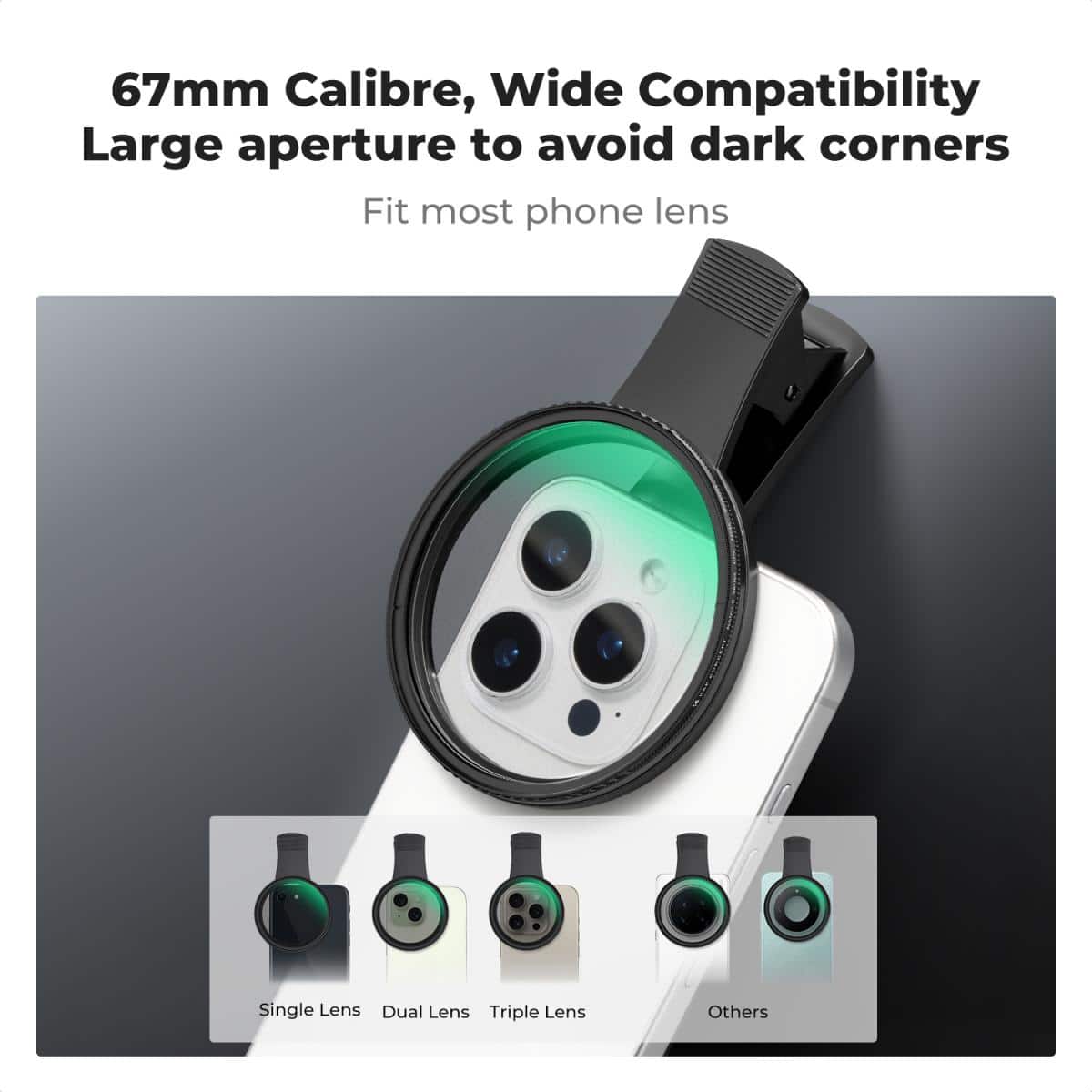
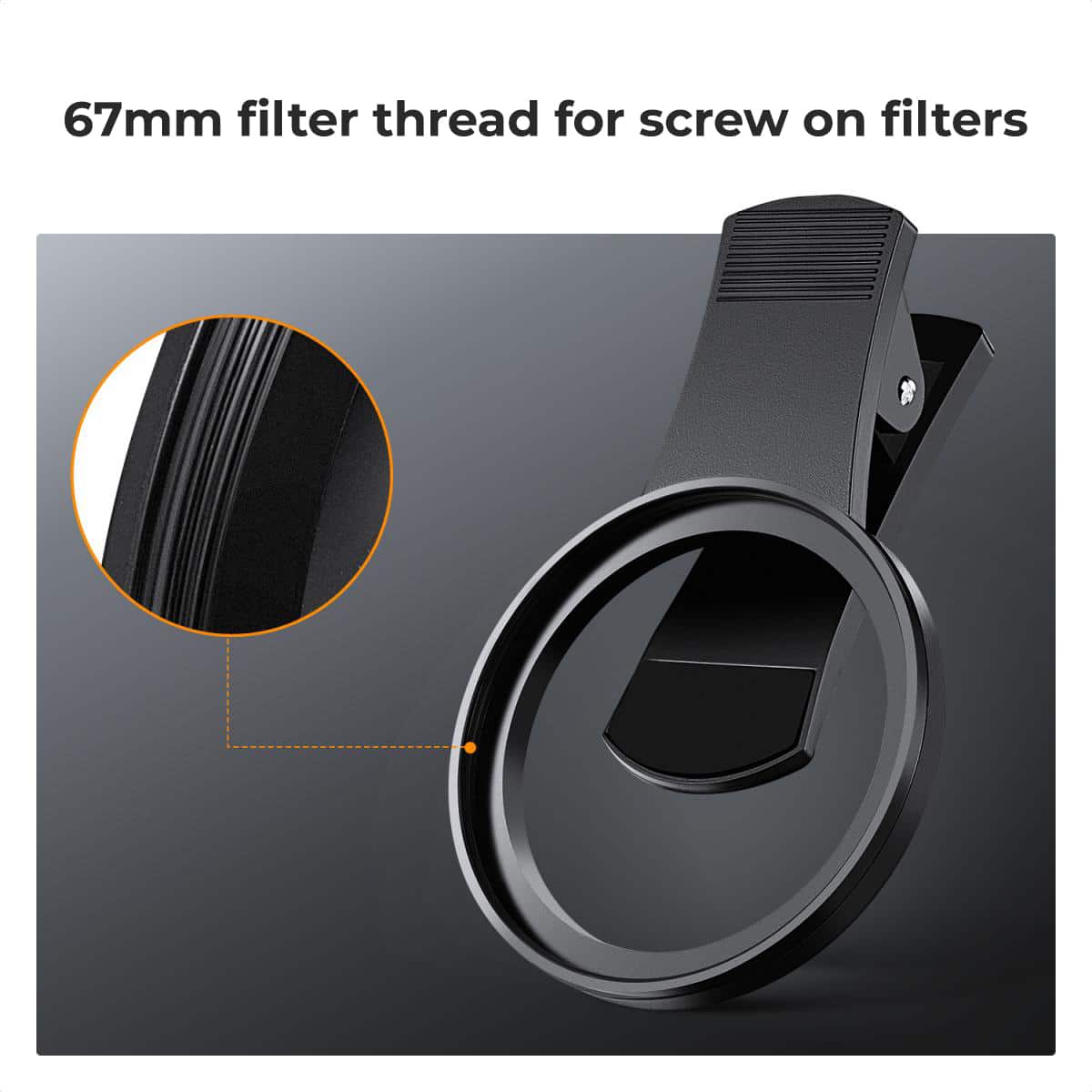
Modern smartphones mount two, three, or even four lenses on the rear panel, often arranged in a cluster. This filter's 67mm diameter is large enough to cover that entire array, so you can switch between wide, ultra-wide, and telephoto lenses without repositioning the clip. The universal mount grips securely without scratching the phone's body, and the non-slip pad ensures it stays put even when you're shooting handheld in motion, walking through a market, leaning over a railing, or tracking a subject across uneven ground.
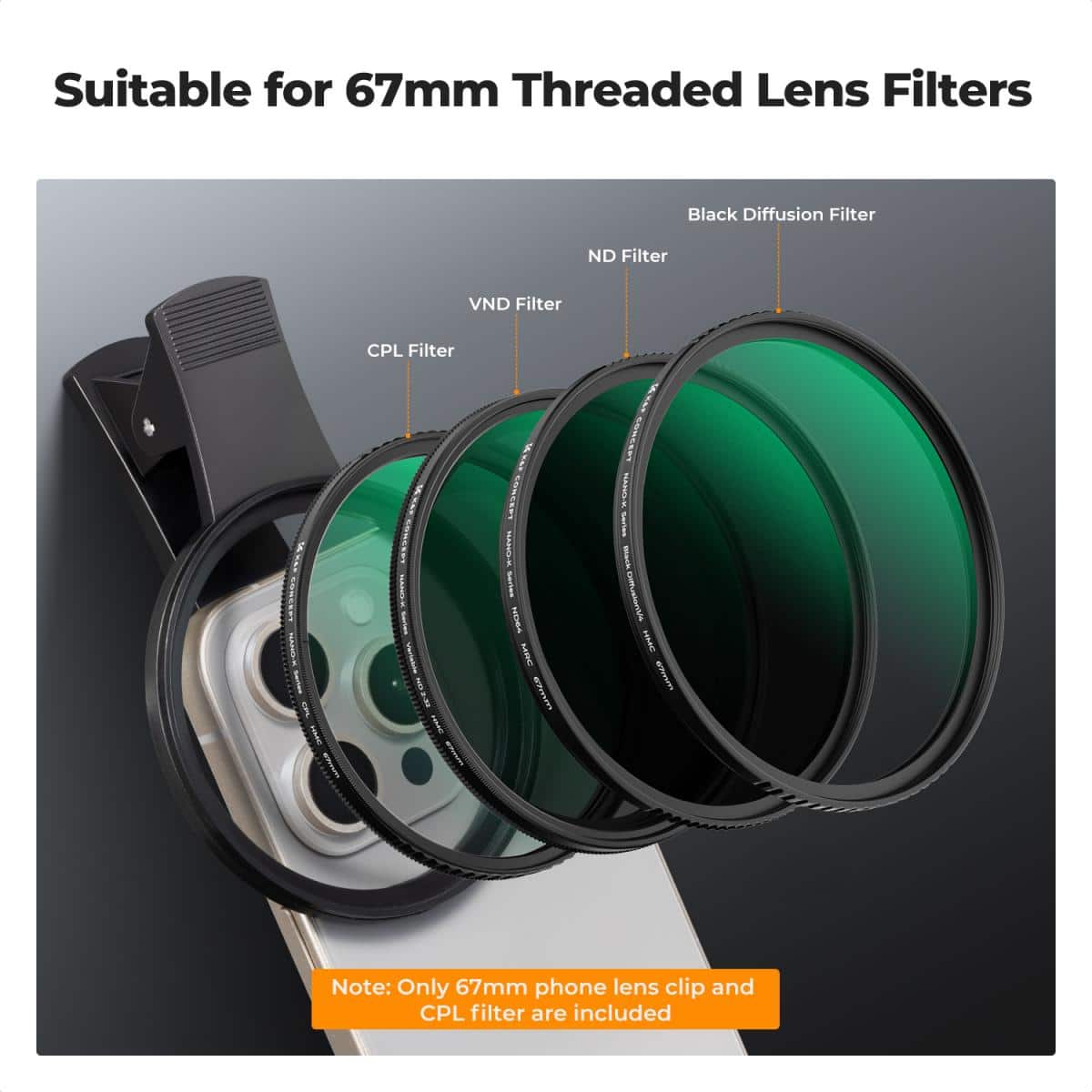
The 67mm thread also means you can stack other glass if your workflow calls for it: an ND filter for long-exposure water shots, a diffusion filter for portraits, or a second polariser for cross-polarisation effects. The slim profile keeps the overall bulk minimal, so the setup still fits in a jacket pocket or small sling bag.
Where the Filter Earns Its Place
Architectural and travel photography benefit immediately. Shooting through train or car windows becomes viable because you can dial out the interior reflections that normally ruin the shot. Capturing storefronts, museum glass, or aquarium tanks shifts from frustrating to straightforward. Urban scenes with wet pavement after rain gain contrast and colour instead of looking flat and grey.
For nature and landscape work, the filter does two things simultaneously: it cuts atmospheric haze (which is partially polarised) for cleaner distant detail, and it increases saturation in vegetation without the artificial look of a digital saturation slider. Coastal scenes, mountain vistas, and forest trails all render with more depth and separation between elements. Skies stay blue rather than fading to white near the horizon.
Content creators shooting product videos, car reviews, or lifestyle reels will notice fewer distracting reflections on glossy surfaces, which means less time masking and retouching in post. The filter also reduces the need for aggressive colour grading, because the colours captured in-camera are already closer to what you want in the final edit.
Even macro and close-up work improves. Wet surfaces, flower petals after rain, textured bark, insects on leaves, lose their blown-out highlights and reveal underlying colour and structure. Reflections that normally obscure fine detail simply aren't there, so the subject reads clearly without needing to reposition your light source or wait for conditions to change.
How to Use It in the Field
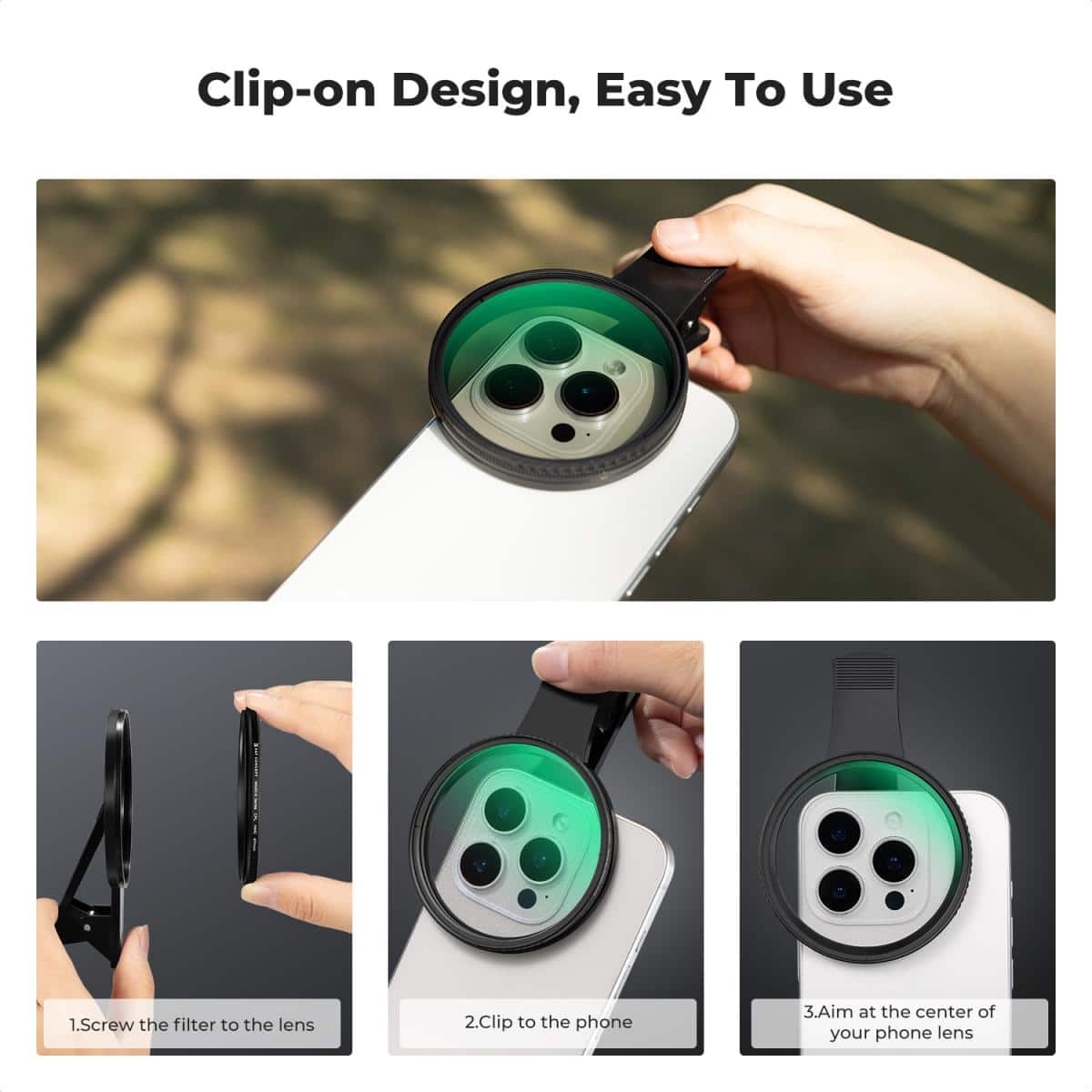
Mount the clip over your phone's lens array, open your camera app, and rotate the filter's outer ring while watching the preview screen. The effect peaks at a 90-degree angle to the light source, so if the sun is directly overhead or behind you, polarisation will be minimal. Side lighting and front lighting produce the strongest results. Once you've dialled in the look you want, shoot normally, the filter stays in position and doesn't interfere with autofocus, exposure metering, or computational photography features like HDR or Night Mode.
Because the filter blocks some light (typically one to two stops), your phone may select a slightly slower shutter speed or higher ISO in dim conditions. In bright daylight this isn't an issue, and the improved colour and contrast more than compensate for the minor exposure shift. If you're shooting video, the light reduction can actually help by preventing your phone from maxing out its shutter speed, which keeps motion rendering smooth and natural.
This circular polariser brings a level of optical control to smartphone photography that was previously out of reach. Whether you're documenting a trip, building a portfolio, or simply want your everyday shots to look less flat and more dimensional, the filter solves problems that no amount of editing can fix after the fact. Order the KF01.2902V2 and give your phone the one upgrade its sensor can't provide on its own.