





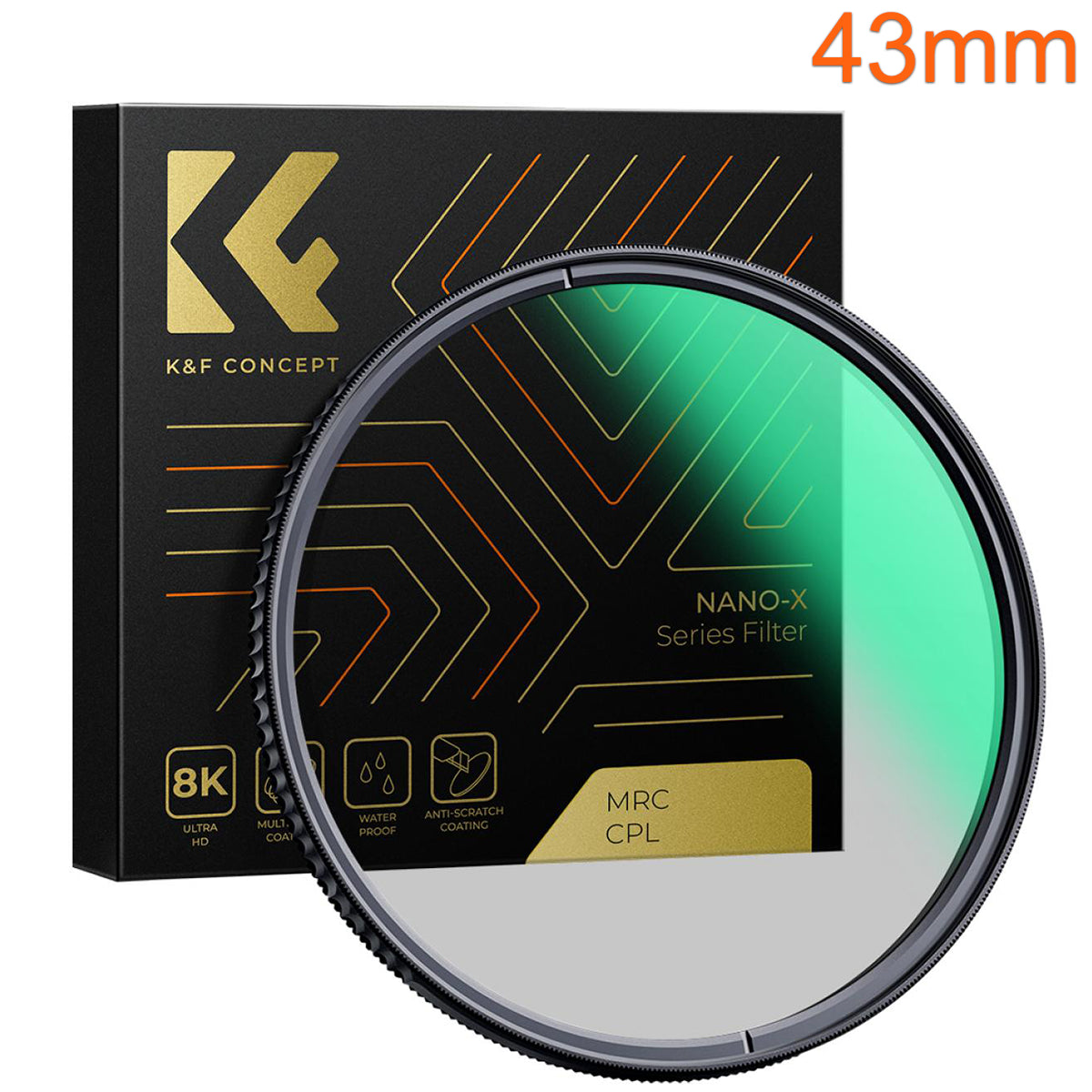
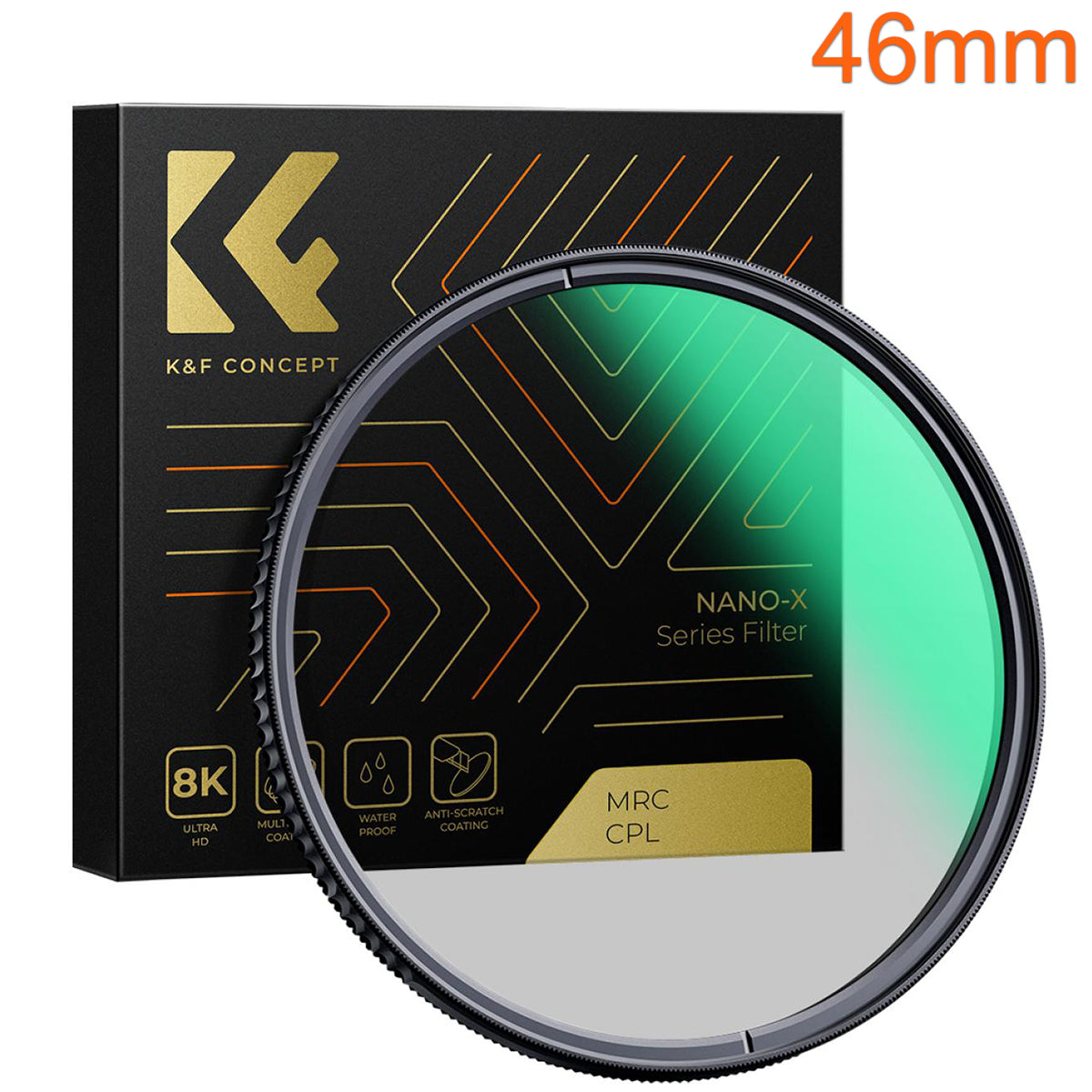
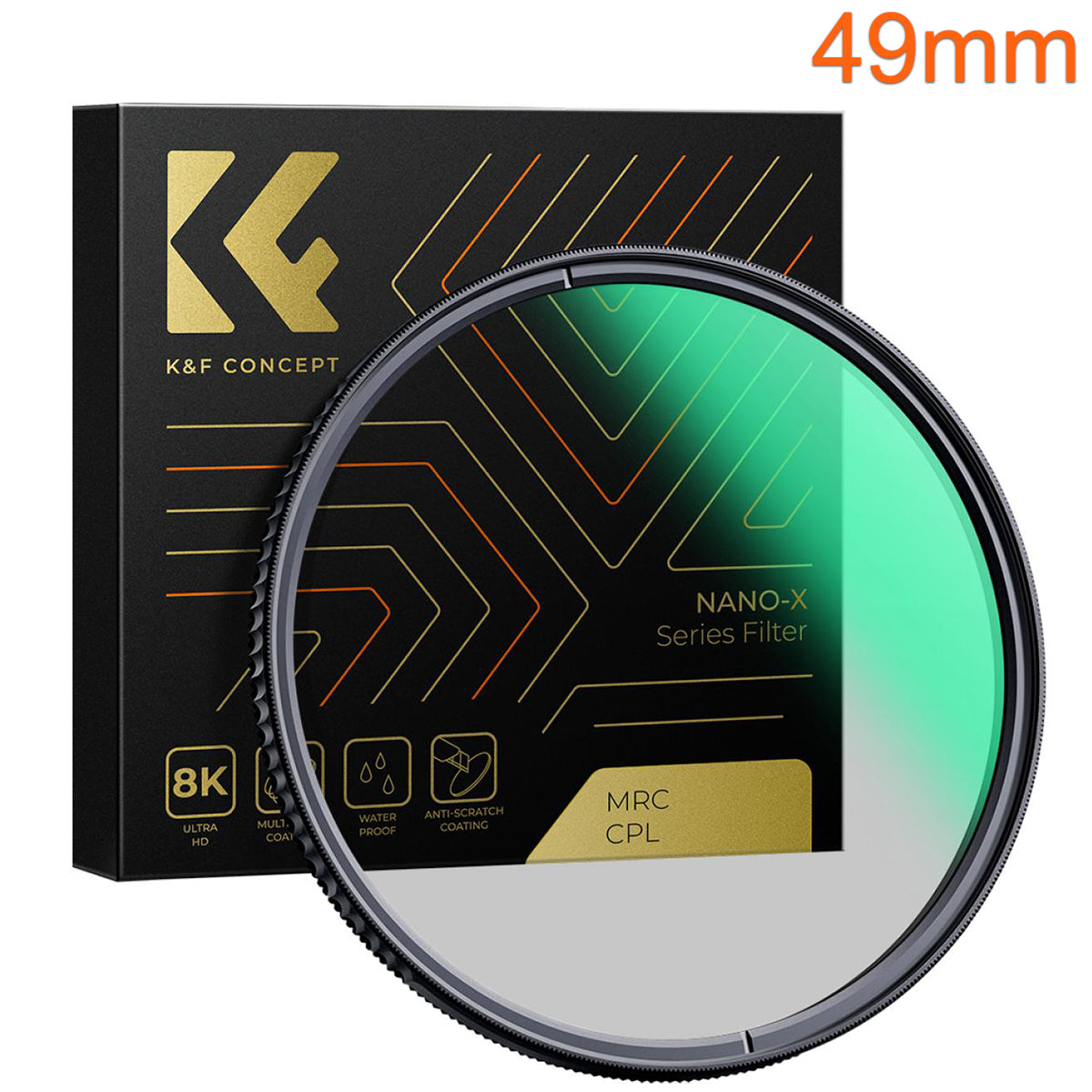
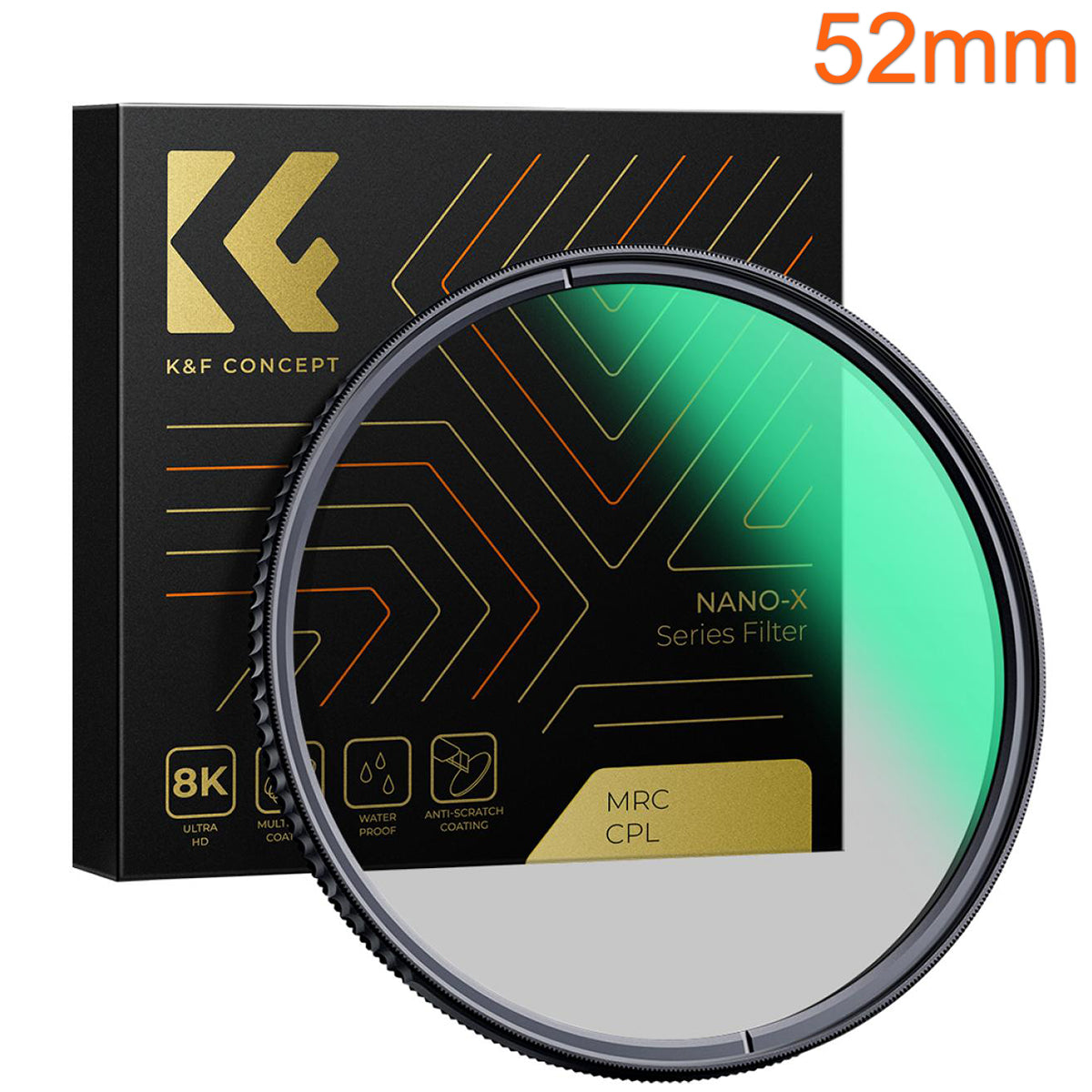
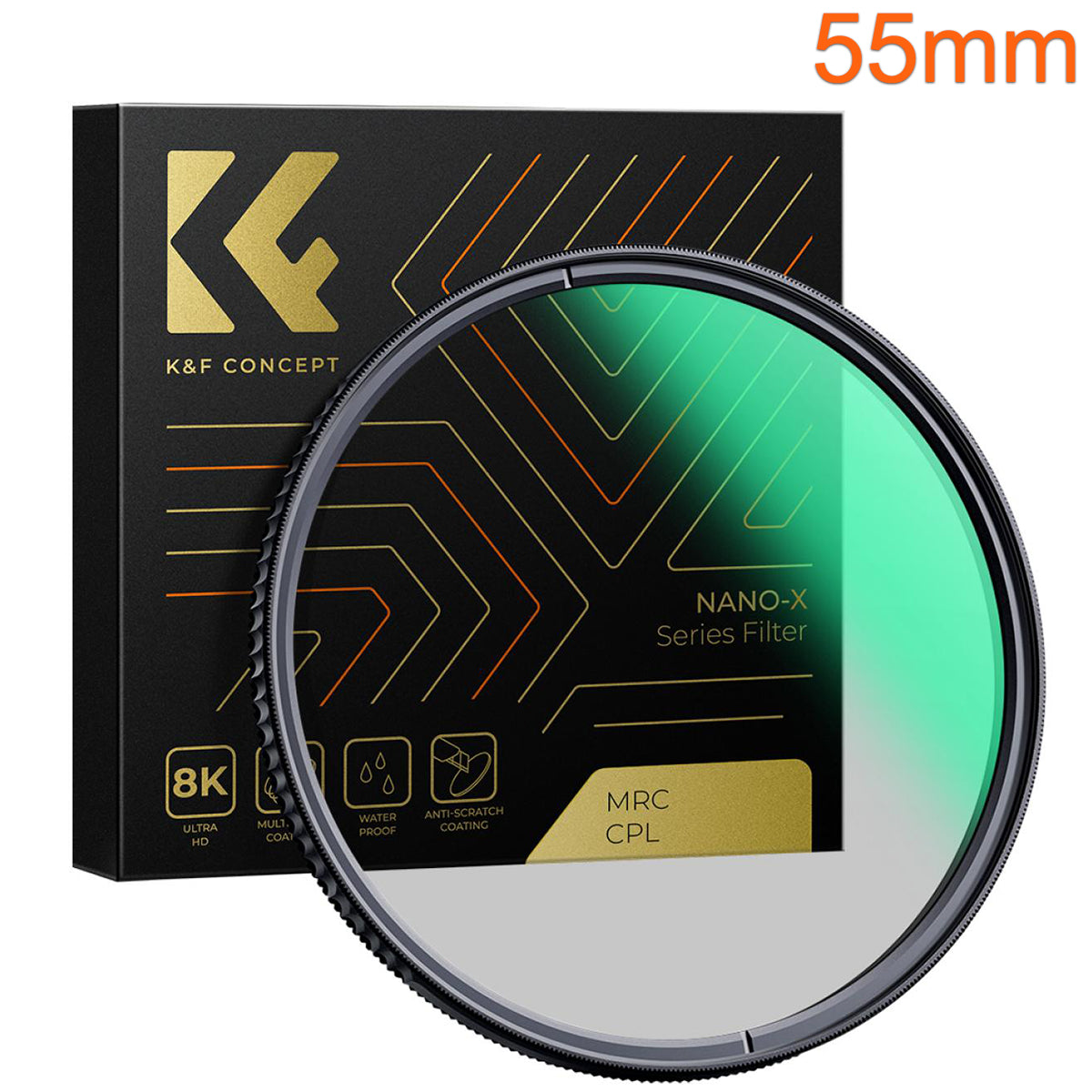
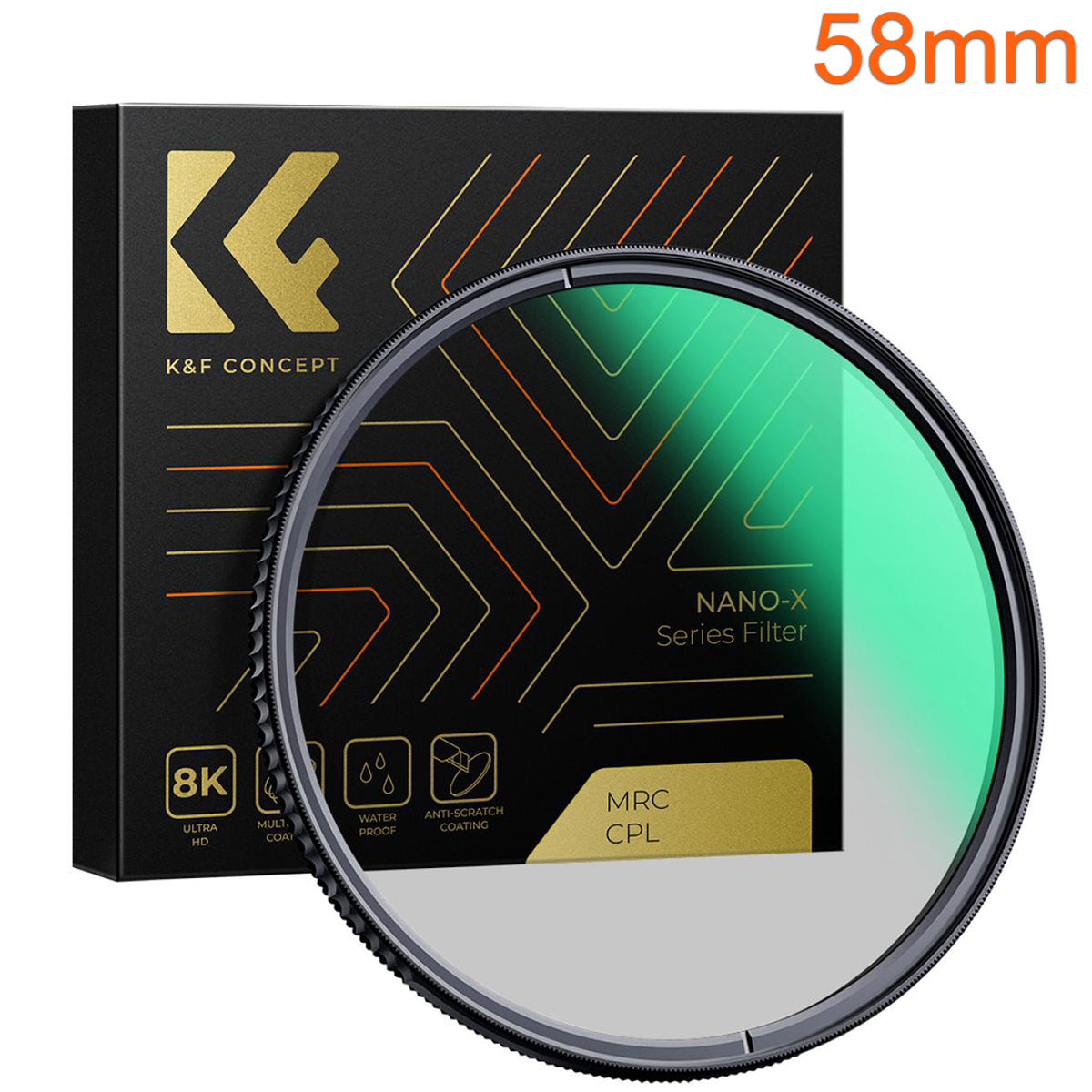
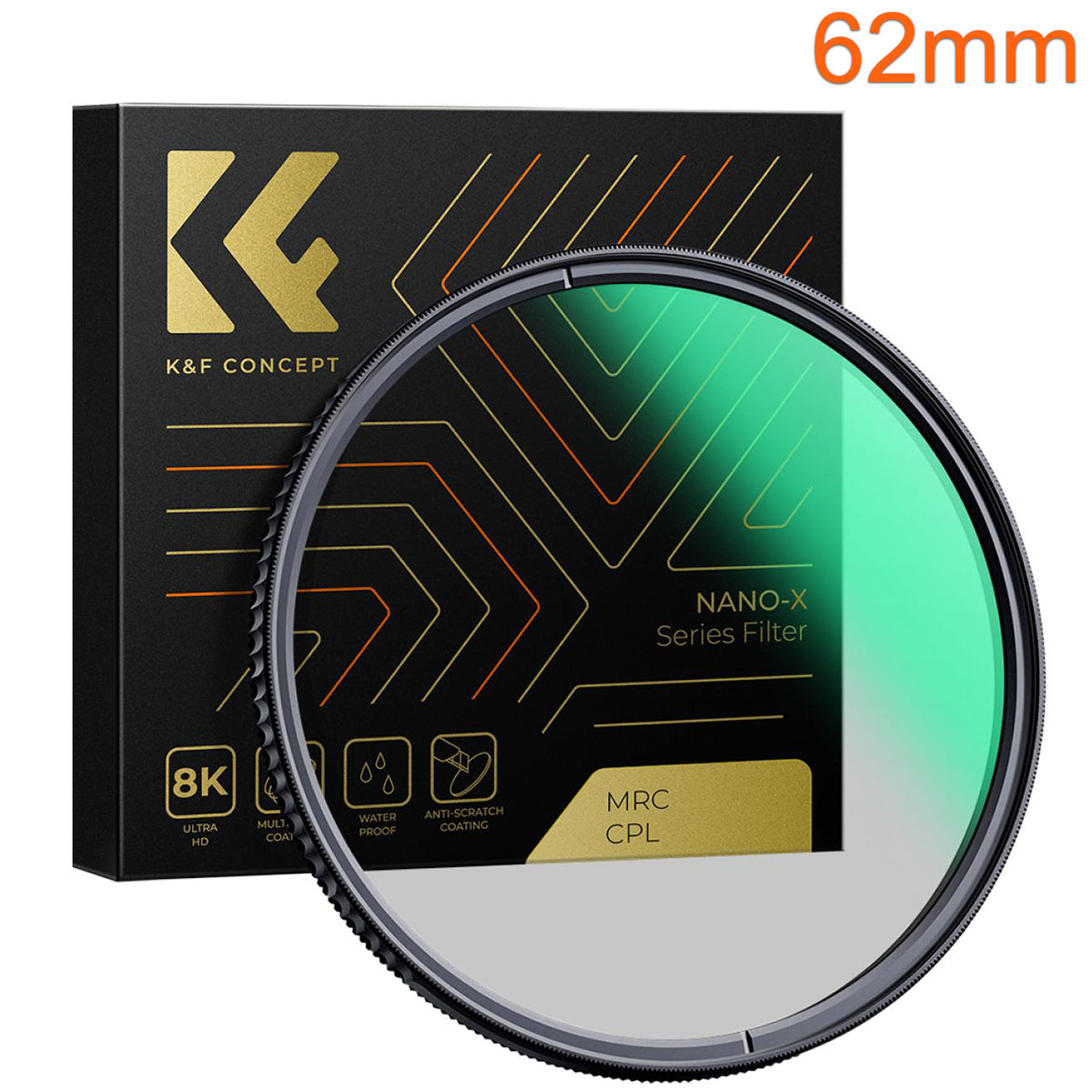
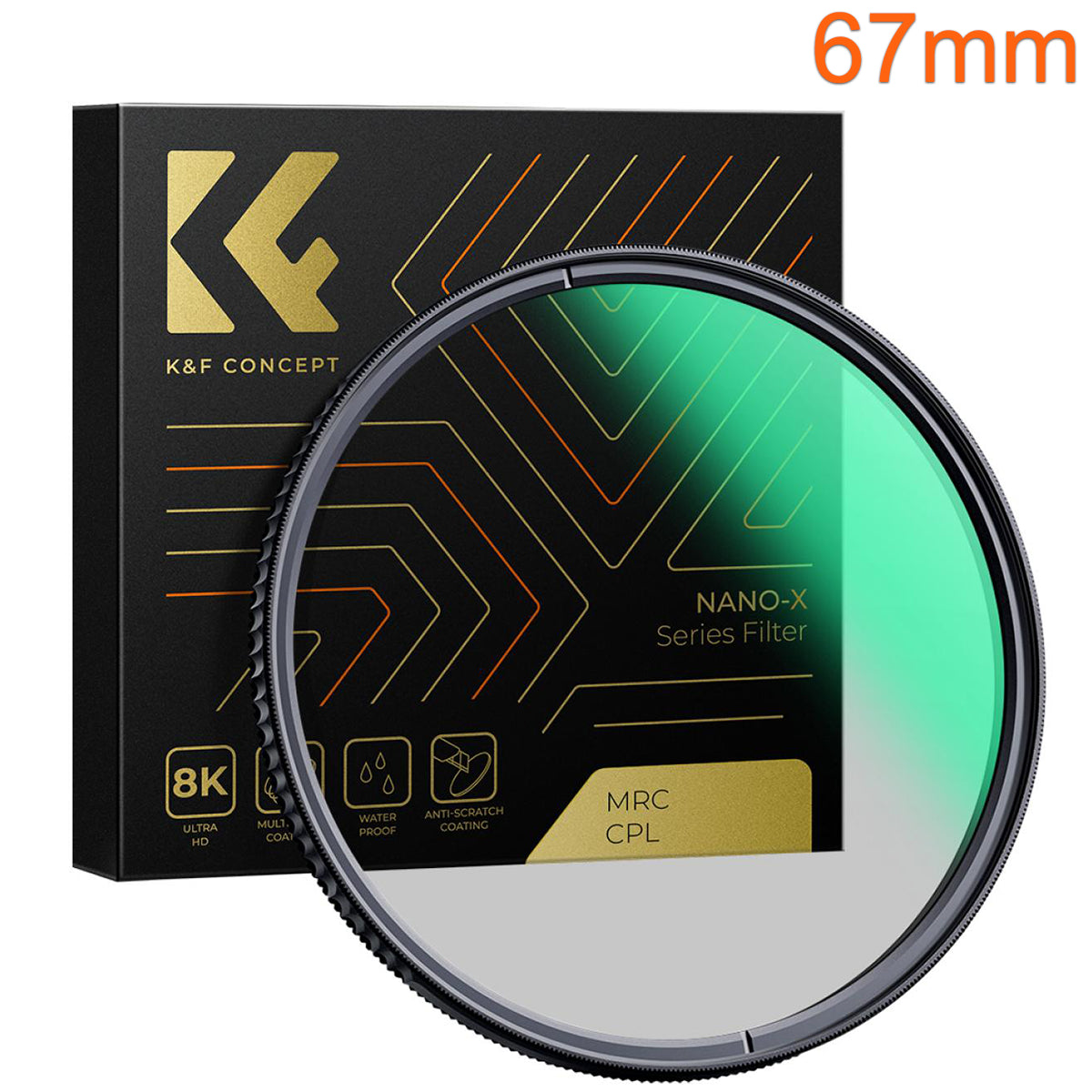
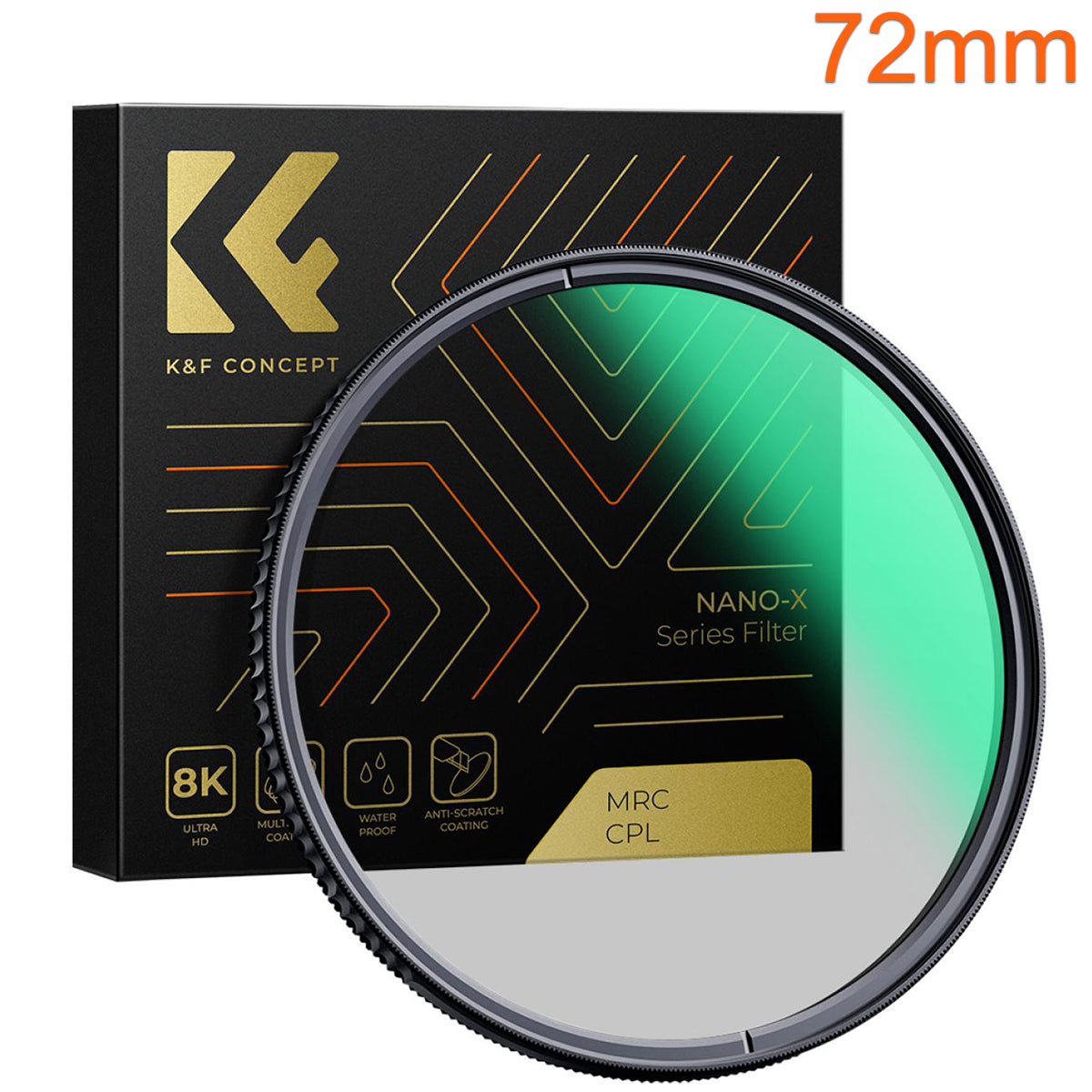
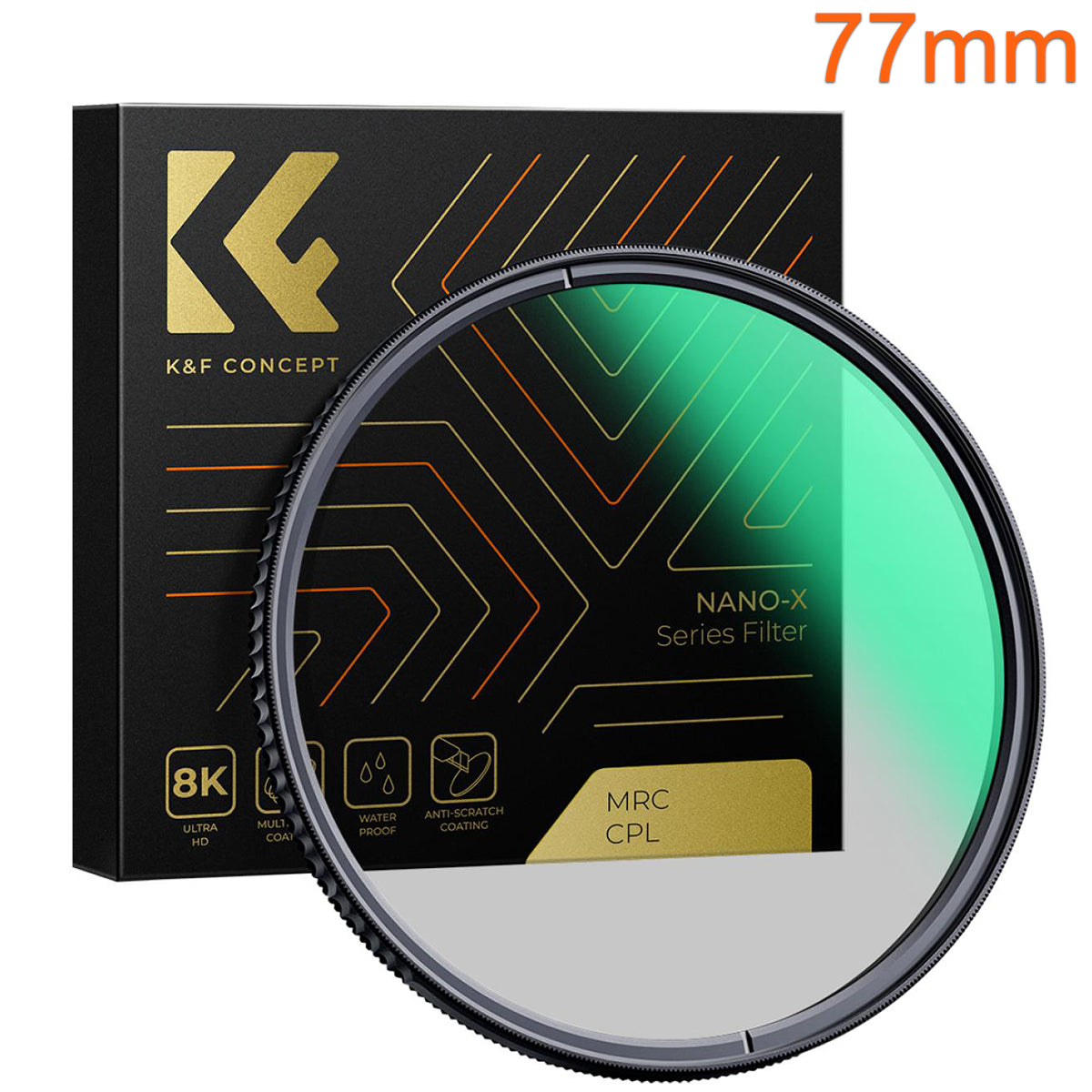
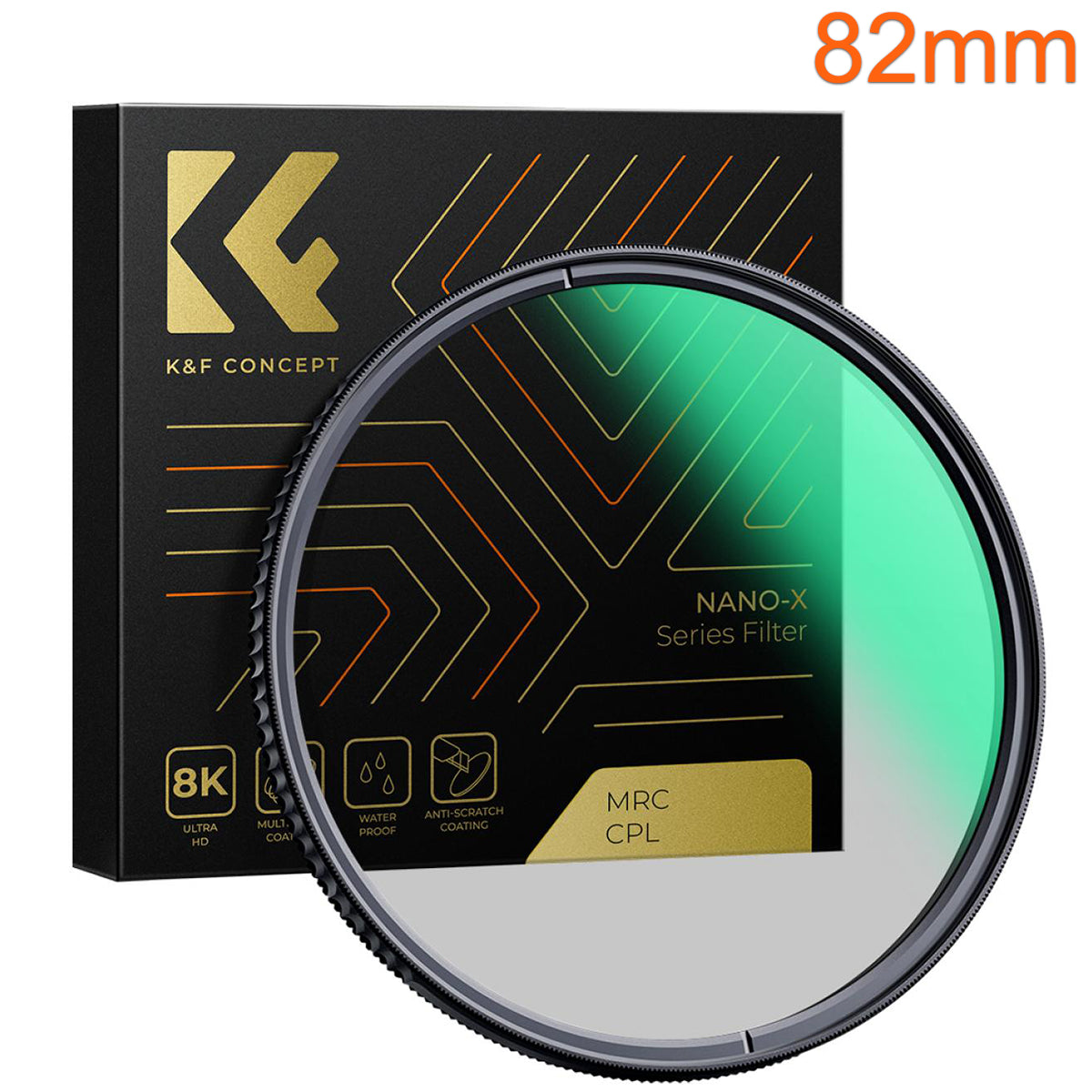
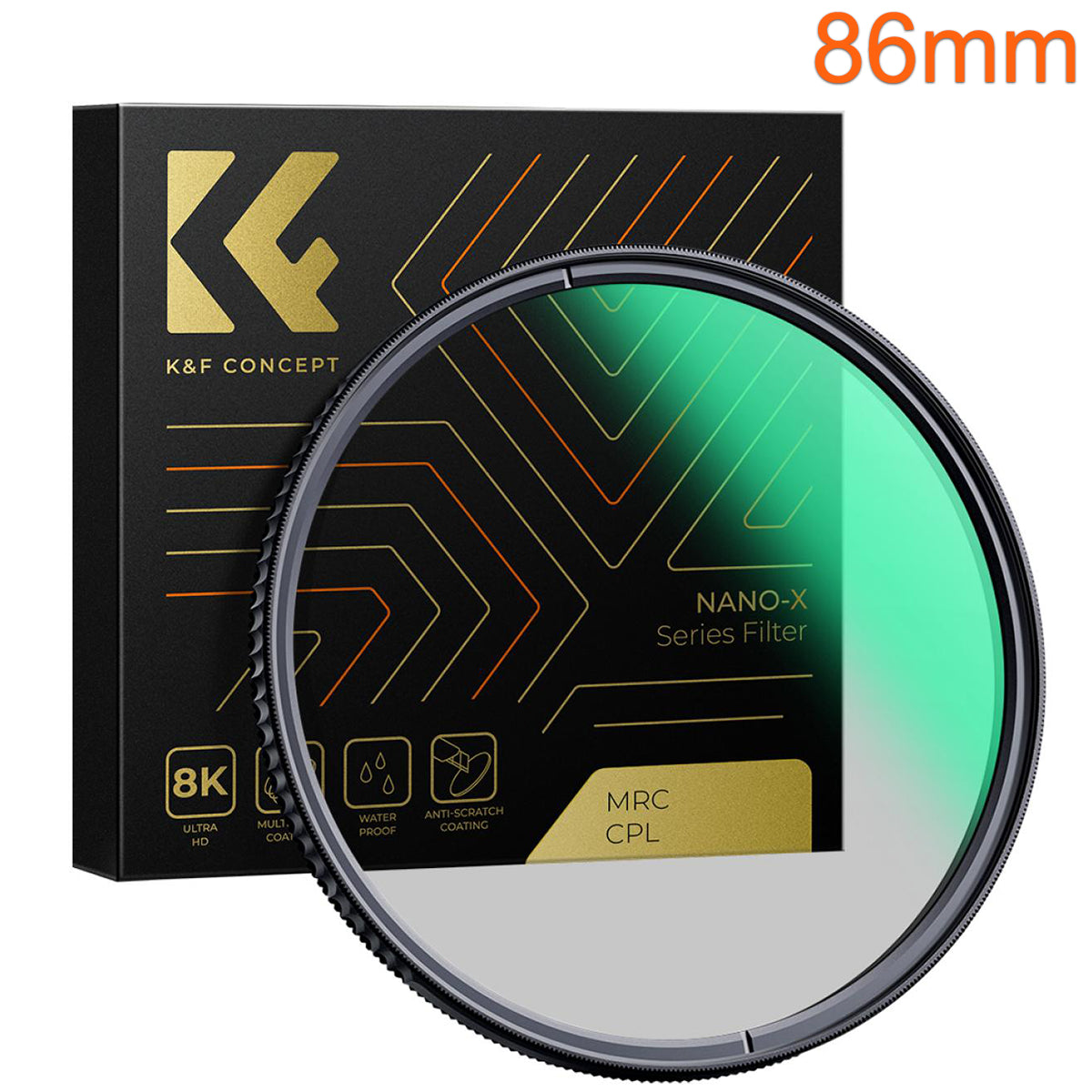
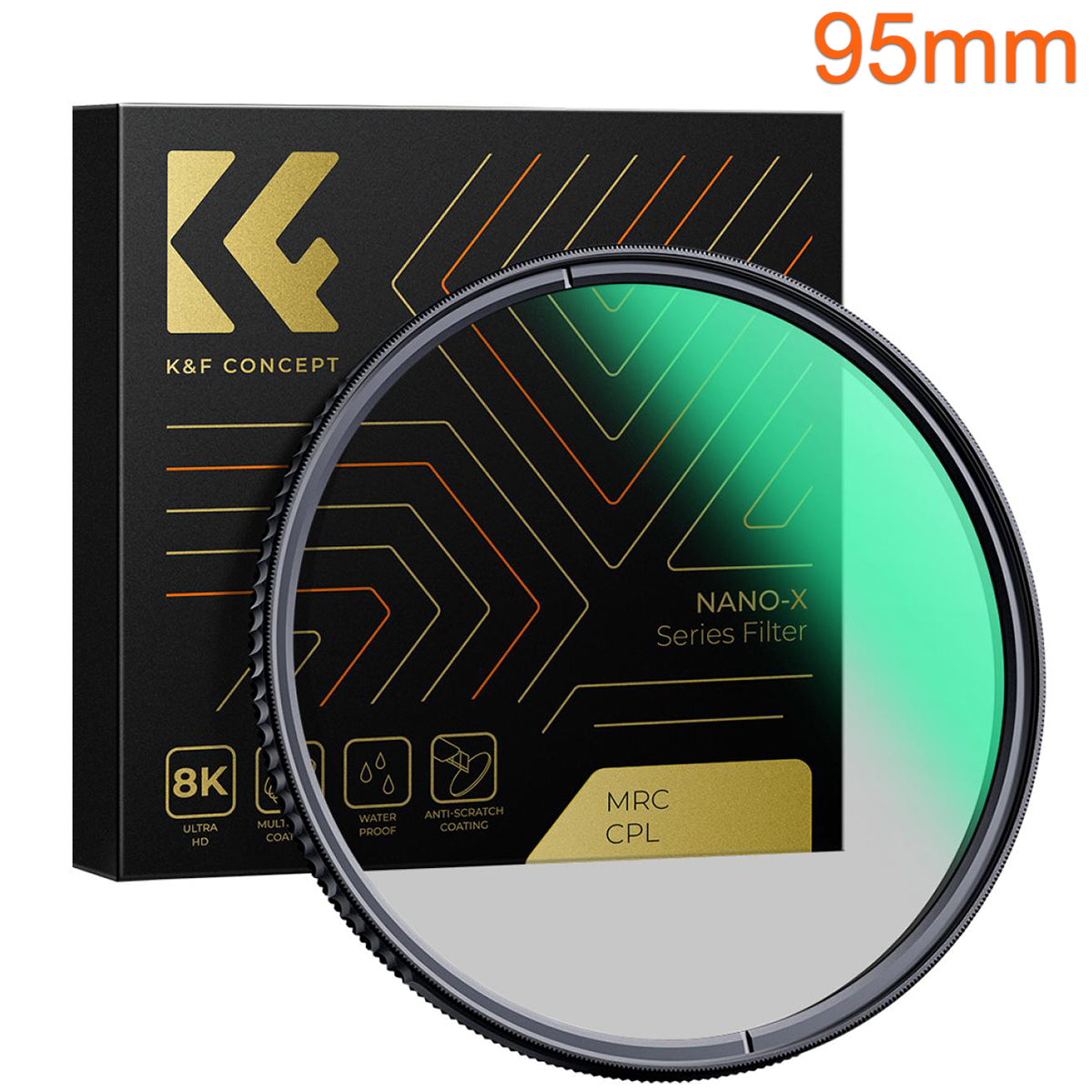
K&F Circular Polariser Filter (CPL) Nano-X Series
Controlling reflected light transforms ordinary scenes into images with depth, colour saturation and tonal separation that no amount of post-processing can replicate. This circular polariser gives you direct command over how your sensor records bounced light from water, glass, foliage and sky, the difference between a washed-out frame and one that holds the viewer's attention.
What Polarisation Does to Your Frame
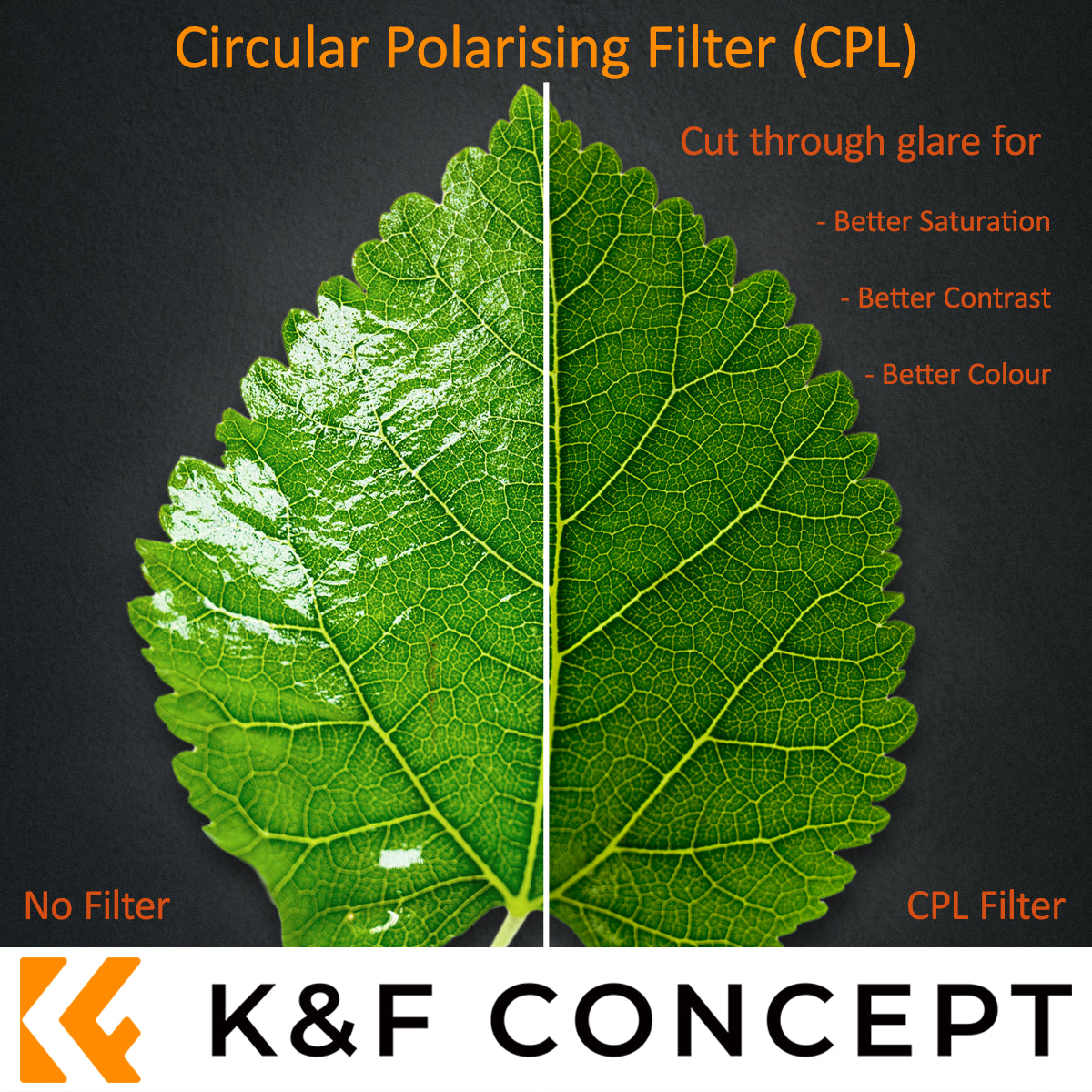
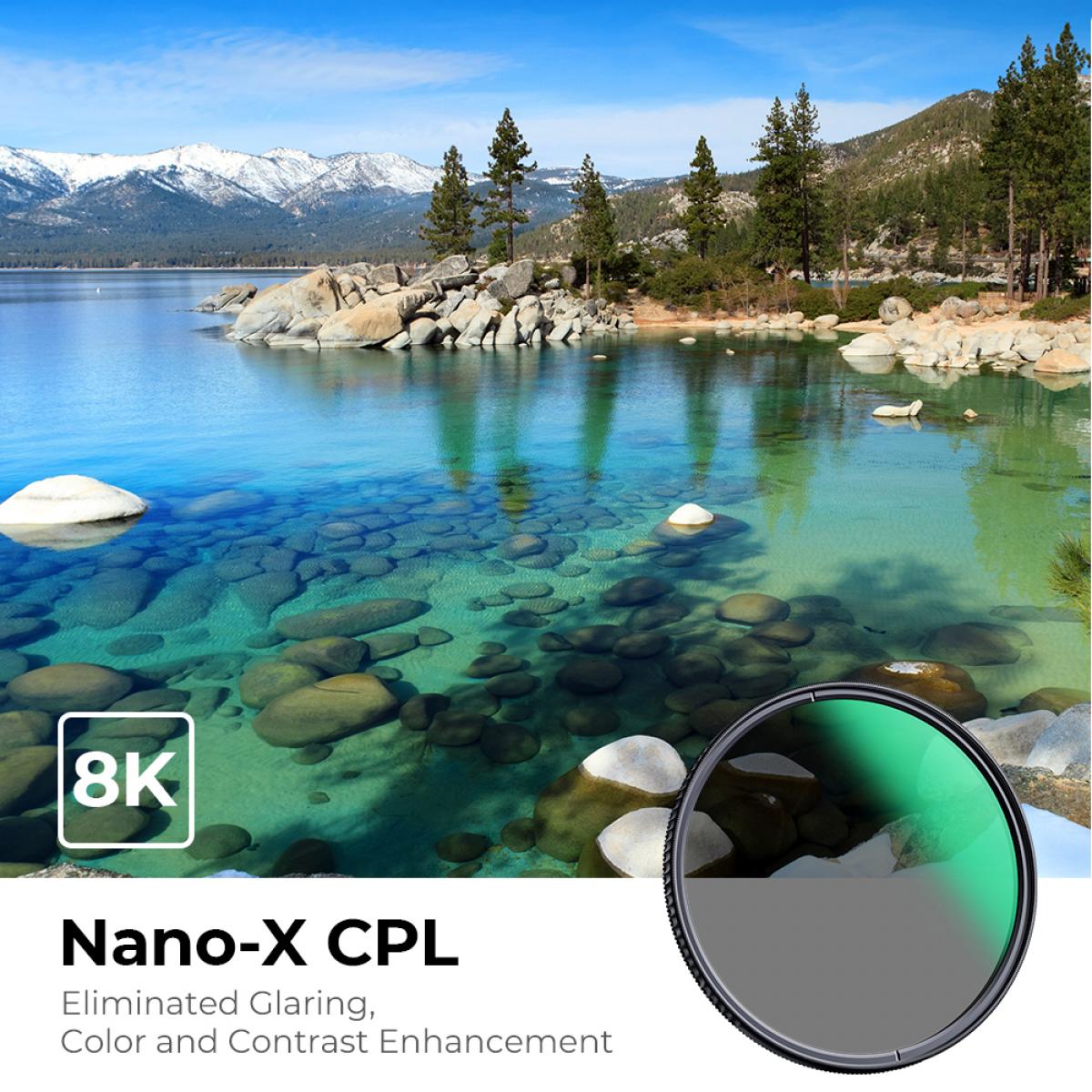
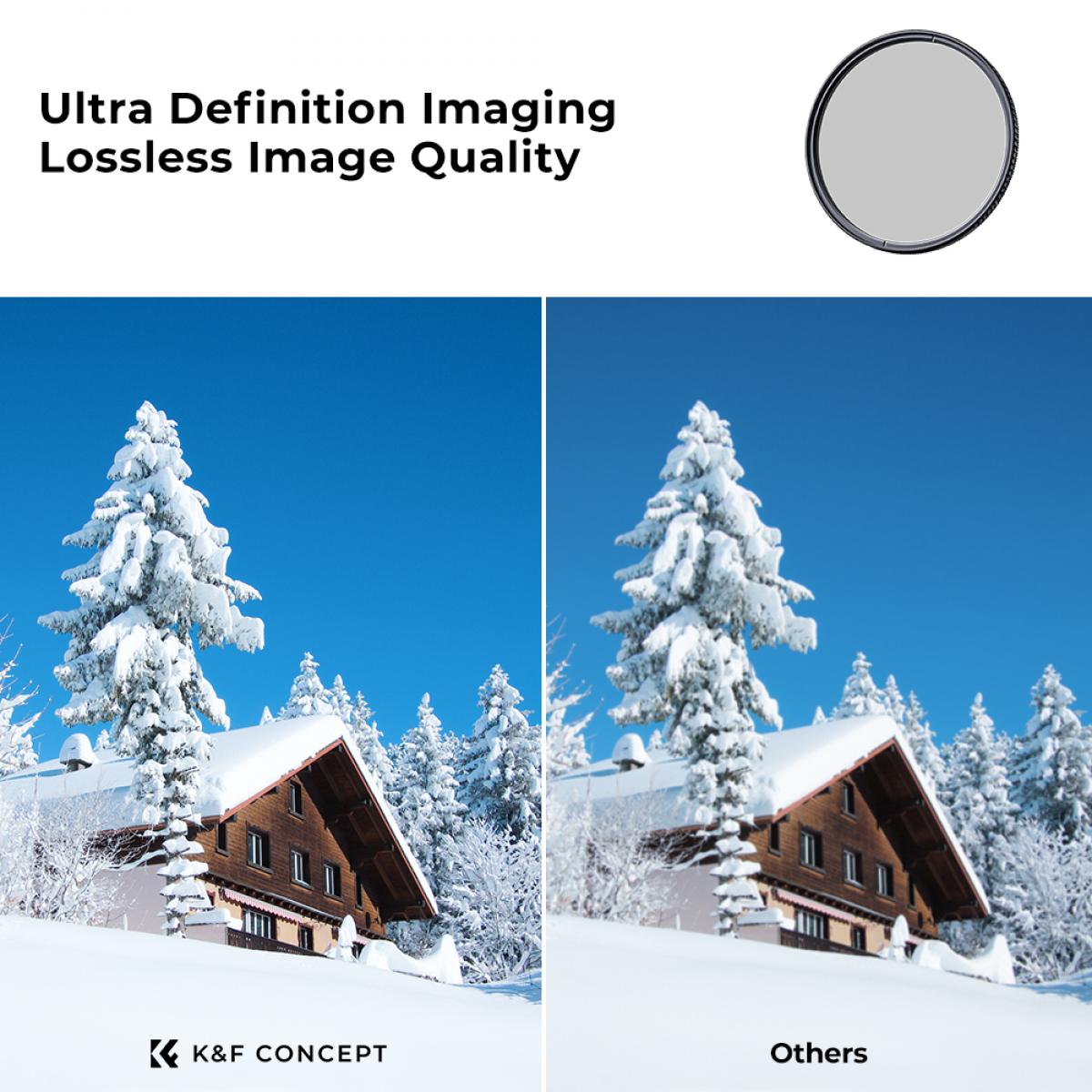
Reflected light scatters in predictable patterns. A polarising filter blocks specific wavelengths, letting you decide whether to capture the mirrored surface of a lake or shoot clean through to the rocks beneath. Rotate the outer ring and watch reflections on car paint, shop windows or wet pavement either vanish or intensify. The same principle applies overhead: blue sky deepens without artificial saturation, cloud structure emerges with definition instead of merging into flat white, and haze that flattens distant hills lifts away. Foliage stops reading as a wall of shine and starts showing individual leaf texture and true green tones. The effect is most pronounced when shooting at right angles to the sun, around 90 degrees from the light source, and becomes negligible when pointing directly toward or away from it. Overcast conditions offer little to polarise; bright sun with clear air is where the filter earns its place in your kit.
Nano-X Optical Construction
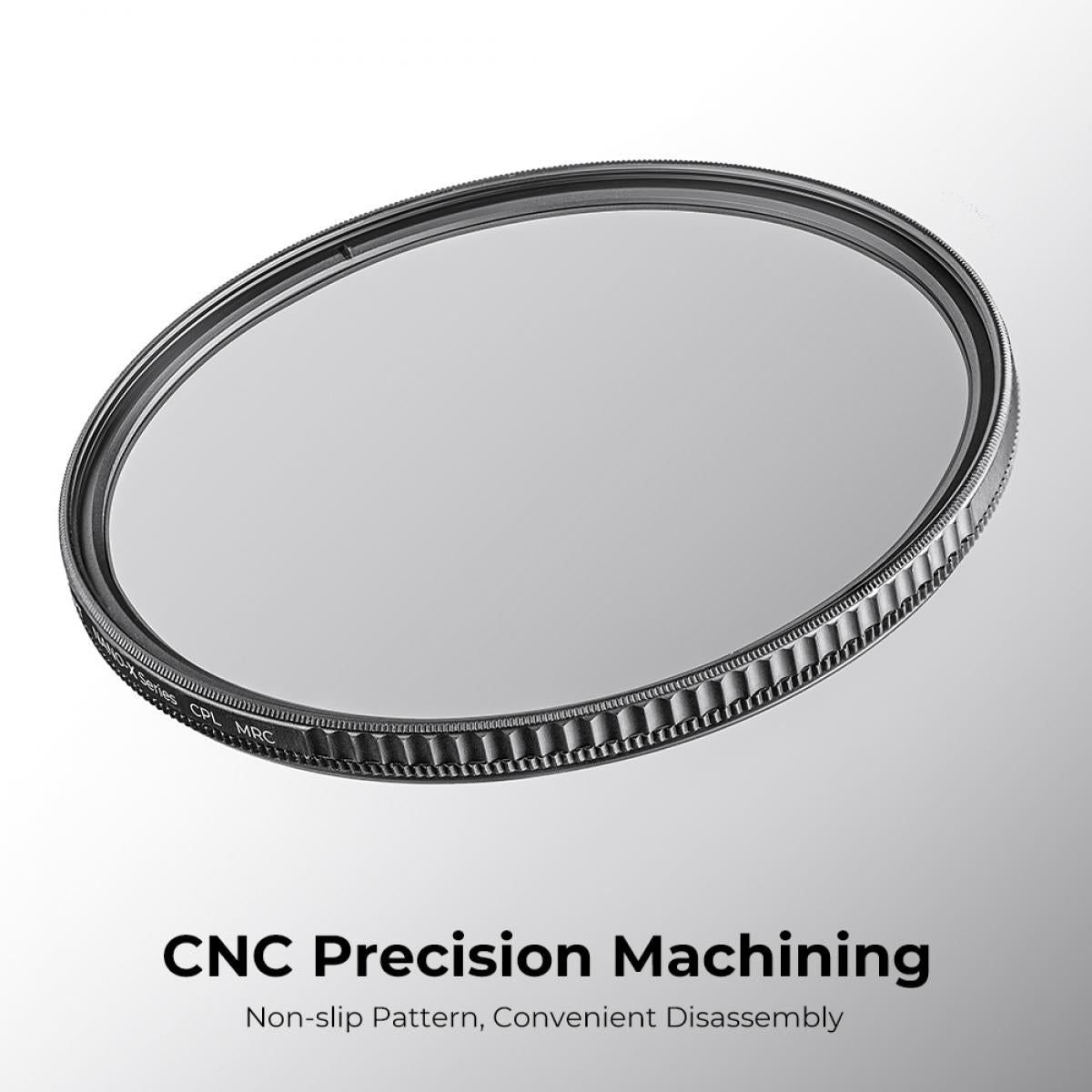
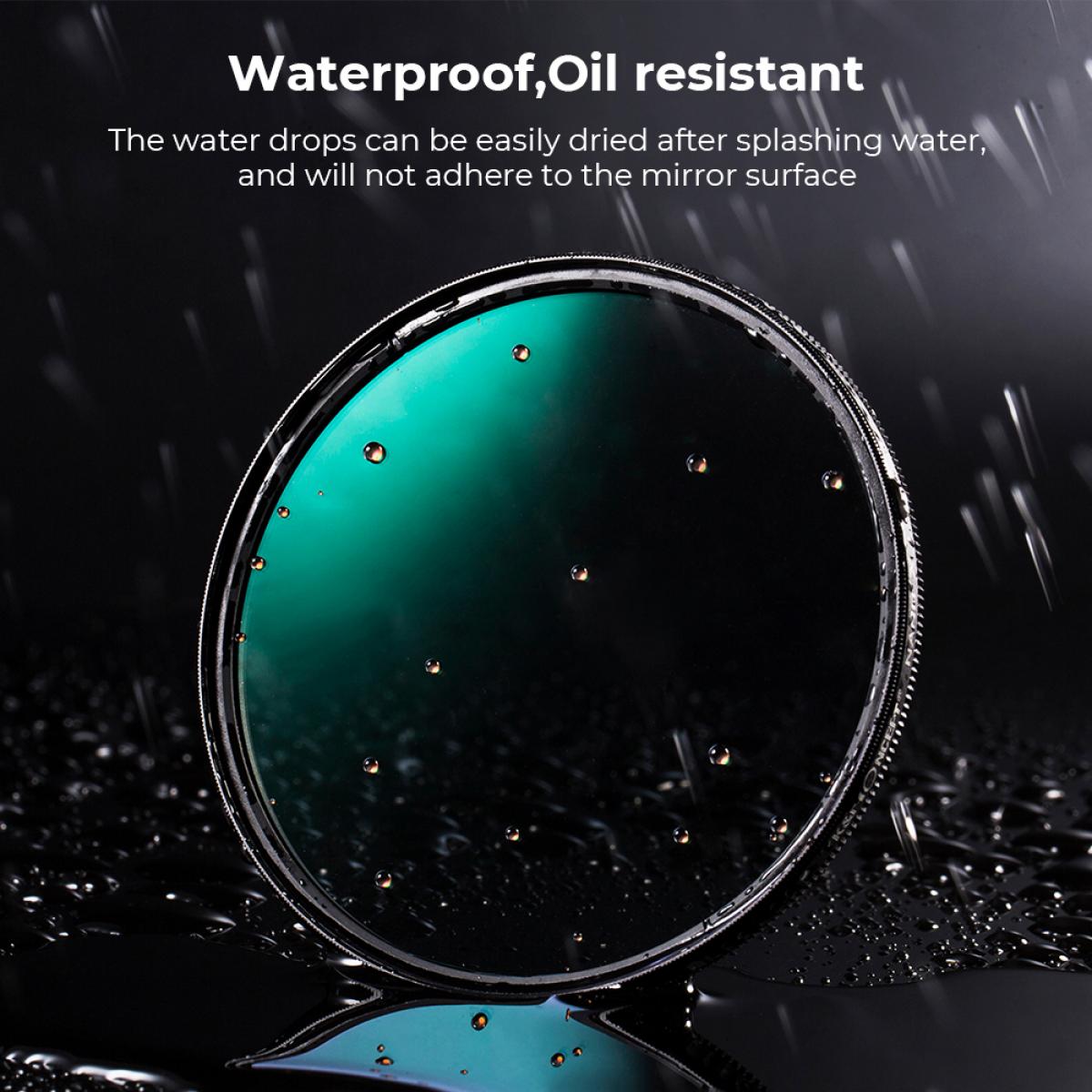
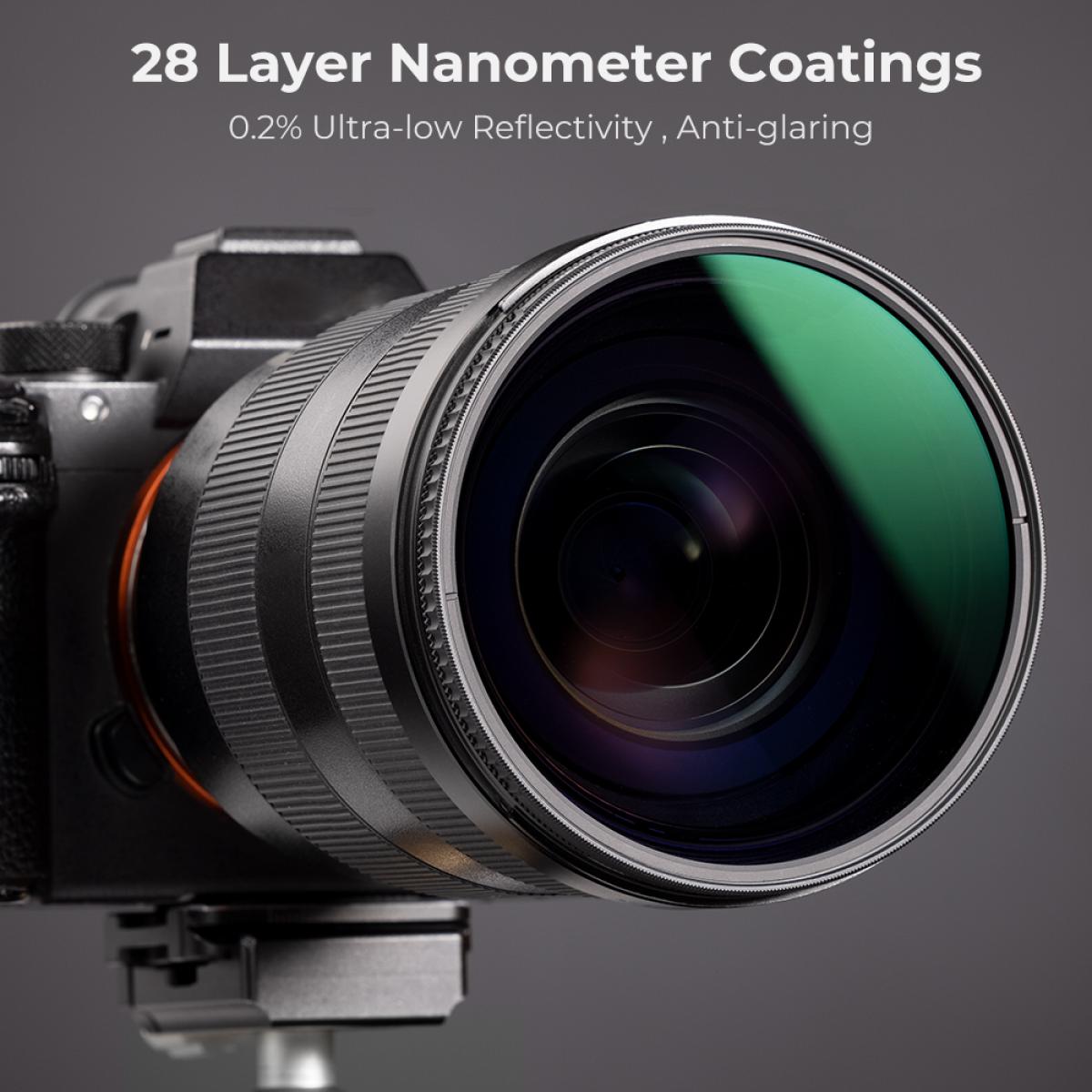
The Nano-X designation refers to a 28-layer coating stack applied to Japanese optical glass, engineered to meet the resolving power of contemporary high-megapixel sensors. Anti-reflection treatments suppress internal bounce that would otherwise show up as flare or ghost images when shooting into strong light. Light transmittance stays high, the coatings don't introduce a colour cast or force you to open up exposure compensation. The surface resists water beading, sheds fingerprints with a single wipe, and holds up to the kind of handling that comes with regular field use. Double-sided polishing keeps the glass plane parallel, so there's no image-softening distortion at the frame edges even when shooting wide open on fast primes. The aluminium frame is slim enough to avoid vignetting on wider focal lengths and carries front threads so you can stack a protective UV or ND filter if the shoot calls for it.
Practical Field Scenarios
Landscape work is the obvious application: controlling sky tone, bringing out cloud structure, cutting through atmospheric haze on distant ridgelines. But the same physics apply to urban and automotive subjects. Shooting architecture through glass facades becomes viable without the building interior reflecting back at you. Product photography of anything with a glossy finish, whether it's a motorcycle tank or a polished countertop, becomes manageable without elaborate lighting setups to kill specular highlights. Even portraiture benefits when your subject is standing near water or under tree cover; eliminating stray reflections from leaves or a pond surface keeps attention on the face instead of distracting bright spots. The rotating outer ring lets you dial the effect in real time while looking through the viewfinder or at the rear screen. There's no guesswork: you see the change as it happens, lock in the orientation that works for the composition, and shoot.
Fitting and Rotation Mechanics
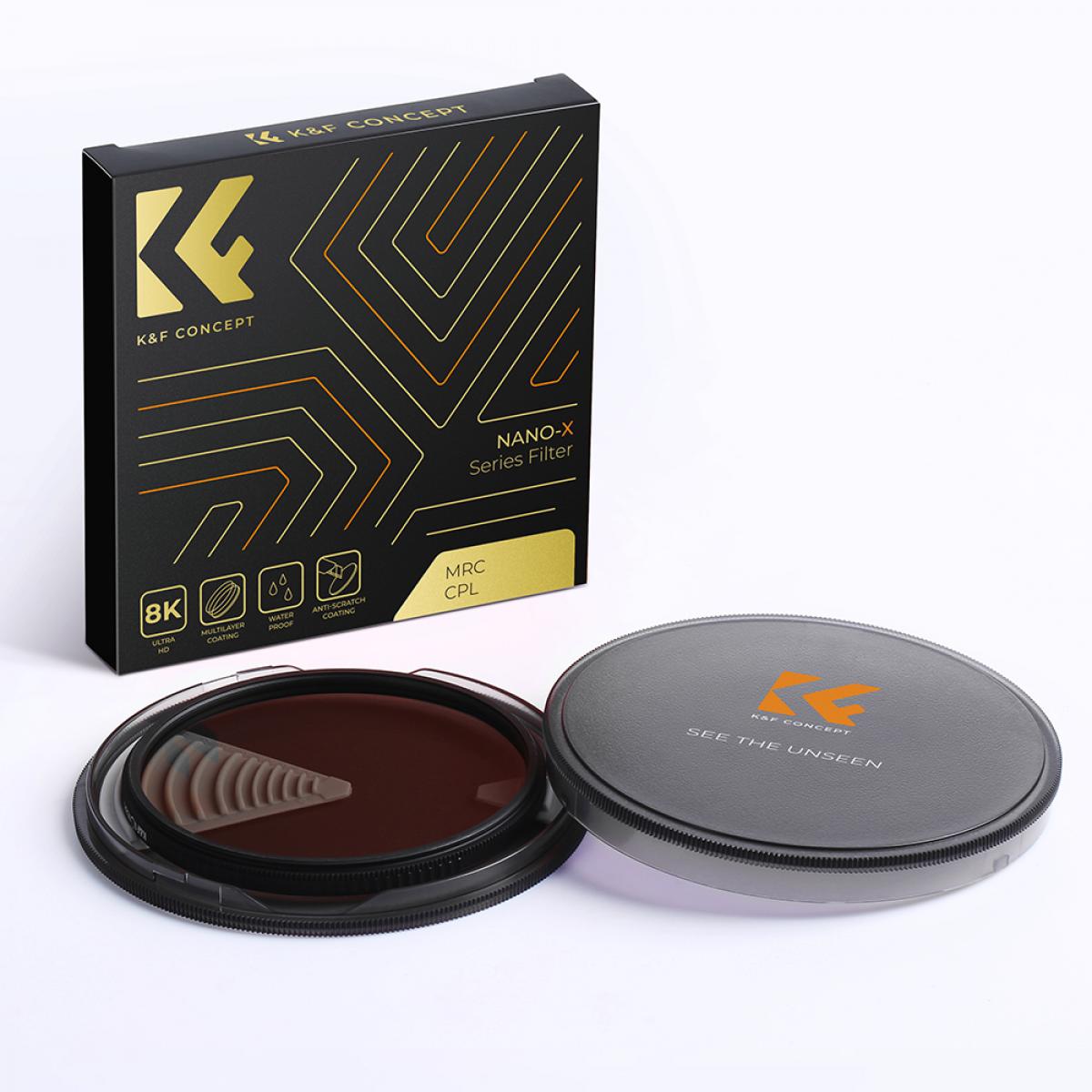
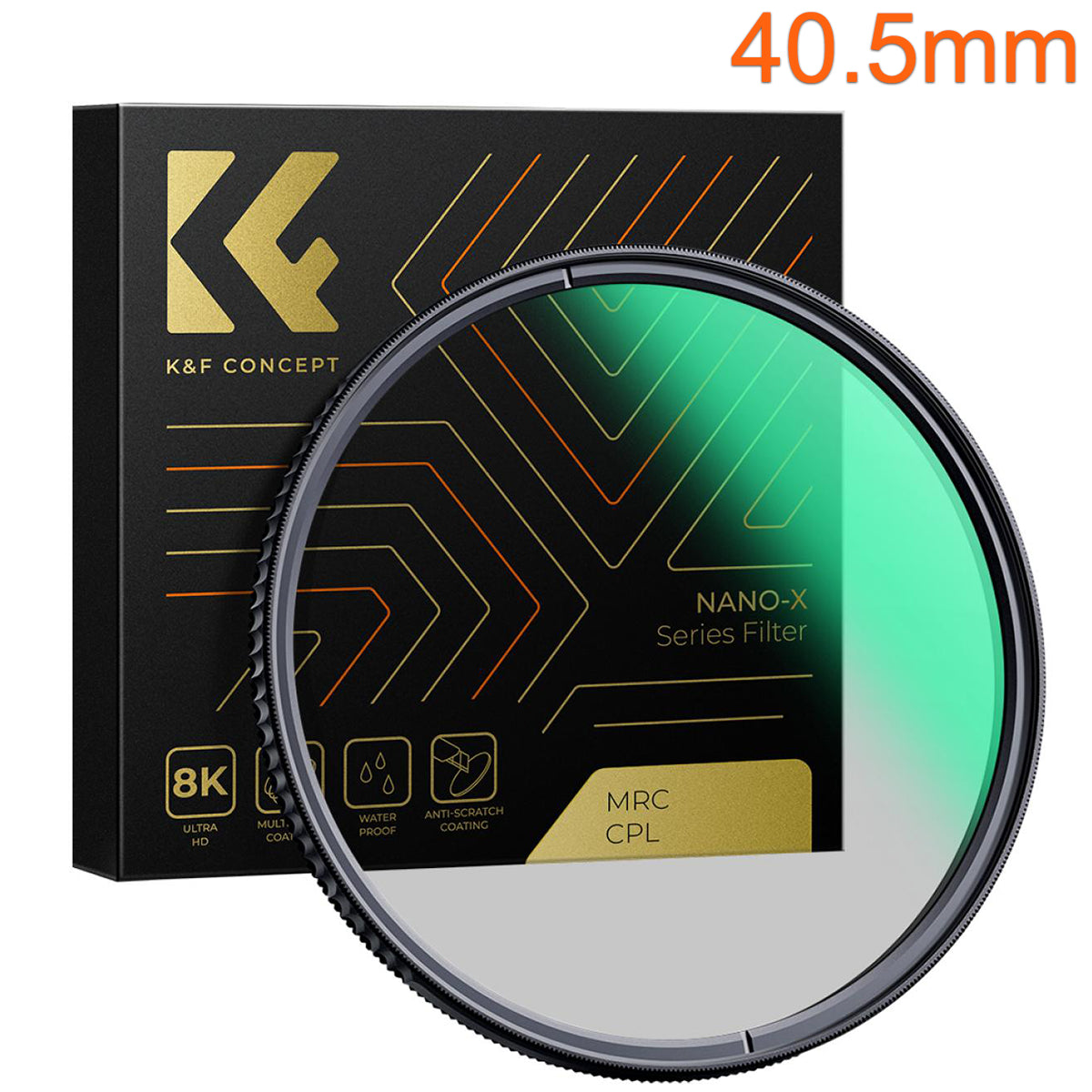
Before ordering, confirm your lens thread diameter, it's marked on the barrel or printed inside the lens cap, always preceded by the ø symbol. Once you have the correct size, the filter threads directly onto the front element. The outer ring rotates independently, so you can adjust polarisation without unscrewing the entire filter. This matters when you're working quickly or shooting handheld: you're not fumbling to reattach the filter every time you want to change the effect. The rotation is smooth enough to adjust with one hand but offers enough resistance that it won't shift accidentally in your bag. A protective case is included for transport, the filter stays clean between shoots and doesn't rattle loose inside a camera bag pocket.
When Digital Processing Falls Short
Post-production software can darken skies, boost saturation and reduce haze, but it can't remove reflections that were baked into the exposure. If the sensor recorded a bright reflection off water or glass, no amount of masking or clone-stamping will reconstruct the detail that was never captured. A polariser handles the physics at the point of capture: it blocks the reflected wavelengths before they reach the sensor, so the underlying subject is recorded cleanly in the first place. The result is a file with more usable tonal range and colour information, which means less corrective work in editing and a final image that doesn't carry the telltale signs of heavy processing. For photographers who value getting it right in-camera, a circular polariser is one of the few tools that genuinely can't be replicated in software.
Double-threaded aluminium construction, 28-layer nano-coating for flare suppression and high transmittance, Japanese optical glass with parallel polishing, this is the filter to reach for when you need control over reflected light and the image quality to match modern sensor resolution. Supplied with a protective case. KF01.988-1363.