




K&F Lens Adapter for Canon EF Lenses to FUJIFILM X Mount Cameras
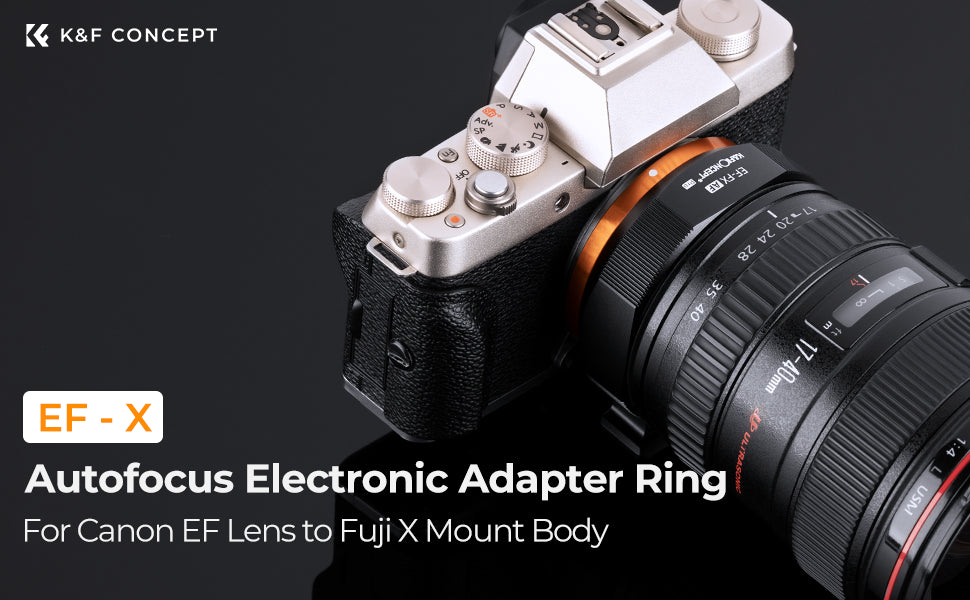
Adapting Canon EF and EF-S glass to Fujifilm X-series bodies opens up lens libraries most shooters already own, sidestepping the cost of building an entirely new collection from scratch. This electronic mount adapter bridges two incompatible systems while preserving the communication protocols that keep autofocus, aperture control, stabilisation and EXIF data flowing between lens and body. Where passive mechanical rings force you into manual-only operation or rely on aperture rings that Canon EF lenses simply don't have, active electronic translation maintains the workflow you're used to: adjust exposure compensation on the body, let the lens respond in real time, and fire without worrying whether the two components are actually talking to each other.
Fujifilm X shooters often face a choice between investing thousands in native glass or accepting the limitations of dumb adapters that strip out every automated function. This adapter sits in the middle ground, delivering full electronic handshake at a fraction of the cost of replacing your existing Canon lineup. Autofocus remains operational, though cross-system translation does introduce a speed penalty compared to native X-mount lenses,expect hunt in lower contrast scenes and a slight lag on continuous AF. For static subjects, product work, portraiture or any scenario where you have time to lock focus, the trade-off is negligible. For fast-moving sports or wildlife where every millisecond counts, native glass still holds the edge.
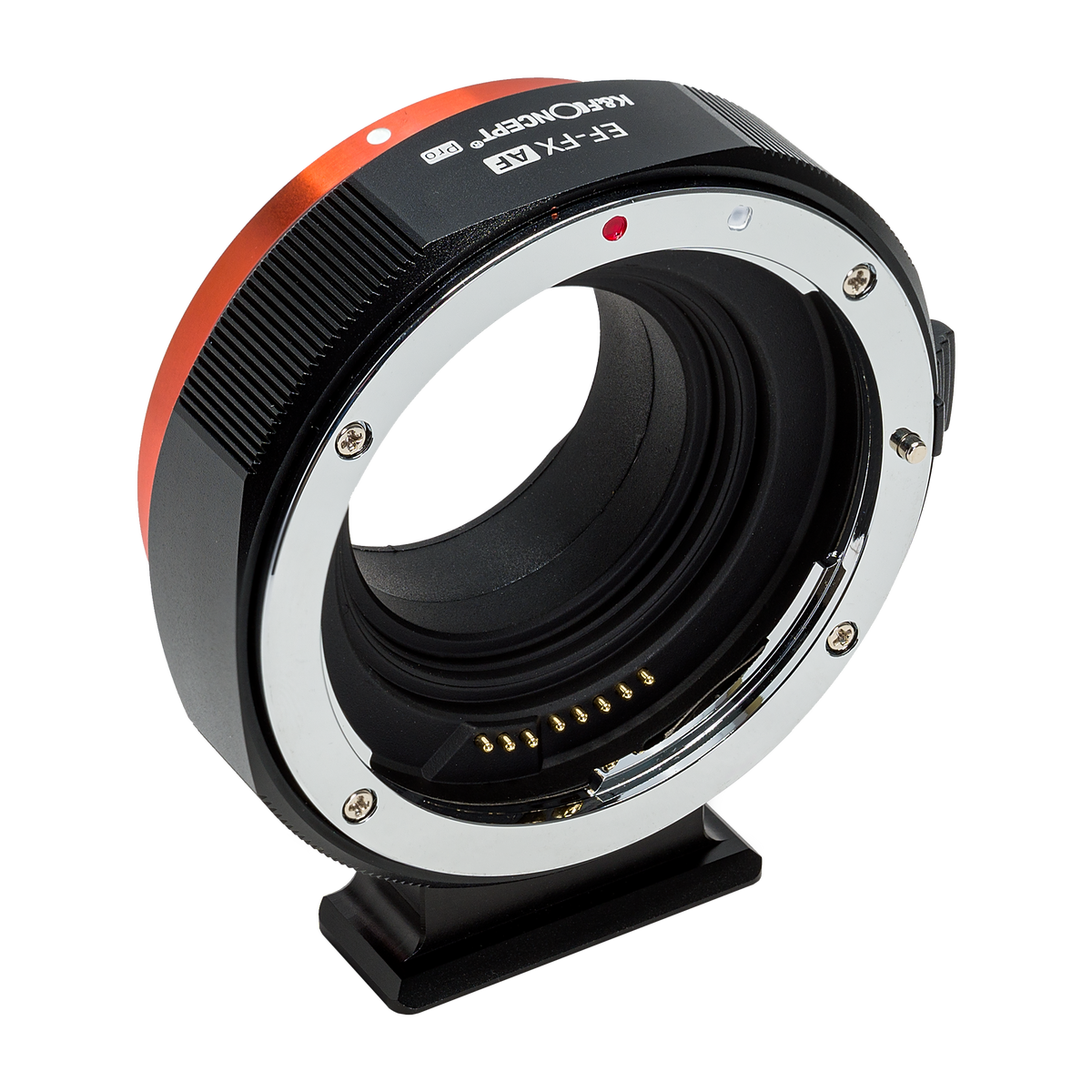
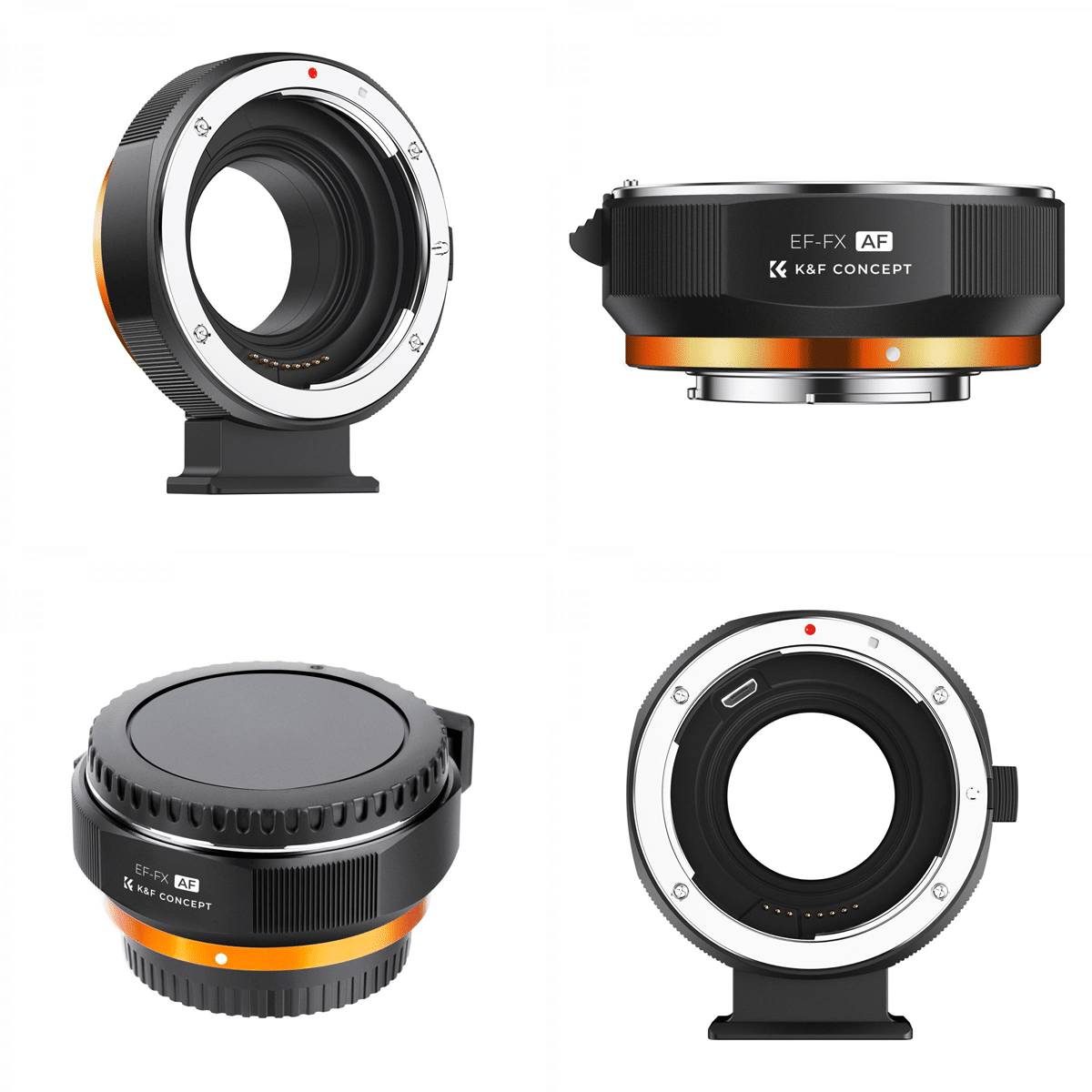
The adapter body is CNC-machined from aircraft-grade aluminium, keeping weight down to a level that won't unbalance smaller X-series bodies when you mount a full-frame EF lens. Gold-plated contact pins handle signal transmission and resist corrosion over years of field use, ensuring the electronic conversation between lens and body doesn't degrade as the adapter ages. The bayonet mount on both sides is machined to tolerances tight enough that lenses seat without wobble or play,no force required, no grinding metal, just a clean twist and lock. A release button on the adapter's side prevents accidental lens detachment; you have to press it deliberately to dismount, adding a layer of security when you're swapping glass in the field.
Aperture control remains fully electronic, so you adjust f-stop from the camera body exactly as you would with a native lens. Canon EF lenses lack manual aperture rings, which would leave you stuck wide open on a mechanical adapter. Here, the body sends aperture commands through the adapter's circuitry to the lens, and the lens responds. Depth-of-field preview, exposure compensation, and aperture priority modes all function as expected. Optical stabilisation built into Canon IS lenses continues to operate when mounted via this adapter, giving you the shake reduction you need for handheld work at slower shutter speeds. EXIF metadata,focal length, aperture, ISO, shutter speed,writes correctly to image files, so your cataloguing software and post-processing workflow remain unaffected.
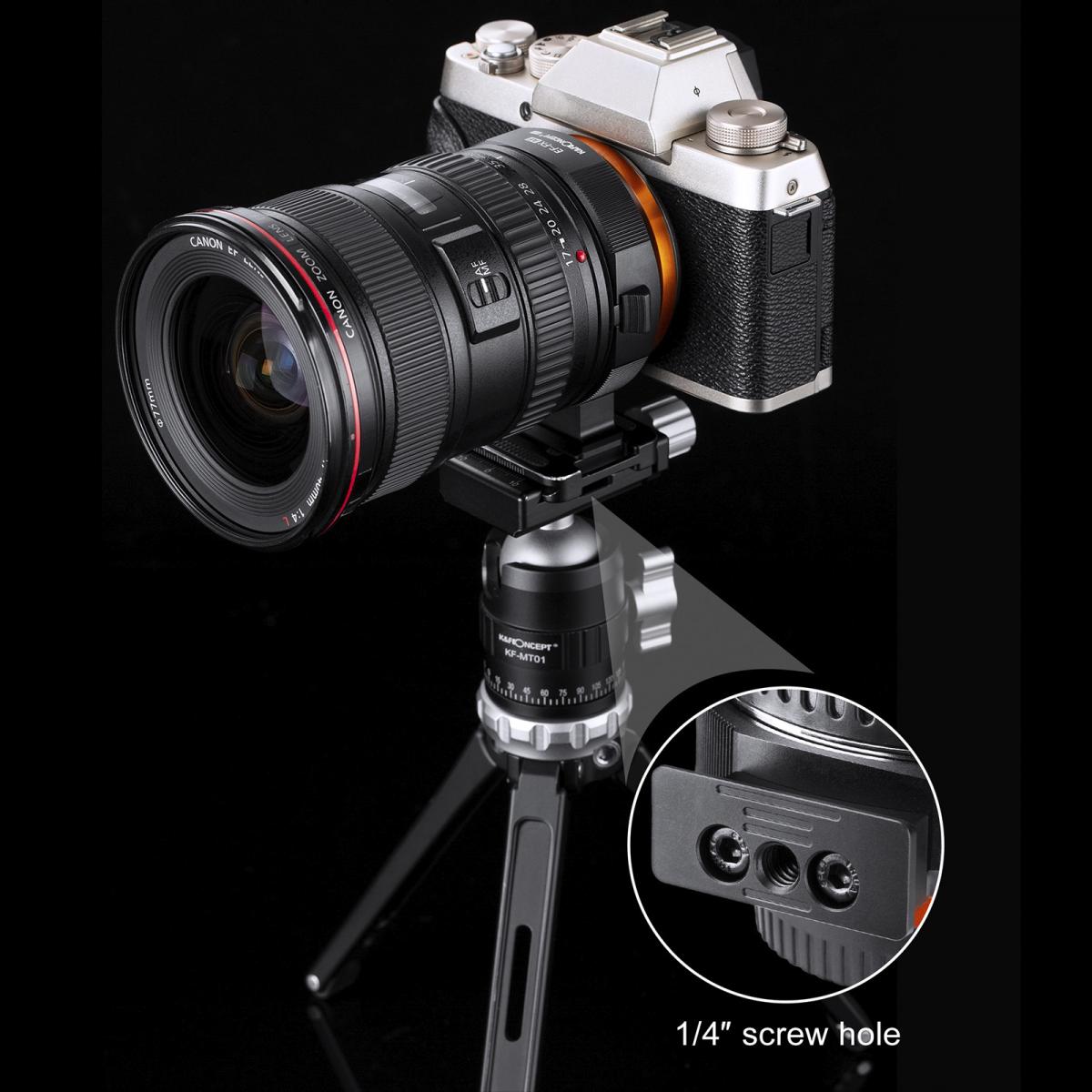
A removable tripod foot screws into the base of the adapter, shifting the mounting point forward from the camera body to a position closer to the lens's centre of gravity. When you're running a heavy EF zoom or a long prime, that forward balance point reduces strain on the camera's lens mount and keeps the rig stable on a tripod head. The foot accepts standard quarter-inch tripod screws and is also shaped to drop directly into Arca-Swiss-compatible clamps, so if your tripod head uses that system you can skip the quick-release plate entirely and lock the adapter straight into the clamp. The foot detaches with an Allen key (supplied) when you want to reduce bulk for handheld shooting or travel.
Setup is plug-and-play: mount the adapter to the X-series body, attach your Canon lens to the adapter, power on, and shoot. No firmware updates, no menu diving, no custom function programming. The adapter initialises communication with the lens within a second or two, and from that point forward the camera treats the adapted lens as if it were native,albeit with the focusing speed caveat mentioned earlier. Compatibility is proven with Canon's own EF and EF-S lenses; third-party glass from Sigma, Tamron or Tokina may or may not function depending on how closely those manufacturers replicated Canon's electronic protocols, particularly in older lens generations. If you're adapting third-party lenses, test before committing to a critical shoot.
The adapter ships with a rear lens cap that protects the electronic contacts and bayonet mount when the adapter is stored off-camera. That cap stays on the adapter when it's packed in your bag, preventing dust ingress and accidental contact damage. The adapter itself can also remain mounted to the camera body with a body cap over the front, so you're not constantly threading it on and off between shoots. Compact enough to tuck into a jacket pocket or the accessory pouch of a camera bag, the adapter adds minimal bulk to a travel kit.
This adapter makes the most sense for shooters who already own Canon EF glass and are moving to or adding a Fujifilm X body, or for those who have access to a shared lens pool,rental inventory, a studio's communal gear, a colleague's kit,and want to tap into that resource without buying duplicates in X mount. It's also a cost-effective way to trial expensive focal lengths: rent a Canon EF 70-200mm f/2.8 for a weekend shoot rather than committing to the X-mount equivalent at twice the rental cost. The adapter pays for itself in a single job if it lets you use glass you already have instead of buying or renting native alternatives.
Build quality reflects the engineering-first approach that defines the brand's broader lens adapter and filter lineup. The burnt-orange accent ring is a visual signature, but the substance is in the machining tolerances, the contact plating, and the bayonet fit. This isn't a disposable plastic ring that'll flex under load or lose electronic continuity after six months of use. It's a tool designed to last as long as the lenses and bodies it connects, backed by a two-year limited warranty and local support in South Africa.
For Fujifilm X shooters looking to bridge two lens ecosystems without sacrificing electronic control, this adapter delivers full-function adaptability at a price point that makes cross-system compatibility accessible rather than prohibitive. It won't match the speed of native glass, but it will let you keep shooting with the lenses you already know while you build out your X-mount collection at your own pace,or skip that investment entirely if adapted Canon glass already covers your needs. KF06.465.