



K&F Pro-Arm Tripod for Every Type of Photography Incl. Monopod
When a single support system needs to handle overhead product shots, ground-level macro work, crowd navigation with a long lens, and conventional landscape setups without switching gear, most photographers end up carrying multiple stands. This aluminium tripod consolidates that kit into one 1.8kg frame by pivoting its centre column into a horizontal boom and detaching a leg to form a monopod, three distinct tools sharing the same folded 48cm carry profile.
Overhead and Table-Edge Shooting
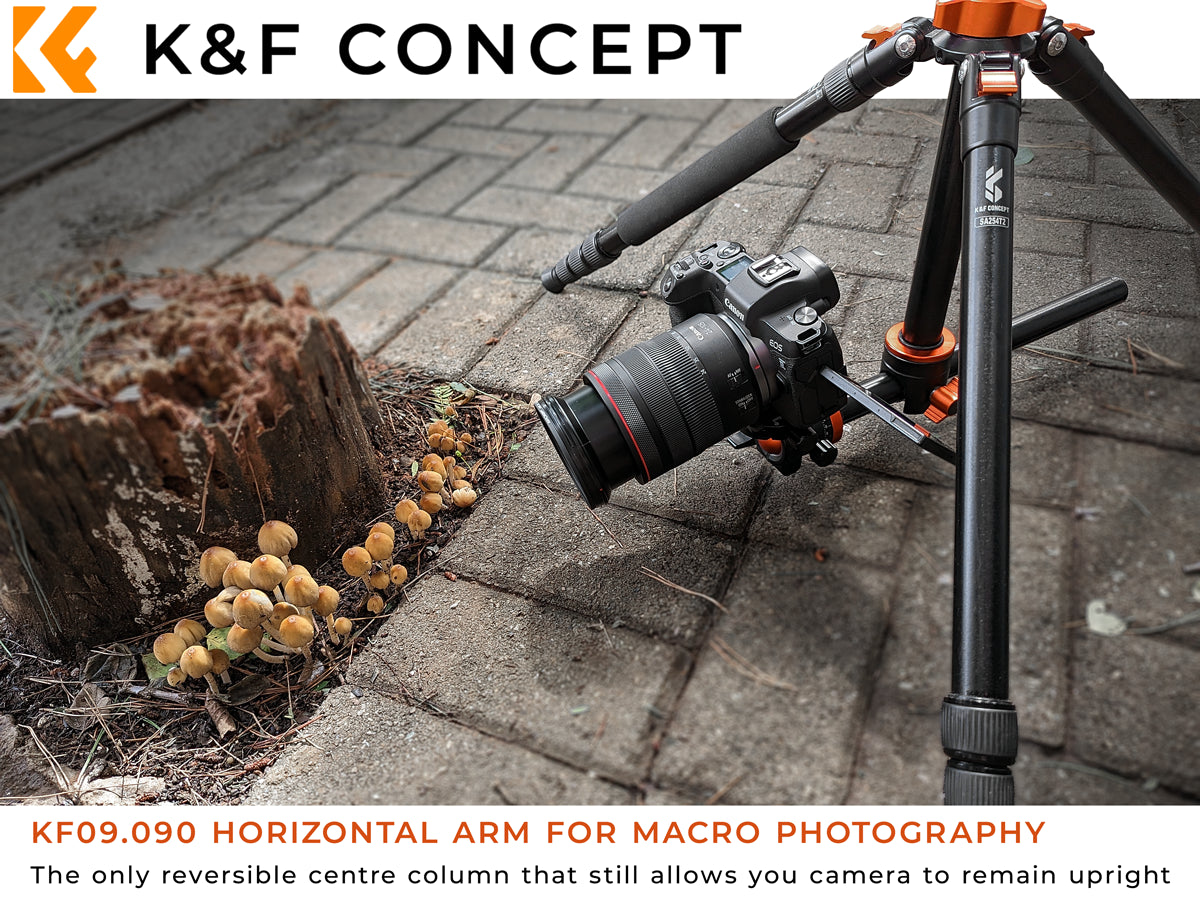
The defining capability is the centre column's ball-jointed pivot. Pull the column upward, release the joint, and swing the shaft ninety degrees so it extends horizontally over your subject. No disassembly, no adapter plates, no second tripod arm clamped to the side. Lock the joint and you have a stable boom for top-down food styling, flat-lay product photography, or macro work where the camera needs to look straight down while the tripod legs stay out of the composition. When working at a table, the horizontal reach moves the camera past the table edge so the legs no longer dictate your minimum shooting distance. Inverting the column, threading it downward through the apex, brings the camera within millimetres of the floor while the boom keeps the body upright, avoiding the neck-craning angle you get when tilting a ball head on a conventional low tripod. The same pivot that enables overhead work also lets you swing the camera off to one side, clearing the leg tower from your working area when framing from an unconventional position.
Monopod Conversion
One leg unscrews from the apex and accepts the centre column directly, creating a monopod with the ball head still attached. The quick-release plate stays mounted, so switching between tripod and monopod takes under thirty seconds. A monopod suits environments where a tripod footprint is impractical, dense crowds, narrow aisles, event spaces with restricted floor area, and provides enough stability to drop shutter speeds a stop or two below handheld limits when using longer glass. It also redistributes the weight of heavy telephoto lenses from your shoulder to the ground, reducing fatigue during extended shoots. The converted monopod weighs a fraction of the full tripod, making it a practical grab-and-go option when you know the assignment will involve constant repositioning.
Ball Head and Load Capacity
The included 28mm ball head, machined from anodised aluminium, handles an 8kg load, comfortably above the combined weight of a full-frame mirrorless body, battery grip, and a 70-200 f/2.8 lens. The ball releases with a single knob, allowing fast reframing across multiple axes, then locks firmly enough that the camera holds position under its own weight without drift. A separate pan lock enables smooth 360-degree rotation on a fluid bearing, with degree markings engraved into the base for precise panoramic stitching. The built-in spirit level confirms when the camera is level to the horizon, useful for architecture and seascape work where a tilted frame is immediately obvious. Two quick-release plates ship with the tripod, so a second camera body or an on-axis LED panel can swap onto the head without unscrewing and reattaching the same plate. The plate slides fore and aft within its clamp to balance front-heavy or back-heavy setups, but a mechanical stop prevents it from sliding completely out and dropping the camera.
Leg System and Height Range
Four-stage aluminium legs extend via twist locks that tighten without rotating the leg tube itself, a few quick turns per section and the leg is rigid. The apex clips release to set the leg splay at three angles: a narrow stance for tight spaces and maximum height, a mid-angle for general use, and a wide splay that drops the camera close to the ground for low foreground emphasis in landscapes or reflection shots in shallow water. Fully extended with the centre column raised, the tripod reaches 182cm, tall enough to shoot over a standing crowd or frame at eye level without stooping. Collapsed, it measures 48cm, short enough to strap to the side of a daypack or fit inside a roller case. The dual-stage centre column contributes much of that height range; when you don't need the extra reach, leave the column retracted and the tripod remains more rigid in wind. A hook at the base of the column accepts a sandbag or a loaded camera bag, adding ballast in gusty conditions or on uneven ground.
Durability and Field Serviceability
Aluminium alloy construction keeps the weight practical for regular carry while providing enough rigidity that the tripod doesn't flex under load or chatter in moderate wind. The twist locks are metal-threaded, not plastic, so they tolerate grit and repeated tightening without stripping. The ball head's anodised finish resists scratches and corrosion from salt air or humidity. A padded carry bag with a shoulder strap is included; the bag has enough internal length to accommodate the folded tripod and protects the ball head during transport. Authorised dealers in South Africa stock replacement parts, leg sections, locking collars, apex clips, so a bent leg or lost knob doesn't retire the entire tripod. That spares infrastructure matters when a piece of gear is expected to last years rather than seasons.
Who This Suits
This tripod fits photographers who need one support system to cover multiple shooting styles without carrying redundant gear. Food and product photographers gain overhead capability without buying a separate copy stand. Macro shooters get ground-level access and top-down framing in the same setup. Event and travel photographers have a monopod option for crowd work and a full tripod for formal group shots, both packed into the same 48cm tube. Landscape photographers benefit from the height range, the low-angle splay, and the pan markings for stitched panoramas. The 1.8kg weight and compact fold make it practical for hiking or airline carry, while the 8kg head capacity means it won't be outgrown when upgrading to a larger camera body or faster glass. The horizontal boom and monopod conversion are not gimmicks, they solve real framing problems that otherwise require additional stands, clamps, or compromised shooting positions. If your work regularly involves overhead shots, low-angle compositions, or environments where a tripod footprint is too large, this design eliminates the need to choose between tools. One frame, three configurations, all verified to support professional camera loads. KF09.090V1.