
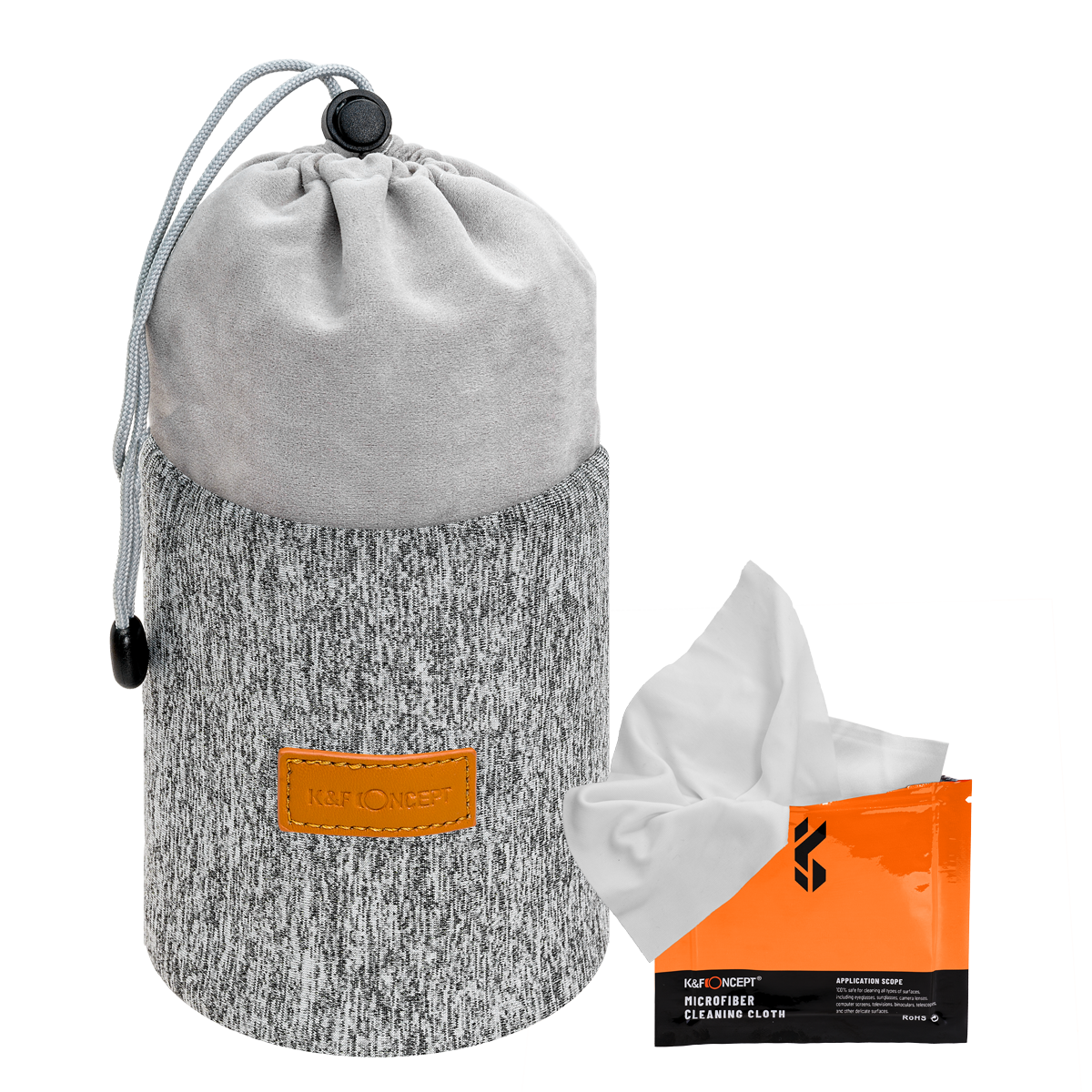



K&F Lens Pouch; Neoprene Padded and Adjustable with a Lens Cloth
Lenses represent one of the most significant investments a photographer makes, often outlasting multiple camera bodies and opening creative possibilities that no amount of post-processing can replicate. Yet a single scratch on the front element or a hard knock during transport can compromise optical performance or render an otherwise excellent lens unusable. This K&F Concept protective pouch addresses that vulnerability with a layered approach to cushioning and an adjustable design that adapts to different lens lengths and hood diameters.
The construction centres on shock absorption and surface protection. The lower section uses thick neoprene chosen specifically for its ability to dissipate impact energy, shielding the lens from the bumps and jostling that occur when a bag is set down heavily or knocked against a doorframe. Neoprene also resists moisture, offering a degree of protection against condensation or light rain that might penetrate an outer bag. A firm sponge mat reinforces the base, adding a second layer of cushioning beneath the lens's heaviest point. The interior is lined with flocked microfibre, a material soft enough to prevent contact scratches yet durable enough to withstand repeated packing and unpacking.
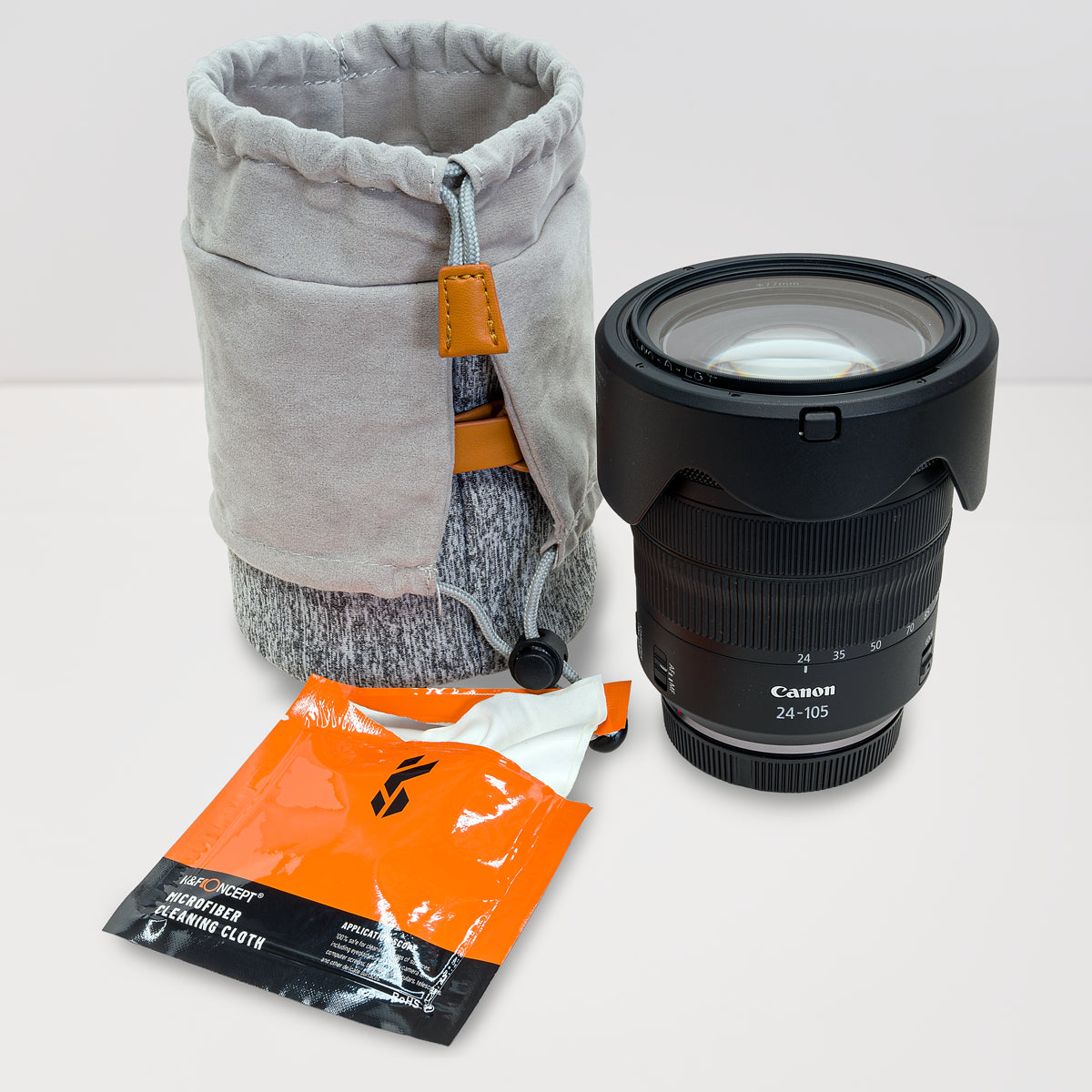
What distinguishes this pouch from fixed-height alternatives is the extendable top pocket. The microfibre lining continues upward beyond the neoprene base, forming a sleeve that can be pulled out to accommodate longer lenses or folded down for compact primes. Maximum extended length reaches 18 centimetres, sufficient for most standard zooms fitted with their hoods. The adjustable buckle at the top accommodates lens hoods up to 10 centimetres in diameter, though ultra-wide or fisheye hoods that exceed this dimension will not fit. This size flexibility means a single pouch can serve multiple lenses in a kit, rather than requiring dedicated cases for each focal length.
Access is controlled by two independent drawstrings. The lower drawstring cinches the neoprene base, while the upper drawstring secures the microfibre sleeve. This dual-closure system ensures the lens remains enclosed regardless of how far the top pocket is extended. Faux leather tabs cap the lower drawstring ends, providing a tactile grip point that's easier to operate than bare cord, particularly when wearing gloves or working in low light. The upper drawstring features a squeeze-clip adjuster for quick tension changes. A locking strap adds a failsafe when the pouch is extended to full height, preventing the lens from sliding out if the pouch tips over inside a bag.
The pouch functions primarily as internal organisation within a larger camera bag or backpack, separating lenses from bodies, batteries, and other hard-edged accessories that could cause abrasion during transit. It prevents the gradual accumulation of micro-scratches that degrade coatings and image quality over time. The soft, collapsible construction means the pouch occupies minimal space when empty, unlike rigid cases that consume the same volume whether in use or not. When folded flat, it tucks into a side pocket or lid compartment, ready to be deployed when additional lenses are added to the kit.
While designed for bag storage, the pouch can be carried independently when a full camera bag isn't warranted. Clipping it to a belt loop or bag strap provides faster access than digging through a main compartment, useful during event coverage or street photography where lens changes need to happen in seconds. The neutral grey exterior with burnt orange K&F branding maintains a low profile, avoiding the visual signature of expensive gear that can attract unwanted attention in urban environments.
Organisation benefits extend beyond protection. Pouches like this one impose structure on the chaotic interior of a well-used camera bag, assigning each lens a designated space and preventing the frustrating search for a specific focal length when a shot is time-sensitive. They also stabilise contents during movement, reducing the shifting and clanking that occurs when loose lenses slide around inside oversized compartments. For photographers who rotate between different bag sizes depending on the shoot, pouches allow lenses to be transferred quickly without re-padding each compartment.
The economics of lens protection are straightforward. Repair costs for damaged optics routinely exceed the original purchase price of mid-range glass, and many types of damage,decentred elements, internal scratches, broken autofocus motors,are uneconomical to repair relative to replacement cost. A pouch that prevents even a single incident pays for itself many times over. Pairing this storage solution with a UV or protection filter on the front element creates a two-layer defence: the filter guards against scratches during shooting, the pouch guards against impact during transport.
Before selecting this pouch, verify that your lens and hood combination falls within the 10-centimetre diameter limit. Measure the widest point of the hood when mounted, not the lens barrel itself, as the hood typically determines clearance. Lenses with petal or tulip hoods designed for ultra-wide angles may exceed this threshold even if the lens body is compact. For photographers working primarily with standard zooms, fast primes, or telephoto lenses up to moderate lengths, the dimensions accommodate the majority of commonly used glass.
This pouch forms part of a broader protective strategy rather than a standalone solution. It works in concert with a well-padded camera bag, sensible handling practices, and front-element filters to minimise the cumulative wear that degrades optical performance. The adjustable height and dual-drawstring closure make it adaptable to different lenses within a kit, reducing the need for multiple dedicated cases. The collapsible design ensures it doesn't become dead weight when not actively in use, a consideration for photographers who count grams on long shoots or multi-day assignments.
K&F Concept positions this accessory as practical insurance for photographers who understand that lens longevity depends on consistent, unglamorous habits,using a pouch every time, not just on high-risk trips. The engineering reflects that philosophy: no unnecessary features, no fragile components, just layered cushioning and adjustable sizing executed in materials chosen for durability and shock absorption. For anyone carrying glass worth protecting, the cost-to-benefit ratio makes this type of storage a baseline requirement rather than an optional extra. KF13.121