

K&F Pro-Shooter Junior 25L Camera Backpack for Photographers
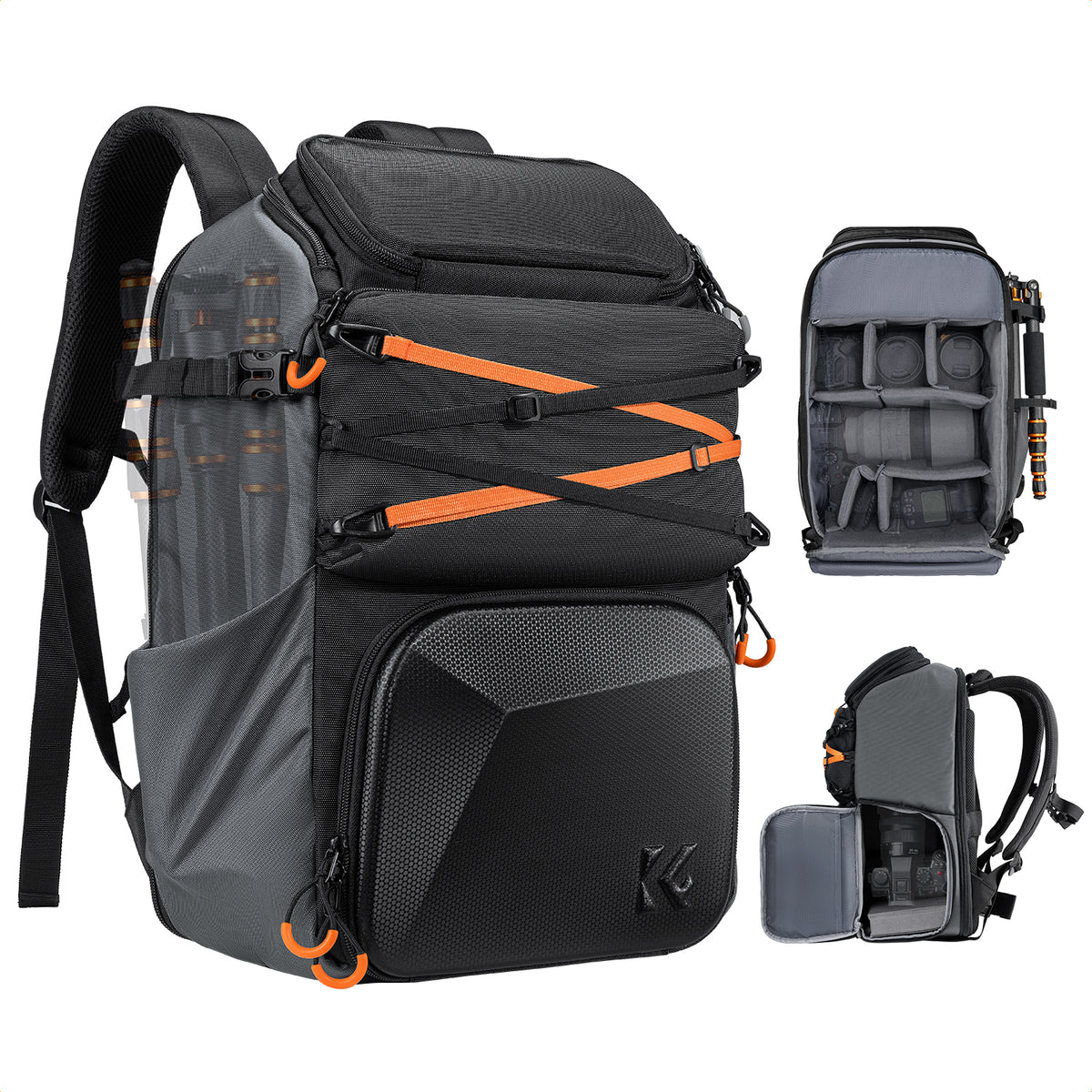
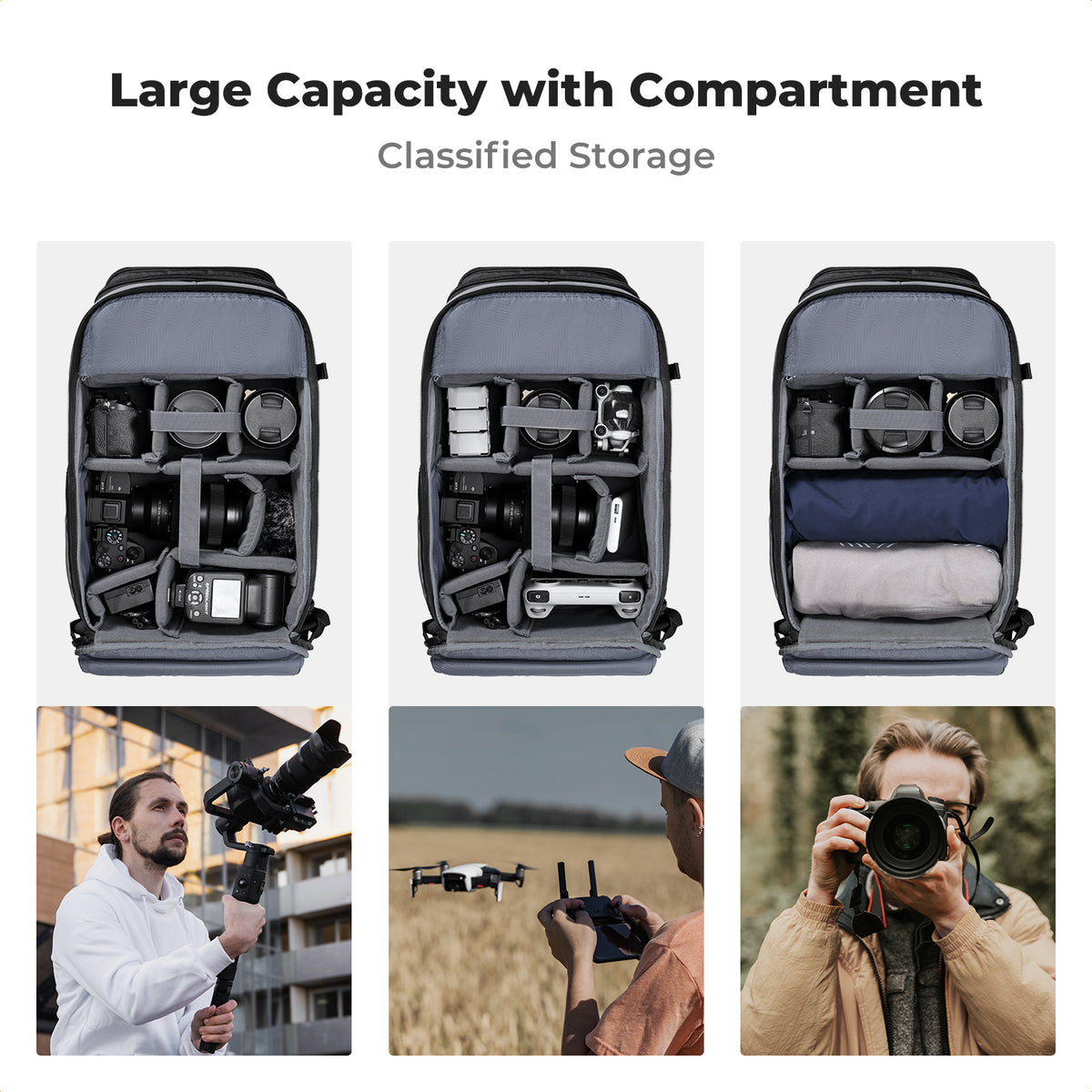
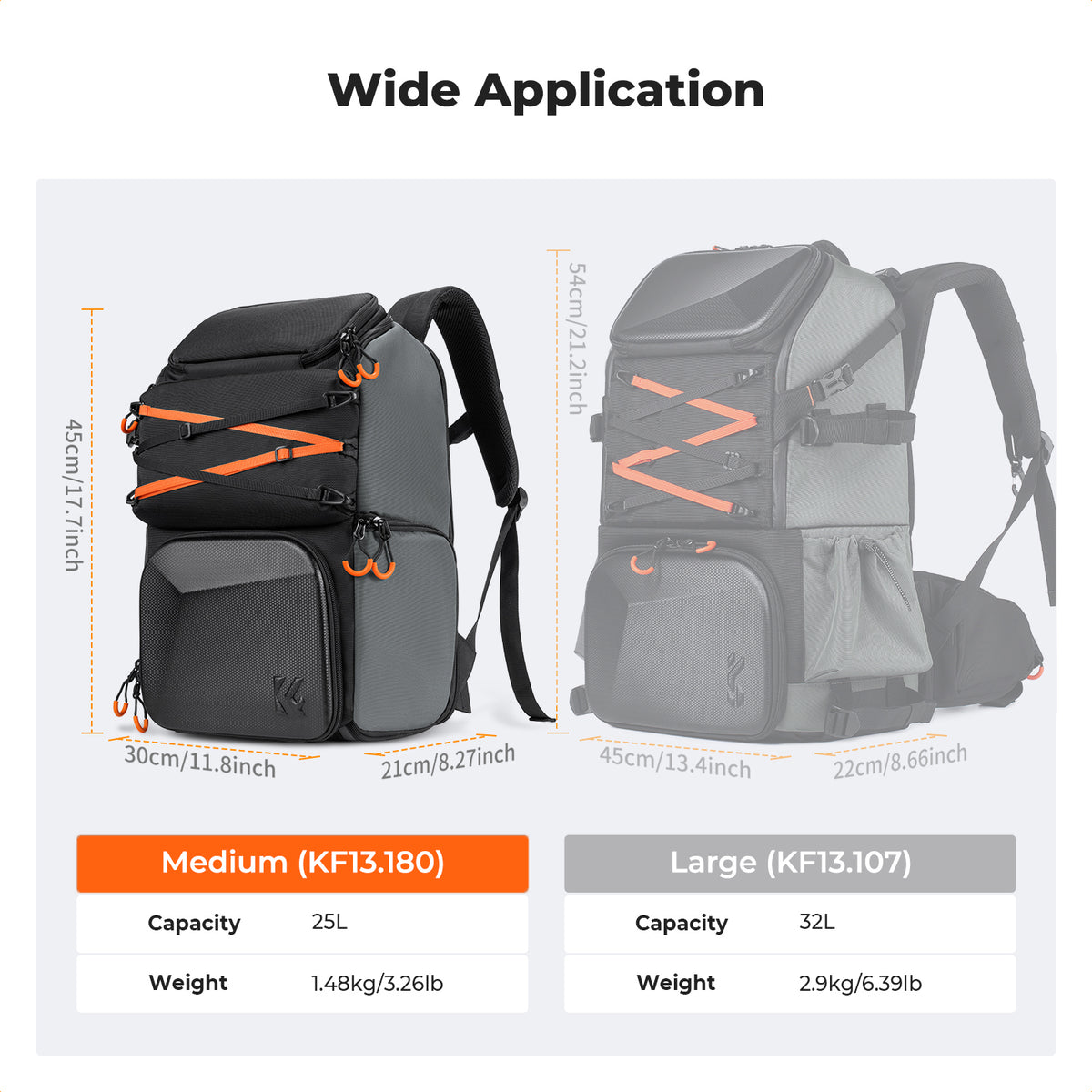
The Pro-Shooter Junior is built for location photographers who shoot multi-body, multi-lens kits regularly and need everything, gear, laptop, tripod, in one 25-litre load without splitting across two bags. It holds two DSLR or mirrorless bodies and up to six lenses depending on size, alongside batteries, chargers, filters, a laptop and a tripod, all organised so nothing needs a full unpack mid-shoot to find.
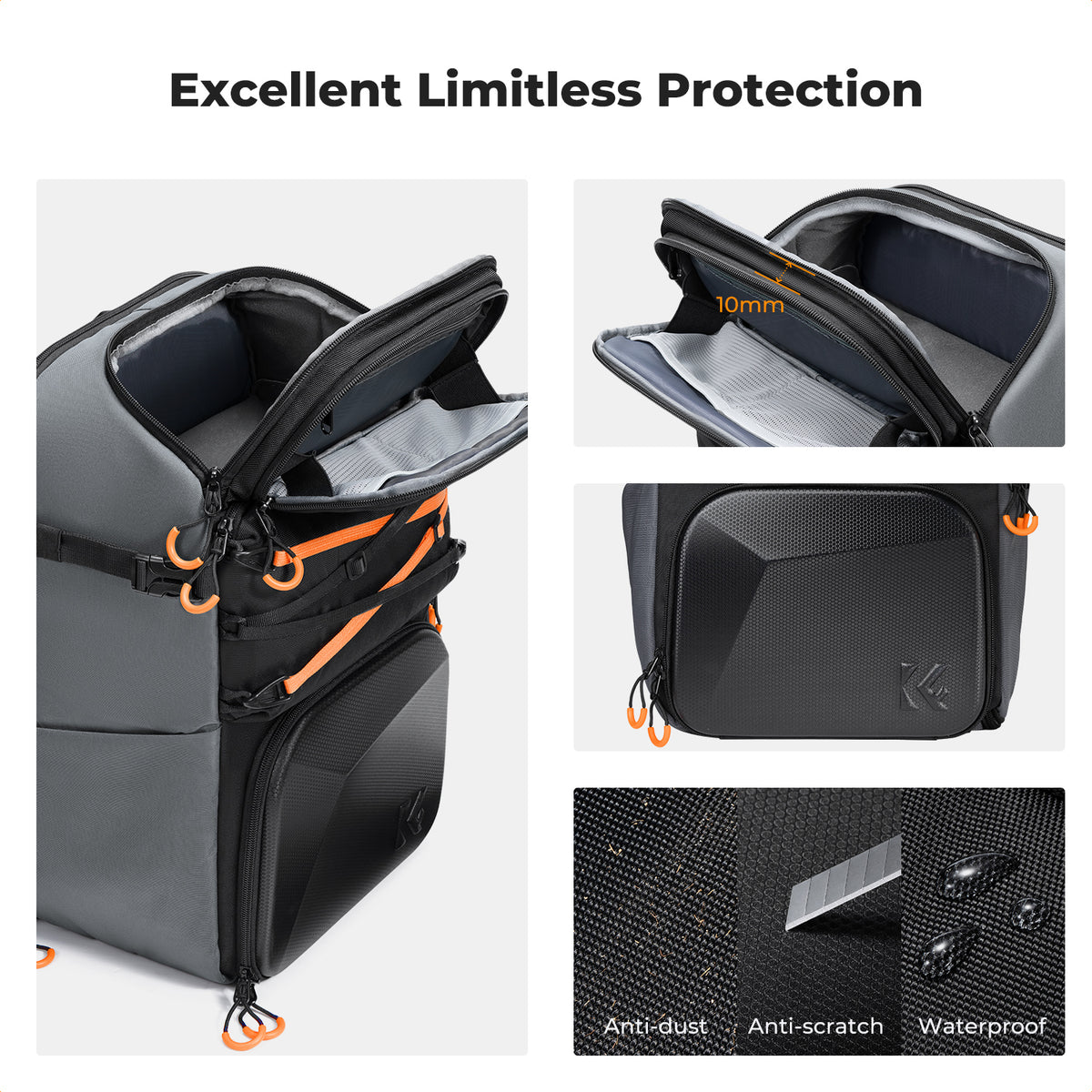
The 180-degree rear-access opening exposes the entire main compartment when the bag is laid flat, showing every lens and body at once, useful working against the clock at a wedding ceremony or a live event. That design is also the bag's security feature: the primary zips face the wearer's back rather than outward, so nobody can unzip it while it's being worn on public transport or in a crowd, and the trade-off, needing to take the bag off for full access, is a deliberate one. A side quick-access panel solves the speed problem the rear design creates: reaching in and swapping a lens or grabbing a body without removing the pack at all, keeping the photographer mobile during street or documentary work where staying responsive matters.
Four dense-foam EVA dividers reshape the main compartment to fit different body and lens combinations rather than flimsy fabric that collapses under a knock, and a dual-layer upper compartment keeps a drone genuinely isolated from camera bodies so propellers don't scratch glass, or serves as general clothing storage on a multi-day trip.
Worth being honest about upfront: a 70-200mm f/2.8 does fit vertically in the main compartment, but occupies roughly two lens slots' worth of space once the dividers are configured around it, so the realistic carry with a lens like that is closer to two bodies and 3-4 smaller lenses rather than the full six-lens claim, which assumes standard zooms and primes rather than a large telephoto.
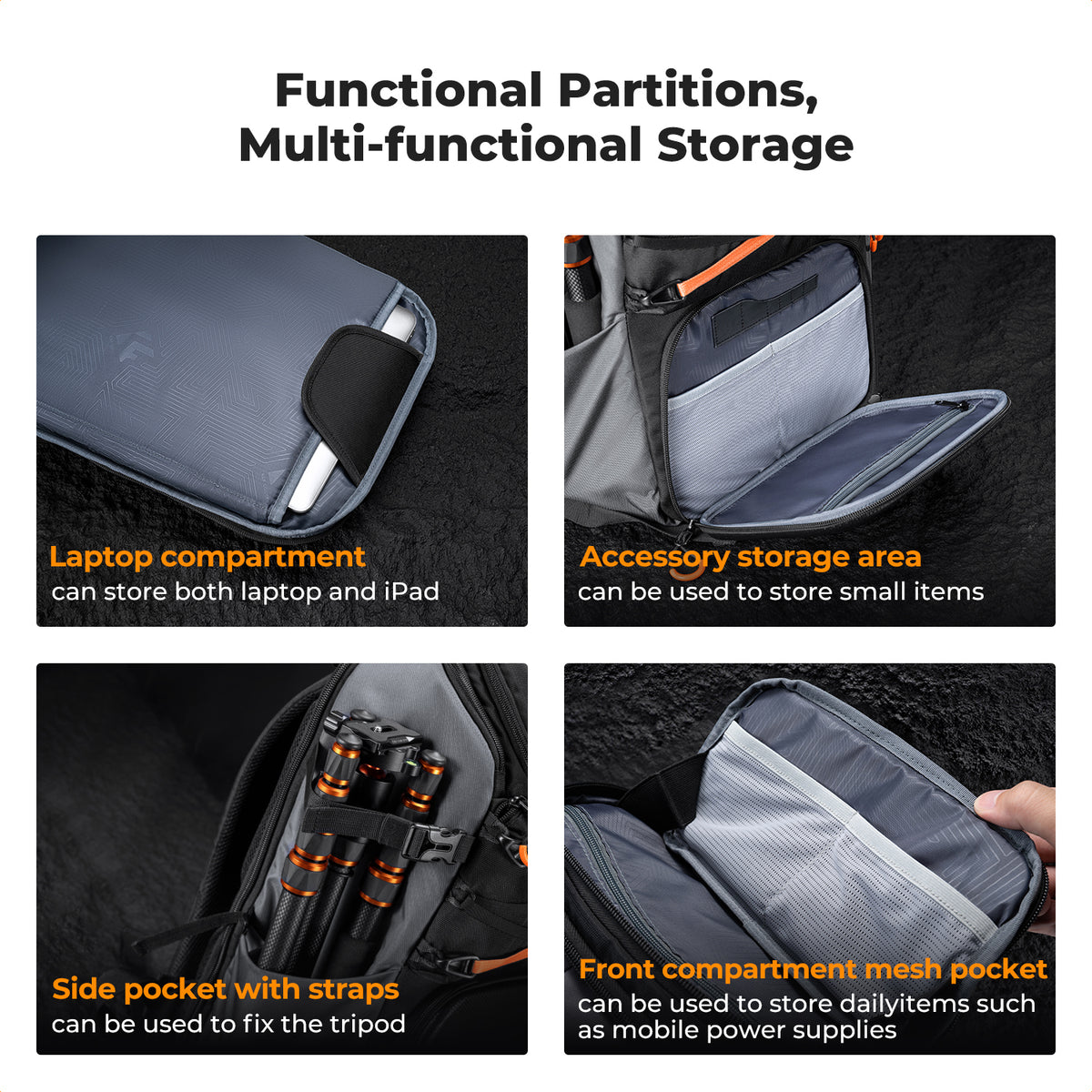
1200D nylon with a reinforced front shell resists abrasion and impact from years of being shoved under seats or stacked with other luggage, and 10mm padding across every interior wall and the base panel absorbs impact from a drop onto concrete or a toss into an overhead locker, thick enough to protect without eating meaningfully into internal capacity. A side tripod attachment system with a dedicated foot support pouch secures a tripod vertically along the outside of the pack, freeing internal space for lenses rather than forcing the tripod inside, and the pouch itself carries a small zipped compartment for lens caps or cable releases.
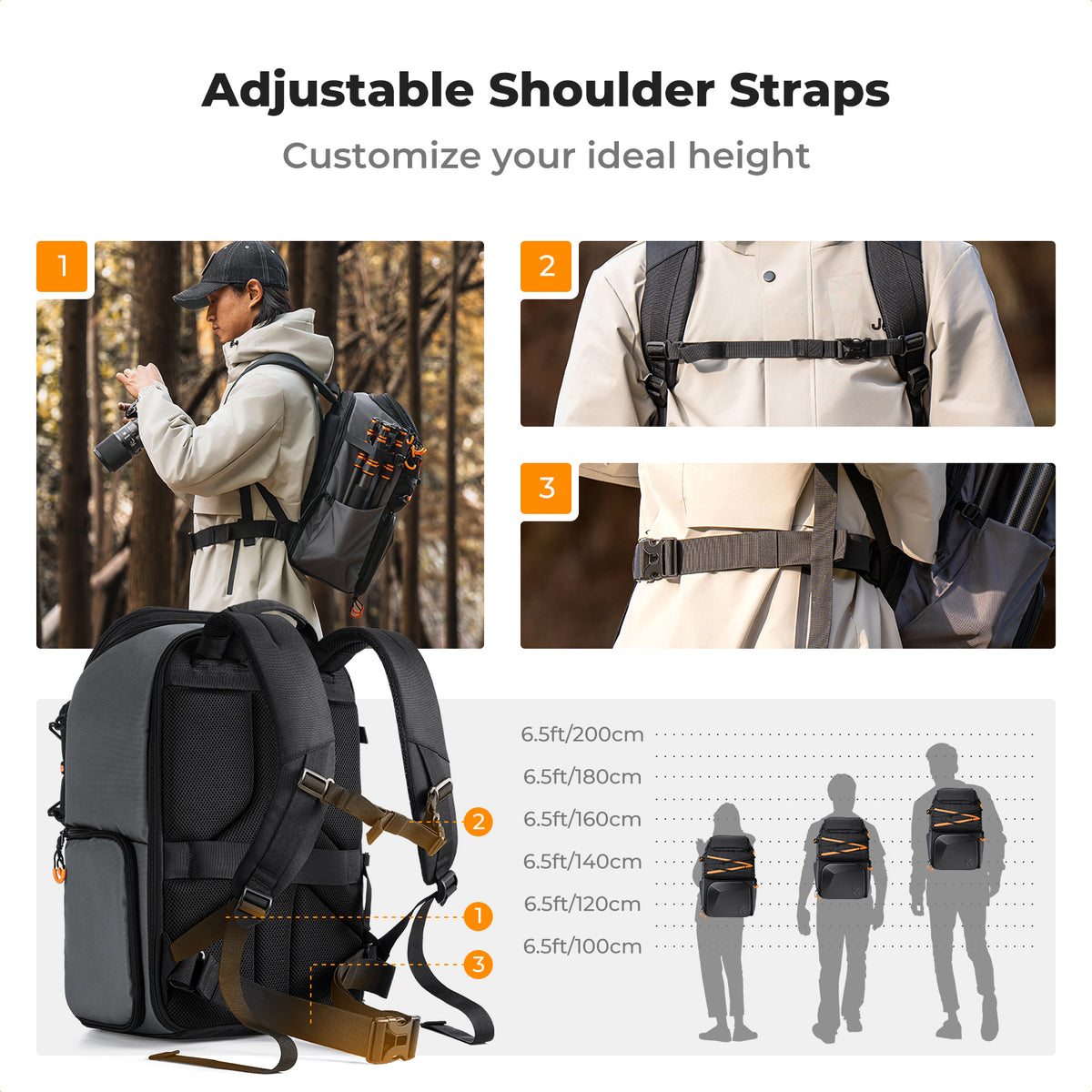
A separate rear 39.6cm laptop compartment fits a 15.6-inch laptop or tablet, letting on-location editing or same-day card backup happen without a second bag. An adjustable chest strap and waist belt transfer weight from the shoulders to the hips, genuinely reducing fatigue carrying 8kg of gear across a full day of event coverage or a hiking shoot, and 70mm padded shoulder straps spread load across a larger area than a standard strap. Metal D-rings accept a carabiner or accessory clip, and a luggage strap slides over a rolling suitcase's telescopic handle for one-handed airport transfers.
The included ripstop nylon rain cover deploys over the whole bag in seconds and packs into its own dedicated built-in pocket, so it's never left behind on a shelf when it's actually needed. A front lower pocket includes hard-case protected memory card slots that keep SD and CF cards separate from the main gear, avoiding an accidental shoot-over on an unformatted card during a multi-card workflow.
The rear-access-versus-side-access split is worth understanding as two genuinely different jobs rather than redundant openings: the rear clamshell is for a proper repack, laying the whole bag flat and seeing everything at once between locations, while the side panel exists purely for speed, one lens out, one lens back in, without ever fully opening the bag or setting it down. A photographer moving through a wedding day, ceremony to reception to portraits, uses both constantly and for entirely different reasons rather than picking one and ignoring the other.
The four EVA dividers are dense foam rather than the flimsy fabric partitions found in cheaper bags, and that distinction matters most exactly when the bag takes a knock, set down too hard on a concrete floor, tossed into an overhead locker, or bumped against a doorframe moving through a venue. Fabric dividers compress and let an impact through to the gear behind them; dense foam holds its shape and actually absorbs that energy instead, which is the entire reason a 10mm padding thickness across every interior wall and the base panel is specified rather than left to whatever generic foam happened to be cheapest to source.
The realistic capacity caveat around a 70-200mm f/2.8 is worth repeating in plain terms because it's the single most common way a bag like this gets bought on the wrong expectation: the six-lens figure assumes standard zooms and primes, not a large telephoto occupying two slots' worth of space on its own. Anyone whose kit centres on long glass should plan around two bodies and 3-4 smaller lenses alongside that 70-200mm, not the full six, and configure the EVA dividers with that real-world layout in mind from the start rather than discovering the shortfall mid-pack before a shoot.