



K&F Dual Charger for Sony FW-50 batteries
Charging Workflow Built for Multi-Battery Shooters
When you're running mirrorless bodies that drain power faster than DSLRs ever did, particularly during video recording or high frame-rate bursts, a single-slot charger becomes a bottleneck. This dual-port unit addresses that constraint directly: two FW-50 batteries charging in parallel, halving the turnaround between a drained set and a ready kit. For event shooters rotating through multiple bodies, or travel photographers managing power across long days without mains access, simultaneous charging isn't a luxury; it's how you avoid the 'waiting for the second battery' dead zone that kills momentum.
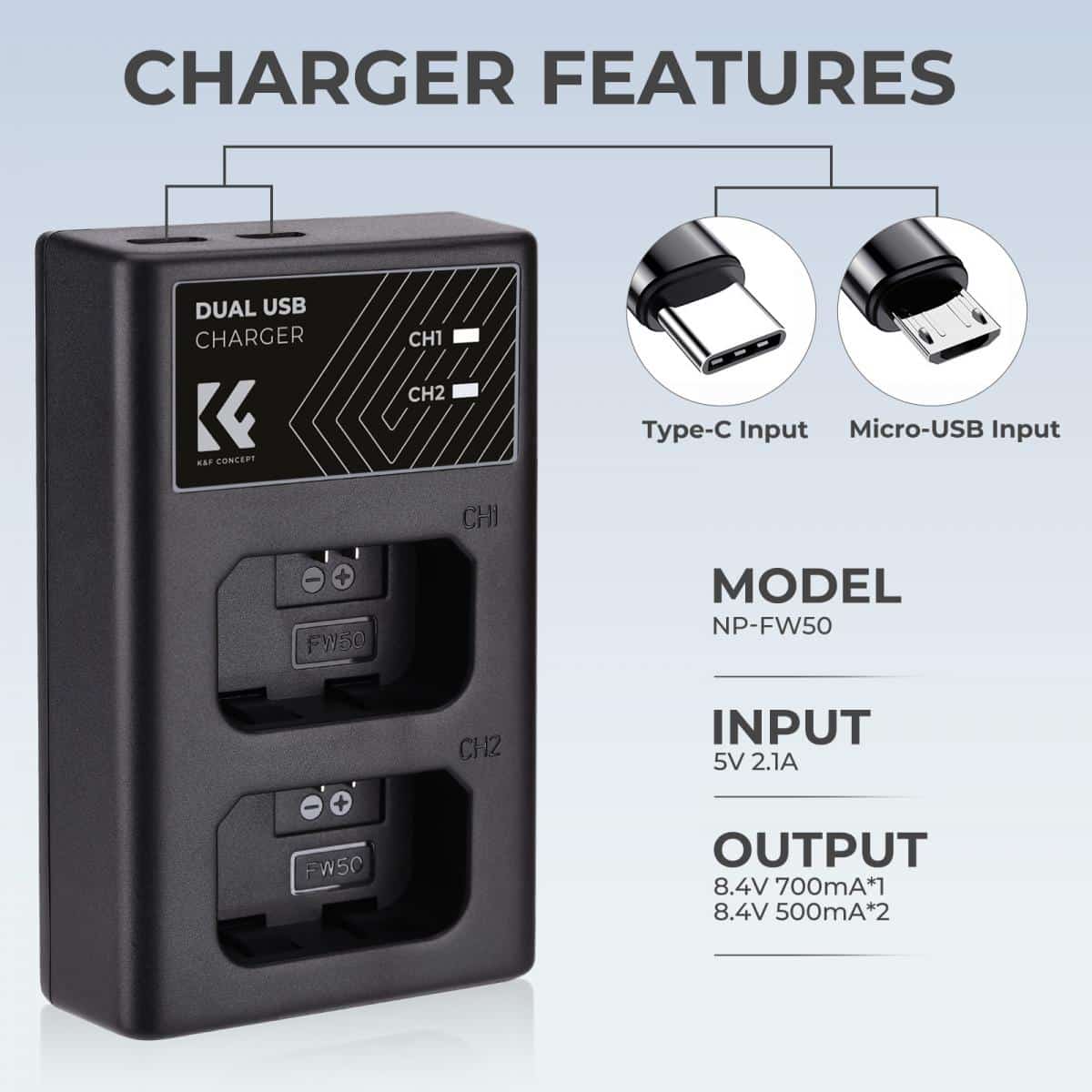
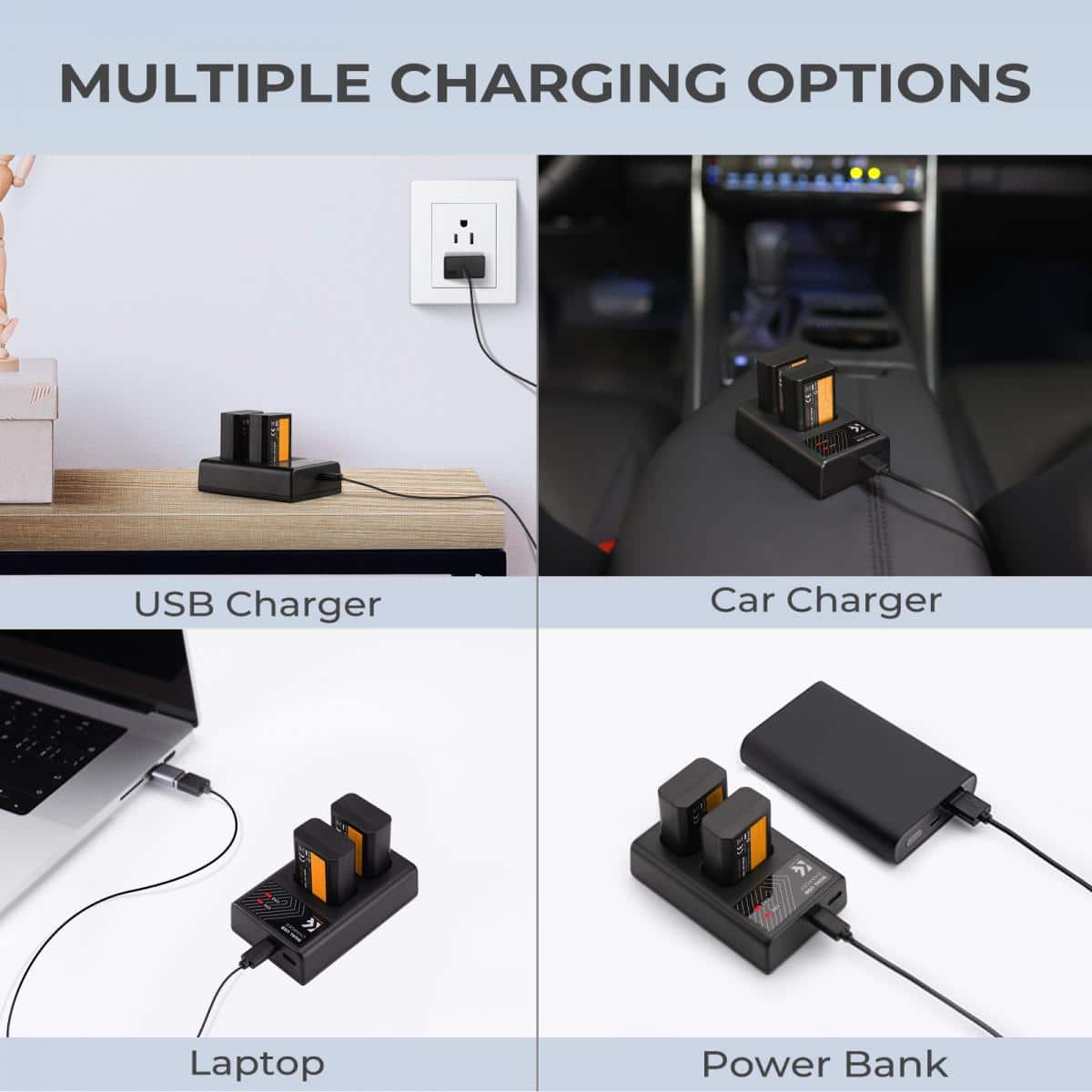
The design assumes you're not always near a wall socket. USB Type-C and micro-USB ports both present on the chassis mean the charger accepts power from laptop ports, car adapters, or the power bank already in your bag. That flexibility matters on location: a 10,000mAh power bank can top up two depleted FW-50 cells without requiring you to find a café or return to the vehicle. The included USB-A to USB-C cable handles most modern sources; if you're still carrying older micro-USB leads, the secondary port ensures backward compatibility without needing an adapter.
Protection Architecture That Preserves Cell Lifespan
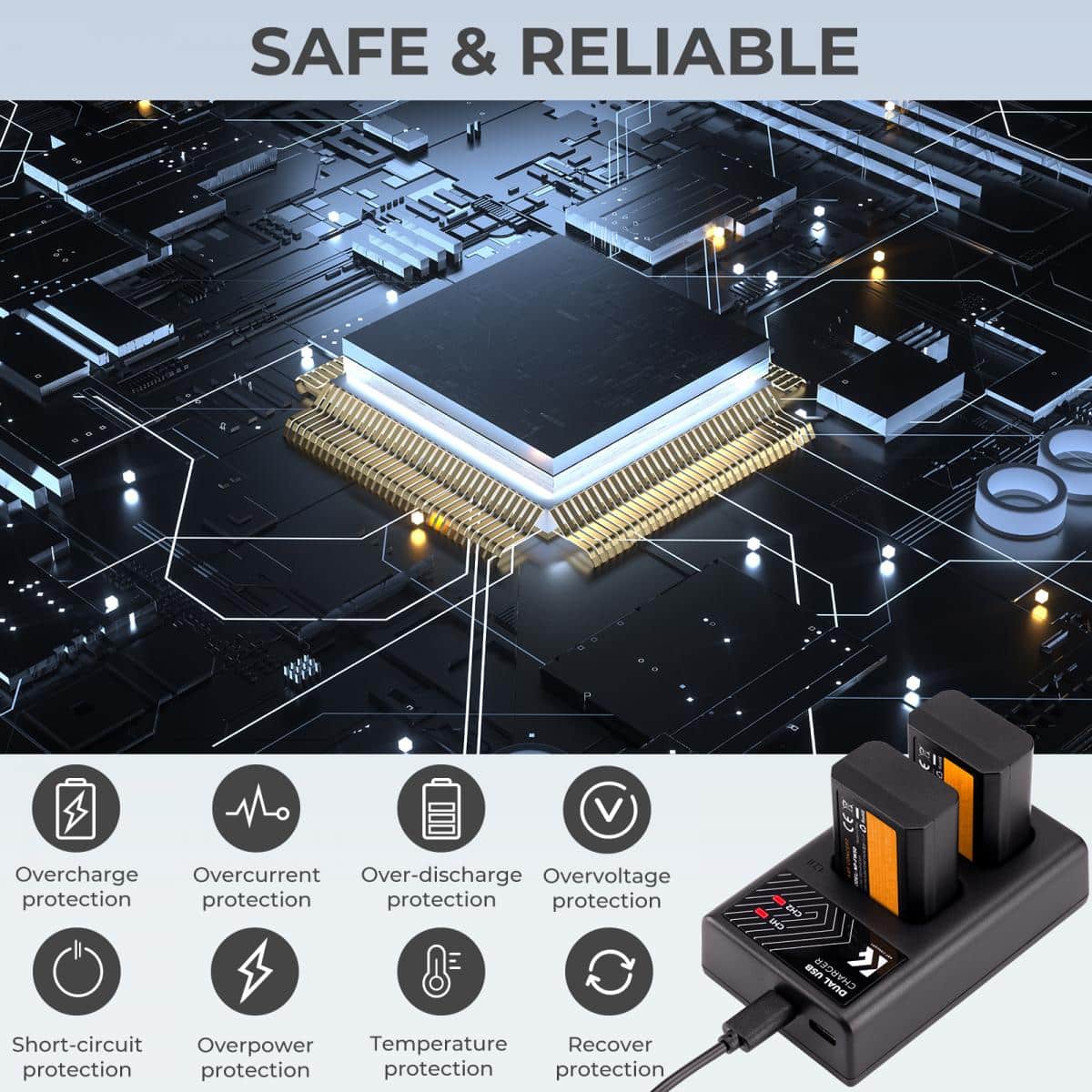
Lithium-ion batteries degrade faster under thermal stress, voltage spikes, or charge cycles pushed beyond safe thresholds. The onboard management chip monitors eight failure modes: high-temperature cutoff, over-current limiting, over-charge termination, over-discharge prevention, over-voltage clamping, short-circuit isolation, over-power shutdown, and recovery sequencing after a fault. These aren't marketing abstractions, they're the difference between a battery that holds 80% capacity after 500 cycles and one that's down to 60% after 300. For shooters who've invested in a set of four or five FW-50 cells, that longevity delta translates to years of usable service before replacement becomes necessary.
The LED indicators give real-time feedback: red during active charging, green at completion. No guesswork about whether a cell is topped up or still drawing current. That clarity helps when you're packing for a shoot at 5am and need to know which batteries are ready and which need another hour.
Compatibility Across Sony and Third-Party Cells
The charger accepts both OEM Sony NP-FW50 batteries and K&F Concept equivalent cells without modification. The contact plate geometry and charge profile accommodate the FW-50 form factor regardless of manufacturer, so mixed sets, a combination of original Sony units and aftermarket spares, charge without issue. For photographers who've built their battery inventory around cost-effective third-party options, this removes the 'will it work?' uncertainty that sometimes accompanies non-OEM chargers.
That cross-compatibility extends to the power delivery side as well. The charger draws 5V input, which aligns with standard USB power specifications. Whether you're plugging into a 2.4A wall adapter, a laptop's 1A port, or a portable battery rated at 3A output, the unit negotiates the available current and adjusts charge rate accordingly. Higher-amperage sources accelerate the process; lower-output devices still complete the job, just over a longer interval.
Field-Practical Dimensions and Build
The housing measures compact enough to slip into a camera bag's accessory pocket without displacing a lens or occupying prime real estate. Weight sits below 100 grams, so it doesn't register as bulk when you're already carrying bodies, glass, and support gear. The matte finish resists fingerprints and surface scuffs better than gloss plastics, and the recessed ports reduce the risk of cable strain damage if the unit gets jostled in transit.
For shooters working across multiple locations in a single day, a morning corporate session, an afternoon product shoot, an evening event, the ability to charge in the car between gigs using a 12V USB adapter keeps the workflow uninterrupted. You're not hunting for power outlets in client spaces or rationing battery swaps to stretch a single charged cell across two hours of coverage.
Why Dual-Slot Charging Changes the Logistics
Single-battery chargers force a serial workflow: charge one, wait, swap, charge the next. If each FW-50 takes 150 minutes to full from empty, a four-battery rotation means six hours of sequential charging. Parallel charging collapses that to three hours for the same set. The time saving compounds when you're managing batteries across multiple shoots per week, less time tethered to the charger, more time with a full rotation ready to deploy.
The protection circuitry also means you can leave batteries on the charger overnight without risking over-charge damage. The unit terminates current delivery once cells reach full capacity, then switches to a maintenance trickle that prevents self-discharge without stressing the chemistry. That 'set it and forget it' reliability removes the mental load of timing charge cycles or waking up to pull batteries off at 3am.
For photographers running Sony A6000-series bodies, A7-series mirrorless cameras, NEX models, or any platform that relies on the NP-FW50 standard, this charger integrates into an existing battery ecosystem without requiring new cells or adapters. It's a logistics upgrade that doesn't demand a gear overhaul, just a smarter way to manage the power infrastructure you already own. KF28.0009.