
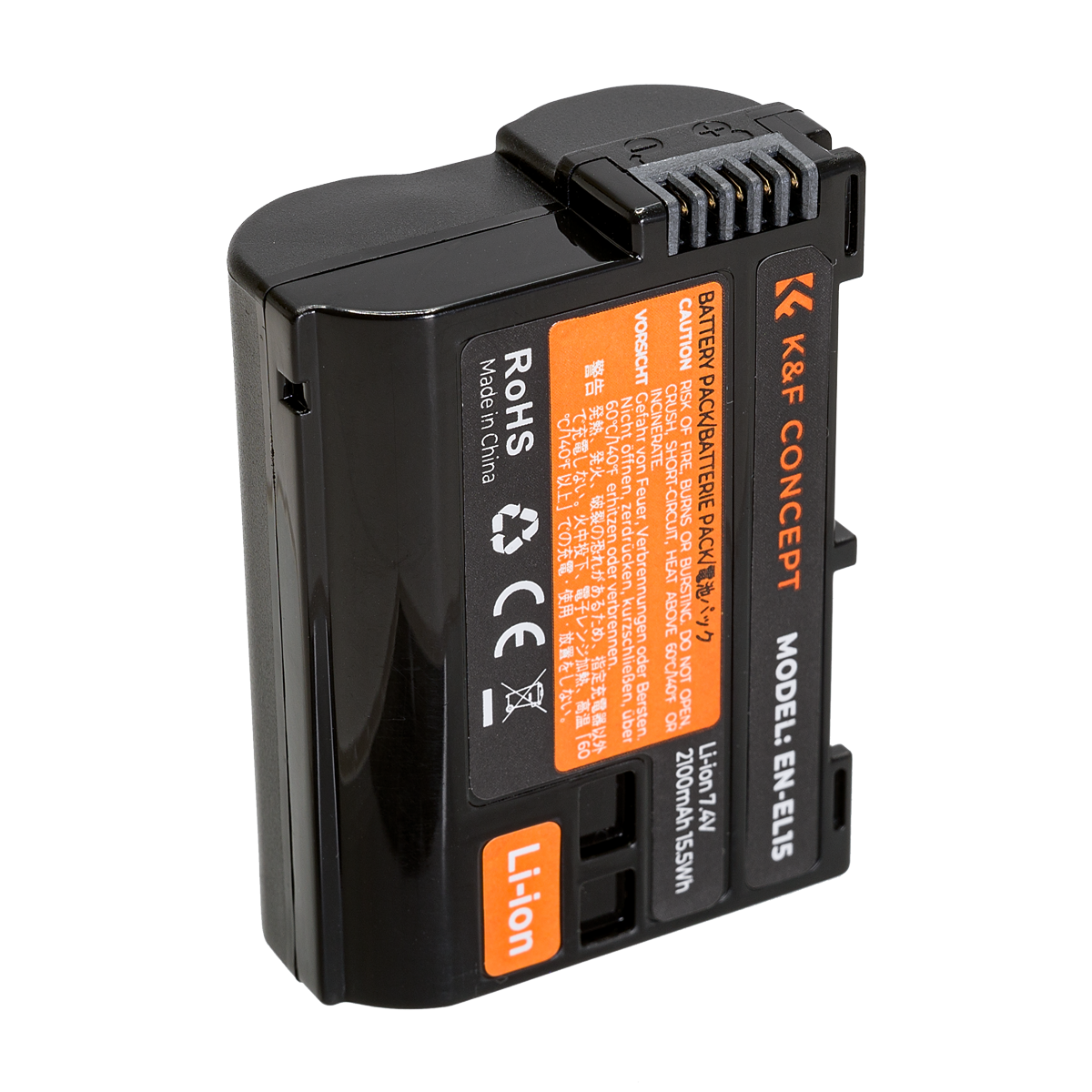
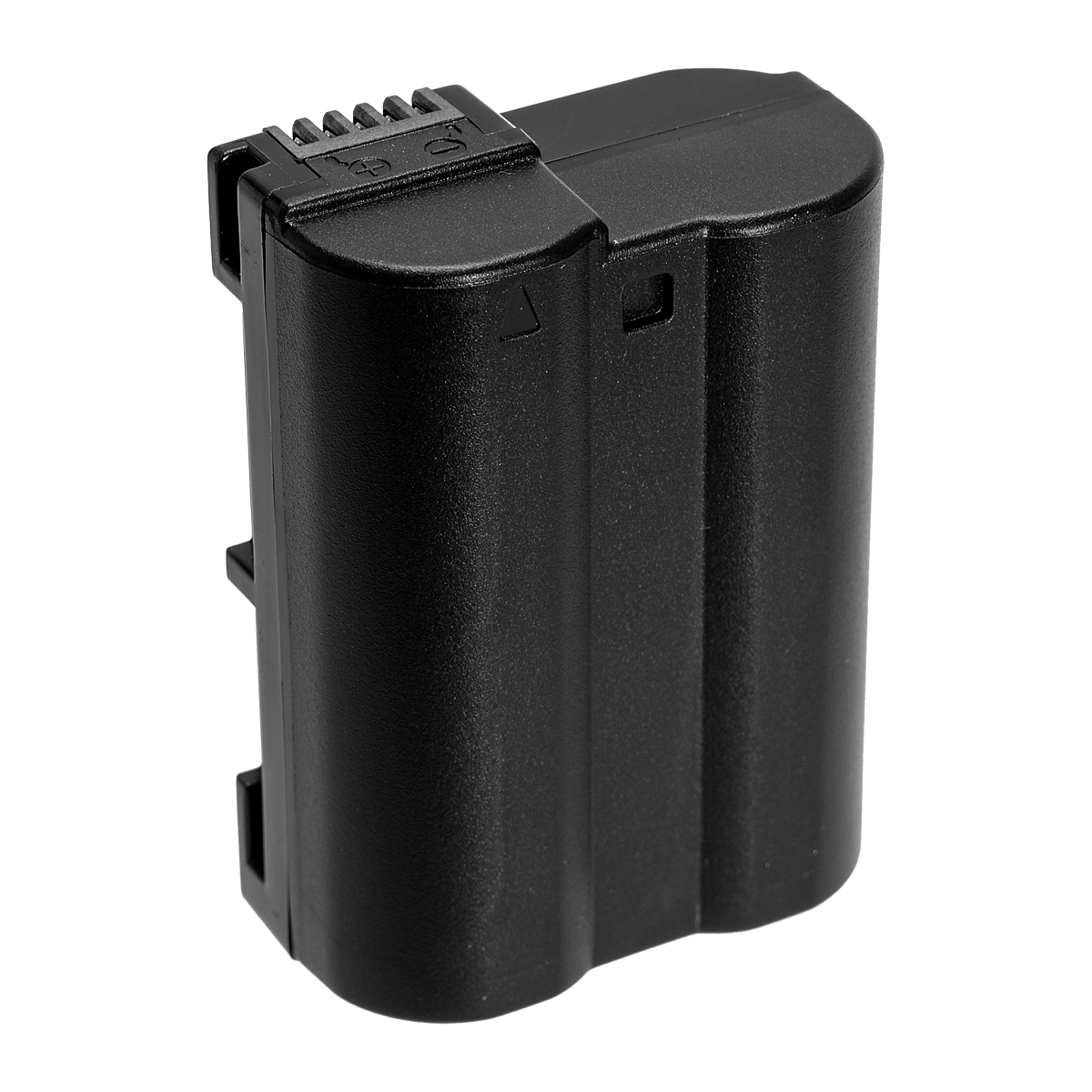
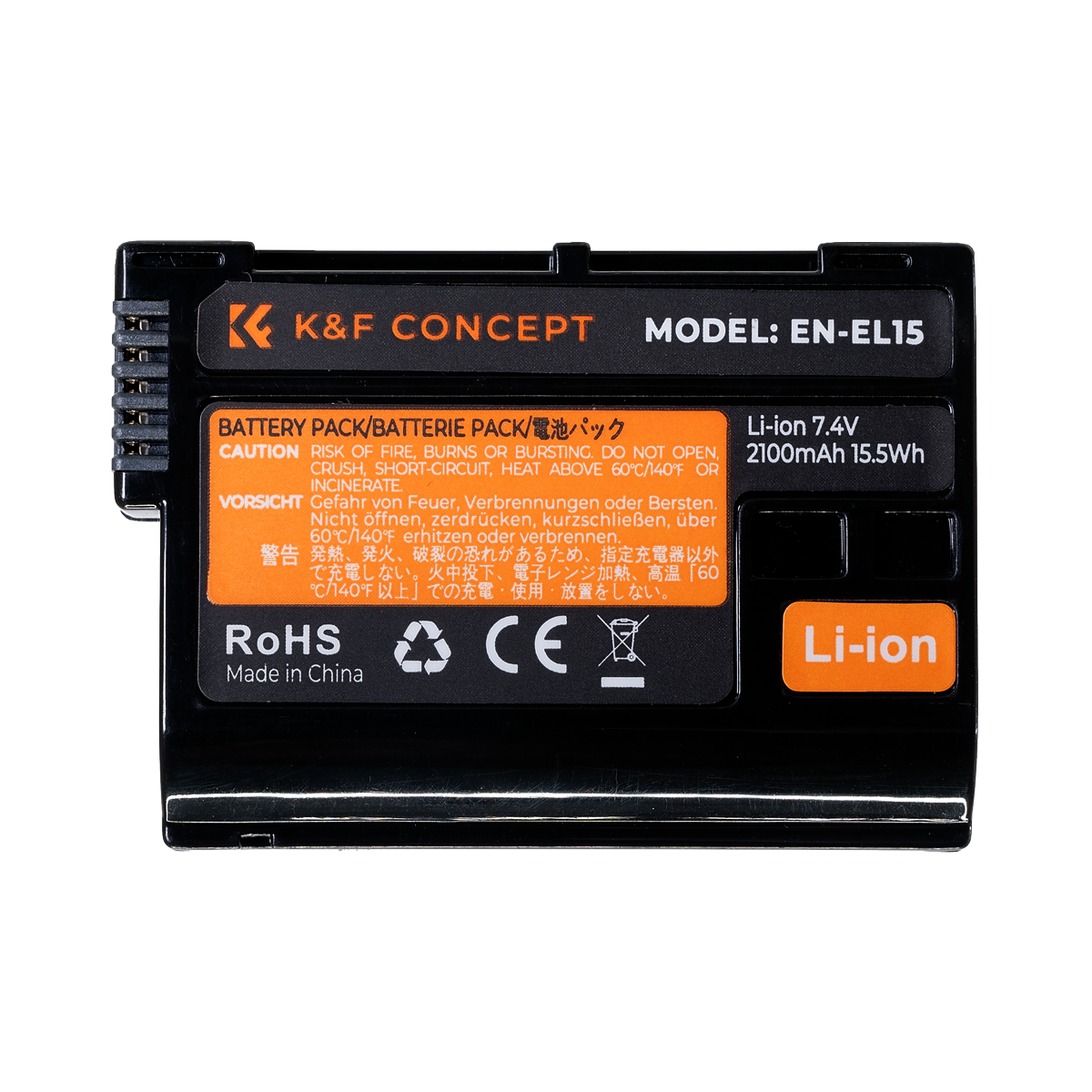

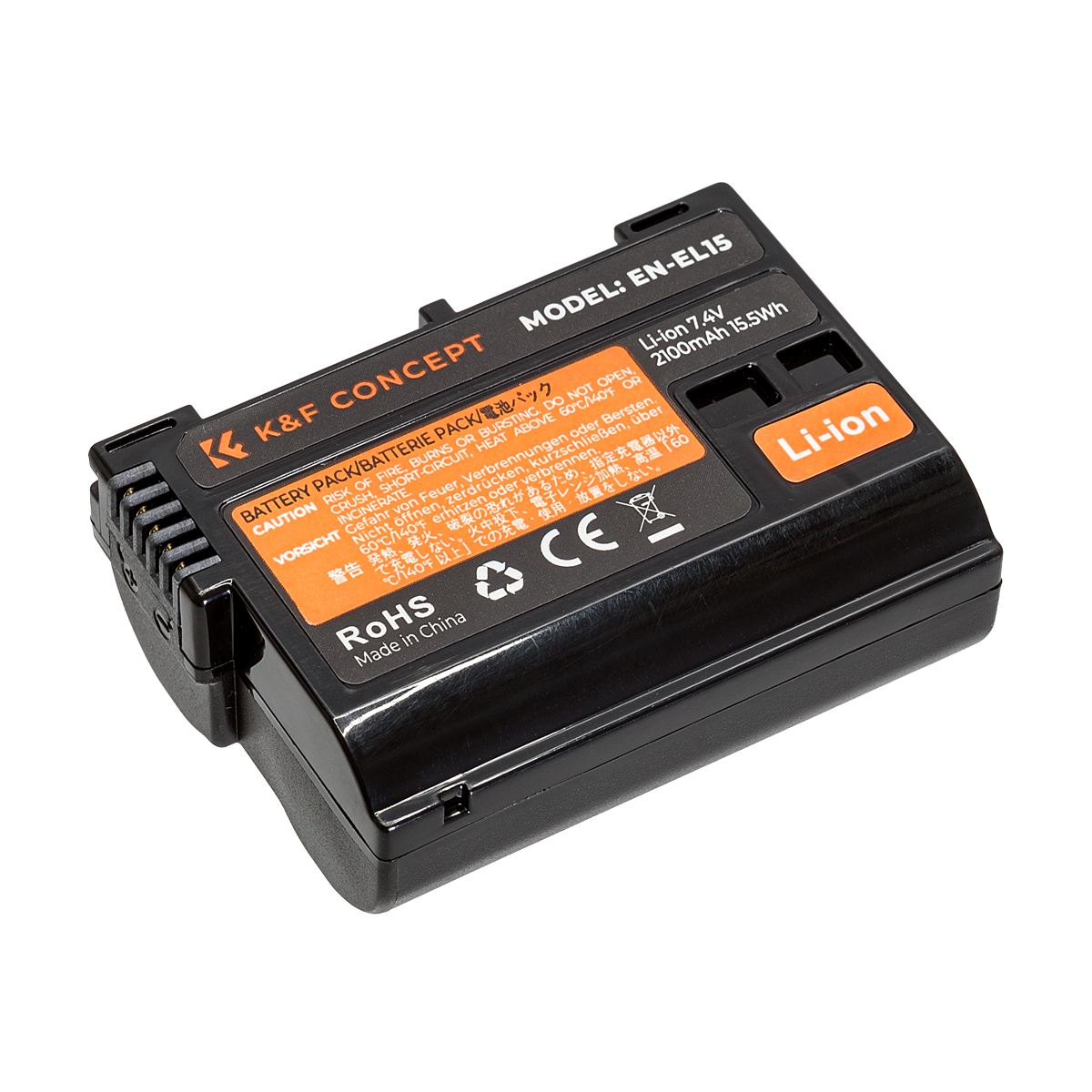
K&F EN-EL15 Camera Battery for Nikon Cameras
When you're out in the field chasing light or locked into a multi-hour event shoot, running out of charge isn't just inconvenient, it can mean missing the shot you travelled for or letting down a client. A spare lithium-ion cell rated at 2100mAh gives you the runway to keep working when the original battery hits empty, whether you're halfway through a wedding ceremony, deep into a wildlife stakeout, or documenting a festival that runs well past sunset.
Extended Runtime for Real Shoots
A 2100mAh capacity translates to several hundred frames on a typical mirrorless body or a solid block of 4K recording time on a camcorder, depending on how you shoot. That matters when you're working somewhere you can't plug in, a nature reserve, a multi-day hike, a destination wedding abroad, or a corporate event in a venue with no accessible power. Swapping in a fresh cell takes five seconds; waiting for a charge takes an hour you don't have. Carrying two or three spares in your bag means you can shoot all day without rationing shots or second-guessing whether you have enough juice left for the golden-hour sequence.
The performance gap between a quality third-party cell and a cheap no-name alternative shows up in real use. Voltage sag under load, premature capacity fade after a few dozen cycles, or a battery that reports full but dies twenty minutes into a shoot, those are the hallmarks of cells built to a price rather than a standard. This battery is engineered to deliver equivalent or better performance compared to the manufacturer's original, using lithium-ion chemistry that holds its charge across hundreds of cycles and doesn't suffer from memory effect. You can top it up whenever convenient without waiting for a full discharge, and it will still deliver its rated capacity months later.
CE and RoHS certification means the cell has passed the European Union's safety and environmental standards, not a guarantee of perfection, but a baseline filter that eliminates the worst offenders. The one-year warranty covers manufacturing defects, which gives you recourse if a cell arrives dead or fails prematurely. That's table stakes for any battery you're trusting with paid work or irreplaceable personal moments.
Lithium-Ion Chemistry and What It Means in Practice
Lithium-ion cells don't hit peak performance straight out of the packaging. The first charge cycle conditions the internal chemistry; by the third or fourth cycle, you'll see the full rated capacity and the most stable voltage curve. That's normal behaviour, not a defect. Charge it fully before the first shoot, then run it through a couple of complete cycles, full discharge, full recharge, and you'll get the runtime the spec sheet promises.
Lithium-ion also means you can charge whenever it's convenient without waiting for the battery to drain completely. There's no memory effect, so topping up after every shoot won't degrade capacity over time. That's a meaningful workflow advantage if you're shooting sporadically, a corporate headshot session one day, a family portrait the next, and you want to start each job with a full charge without having to track discharge state.
The trade-off is that lithium-ion cells are sensitive to physical damage and temperature extremes. Puncturing the casing or crushing the cell can trigger thermal runaway, which is why you never toss a battery loose into a bag with keys or metal clips. Keep it in a padded case or the original plastic shell. Water and short circuits will kill a cell instantly, so if you're shooting in wet conditions, make sure the battery compartment is sealed before you swap. Heat above 60 °C, inside a car on a summer afternoon, or next to a lighting rig, will degrade capacity permanently. Cold weather below freezing will temporarily reduce performance, but the cell recovers once it warms up; just keep a spare inside your jacket so it stays closer to body temperature.
When a Spare Becomes Essential
If you shoot events, you already know that the moment the low-battery warning flashes is never convenient. It's always mid-ceremony, mid-toast, mid-performance, never during a lull when you have time to dig through your bag. A spare in your pocket means you swap and keep shooting without breaking stride. For travel and documentary work, the calculus is even simpler: you're often far from mains power for days at a time, and the cost of a second battery is trivial compared to the cost of the trip itself. For studio work or controlled environments where you can charge between setups, a spare is less critical but still useful insurance against the one day your primary cell decides to fail.
This battery is a direct equivalent for the Nikon EN-EL15 form factor, which means it fits the same cameras, uses the same charger, and communicates the same battery-status data to the camera body. The camera will display remaining charge as a percentage or bar graph, just as it does with the original. There's no firmware lock-out, no compatibility warning, no need to update the camera to recognise the cell. It drops in, clicks into place, and works.
What You're Actually Buying
You're buying the ability to keep shooting when the first battery dies. That's the entire value proposition, and it's why every working photographer and videographer carries at least one spare. The difference between a reliable spare and a cheap one is whether it actually delivers the runtime it promises and whether it's still delivering that runtime a year from now. This cell is built to perform equivalently to the manufacturer's original across hundreds of charge cycles, which means it should still be holding 80 per cent of its rated capacity after a year of regular use. That's the benchmark that separates a tool from a disposable.
If you're shooting anything that matters, paid work, personal projects, travel documentation, family milestones, you need more battery capacity than a single cell provides. The KF28.0012V3 gives you that capacity at a cost that makes sense for enthusiasts and working professionals alike.