
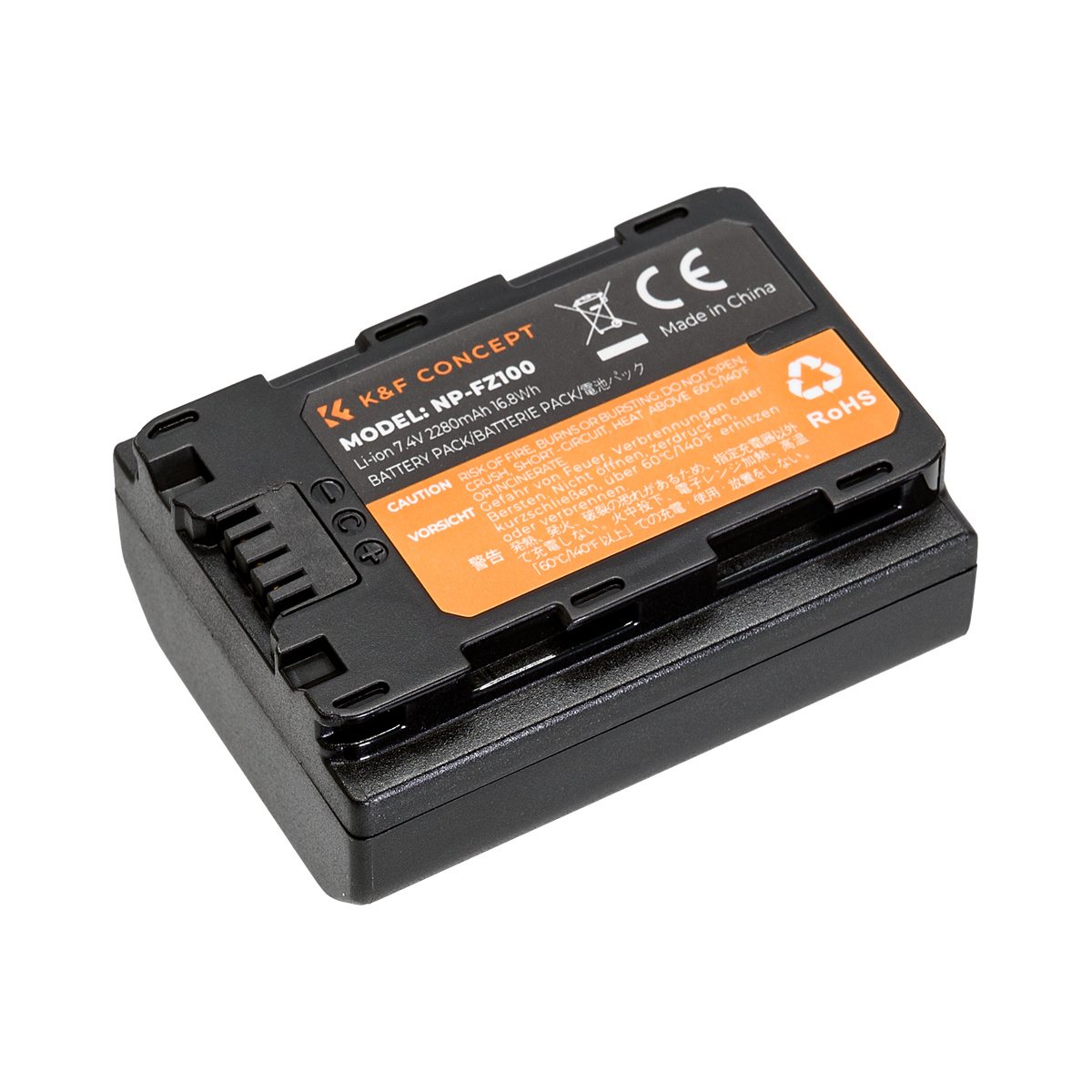
K&F NP-FZ100 Camera Battery for Sony Cameras
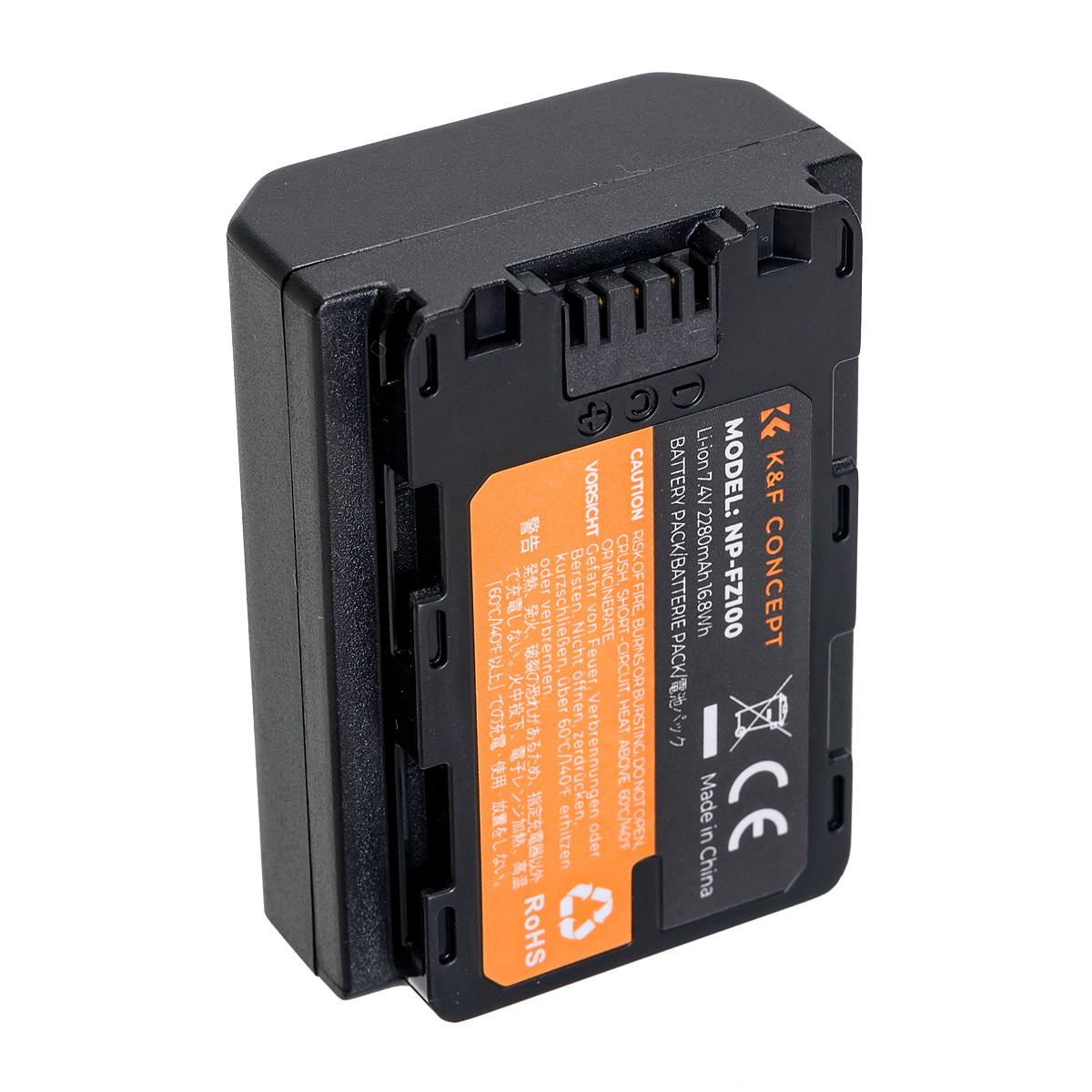
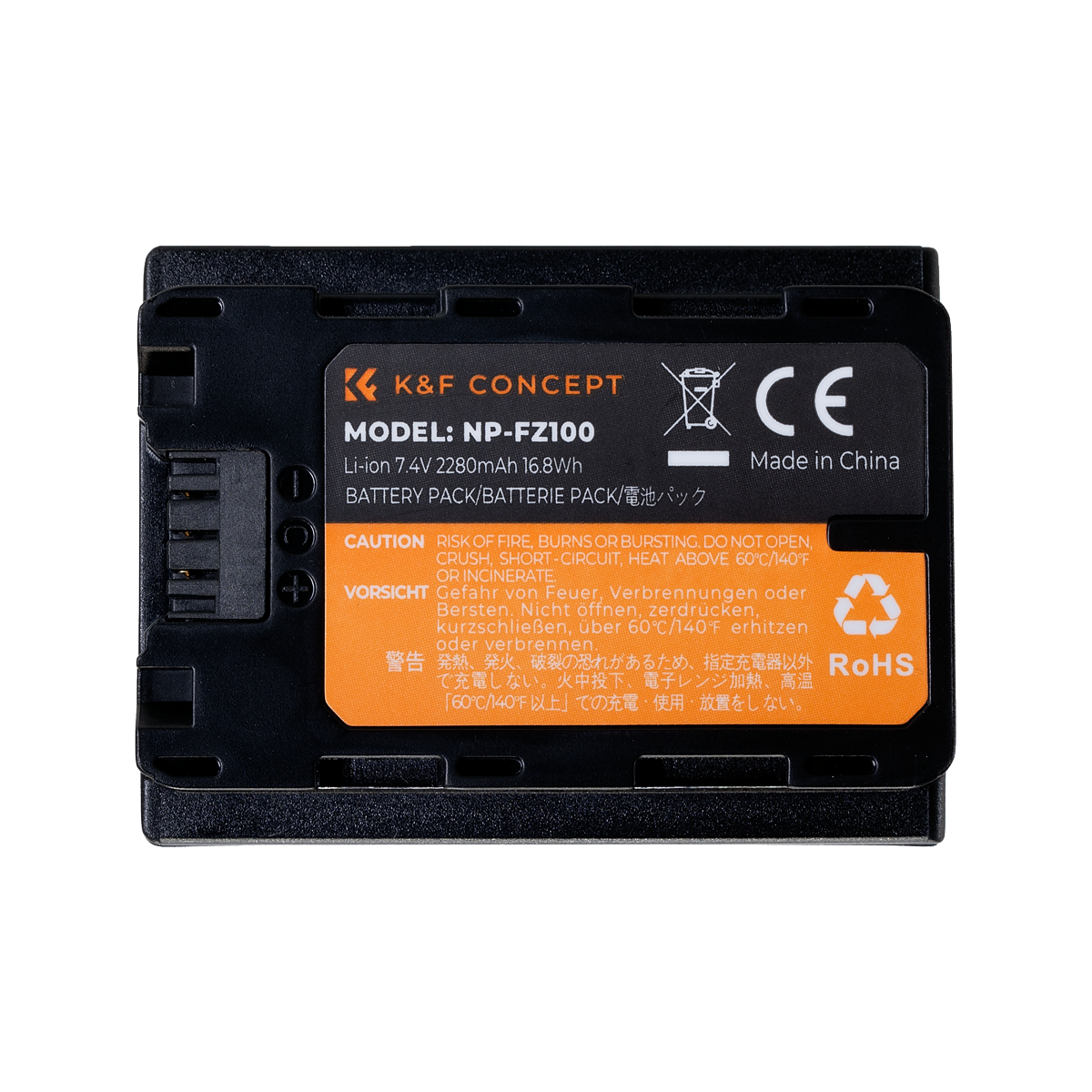
When you're deep into a shoot and the low-battery icon appears, the frustration is immediate. You're mid-flow, the light is perfect, your subject is relaxed, and suddenly you're racing against a countdown. A second battery in your bag changes that equation entirely. This K&F Concept lithium-ion cell delivers 2280mAh of working capacity, matching the output of Sony's own FZ-100 pack, so your camera behaves exactly as it would on the manufacturer's original. No performance drop, no compatibility quirks, no unexpected shutdowns at 20% remaining.
Capacity and Real-World Runtime
The 2280mAh rating translates to several hundred frames on a mirrorless body, depending on how you shoot. If you're working stills with the EVF off and minimal playback, you'll stretch further. Video drains faster, especially at higher frame rates or with continuous autofocus tracking. Either way, the cell holds enough charge to cover a half-day event, a portrait session, or a full morning of landscape work before you need to swap. That headroom matters when you're shooting a wedding ceremony, a client presentation, or travel content in a location where mains power isn't an option until evening. You're not constantly checking the indicator; you're focused on the frame.
Lithium-ion cells have no memory effect, so partial charges don't degrade long-term capacity. Top up whenever convenient without worrying about conditioning cycles. The chemistry does benefit from a few full discharge-and-recharge passes early in its life, performance typically peaks after the third cycle, but it's usable straight out of the packaging with a quick charge. Store the battery between 40% and 80% if it's sitting unused for weeks; that range minimises stress on the cells and preserves overall lifespan.
Safety Certification and Build Standards
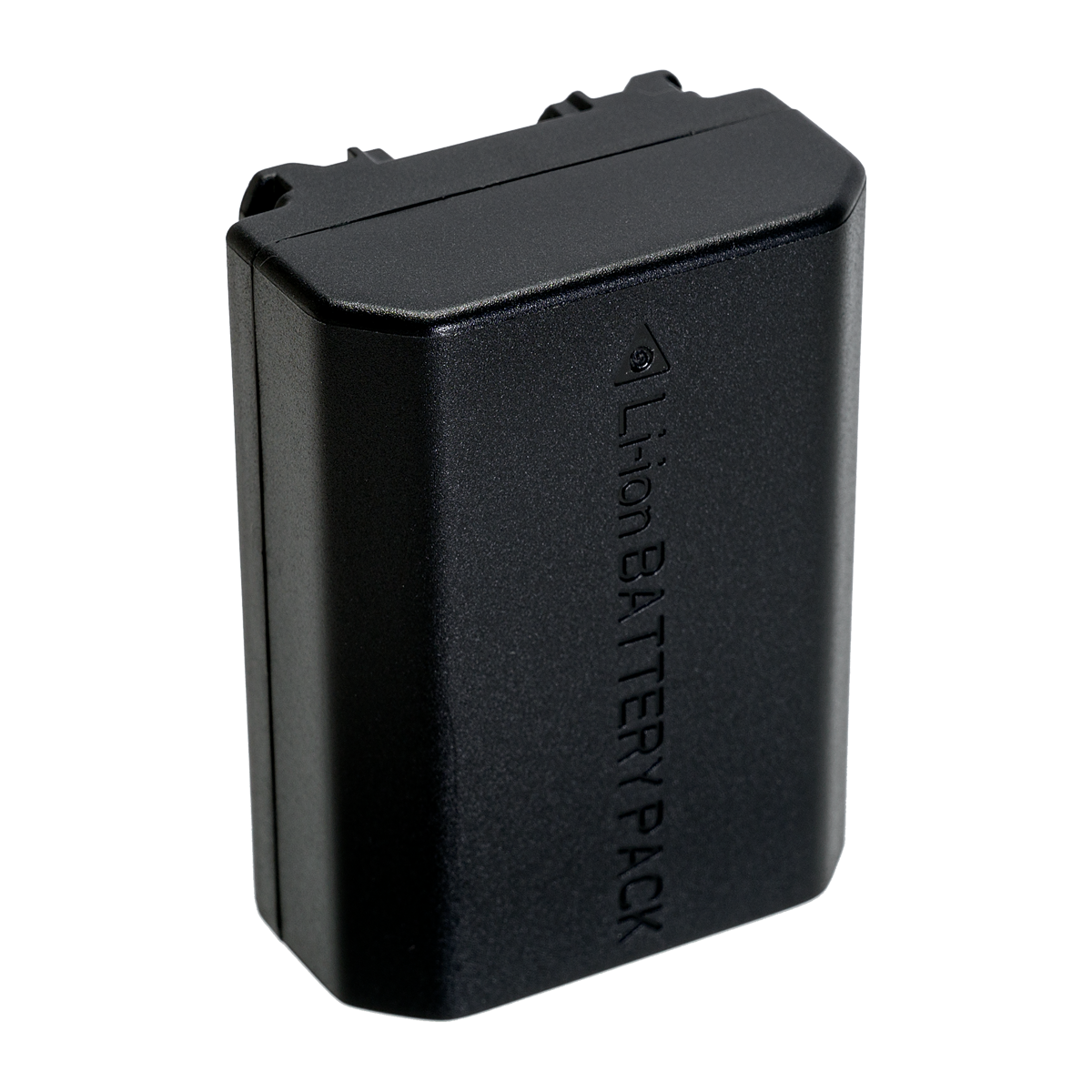
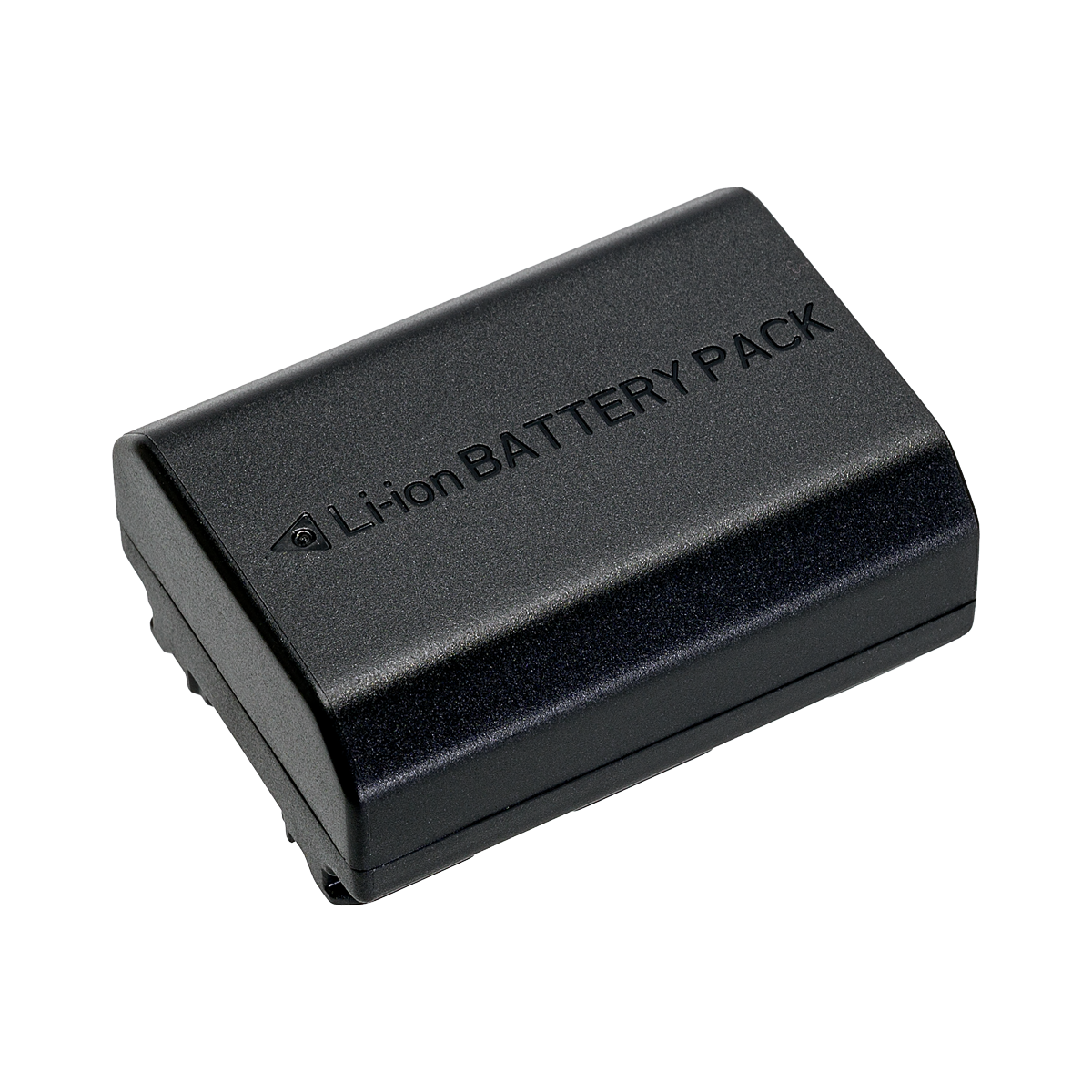
This battery carries CE and RoHS certification, meaning it has passed European Union safety and environmental standards for electronic components. Those marks confirm the cell uses compliant materials, includes protection against overcharge and short-circuit, and won't vent or swell under normal operating conditions. The outer casing is impact-resistant ABS, the same material used in OEM packs, with recessed contact pins that resist accidental bridging. Internal circuitry monitors voltage and temperature, cutting power if either threshold is exceeded. You're not gambling on an uncertified clone that might damage your camera's charging logic or, worse, fail mid-shoot.
Never puncture or crush the casing, lithium cells contain flammable electrolyte, and breaching the seal creates a fire risk. Keep the battery dry; moisture on the contacts can cause a short. Avoid exposure above 60 °C, which accelerates internal degradation and can trigger thermal runaway in extreme cases. Cold weather temporarily reduces output, you'll notice shorter runtime in sub-zero conditions, but the cell recovers once it warms up. If you're shooting in winter, keep the spare in an inside pocket close to your body until you need it.
Why a Second Battery Isn't Optional
A single battery forces you into reactive mode. You're always aware of the percentage, always calculating whether you have enough juice left for the next sequence. A second battery flips that dynamic: you shoot until the first one dies, swap in the fresh cell, and keep working. No anxiety, no missed frames during a critical moment, no need to hover near a power outlet during a break. For event work, this is non-negotiable. For travel, it's the difference between rationing shots and shooting freely. Even for casual use, the psychological shift is real, you stop managing the battery and start managing the light, the composition, the subject.
The K&F cell uses the same form factor and contact layout as Sony's FZ-100, so it drops into the camera's battery compartment without adapter plates or modified doors. The camera's fuel gauge reads it accurately, the charger accepts it without error codes, and the grip's secondary slot (if your body has one) recognises it as a valid power source. You're not introducing a compatibility variable; you're adding capacity.
Charging and Maintenance
Fully charge the battery before first use to calibrate the camera's metering and establish a baseline for the cell's internal management chip. After that, charge whenever convenient. Lithium-ion cells prefer shallow cycles over deep discharges, so topping up at 30% is better for long-term health than running to 0% repeatedly. If the battery will sit unused for more than a month, store it at around 50% charge in a cool, dry place, not in the camera, not in a hot car, not in a damp bag. Heat and full charge are the two factors that age lithium cells fastest.
The battery is covered by a 1-year warranty against manufacturing defects, which includes cells that fail to hold a charge, casings that crack under normal handling, or contact pins that corrode prematurely. Damage from misuse, punctures, water ingress, exposure to extreme heat, isn't covered, but those scenarios are avoidable with basic care. Treat the battery like you treat a lens: keep it clean, keep it dry, don't drop it onto concrete.
Who This Battery Serves
If you own a Sony mirrorless body that uses the FZ-100 format, A7 III, A7R IV, A9, A6600, and others, this battery extends your working time without requiring you to carry the OEM spare at OEM pricing. It's equally suited to a professional who needs redundancy on a paid shoot and an enthusiast who wants to shoot all day at a nature reserve without a charging break. The performance is equivalent, the safety standards are met, and the capacity matches the original. You're not compromising; you're adding a second magazine to the rifle.
For video shooters, a second battery is baseline kit. Recording drains power faster than stills, and you can't pause a live event to swap cells mid-take. For stills photographers working events, the same logic applies: you need enough capacity to cover the ceremony, the formals, and the reception without a charging interlude. For travel and landscape work, a second battery means you're not tethered to your accommodation's power socket, you can shoot sunrise, explore all day, and still have charge left for sunset.
This K&F Concept lithium-ion battery for Sony FZ-100 cameras, KF28.0016V3, delivers the capacity, safety certification, and form-factor compatibility you need to keep shooting when the first cell runs dry.