




K&F LP-E6NH Camera Battery with Built-In USB-C Charging (Beige)
Direct USB-C Charging Without a Separate Charger
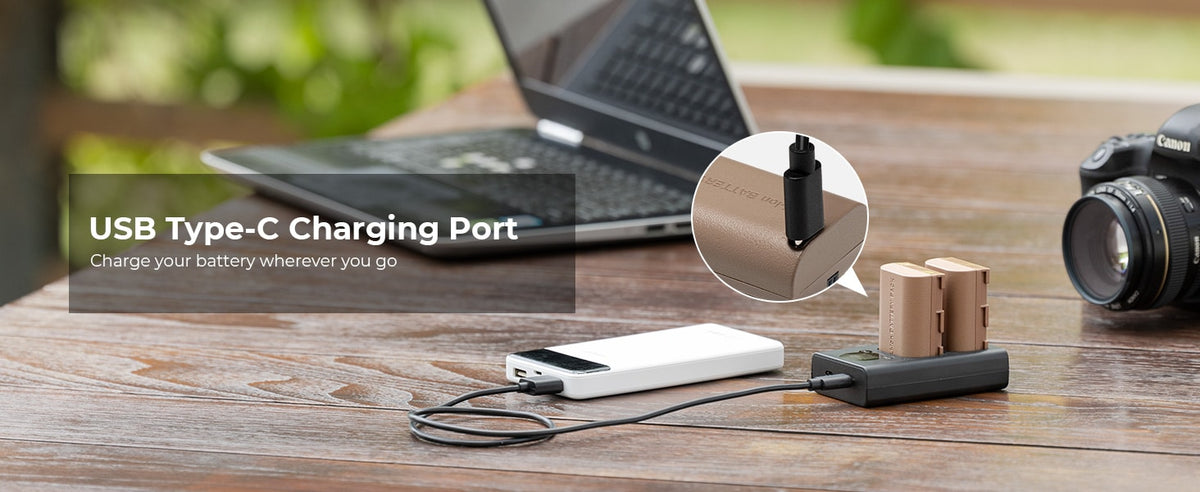
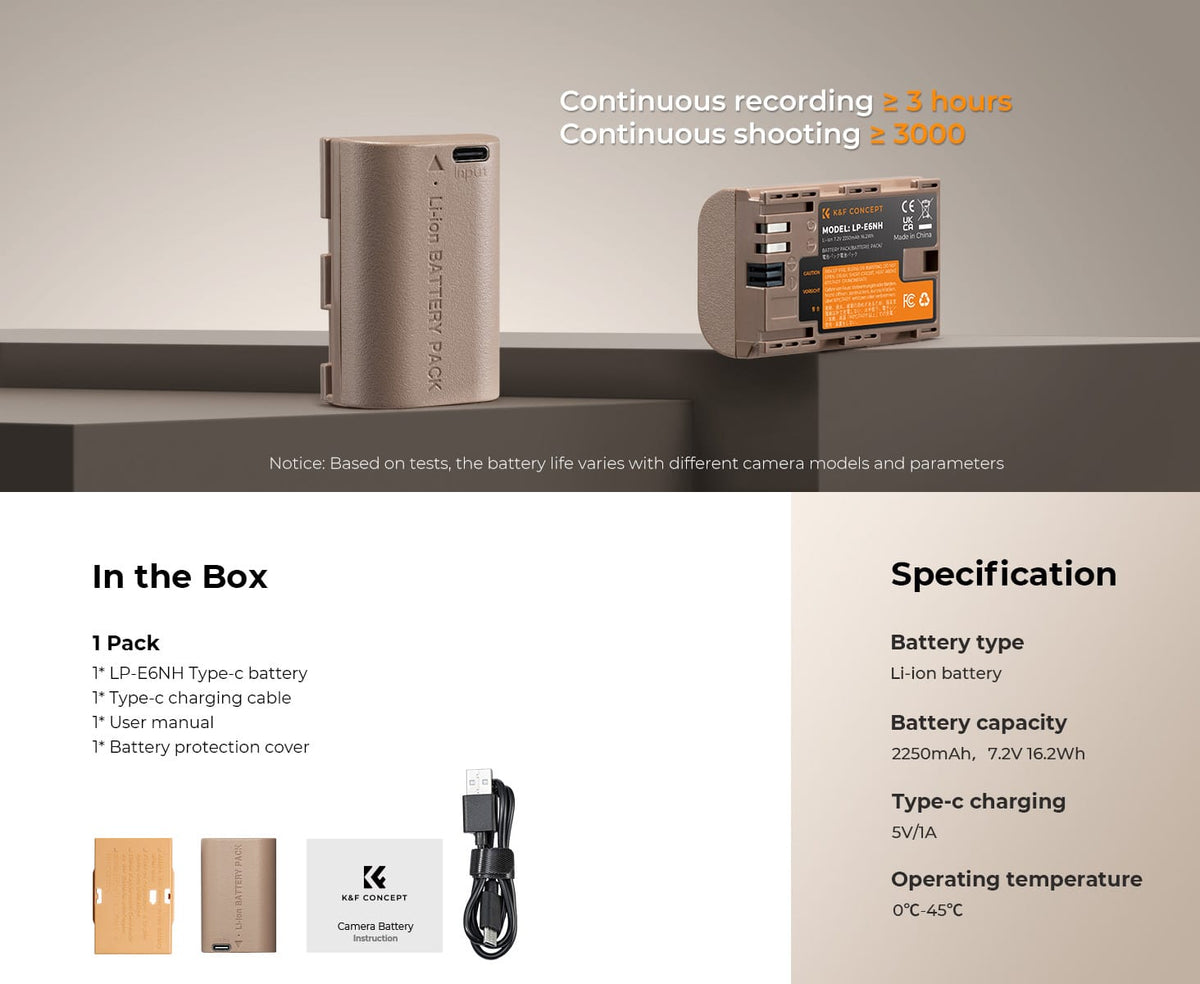
This Canon LP-E6NH equivalent integrates the charging circuitry into the cell itself, removing the need to pack a dedicated external charger. A USB Type-A to USB Type-C cable ships in the box; plug into any USB power source, mains adapter, laptop port, car socket, or power bank, and the battery charges wherever you happen to be. Fast-charge capability delivers a full cycle in approximately 2.5 hours when paired with a quality USB power supply. The onboard LED glows red during charging and switches to green when complete, giving you a clear visual status at a glance.
For travel shoots, multi-day events, or any situation where mains access is intermittent, this design collapses your kit footprint. One cable replaces the bulky OEM cradle, and you can top up cells from the same USB brick that charges your phone or laptop. If you're working from a vehicle or a location with solar panels, the battery draws power directly from those sources without requiring an inverter or proprietary dock.
2250mAh Capacity for Extended Shooting
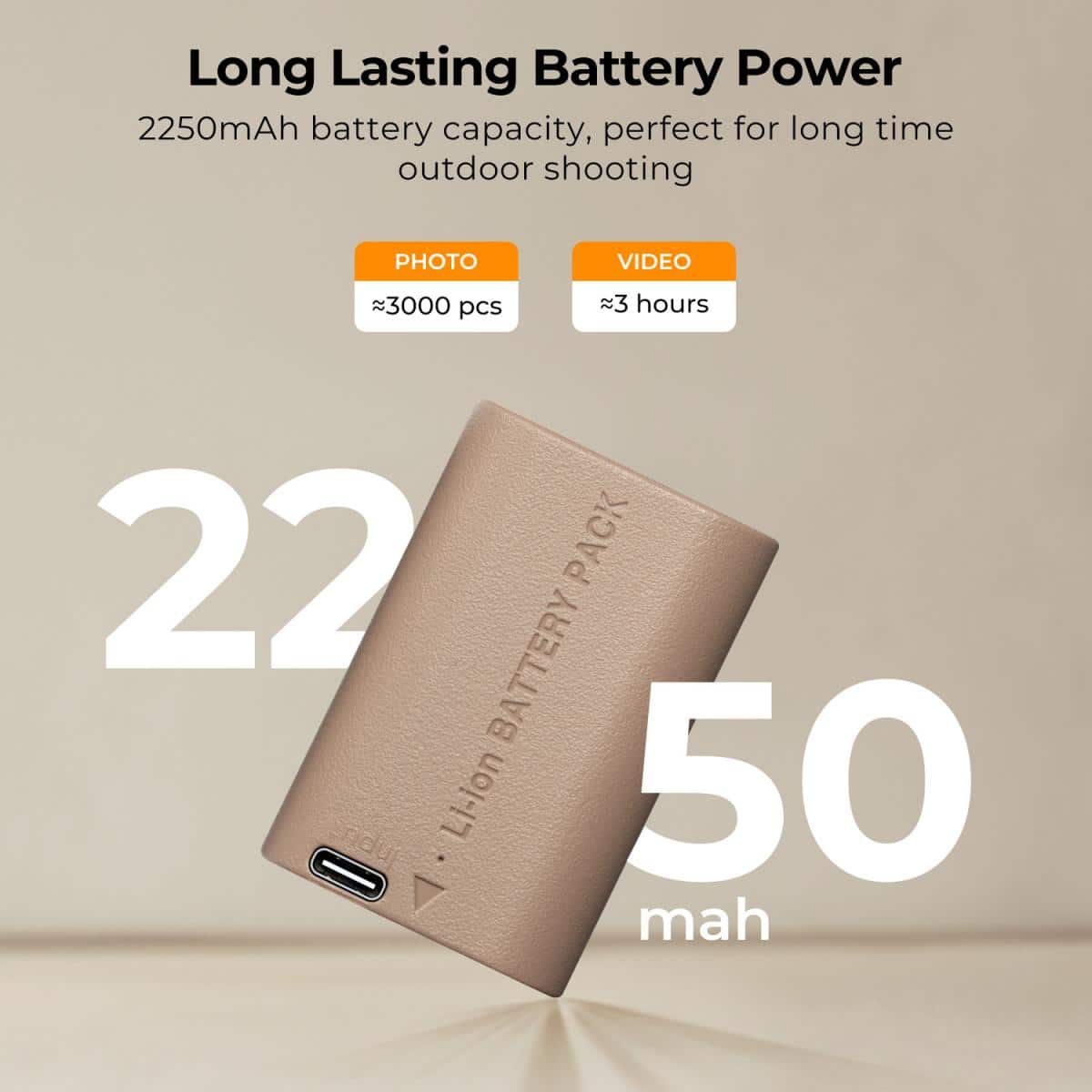
Rated at 2250mAh, this cell exceeds the original Canon LP-E6n specification and matches the LP-E6NH capacity, translating to several hundred frames per charge in typical mixed shooting (stills and short video clips). Exact runtime depends on your camera model, ambient temperature, live-view usage, and whether you're recording 4K video continuously, but the higher milliamp-hour rating means fewer mid-session swaps compared to older or lower-capacity alternatives.
Carrying multiple charged cells is standard practice for any assignment where you cannot afford downtime, weddings, conferences, wildlife hides, or multi-location commercial work. A depleted battery at the wrong moment can cost you the shot, the client relationship, or the once-off wildlife behaviour you travelled across a continent to document. Extra capacity per cell reduces the total number of spares you need to pack, which matters when you're also carrying lenses, a tripod, lighting, and everything else that fills a camera bag.
Lithium-Ion Chemistry with No Memory Effect
Lithium-ion cells do not suffer from the memory effect that plagued older nickel-cadmium and nickel-metal-hydride chemistries. You can top up the battery at any state of charge, after ten frames or after five hundred, without degrading its long-term capacity. This flexibility is particularly useful on multi-day shoots where you grab charging opportunities as they arise, rather than waiting for a full discharge cycle.
Performance stabilises after approximately three full charge-and-discharge cycles. The cell arrives with a partial factory charge and is ready to use immediately after a top-up, but you will notice slightly longer runtimes and more consistent voltage delivery once the chemistry has bedded in. This is normal behaviour for lithium-ion technology and does not indicate a defect.
Six-Layer Protection Circuit
The integrated protection board monitors voltage, current, and temperature in real time, shutting down the cell if any parameter moves outside safe operating limits. Overcharge protection prevents voltage from exceeding the lithium-ion ceiling, which would otherwise cause thermal runaway. Overcurrent protection guards against excessive draw that could damage the cell or the camera's power regulation circuit. Overdischarge protection cuts output before the voltage drops low enough to permanently harm the chemistry. Short-circuit protection isolates the terminals if they are accidentally bridged. Overheat protection halts charging or discharging if the internal temperature climbs beyond the safe threshold. ESD (electrostatic discharge) protection shields the circuitry from static shocks during handling or insertion.
These safeguards operate transparently; you will never notice them unless a fault condition arises, at which point they prevent equipment damage, fire risk, or injury. The protection board adds negligible weight and does not interfere with normal operation, but it significantly reduces the probability of catastrophic failure compared to unprotected cells.
CE and RoHS Certification
CE marking confirms that the battery meets European Union safety, health, and environmental protection standards. RoHS (Restriction of Hazardous Substances) certification verifies that the cell does not contain lead, mercury, cadmium, hexavalent chromium, polybrominated biphenyls, or polybrominated diphenyl ethers above the permitted thresholds. These certifications are not decorative; they represent third-party testing and compliance with regulations designed to protect both users and the environment. Products that lack these marks may not have undergone equivalent scrutiny.
One-Year Warranty Against Manufacturing Defects
The warranty covers material and workmanship faults that manifest under normal use within twelve months of purchase. It does not cover physical damage, water ingress, or degradation from hundreds of charge cycles (lithium-ion cells naturally lose capacity over time and repeated cycling; this is chemistry, not a defect). If the battery fails to hold a charge, exhibits swelling, or shows erratic behaviour within the warranty period, the manufacturer will replace it. Keep your proof of purchase; warranty claims require evidence of the transaction date.
Compatibility Across Canon's LP-E6 Ecosystem
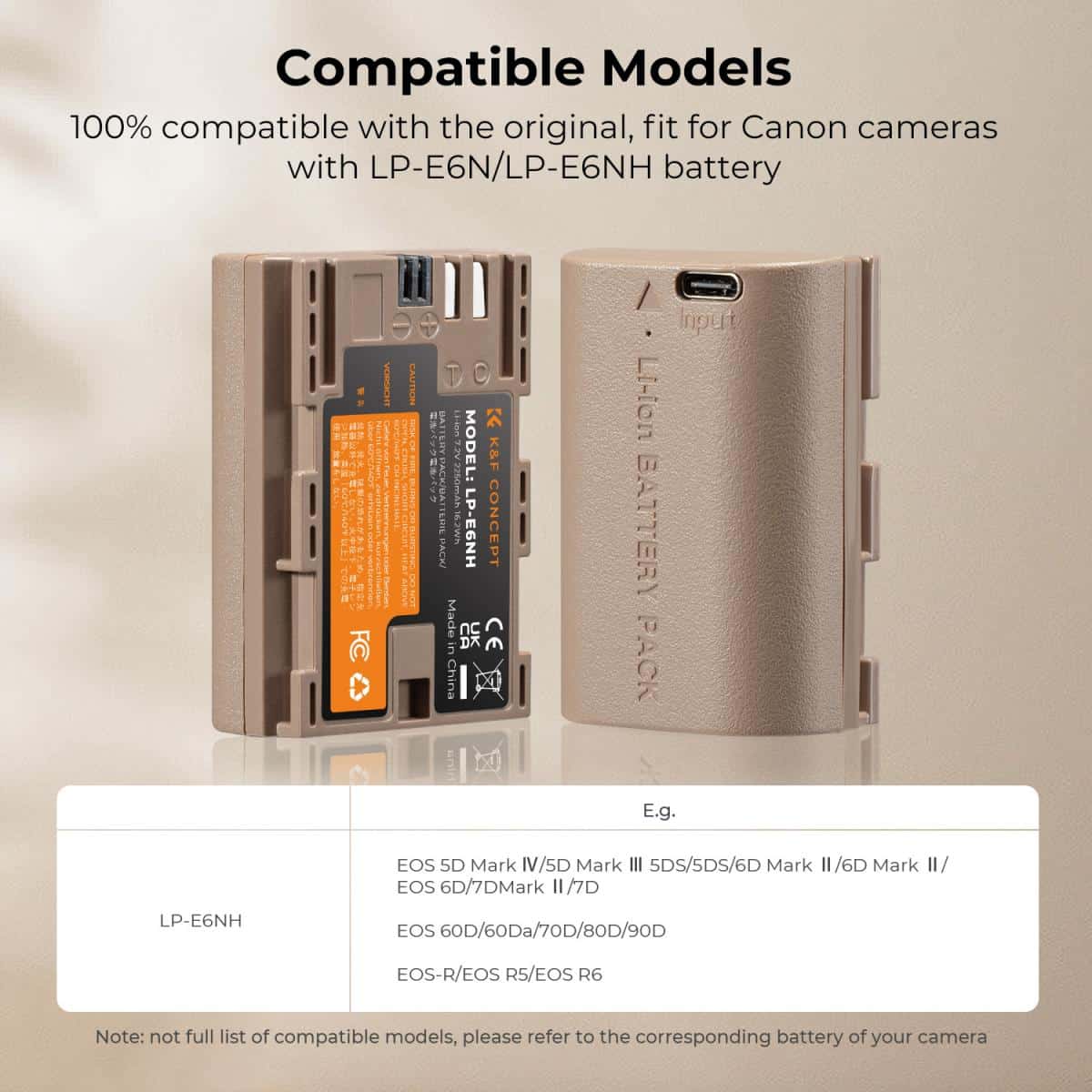
This cell is a direct replacement for the Canon LP-E6NH and is backward-compatible with cameras that accept LP-E6, LP-E6N, or LP-E6NH batteries. The physical dimensions, terminal layout, and communication protocol match the OEM specification, so the camera recognises the battery and displays remaining charge accurately in the viewfinder or on the rear LCD. You can mix K&F cells with original Canon batteries in the same kit without issue; the camera does not distinguish between them once they are inserted.
Canon's LP-E6 family powers a wide range of EOS bodies, from older DSLRs through to current mirrorless models. Check your camera's manual or battery compartment label to confirm which variant it requires. If your camera shipped with an LP-E6, LP-E6N, or LP-E6NH, this battery will work.
Practical Field Considerations
Lithium-ion performance drops in cold environments. If you are shooting in sub-zero temperatures, keep spare batteries inside your jacket or close to your body until you need them; inserting a warm cell into a cold camera will give you significantly more shots than inserting a cold cell. Conversely, do not leave batteries in direct sunlight or inside a hot vehicle for extended periods, as elevated temperatures accelerate capacity fade over the cell's lifespan.
If you store batteries for weeks or months between shoots, leave them at approximately 40-60 % charge rather than fully charged or fully depleted. Lithium-ion chemistry degrades faster at the voltage extremes. Check stored cells every few months and top them up if they have self-discharged below 30 %. A battery left at zero charge for an extended period may enter a deep-discharge state from which it cannot recover.
Label your batteries with a marker or tape so you can rotate them evenly and track which cells are older. Uneven rotation means some batteries accumulate hundreds of cycles while others sit unused, leading to mismatched capacity within your kit. Rotating them evenly extends the useful life of the entire set.
Why a Third-Party Battery Makes Sense
OEM batteries carry a brand premium that does not always correlate with measurably better performance or longevity. Third-party cells from established manufacturers use the same lithium-ion chemistry, similar protection circuits, and equivalent build quality, but cost significantly less. The price difference allows you to carry more spares for the same budget, which is often more valuable than marginal improvements in cycle life or capacity.
The risk with third-party batteries is inconsistent quality control and absent certifications. This cell mitigates that risk through CE and RoHS compliance, a documented protection circuit, and a one-year warranty. It is not a grey-market product or a rebadged no-name cell; it is a purpose-engineered replacement from a brand with an established presence in the photography market.
Order the K&F LP-E6NH equivalent camera battery, KF28.0022, and add USB-rechargeable backup power to your Canon kit without the bulk of a separate charger.