



K&F LP-E6NH Camera Battery for Canon with USB-C Charging Port
Direct USB-C Charging Without a Separate Charger
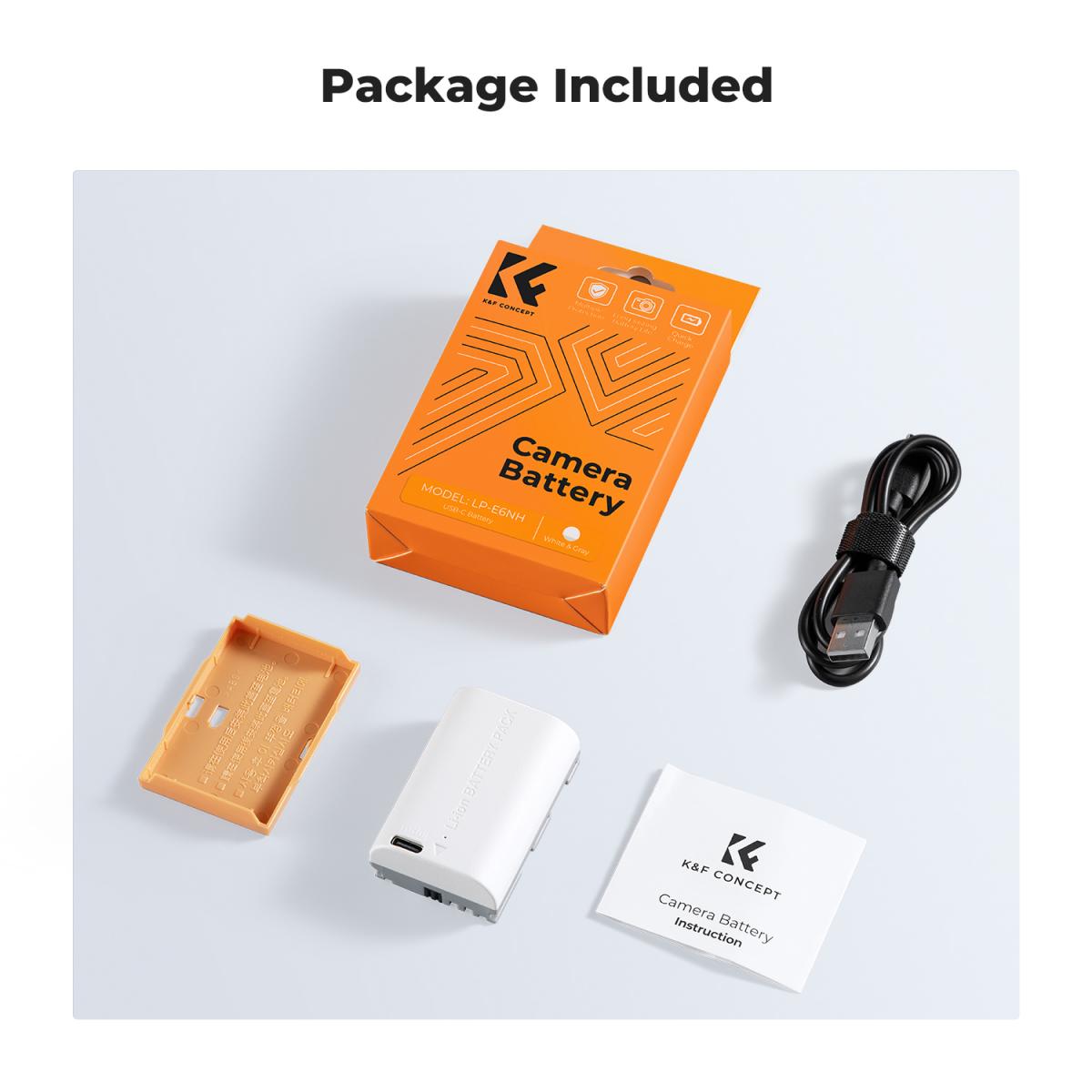
This K&F Concept LP-E6NH equivalent battery eliminates the need to pack a dedicated charging dock. A USB Type-C port is integrated into the battery casing itself, so you can plug straight into any USB power source you already carry, a laptop, power bank, wall adapter or car socket. The included USB-A to USB-C cable connects the battery to whatever outlet is available, whether you're working from a hotel room, a vehicle or a field location hours from mains power. Fast-charge circuitry delivers a full cycle in approximately 2.5 hours when paired with a quality USB charger, meaning a drained cell can be ready again during a lunch break or the drive between locations. For photographers who move between shoots without returning to a studio, this design collapses two pieces of kit into one and frees up bag space that would otherwise hold a charger and its cables.
Extended Capacity for Longer Sessions
Rated at 2600mAh, this lithium-ion cell exceeds the capacity of Canon's original LP-E6NH, translating to additional frames per charge cycle. Running out of power mid-shoot disrupts workflow, forces hurried swaps and risks missing fleeting moments during events, travel or documentary work. A higher-capacity spare extends the interval between changes, which matters most when you're shooting video, working in cold conditions that accelerate drain, or covering an all-day assignment without a break to recharge. Carrying two or three of these cells ensures continuous operation through a wedding ceremony, a day-long conference or a multi-location portrait session, where pausing to find an outlet is not an option. The additional milliamp-hours mean fewer interruptions and more confidence that the camera will keep recording when the decisive moment arrives.
Built-In Protection Circuitry
Six independent safety systems monitor the cell during charge and discharge cycles: overcharge cutoff prevents voltage from exceeding safe limits, overcurrent protection guards against excessive draw, overdischarge circuitry stops the cell before it drops into a damaging voltage range, short-circuit detection isolates faults instantly, overheat sensors halt operation if internal temperature climbs beyond specification, and overvoltage protection blocks surges from incompatible chargers. These layers work together to prevent the failure modes that shorten lifespan or, in rare cases, pose fire risk with unprotected cells. CE and RoHS certification confirms compliance with European safety and environmental standards, and the battery ships with a one-year warranty covering manufacturing defects. For a photographer relying on backup power in remote or high-stakes environments, these protections reduce the risk that a faulty cell will end a shoot prematurely or damage the camera.
Lithium-Ion Chemistry and Break-In Behaviour
Lithium-ion cells do not suffer from the memory effect that plagued older nickel-cadmium technology, so partial discharge and recharge cycles do not degrade capacity over time. You can top up the battery whenever convenient without waiting for it to drain fully. Performance reaches its peak after approximately three full use-and-recharge cycles as the internal chemistry stabilises, so expect modest improvement in runtime after the first few sessions. The battery arrives with a partial factory charge and is ready to use immediately after a top-up, but maximum capacity and cycle life emerge once the cell has been exercised. An integrated LED indicator glows red during charging and switches to green when the cycle completes, providing clear feedback without needing to check a separate charger display or camera menu. This visual cue is particularly useful when charging multiple cells simultaneously from a multi-port USB hub in a hotel room or vehicle.
Practical Advantages for Multi-Day and Travel Shoots
When working across multiple days without access to a fixed base, festival coverage, hiking expeditions, destination weddings, the ability to recharge a battery from the same USB power bank that charges a phone or tablet consolidates the gear list and reduces weight. A single 20,000mAh power bank can top up two or three camera batteries and a mobile device overnight, eliminating the need to pack a mains charger, international plug adapters and separate battery docks. For videographers shooting interviews or b-roll across several locations in one day, keeping a spare cell charging in a backpack pocket via a portable power bank means a fresh battery is ready by the time the first one is depleted. The 2600mAh capacity supports extended 4K video recording, which drains cells faster than still photography, and the fast-charge capability ensures minimal downtime between takes. This setup is especially valuable when shooting in cold weather, where lithium-ion cells lose efficiency and require more frequent swaps to maintain camera operation.
Compatibility and Fit
This battery is dimensionally and electrically compatible with Canon cameras that accept the LP-E6NH form factor, fitting the same battery compartment and communicating charge level to the camera's metering system. It functions as a direct replacement for the original Canon cell, with no adapter or modification required. The camera's battery indicator reads remaining capacity accurately, and the cell integrates with in-camera USB charging on bodies that support that feature. For photographers who already own original Canon LP-E6 or LP-E6N batteries, this cell can be mixed into the same rotation, providing a cost-effective way to expand the power reserve without replacing the entire set. The USB-C charging port does not interfere with the battery's fit in the camera or in third-party grips that accept this form factor.
Order the K&F Concept LP-E6NH equivalent battery, KF28.0033, to add flexible, high-capacity backup power to your Canon kit without the bulk of a separate charger.