

K&F NP-FZ100 Camera Battery for Sony with USB-C Charging Port
Direct USB-C Charging Without External Hardware
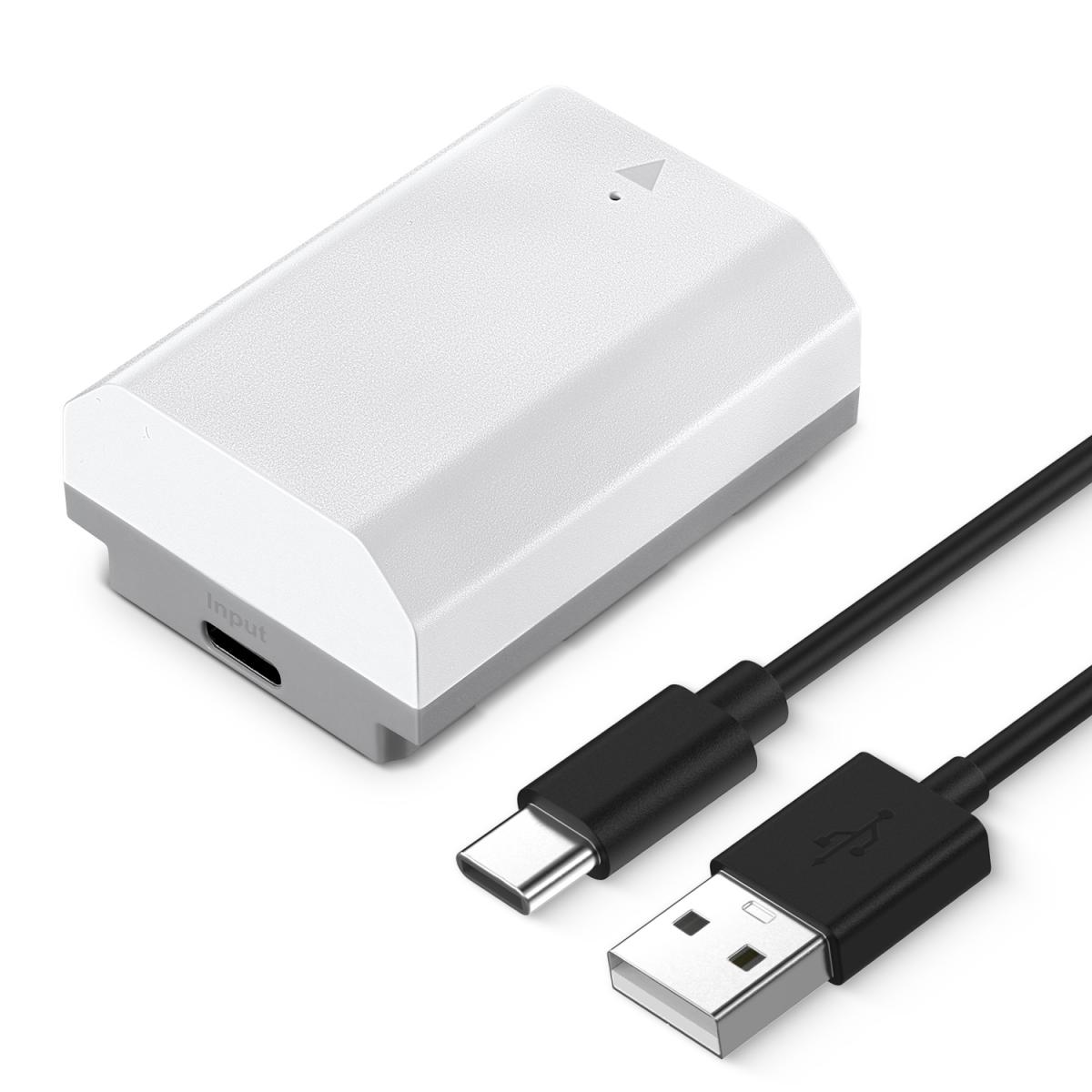
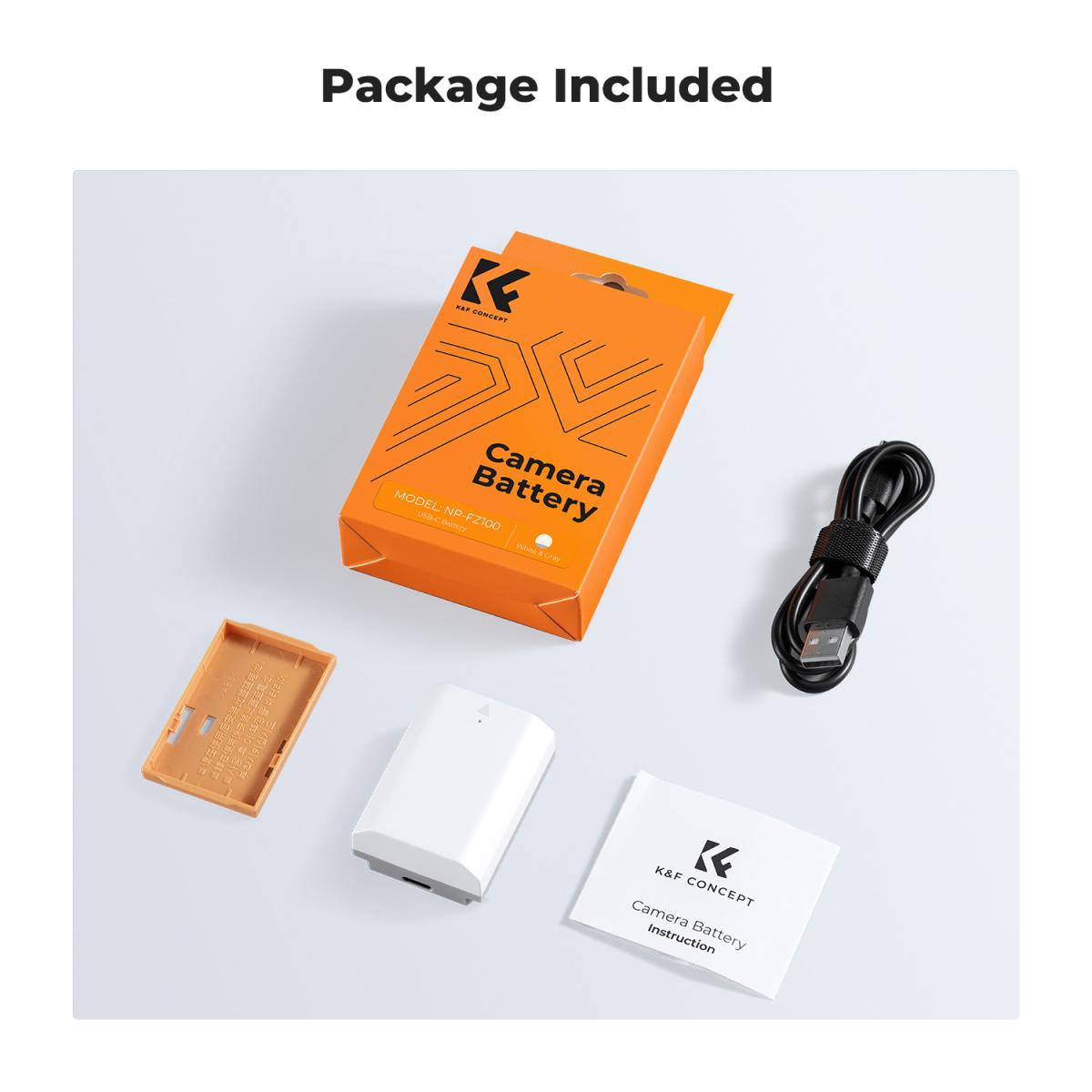
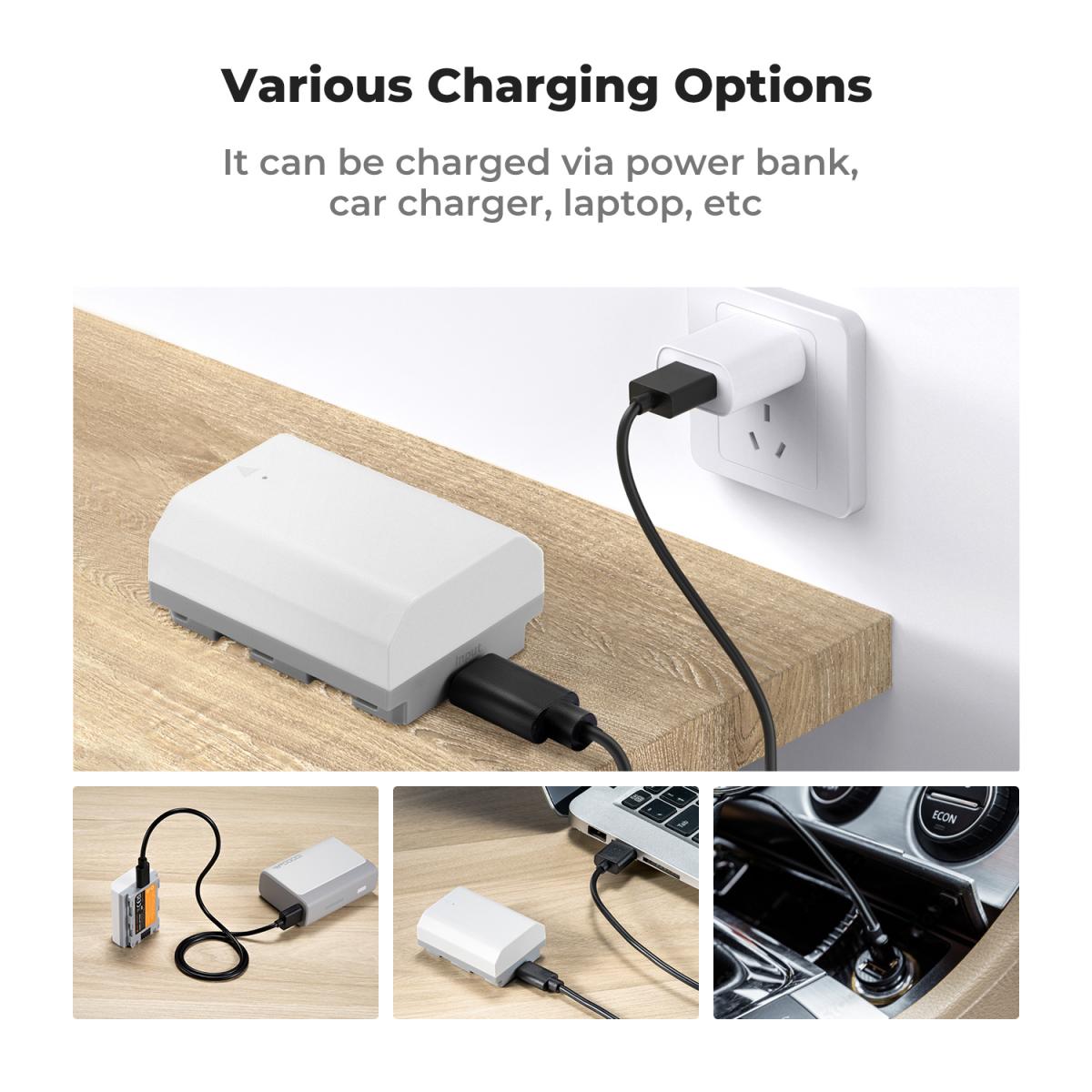
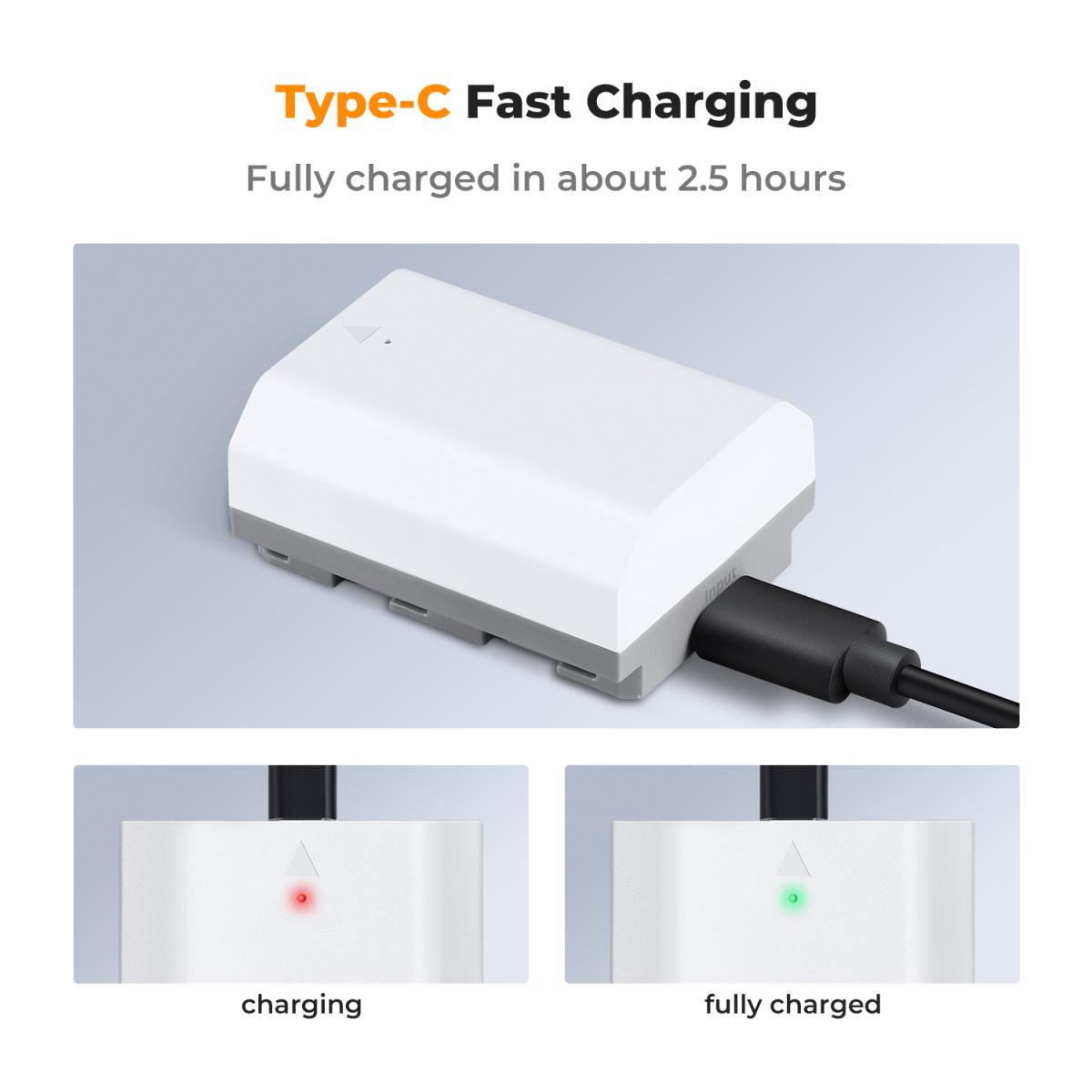
Most camera batteries lock you into carrying a separate charger, one more item in the bag, one more cable to remember, one more thing to fail at the wrong moment. This NP-FZ100 equivalent integrates the charging circuit into the cell itself. Plug a USB-C cable directly into the battery, connect the other end to any USB power source, laptop, wall adapter, power bank, car socket, and the cell charges. No proprietary cradle, no dedicated brick. The included USB-A to USB-C cable covers the most common connection scenario; if your power source already has USB-C output, use that cable instead. Fast-charge support means a full cycle completes in approximately 2.5 hours when paired with a quality adapter (18W or higher recommended). An integrated LED glows red during charging and switches to green when complete, so you know the cell's state at a glance without needing to check a camera menu or external charger display.
This design matters most when you're away from mains power for extended periods. A 10,000mAh power bank can top up two or three of these cells on a day hike. A laptop USB port recharges one while you're editing in a coffee shop. The car's 12V socket handles it on a road trip between locations. You're no longer tethered to wall outlets or hunting for the one charger that fits this specific battery format.
2600mAh Capacity for Longer Shooting Windows
The cell delivers 2600mAh at 7.2V, which translates to approximately 18.7Wh of usable energy. That figure sits slightly above the original Sony NP-FZ100 specification (2280mAh / 16.4Wh), giving you a modest but measurable extension to runtime. In practical terms, expect roughly 10-15% more frames per charge under equivalent shooting conditions, the difference between 420 and 470 shots on a mirrorless body in standard photo mode, or an extra 15-20 minutes of 4K video recording before the low-battery warning appears.
The real value isn't the percentage gain; it's the margin it creates. If your typical shoot drains 80% of an OEM cell, this one leaves you at 70%, which means you're not scrambling for a swap during the final sequence. If you're shooting an event where battery changes are disruptive (a ceremony, a panel discussion, a live performance), that extra headroom keeps the camera running through the critical moment instead of forcing you to pause, pop the grip, fumble with a spare, and hope you didn't miss the shot.
Lithium-ion chemistry means no memory effect, partial discharge cycles don't degrade capacity over time the way older NiMH cells did. Charge it to 60% before a short shoot, top it up to 100% the night before a long one, and the cell won't punish you for inconsistent charging habits. Performance stabilises after three full charge-discharge cycles, so if the first charge feels slightly short, that's normal break-in behaviour, not a defect.
Built-In Protection Circuitry for Safe Operation
Six independent protection mechanisms monitor the cell during charge and discharge: overcharge cutoff prevents voltage from exceeding safe limits when connected to an aggressive charger; overdischarge protection halts output before the cell voltage drops low enough to cause permanent damage; overcurrent limiting caps the maximum draw if the camera or a fault tries to pull excessive amperage; short-circuit protection isolates the terminals instantly if a conductive bridge forms; overheat shutdown triggers if internal temperature climbs beyond the safe operating window; and overvoltage protection guards against input spikes from poor-quality USB adapters.
These aren't theoretical features, they're the difference between a battery that fails gracefully (shuts down, throws a camera error, remains safe) and one that fails catastrophically (swells, vents, damages the camera's battery contacts or internal regulator). Third-party cells without robust protection boards are the ones that generate the horror stories; this one is engineered to behave predictably under fault conditions.
CE and RoHS certification confirm the cell meets European safety and environmental standards, not a guarantee of perfection, but a baseline filter that eliminates the worst offenders. The 1-year warranty covers manufacturing defects and premature capacity loss, which gives you a straightforward claim path if the cell arrives dead, won't hold a charge after the break-in period, or exhibits swelling or other physical faults within the coverage window.
Compatibility Across Sony's Alpha and Cinema Lines
This cell uses the NP-FZ100 form factor and communication protocol, which means it fits and functions in any Sony camera body designed for that battery type. That includes the Alpha 7 series (A7 III, A7 IV, A7R III, A7R IV, A7R V, A7S III), the Alpha 9 line (A9, A9 II, A9 III), the Alpha 1, the Alpha 6600, and Sony's FX-series cinema cameras (FX3, FX30). The cell communicates charge level and health data to the camera's battery menu, so the percentage indicator and estimated shot count display correctly, you're not flying blind with a generic icon.
One practical note: if you're mixing OEM Sony cells and third-party equivalents in the same kit, label them. They're physically identical, and once they're out of the camera it's easy to lose track of which is which. A small sticker or a dot of paint on the third-party cells saves you from accidentally leaving the OEM at home when you meant to bring it as the primary.
When to Add This Cell to Your Kit
If you're shooting events, travel, or any scenario where charging opportunities are sparse or unpredictable, a second or third battery is non-negotiable. The question is whether to buy another OEM cell or save 30-40% on an equivalent like this one. The trade-off: OEM cells sometimes edge out third-party options in cycle life (the number of full charge-discharge cycles before capacity degrades noticeably), but that difference typically shows up after 400-500 cycles, which, for most shooters, is two to three years of regular use. If you're a working professional putting 10,000+ frames a week on a body, OEM might be worth the premium. If you're shooting weekends, travel, or personal projects, the cost difference buys you an extra cell instead of marginal longevity on one.
The USB-C charging feature is the tiebreaker. If you're already carrying a power bank, laptop, or USB adapter for your phone and other devices, this cell charges from the same ecosystem without adding a dedicated charger to the bag. That's a meaningful weight and space saving on multi-day trips, and it eliminates the "forgot the charger" failure mode entirely.
Keep the cell in a protective case when it's not in the camera, loose batteries in a bag can short against keys, coins, or other metal objects, and while the short-circuit protection should catch it, prevention is better than relying on a safety net. Store cells at 40-60% charge if you're not using them for more than a month; lithium-ion degrades faster when held at full charge for extended periods.
Order reference KF28.0034. Standard return and warranty terms apply through the retailer.