




K&F Sony NP-F970 Battery Kit - 2 Batteries and Dual Charger
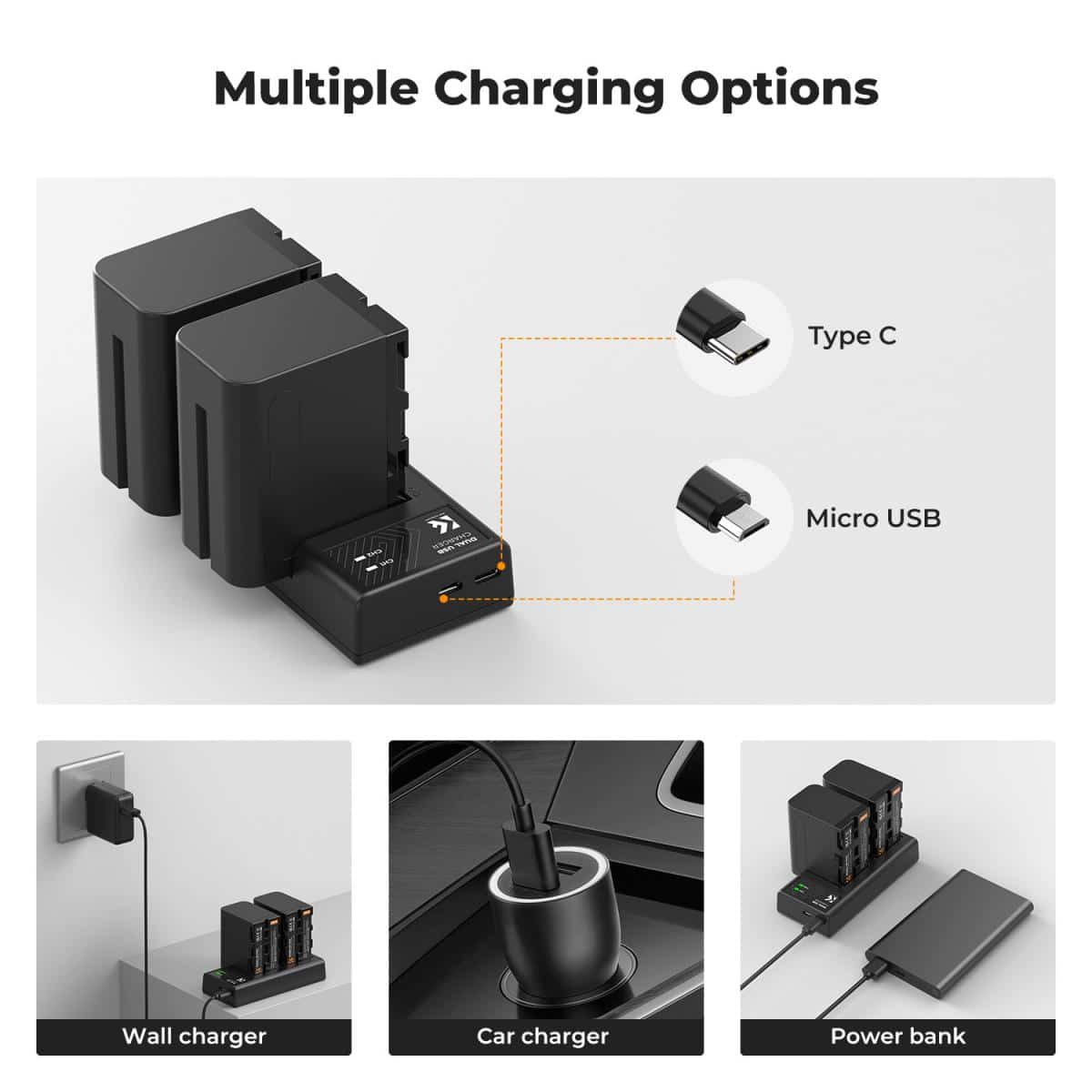
Two 6600mAh lithium-ion cells and a dual-slot USB charger form a self-contained power system for Sony cameras and LED panels that accept NP-F970 batteries. Both cells charge simultaneously from any USB power source, laptop, power bank, car adapter or mains, so downtime between shoots shrinks to the duration of a meal break rather than an overnight wait. The charger accepts USB-C or Mini-USB input, covering both current and legacy charging cables without requiring an adapter.
Chip-level circuit protection monitors each cell independently during charge and discharge cycles. Six discrete safeguards prevent over-voltage, over-current, over-temperature, short-circuit, over-charge and over-discharge conditions that degrade lithium-ion chemistry and shorten usable lifespan. This active monitoring matters most on multi-day shoots where you're cycling through cells repeatedly without access to replacements, a protection fault that kills a battery on day two of a three-day event leaves you scrambling.
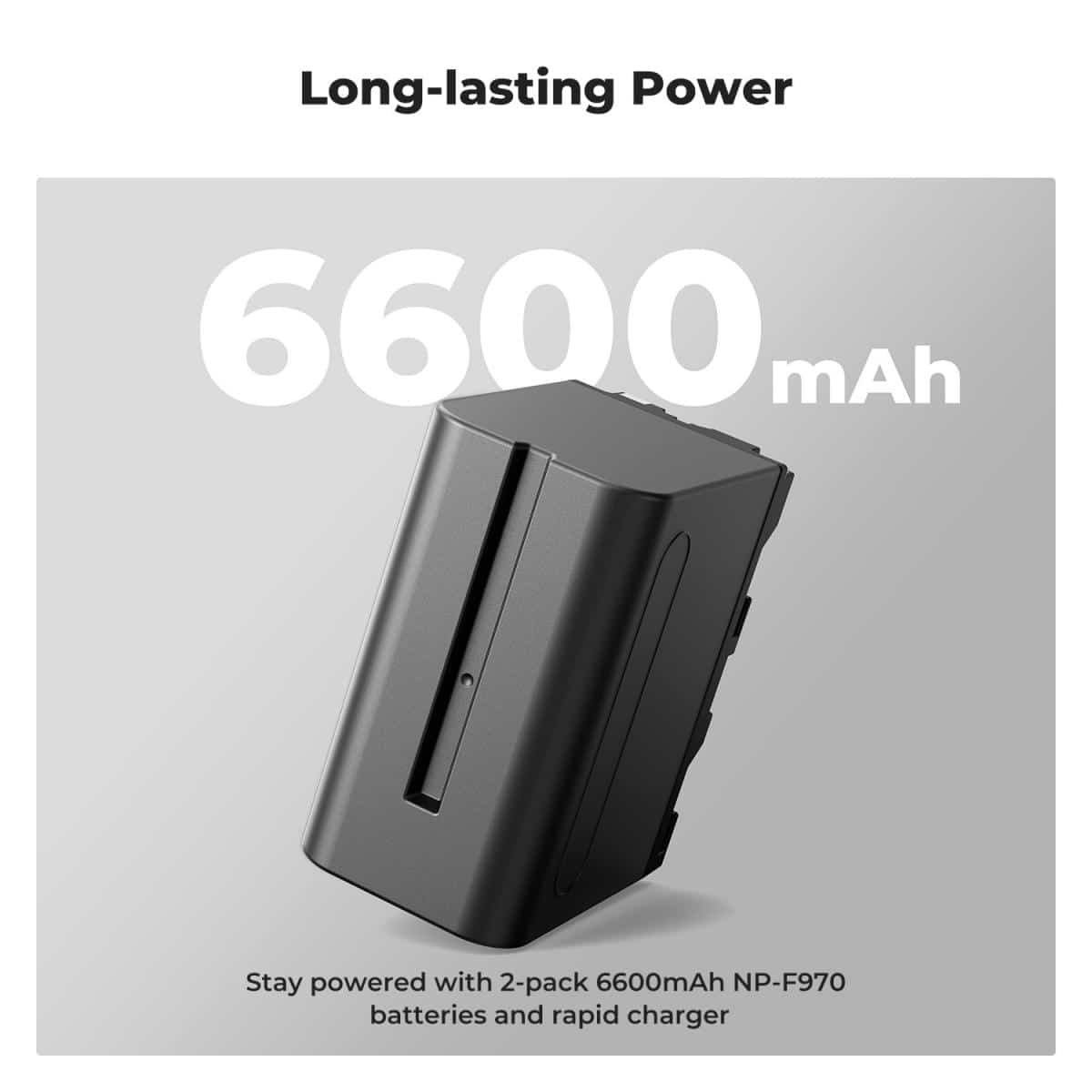
Each 6600mAh cell delivers approximately double the runtime of a standard 3300mAh NP-F550, translating to longer takes on continuous LED panels, extended monitor operation during colour grading on location, or all-day camera power when shooting stills at moderate frame rates. The capacity advantage becomes tangible on run-and-gun documentary work or event coverage where swapping batteries mid-scene risks missing the moment. Two cells in rotation, one in the camera, one in the charger, sustain shooting across a typical 8-10 hour day without requiring a second charger or additional cells.
The dual-port charger eliminates the bottleneck of sequential charging. Plug both depleted cells in after a day's shoot and both reach full capacity in the same window, typically 4-5 hours depending on input current. Single-slot chargers force you to choose which battery charges first, then wait again for the second, a workflow friction that compounds when you're managing multiple camera bodies or a mix of cameras and LED panels all drawing from the same NP-F970 ecosystem.
USB power input decouples the charger from mains electricity, which matters on location shoots where power outlets are contested, distant or non-existent. A 10,000mAh power bank can top up one depleted 6600mAh cell to around 80 per cent capacity, enough to recover from an unexpectedly long take without returning to base. Car charging becomes viable on road trips or safari shoots where the vehicle is the only reliable power source for days at a stretch. The inclusion of both USB-C and Mini-USB ports on the charger body means you're not stranded if you forget the supplied cable, borrow any standard phone or camera cable and the charger accepts it.
Lithium-ion cells perform best after three full charge-discharge cycles as the internal chemistry stabilises. Expect the first use to deliver slightly less than the rated capacity; by the third cycle the cells reach their full 6600mAh potential. This break-in period is standard across all lithium-ion chemistries and does not indicate a defect. Charge the cells fully before first use to establish the correct voltage baseline, then run them through normal shooting until the low-battery warning appears. Partial top-ups between shoots are fine for convenience, but occasional full discharge-recharge cycles help the battery management system recalibrate its capacity estimate and maintain accurate remaining-time readings.
Temperature extremes degrade lithium-ion performance. Operating above 60 °C, inside a sun-baked car boot in summer, for example, accelerates chemical breakdown and permanently reduces capacity. Sub-zero conditions temporarily suppress voltage output, causing the camera to report low battery even when the cell is half full; warming the battery in an inside pocket for ten minutes usually restores normal function. Store cells at room temperature when not in use, ideally at 40-60 per cent charge if they'll sit unused for more than a month. Fully charged cells left idle for extended periods lose capacity faster than partially charged ones.
Physical damage to the outer casing risks exposing the lithium-ion layers inside, which react aggressively with air and moisture. A dented or punctured cell is a fire hazard and must be disposed of safely, not used. Keep cells dry, water ingress can short internal connections and trigger thermal runaway. If a cell gets wet, do not attempt to charge it; let it dry completely for at least 48 hours in a warm, ventilated space, then test it in a non-critical application before trusting it on a paid shoot.
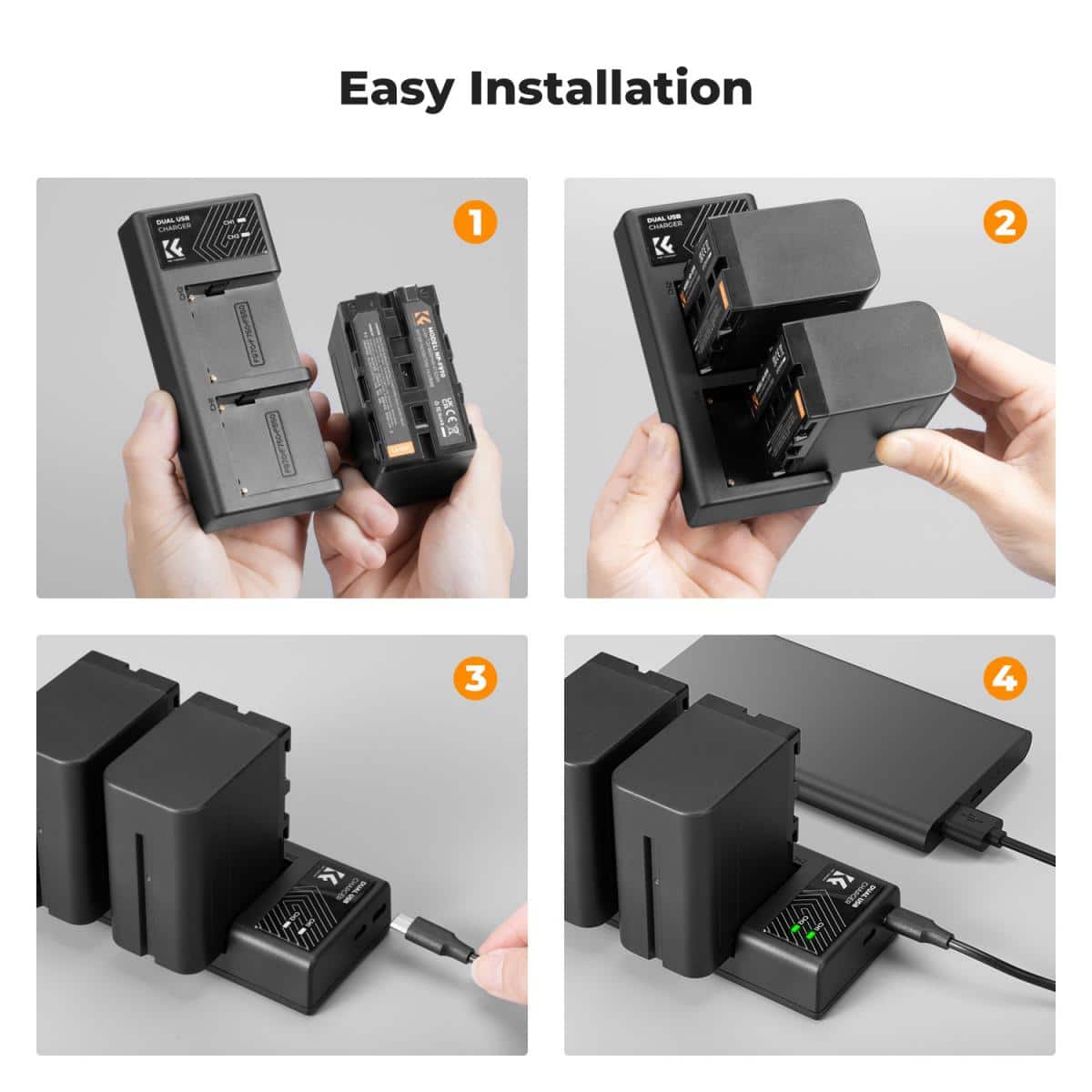
The charger's LED indicators show charging status at a glance: red while charging, green when complete. No guesswork, no voltage meters, no trial-and-error. Slot both cells in before you start your post-shoot workflow, offload cards, back up files, clean lenses, and by the time you're done the cells are ready for the next day. The compact charger fits in a camera bag's accessory pocket without adding meaningful bulk, so it travels with the rest of your kit rather than staying behind because it's too large or fragile to pack.
Compatibility extends beyond Sony camera bodies to any device designed around the NP-F970 form factor: on-camera LED panels, external monitors, wireless video transmitters, follow-focus motors. One battery system powers multiple tools, reducing the number of charger types and cable standards you carry. The cells work interchangeably with original Sony NP-F970 batteries, so you can mix brands in your kit without worrying about voltage mismatches or communication errors.
A one-year warranty covers manufacturing defects and premature capacity loss under normal use. Lithium-ion cells naturally degrade over hundreds of charge cycles, but a cell that drops below 80 per cent of rated capacity within the first year indicates a manufacturing fault rather than normal wear. The warranty does not cover physical damage, water ingress, or capacity loss from improper storage, but it does protect against the silent failures, internal short circuits, faulty protection chips, premature voltage sag, that are impossible to detect until the cell fails mid-shoot.
This kit solves the two most common power problems on location: running out of capacity mid-shoot, and waiting too long for depleted cells to recharge. Two high-capacity cells and a dual-slot USB charger address both, giving you enough runtime to cover a full day and enough charging speed to recover overnight. The result is a power system that keeps pace with how you actually shoot, rather than forcing you to plan your day around battery swaps and charger access.