




K&F 2 Pack Canon LP-E17 Compatible Batteries with USB-C Charging Port
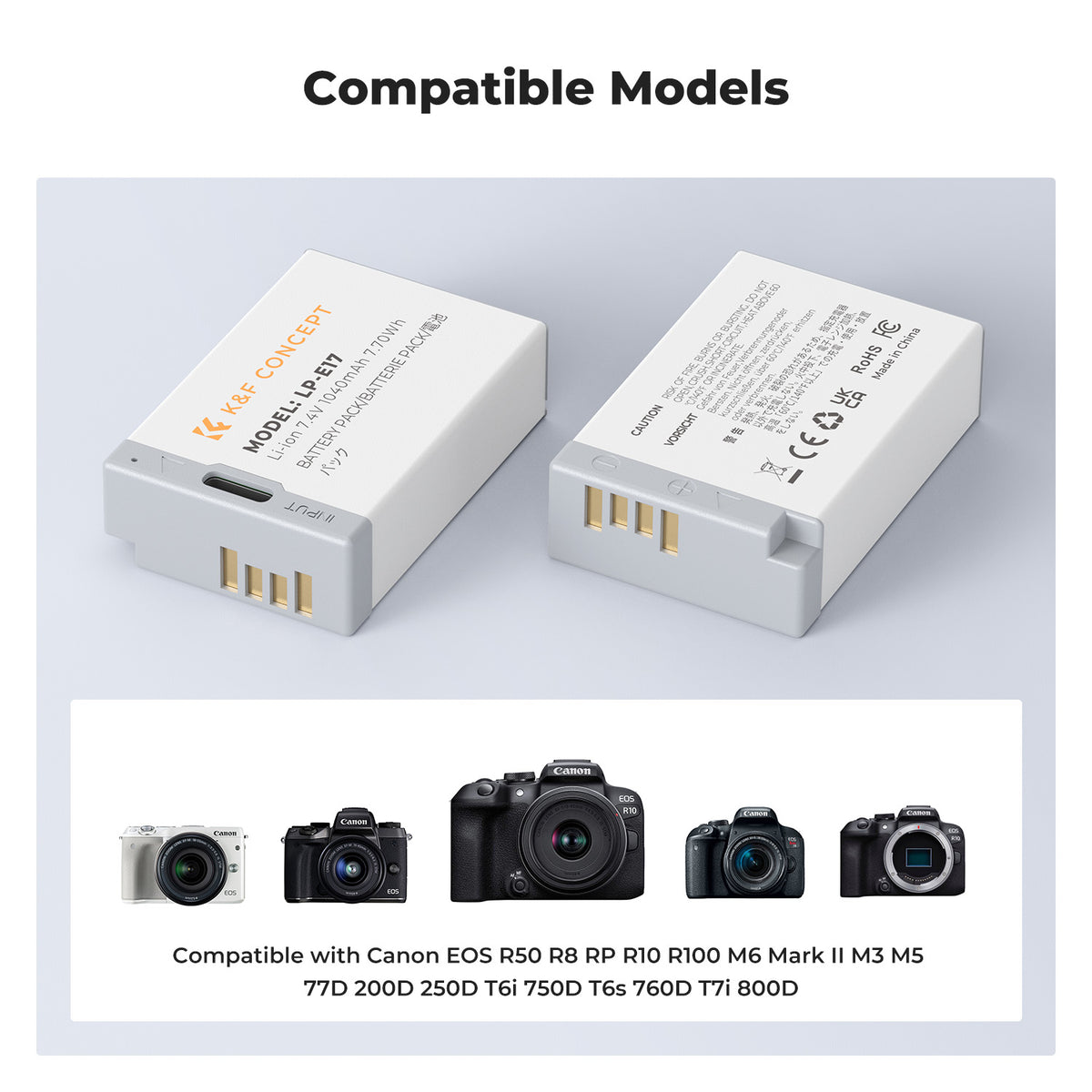
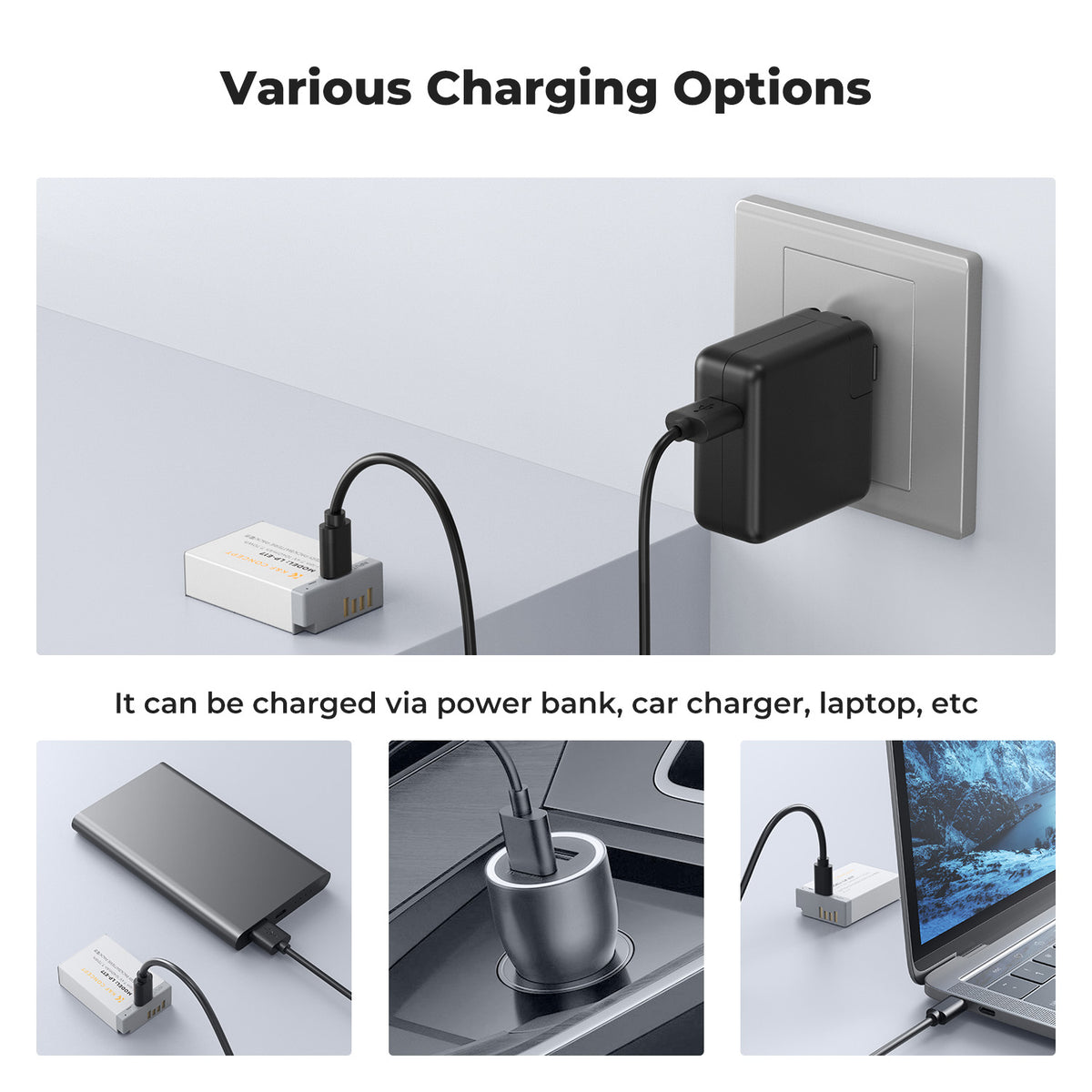
Canon's LP-E17 platform powers a wide range of enthusiast and semi-pro bodies, M-series mirrorless, the EOS RP, and Rebel/EOS lines from the T6i through to the T8i, but the OEM battery ecosystem has a persistent friction point: you need a dedicated charger. That means packing a proprietary dock, finding a wall socket, and planning your charging windows around access to mains power. For photographers working across multiple locations in a single day, or travelling light without wanting to carry a separate charging brick, that workflow constraint adds weight, bulk, and logistical overhead. This twin-pack removes it. Each cell integrates a USB-C charging port directly into the battery casing, which means you charge from any USB power source you already carry, laptop, power bank, car USB port, phone charger, airport USB outlet, without needing Canon's LC-E17 charger or any third-party equivalent. The infrastructure you use to charge your phone now charges your camera batteries as well, and because both cells charge independently, you can run them through two different sources simultaneously or rotate them through a single USB port during transit. For event photographers, travel shooters, and vloggers who work outside the studio, this design eliminates the need to plan around wall sockets or pack a separate charging dock.
Each battery delivers 1040mAh at 7.4 volts, matching Canon's OEM LP-E17 baseline capacity. That translates to over 2300 stills or at least 2.5 hours of video runtime per charge under typical shooting conditions, enough to cover a full day of casual shooting or several hours of event work on one cell, with the second battery serving as your safety margin. The LP-E17 is known for modest runtime on 4K-capable bodies like the EOS RP, especially when using live view and running the LCD constantly, which is why most LP-E17 shooters already carry spares. This twin-pack addresses that reality by giving you two cells that can charge simultaneously from two different sources. One battery can charge from a laptop while the other charges from a power bank, or both can rotate through a single USB source during a travel day. The pack structure also hedges against single-cell failure. If one battery develops a fault mid-shoot, you have a backup without needing to source a replacement on the road. For event photographers and vloggers doing multi-location shoots, this redundancy is the difference between finishing the session and calling it early.
Both batteries support fast charging, delivering a full charge in two hours when paired with a quality USB adapter rated at 5V/2A or higher. This matters during tight turnarounds. A lunch break recovers a depleted cell. A drive between ceremony and reception tops up a spare. Lower-output sources, basic phone chargers, older laptop USB ports, will still charge the battery, just more slowly, so you retain flexibility even when a fast charger is not available. The LED indicator on each battery shows charge status at a glance: red while charging, green when complete. This removes the guesswork that plagues generic batteries where you are never quite sure if the cable is bad or the charge cycle is finished. The indicator is visible without removing the battery from the charger or cable, so you can check progress from across the room or while the battery sits in a daypack pocket.
Third-party batteries carry reputational risk, fire, swelling, camera damage, which is why safety credibility matters. Each battery includes six-layer circuit protection covering over-voltage, over-discharge, over-current, over-charge, short-circuit, and temperature extremes. Both are CE and RoHS certified. These are not marketing claims; they are traceable third-party safety standards. The certifications counter the cheap third-party battery perception and signal that this is an engineered product, not a no-name cell from a marketplace reseller. The protection features safeguard both the battery and the camera during charging and use, which matters when charging from unfamiliar power sources like airport USB ports or budget power banks. The over-temperature cutoff prevents thermal runaway during fast charging, and the over-discharge protection stops the battery from draining below safe thresholds when left in the camera for extended periods.
Both batteries use lithium-ion chemistry, which means you can top up whenever convenient without degrading long-term performance. There is no memory effect, the phenomenon where partial charges reduce total capacity over time, so you are free to charge during a meal break or between location moves rather than waiting for a full discharge cycle. This flexibility aligns with real-world shooting patterns, where you rarely drain a battery to zero before needing to top up. The chemistry also delivers stable voltage output across the discharge curve, which means consistent autofocus performance and viewfinder refresh rates even as the battery depletes. Unlike older nickel-based chemistries that show performance drop-off well before the battery is empty, lithium-ion maintains output until the final few percent of capacity.
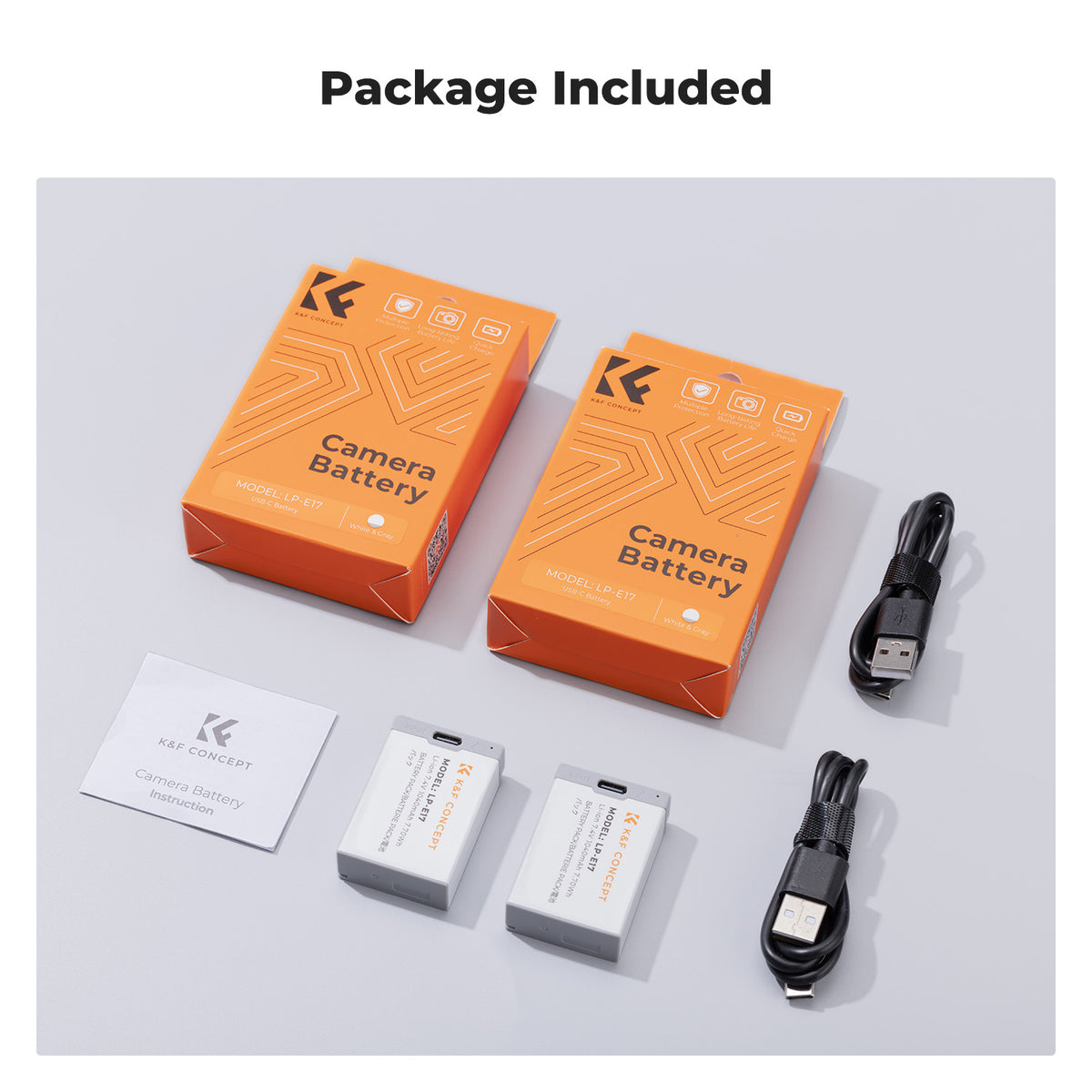
Two USB Type-C charging cables are included in the box, one per battery. This signals thoughtfulness: the buyer does not need to scavenge a cable or buy one separately to use the product as intended. Both batteries are fully compatible with Canon's dedicated LP-E17 charger as well as third-party LP-E17 chargers, so the USB-C port is an additional charging option, not a replacement for traditional charger compatibility. If you are at home with access to your existing charger, you can use it. If you are on the road with only a power bank, you can charge directly from that. The flexibility is the point. The batteries also work with any USB-C cable you already own, so if you lose one of the included cables or need a longer run, any quality USB-C cable will do the job.
The twin-pack structure supports workflows where you need to keep shooting while charging. Swap a depleted battery for the charged spare, drop the depleted cell onto a power bank in your bag, and continue shooting. By the time you drain the second battery, the first is topped up and ready to rotate back in. This leapfrog charging pattern is how working photographers manage power on long shoots, and it only works when you have at least two cells and the ability to charge one while using the other. The USB-C design makes that pattern possible without needing to find a wall socket or carry a dedicated charger. For travel photographers working across multiple cities in a single trip, this removes the need to pack a charging dock and reduces the number of proprietary adapters competing for limited plug space in a hotel room.
This twin-pack is a practical upgrade for Canon shooters who need backup power without the bulk of a dedicated charger. With twin batteries, fast-charge capability, six-layer protection, and included USB-C cables, it supports modern shooting workflows where you move between locations and charge from whatever USB source is available. Order the KF28.0049S1 today and shoot without the charger.