


K&F Gimbal Head for Long Lens Photography and Heavy Setups
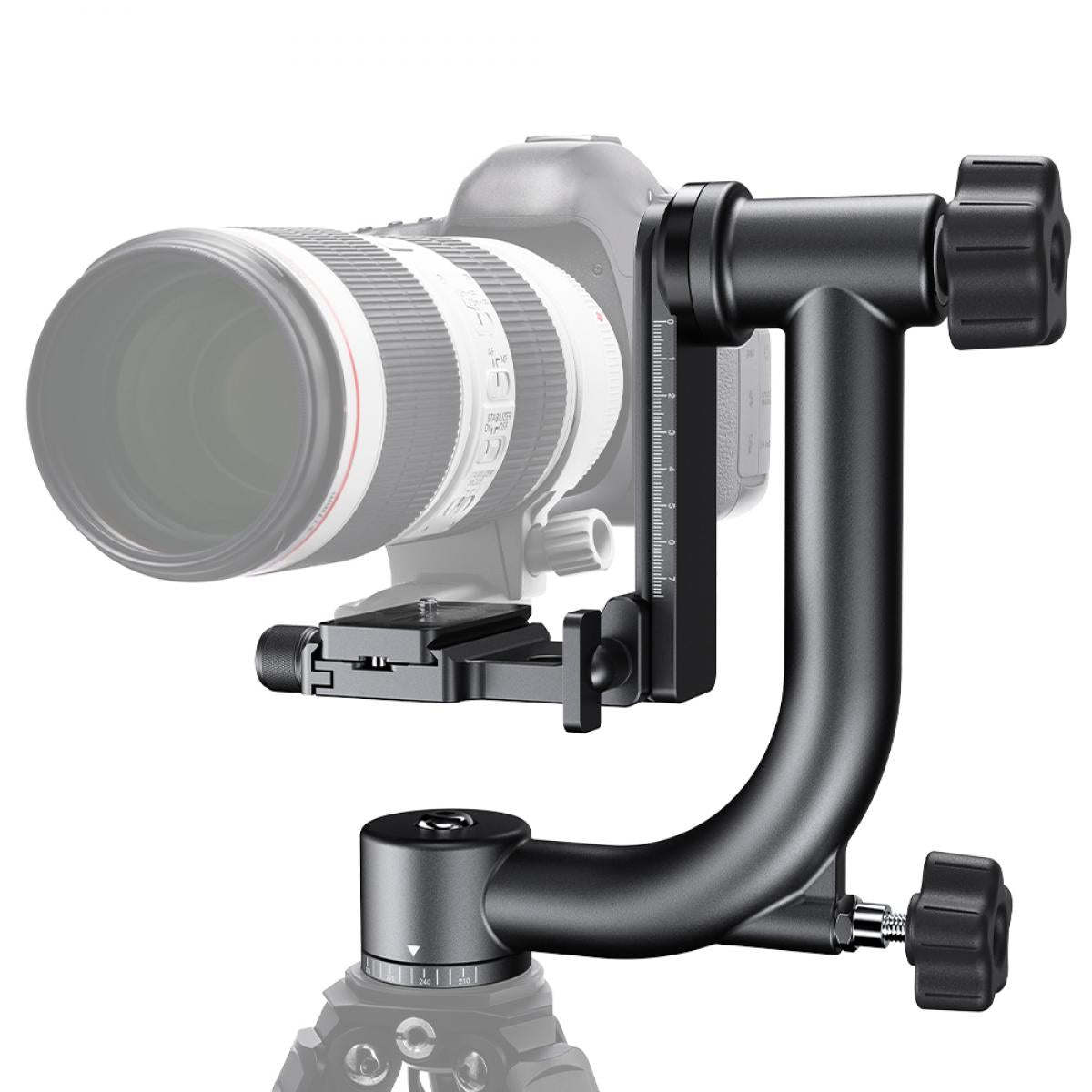
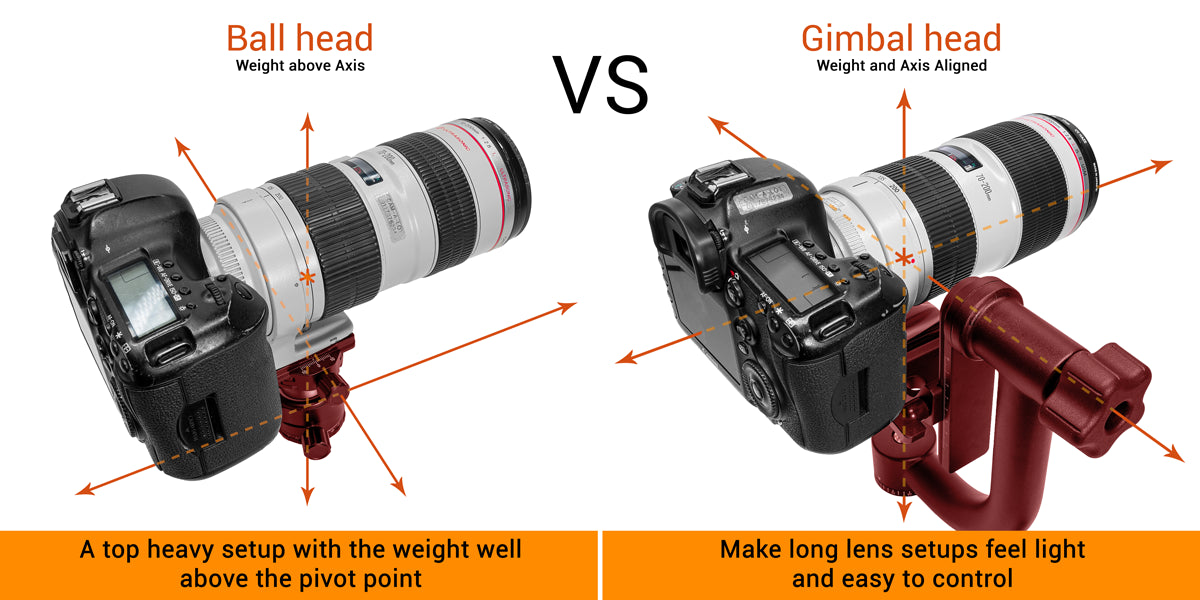
When you're working a wildlife hide at dawn or tracking fast action across a sports field, the weight of a 500mm f/4 or 600mm f/5.6 setup becomes a real physical problem. Hold that rig on a conventional ball head for more than a few minutes and your shoulder burns; tilt down to reframe and the entire assembly wants to pitch forward and take the tripod with it. A gimbal solves both problems by repositioning the pivot point so it passes through the lens's centre of gravity rather than sitting well below it. The result is a rig that feels almost weightless in your hands and stays exactly where you leave it when you let go to check settings or swap cards.
The engineering principle is straightforward but the real-world consequence is profound. On a ball head, your camera and lens act as a long lever arm pivoting from a single point beneath the assembly. Physics dictates that even a modest tilt creates enormous rotational force, which is why you need to crank the tension knob tight enough to leave marks on the ball, and why the whole rig still creeps downward under its own weight during a long exposure. A gimbal repositions that pivot so the mass is balanced fore and aft. Loosen the tilt lock and the camera floats; tighten it and the assembly holds position without drift. You're no longer fighting leverage; you're working with it.
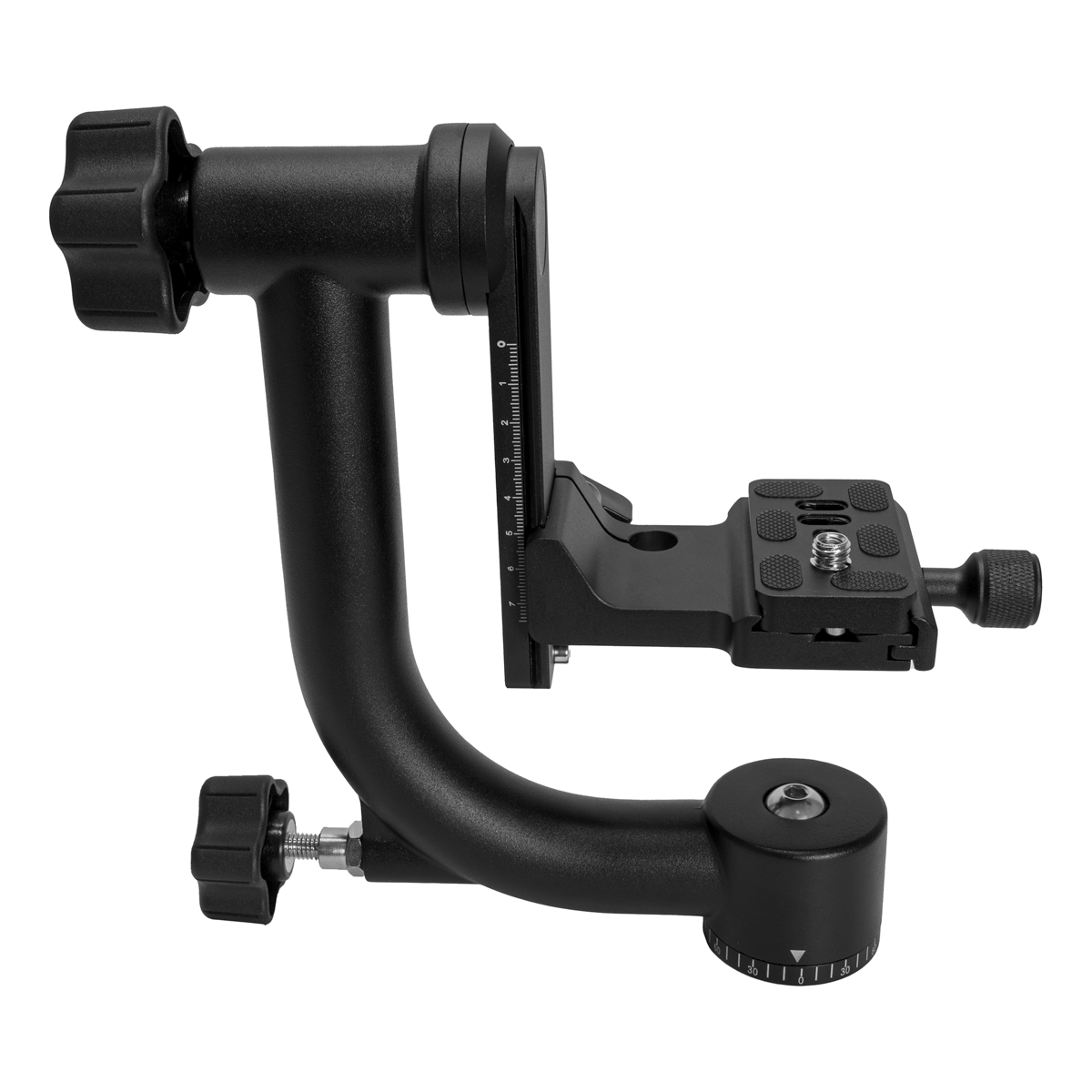
This particular head is built around an aluminium-magnesium alloy yoke rated to 20 kilograms, which covers everything from a cropped-sensor body with a 100-400mm zoom through to a full-frame flagship paired with a 500mm prime and 1.4x teleconverter. The yoke itself is a U-shaped cradle that wraps around the lens collar, with a horizontal tilt axis running through the centre of the U. Your lens collar sits on an Arca-Swiss-compatible sliding plate that locks into the cradle's quick-release clamp. Slide the plate forward or backward until the rig balances perfectly, when you've nailed it, you can let go of the camera and it stays put at any angle, then lock it down with the side knob. An engraved ruler runs the length of the plate so you can record the balance point for each lens in your kit and return to it instantly next time.
The tilt axis is controlled by a single locking lever on the right side of the yoke. Loosen it and the camera tilts freely through a full 180-degree arc, from straight down to straight up. Tighten it and the camera locks in place without creep. Tension is adjustable via a knurled knob at the base of the lever, so you can dial in just enough resistance to smooth out your panning motion without having to muscle the rig around. That adjustable drag is what separates a usable gimbal from one that either flops around uncontrollably or requires two hands to move.
The yoke itself sits on a rotating panning base that turns through 360 degrees. The base is marked in 10-degree increments, which matters more than you might think: when you're stitching a multi-row panorama of a mountain range at 400mm, being able to pan exactly 15 degrees between frames without guesswork is the difference between clean overlap and a stitching nightmare in post. The panning base has its own locking lever and adjustable drag control, so you can lock it down entirely for vertical compositions or leave it loose for tracking a bird in flight.
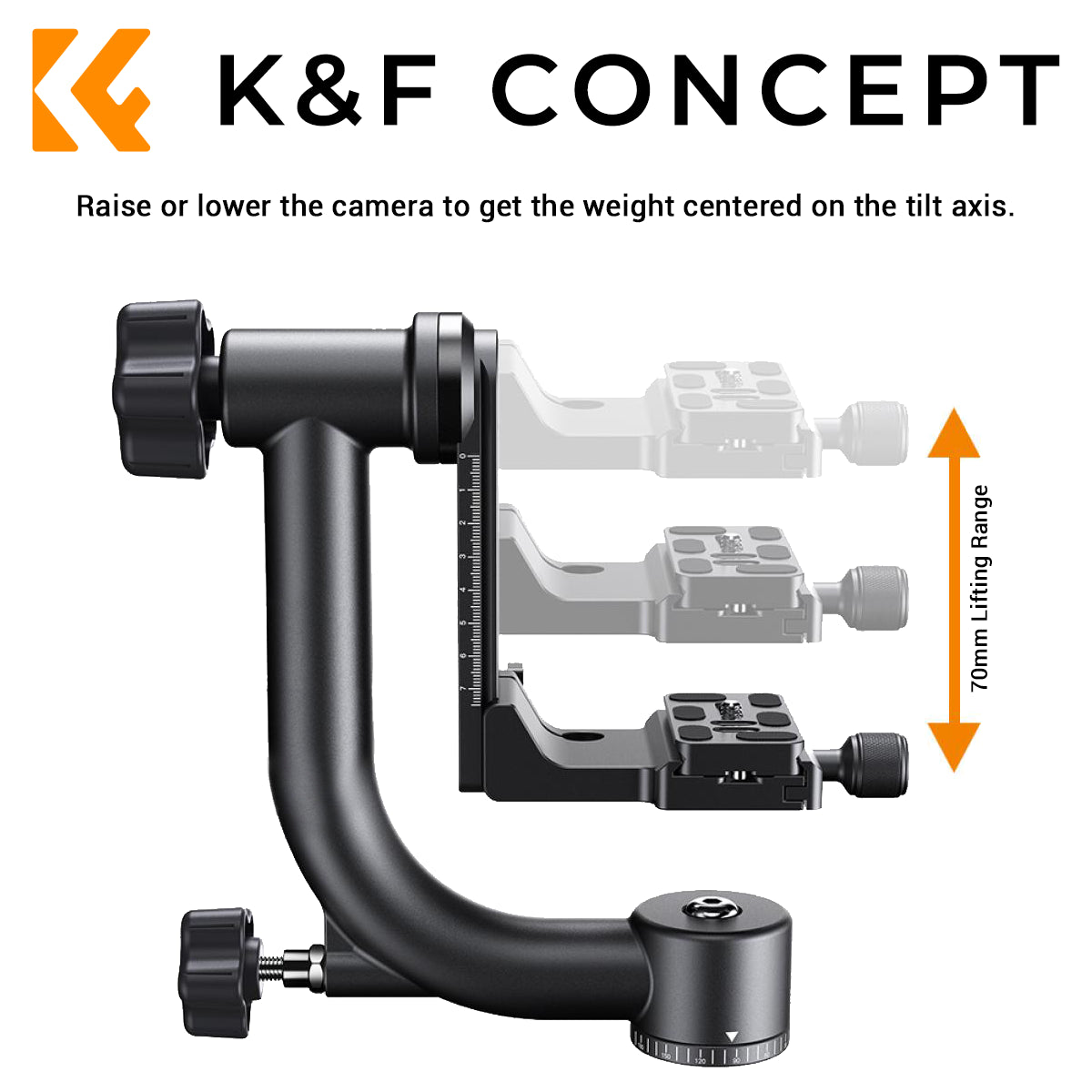
One detail that reveals itself only after extended use: the lifting range adjustment. The yoke can slide vertically by 70 millimetres along the upright post, and that range is marked in contrasting white engravings. Why does this matter? Because different lenses have their tripod collars at different distances from the camera body. A 100-400mm zoom might balance with the collar close to the body; a 600mm prime might need the collar much further forward. If the yoke is fixed at one height, you end up with the camera either too high or too low relative to the tripod's centre column, which affects stability and makes levelling the horizon a chore. The sliding yoke lets you position the camera at the optimal height for each lens, then lock it there with a winged nut. It's a small thing, but it's the kind of small thing that adds up to a rig that feels dialled-in rather than compromised.
The base of the panning platform has a 3/8-inch threaded socket, which is the standard for serious tripods. If your tripod has a 1/4-inch stud, you'll need a reducer bushing, most tripods aimed at this weight class include one. The Arca-Swiss plate that mounts to your lens collar uses a 1/4-inch camera screw, which is universal across DSLR and mirrorless bodies. The plate itself is machined aluminium with a rubberised grip surface that prevents the lens collar from rotating under its own weight, which is a failure mode you see on cheaper plates when the lock isn't quite tight enough.
The anodised black finish is corrosion-resistant, which matters if you shoot in coastal environments or humid conditions where salt spray and condensation are constant threats. The alloy itself is light enough that the head doesn't become a burden when you're hiking into position, but dense enough that it doesn't ring or flex under load. Cheap gimbals made from hollow extrusions tend to transmit vibration from the tripod legs straight into the camera; a solid yoke damps that energy before it reaches the sensor.
In practice, the workflow looks like this. You arrive at your shooting position, extend the tripod, mount the gimbal, slide your camera and lens onto the plate, adjust fore-and-aft balance until the rig floats, lock it down, adjust the yoke height if needed, and you're ready. Total setup time is under a minute once you've done it a few times. When a bird lands or an athlete enters the frame, you loosen the tilt lock, frame the shot, and fire. The gimbal carries the weight; you just steer. When the subject moves, you track it with one hand while the other stays on the shutter. When the action pauses, you let go and the camera stays exactly where you left it, which means you can check exposure, swap cards, or just rest your arm without losing your framing.
The alternative, a ball head or pan-tilt head, forces you to either crank the locks tight enough that repositioning requires both hands and deliberate effort, or leave them loose enough that the rig drifts under its own weight. Neither option works when you're tracking unpredictable movement. A gimbal splits the difference: it's stable when you want it to be and fluid when you need it to be, without requiring you to touch a lock between shots.
One scenario where this matters more than the spec sheet suggests: long exposures with a telephoto. If you're shooting a static subject at 400mm and 1/15th of a second, say, a heron standing in shallow water at dusk, even a rock-solid ball head can introduce micro-vibrations as the assembly settles under load during the exposure. A properly balanced gimbal eliminates that settling because there's no net torque acting on the tilt axis. The camera isn't fighting to stay level; it's already level. The result is measurably sharper images at shutter speeds where most people would assume a tripod alone is sufficient.
The KF31.033 is designed for photographers who need a gimbal's functionality but don't have the budget for a Wimberley or Really Right Stuff head that costs as much as a mid-range lens. It delivers the core engineering, balanced pivot, adjustable drag, Arca-Swiss compatibility, 20-kilogram capacity, without the premium finish or modular accessories that drive up the price on flagship models. The trade-off is weight (this head is heavier than a carbon-fibre equivalent) and the lack of features like replaceable feet or indexed panning stops. But the fundamentals are sound, and the fundamentals are what keep your camera stable and responsive when the shot materialises.