
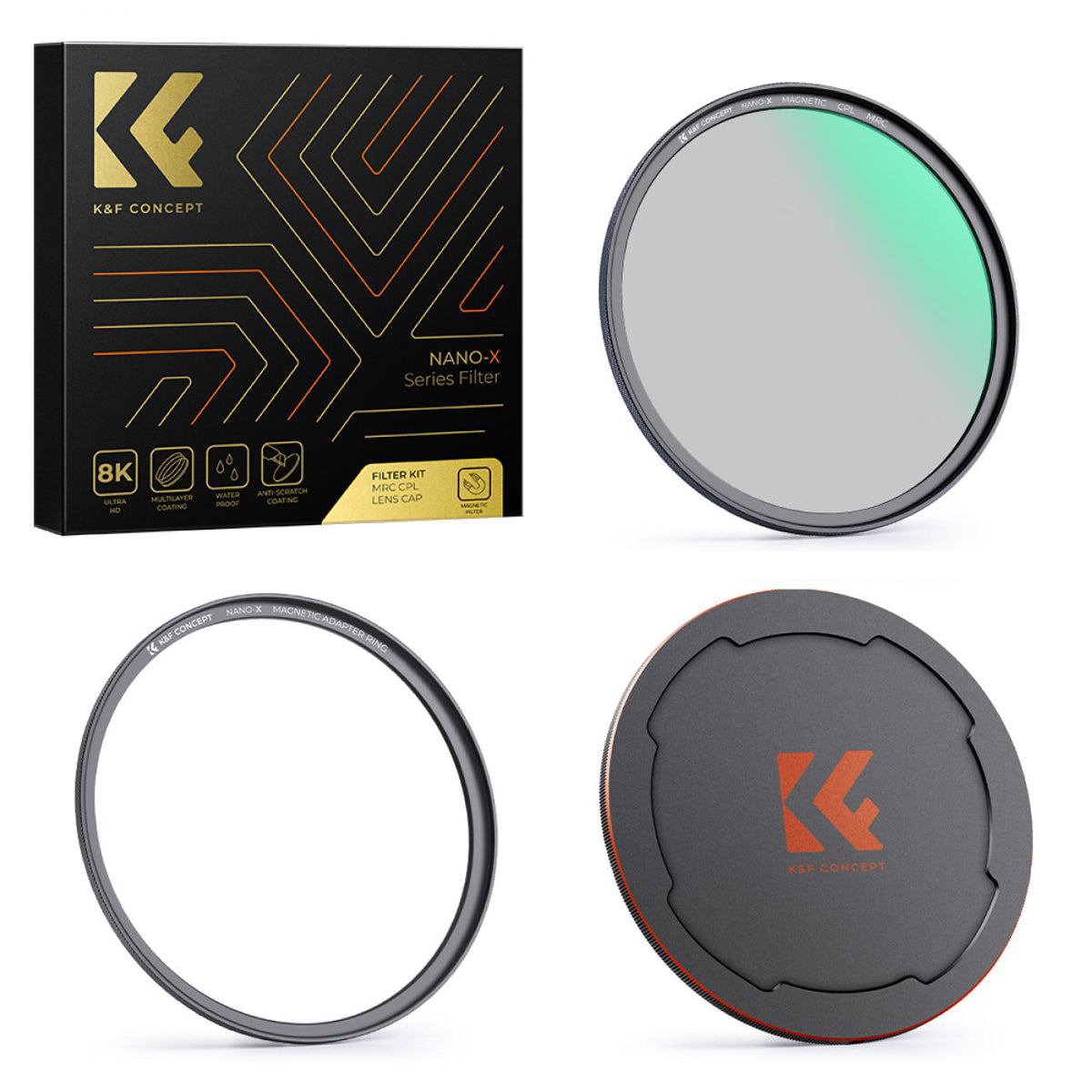



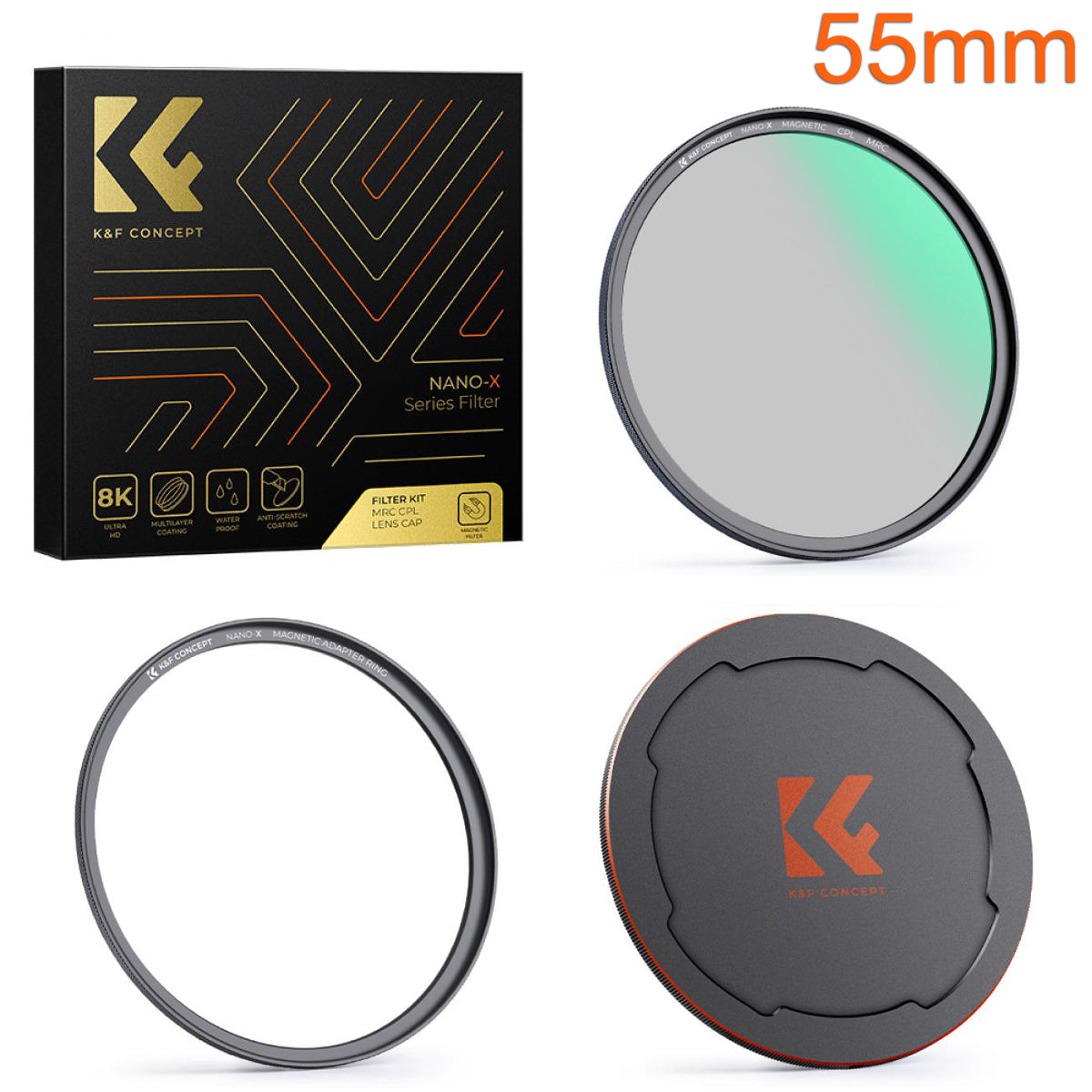


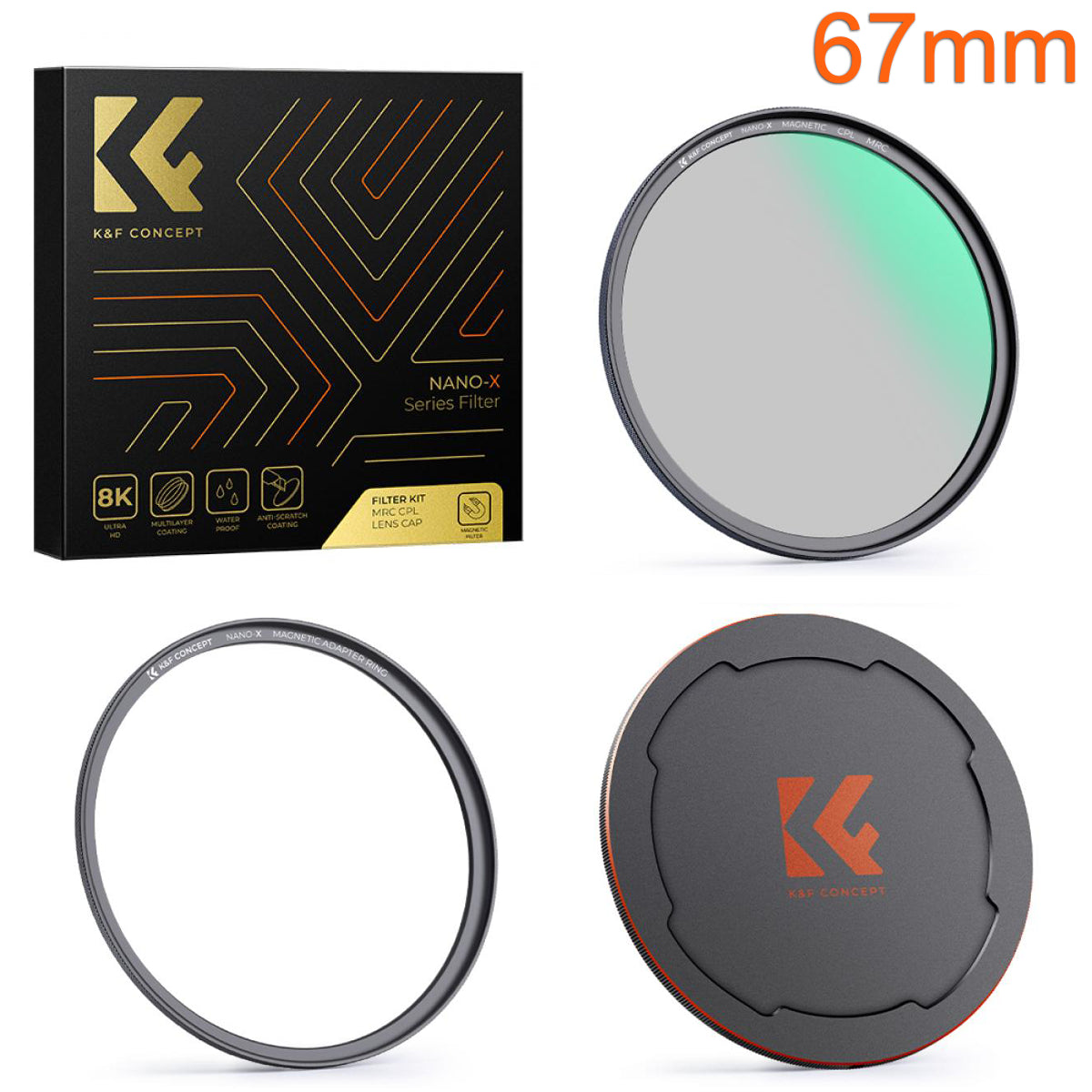

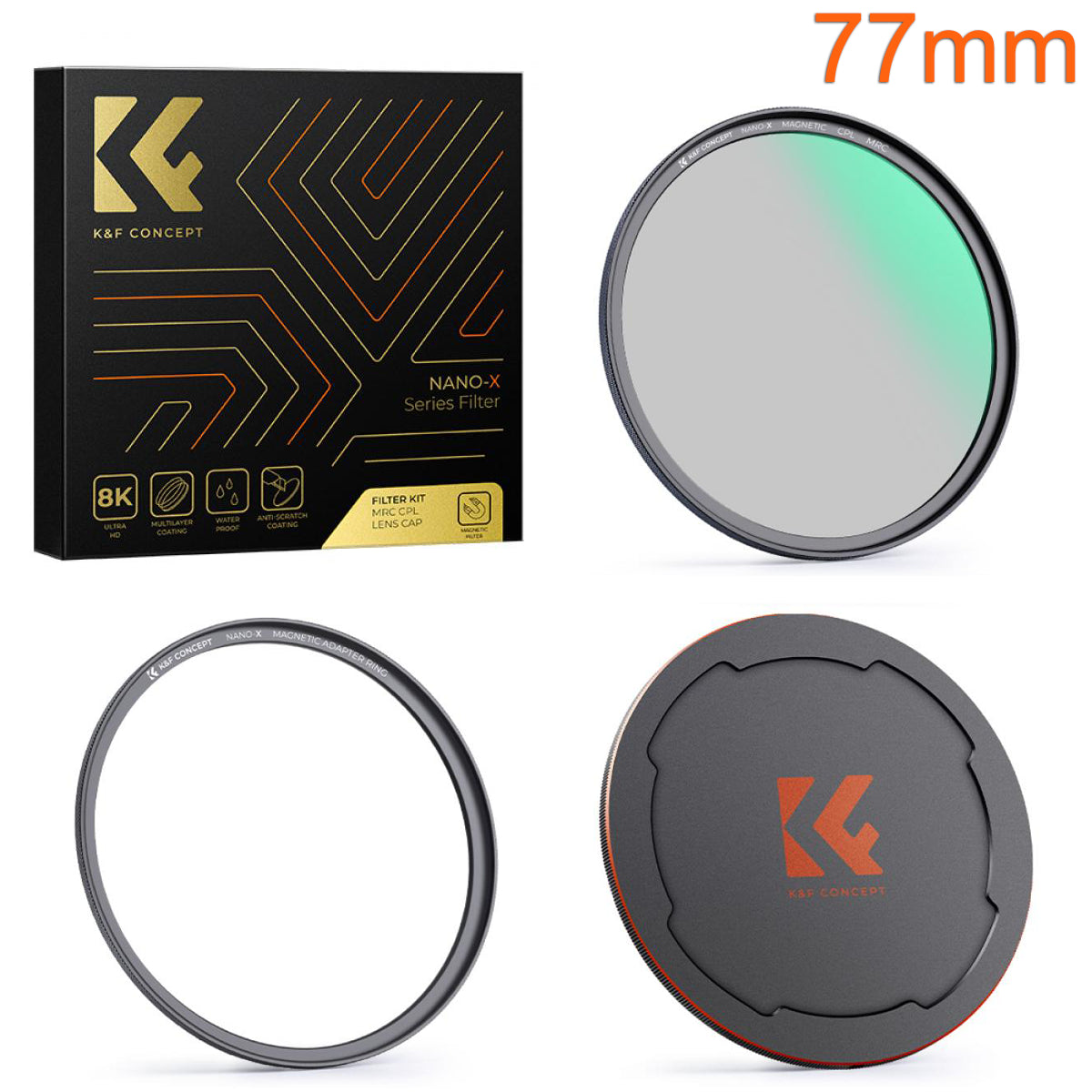
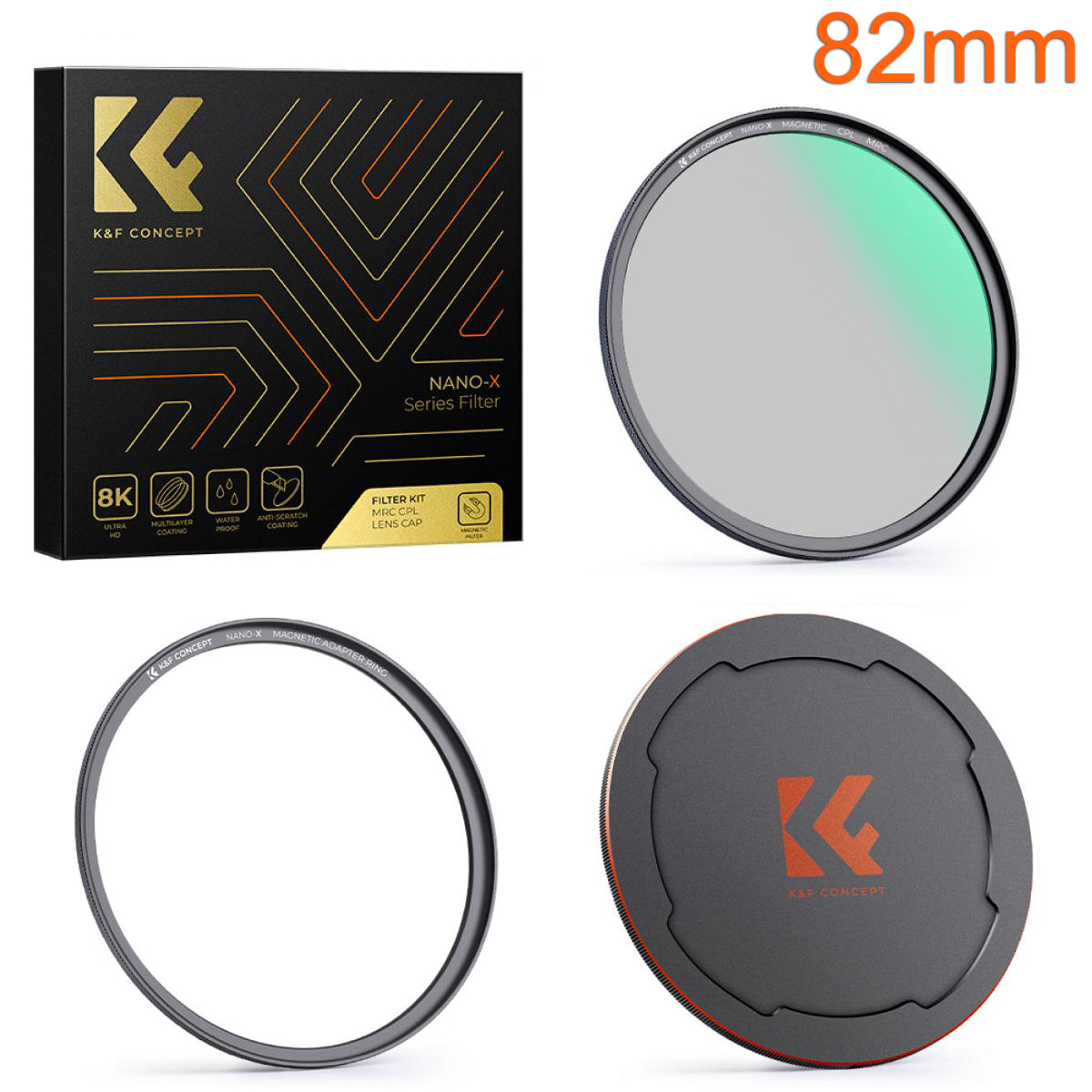
K&F Magnetic Circular Polariser Kit (CPL) Nano-X Series
Magnetic Attachment Transforms CPL Workflow
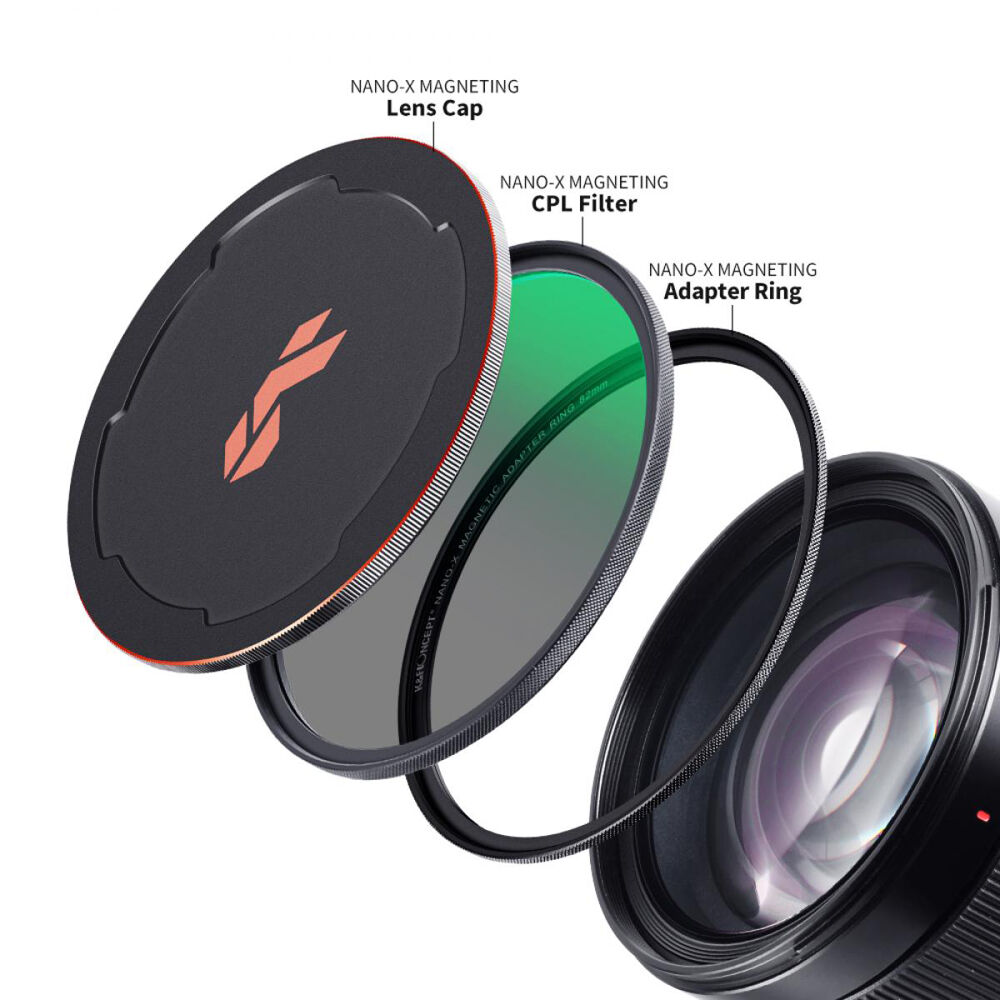
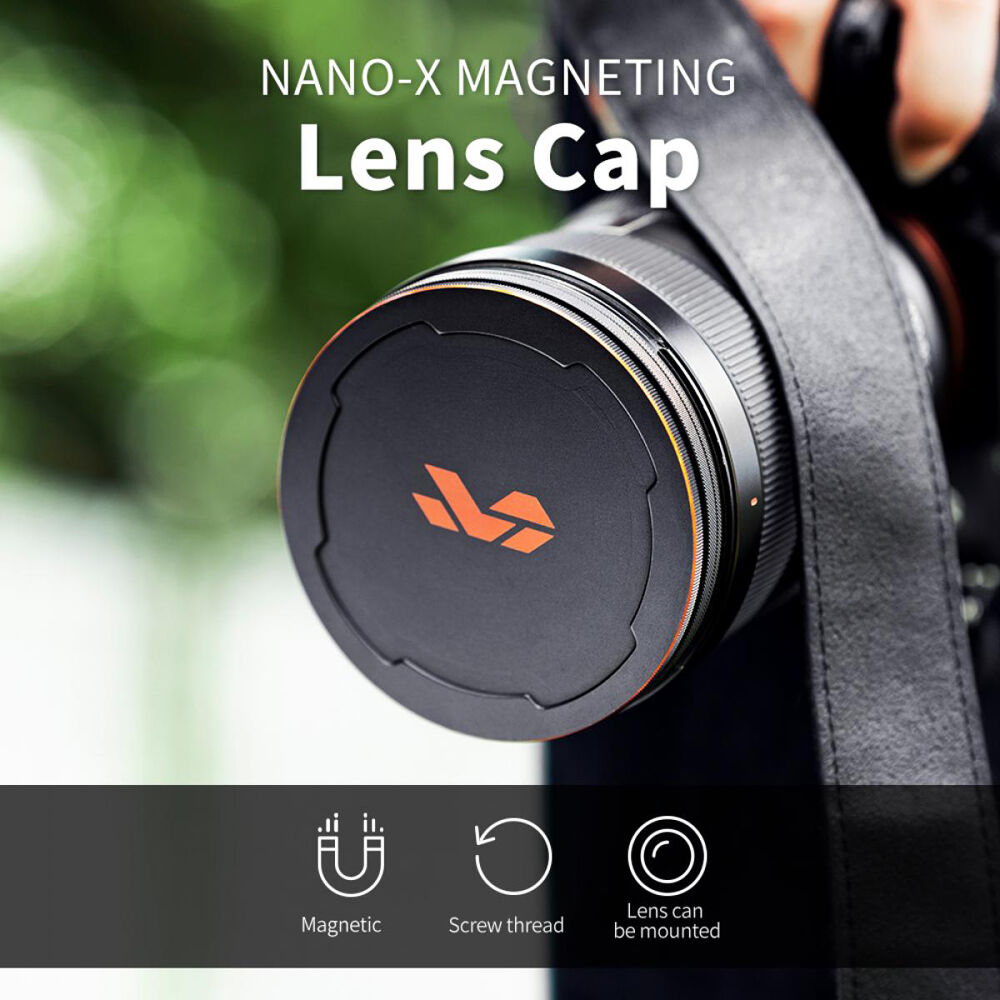
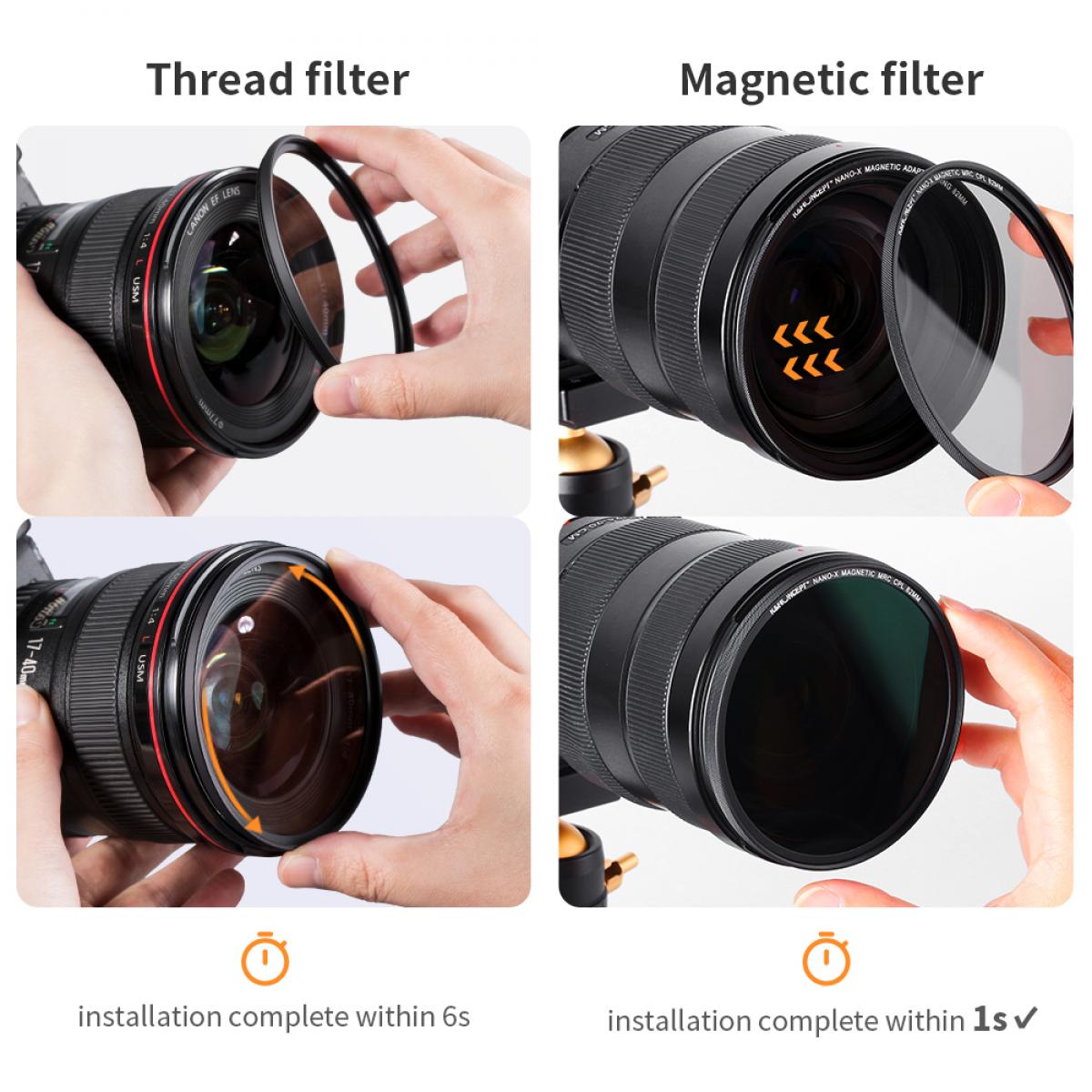
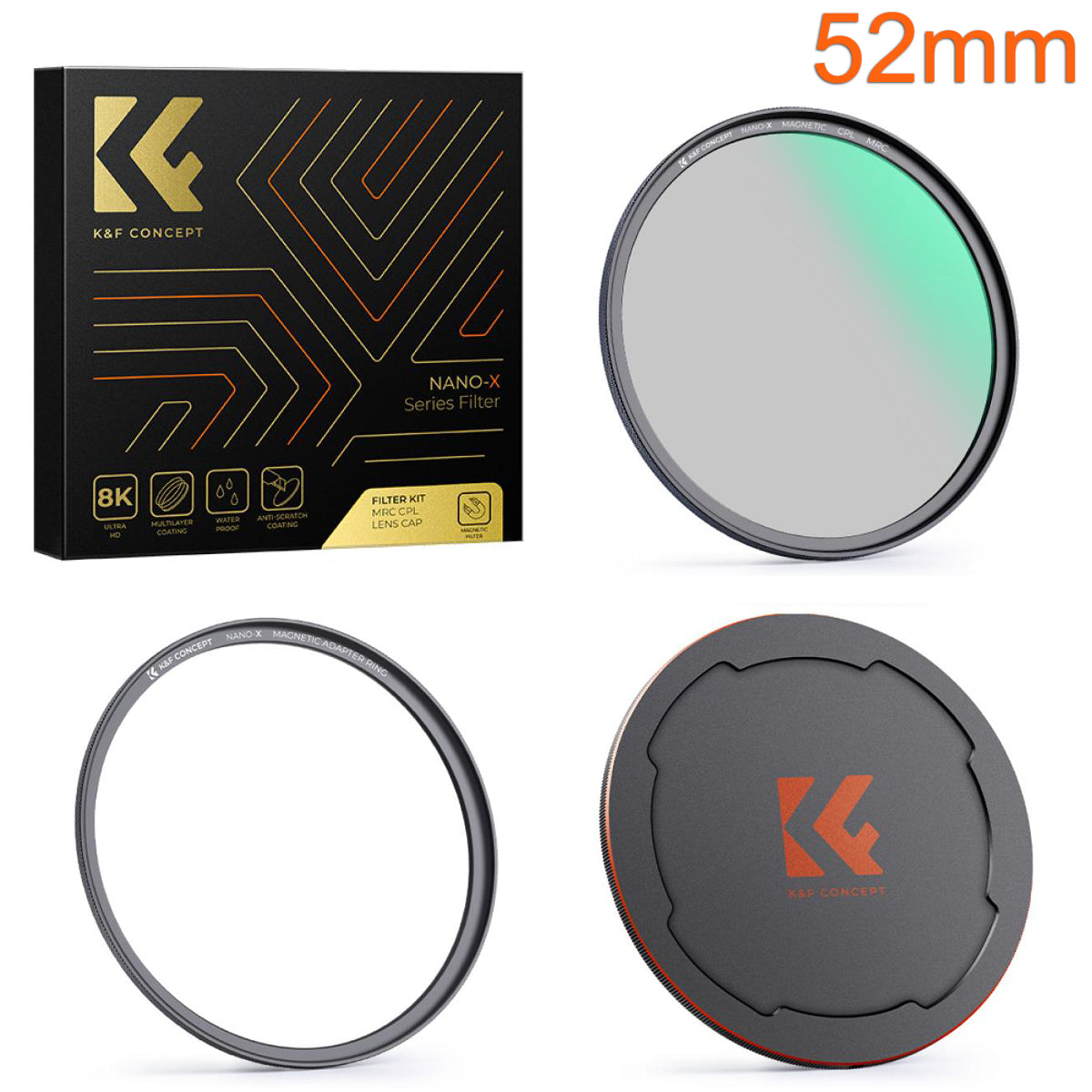
Polarising filters have always delivered results that no amount of post-processing can replicate, deeper skies, saturated foliage, controlled reflections, but traditional screw-mount systems slow you down when light is changing fast. This magnetic CPL from K&F Concept solves that friction point. A slim adapter ring threads onto your lens once; after that, the filter snaps into place and holds securely through the shoot, yet lifts away in under a second when you need it off. The same magnetic interface works with the included lens cap, so you protect glass without unscrewing anything. Fumbling with threads in cold hands or while balancing on uneven ground has caused more dropped filters than anyone admits, this system removes that risk entirely.
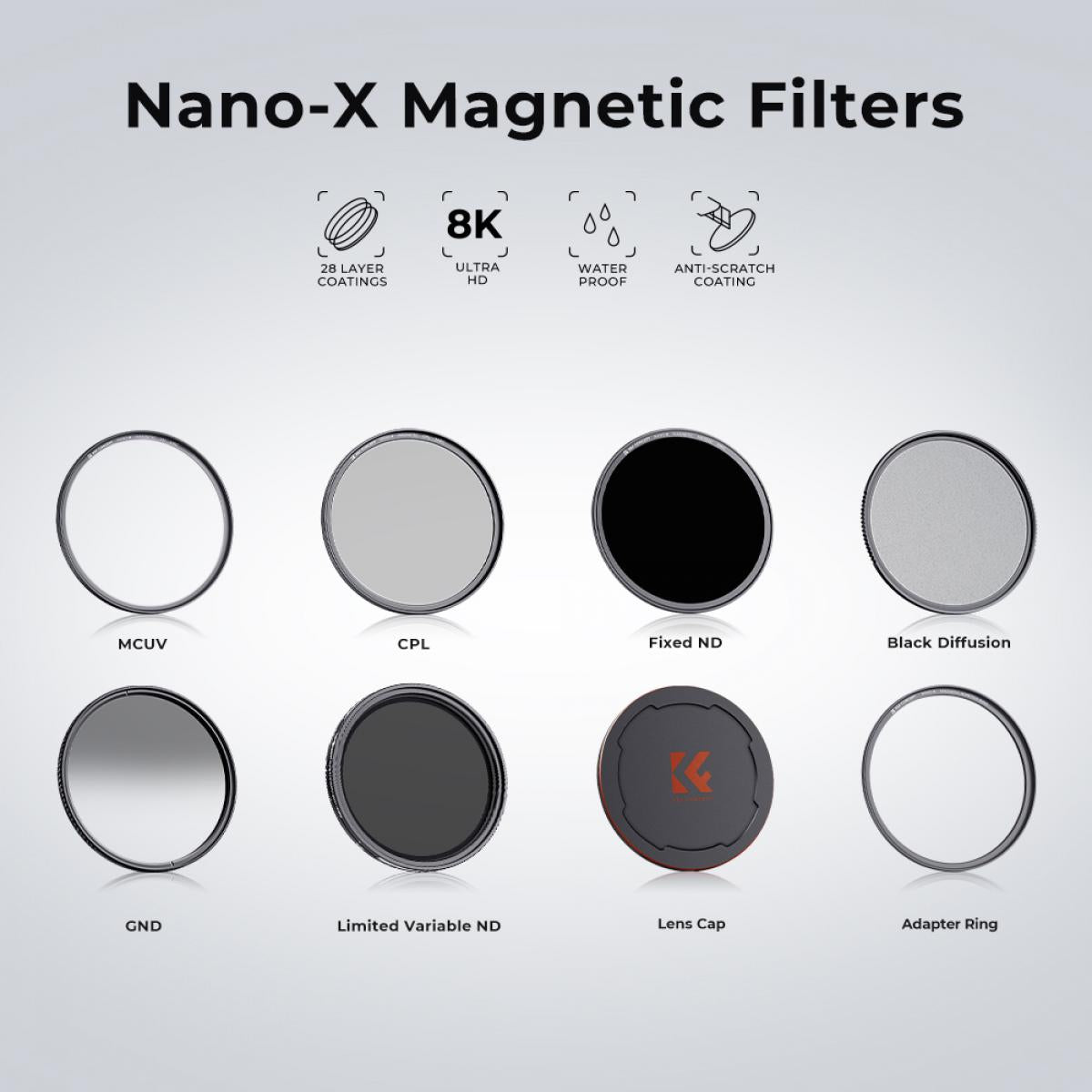
The Nano-X optical stack is engineered for UHD and 8K capture, where older filter glass introduces softness or colour casts that become obvious at high resolution. Twenty-eight layers of nano-coating cover both surfaces of the Japanese optical glass, with anti-reflection treatment cutting flare and ghosting when shooting into or near the sun. Light transmission stays high, so you lose minimal stops even when stacking this CPL with an ND or UV filter (the frame is double-threaded to allow it). Hydrophobic and oleophobic coatings mean water beads off and fingerprints wipe clean without smearing, which matters when you're working near spray or handling gear quickly between takes.
Polarisation Control for Reflective Surfaces
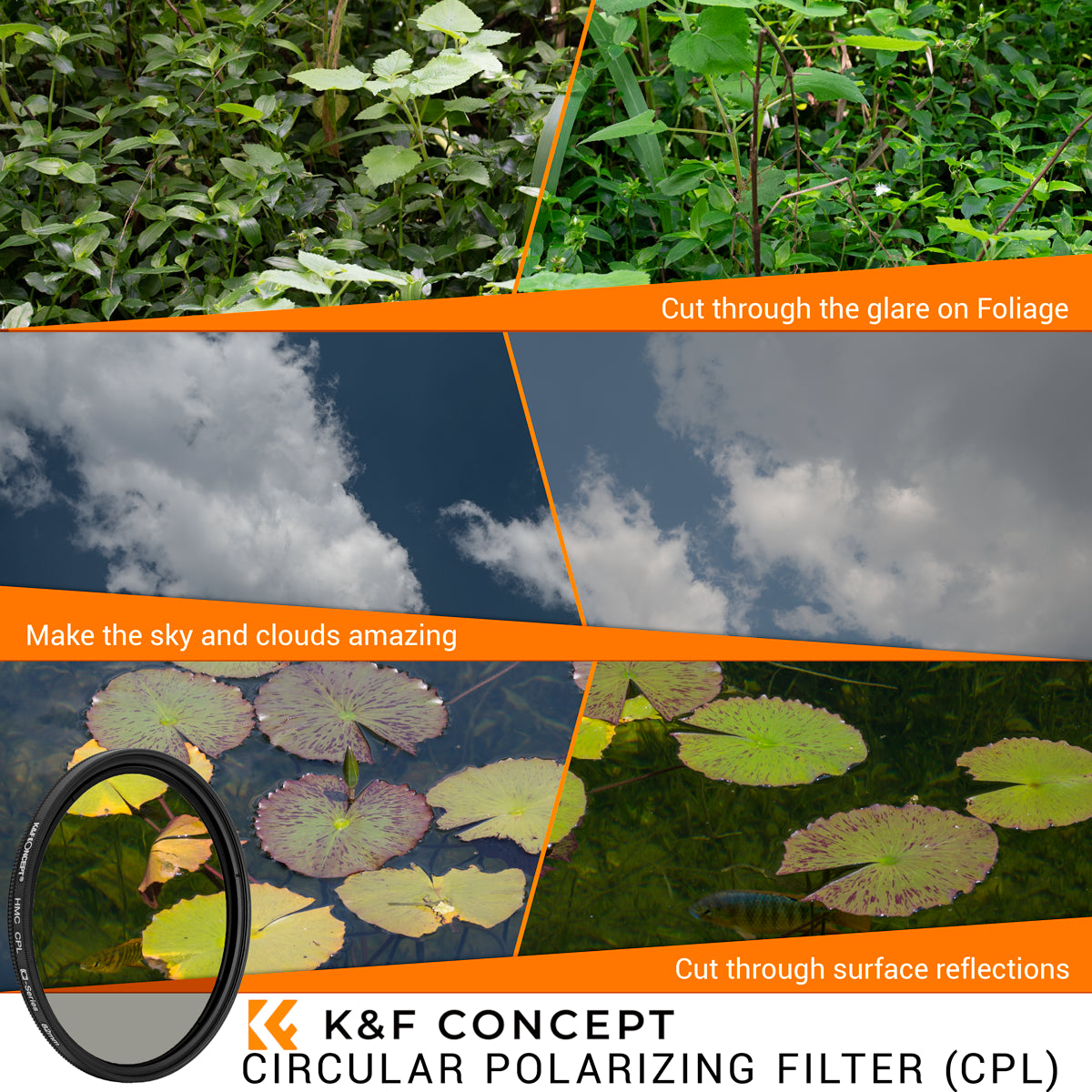
Circular polarisers work by blocking light waves vibrating in certain planes, which is why rotating the filter changes what you see. Reflections from water, glass, painted metal, or wet leaves all polarise light to some degree; dialling in the right orientation lets you either cut through that glare to reveal what's beneath the surface, or enhance it for creative effect. On a lake shoot, you might rotate the CPL to eliminate sky reflections and show submerged rocks, then rotate it the other way for a mirror-perfect reflection of clouds. The same principle applies to shooting through car windows, storefronts, or any non-metallic shiny surface, you control how much of the reflection stays in the frame.
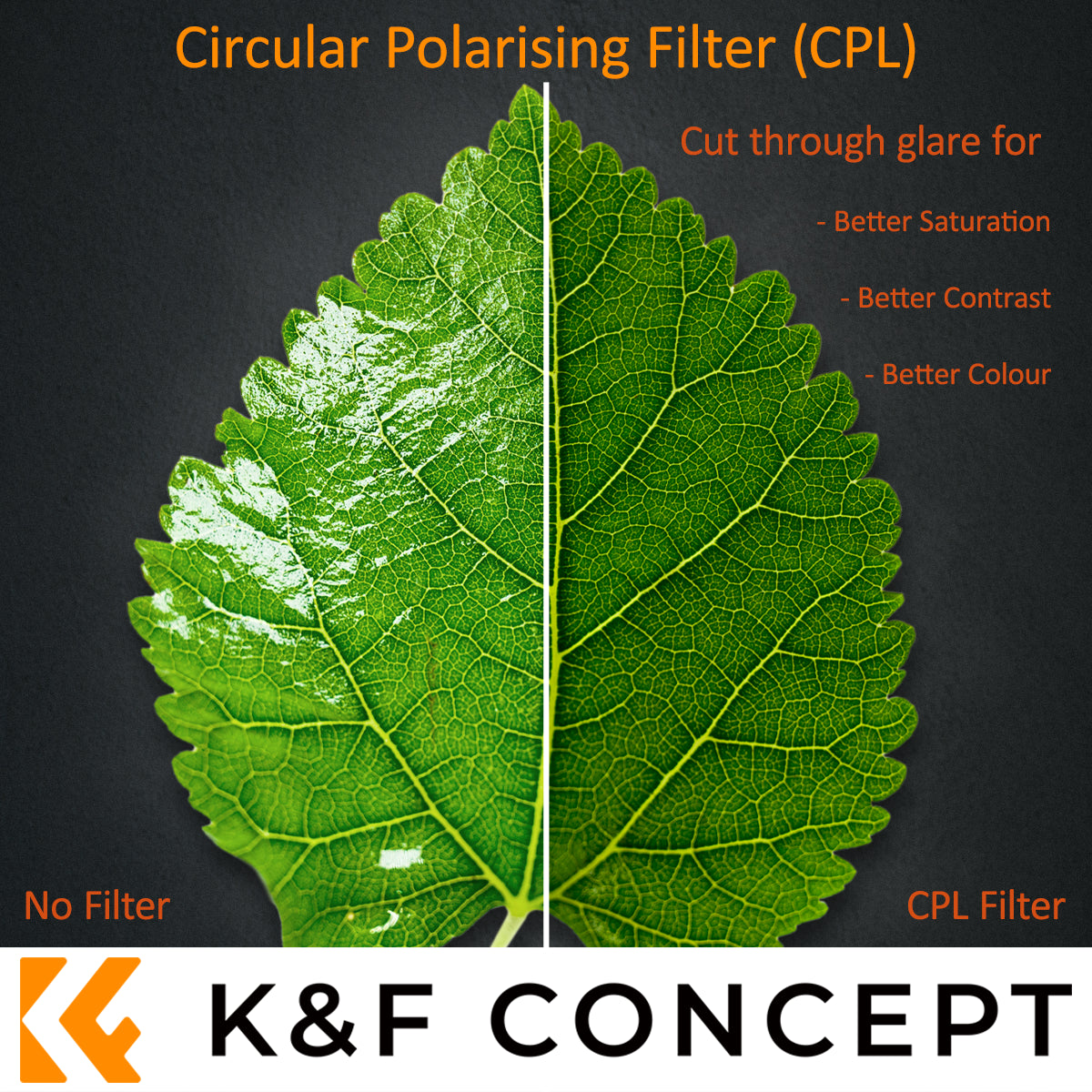
Foliage benefits dramatically because leaves reflect a lot of polarised light when wet or waxy. Without a CPL, you often capture more shine than colour; with one, you bring back the rich greens and texture that your eye saw but the sensor missed. Skies deepen from washed-out pale blue to saturated cobalt, and clouds gain definition instead of blending into a flat white mass. The effect is strongest at 90° to the sun, if you point at the sun and sweep your arm in an arc, maximum polarisation happens where your arm points perpendicular to the light source. That's why CPL impact varies as you change focal length or composition; you rotate the filter to taste for each shot.
Adapter Ring and Magnetic Lens Cap
The magnetic adapter ring is machined from aircraft-grade aluminium and adds roughly 5mm to your lens's front profile once threaded on. It stays in place for the duration of the shoot (or longer if you prefer), so you're not constantly screwing and unscrewing. The CPL itself is slightly thicker due to the rotating outer ring, but total stack height remains reasonable enough that most wide-angle lenses won't vignette unless you're shooting ultra-wide zooms at the short end. If vignetting does appear, it's typically confined to the extreme corners at 16mm or below on full-frame sensors.
The magnetic lens cap snaps onto either the bare adapter ring or over the CPL when it's attached, so you have protection without removing the filter. This is a small detail that saves time when you're moving between locations or packing up in a hurry, no more juggling a loose CPL while trying to cap the lens. The included storage case is rigid plastic with a foam insert, sized to hold the CPL and adapter ring together when not in use.
Verify Thread Diameter Before Ordering
Lens filter thread is marked on the lens barrel or printed inside the lens cap, always preceded by the Ø symbol. Common sizes run from 49mm through to 82mm; this product is available in multiple diameters to match your lens. If you shoot with several lenses of different thread sizes, you'll need either one adapter ring per lens or a step-up ring system (which adds another layer of adapters but lets you use one filter across multiple lenses). The magnetic system works with step-up rings, though stacking too many adapters increases the risk of vignetting on wide lenses.
Once the adapter ring is threaded on, the CPL attaches with a firm click and enough magnetic force to stay put during normal handling and shooting. It won't fall off if you tilt the camera downward, but it's not designed to survive a hard knock, the magnetic hold is strong enough for field use, not strong enough to substitute for a lens hood in terms of impact protection. If you're working in tight spaces or rough conditions, be mindful that the filter can be dislodged by a direct hit.
When Polarisation Delivers the Biggest Gains
CPL filters shine in high-contrast outdoor scenes where glare or reflections flatten the image. Water bodies, wet pavement after rain, glass-fronted buildings, car bodywork, all of these throw polarised reflections that a CPL can manage. Landscape shooters use them to darken skies without affecting foreground exposure, which is why they're standard kit for anyone shooting mountains, coasts, or open fields under blue skies. Architecture and automotive photographers rely on them to control reflections from windows and paint, letting the viewer see into a building or appreciate a car's colour without fighting a layer of glare.
The effect is less useful (or entirely absent) in certain conditions. Overcast skies don't polarise much, so rotating the filter won't change the image. Metallic surfaces don't produce polarised reflections, so a CPL won't remove glare from chrome or brushed aluminium. Shooting directly into or away from the sun also yields minimal polarisation, you need that 90° angle for maximum effect. If you're shooting a wide-angle scene with the sun in one part of the frame, polarisation will be uneven across the image, sometimes resulting in a darker patch of sky on one side. That's not a flaw; it's physics, and it's why you rotate the filter while composing to find the sweet spot.
Nano-X Coating Stack for High-Resolution Sensors
Modern sensors resolve detail that older filter glass can't keep up with. The Nano-X series is built to match the resolving power of 8K video and high-megapixel stills, using multi-layer coatings that maintain sharpness and contrast across the frame. Anti-reflection coatings on both surfaces reduce internal bounce, which is what causes ghosting (faint duplicate images) and flare (washed-out areas or coloured streaks) when shooting toward bright light sources. Hydrophobic treatment makes water bead and roll off rather than spreading into a film, and oleophobic coating resists fingerprints and smudges, so the glass stays cleaner between wipes.
Double threading on the filter's front edge means you can stack another filter on top if needed, common combinations include CPL plus ND for long-exposure work in bright conditions, or CPL plus a protective UV filter if you want an extra sacrificial layer. Stacking does increase the chance of vignetting on wide lenses and adds a small amount of light loss, so test your specific lens and focal length combination before committing to a stacked setup in the field.
The aluminium frame is thin-profile to minimise vignetting, but it's still rigid enough to protect the glass edge from minor knocks. The rotating outer ring turns smoothly without excessive resistance, so you can make fine adjustments to polarisation while looking through the viewfinder or at the rear screen. Some cheaper CPL filters have stiff or gritty rotation that makes precise control difficult; this one turns cleanly across the full 360° range.
Why Magnetic Beats Screw-Mount for Speed
Traditional screw-mount filters require you to align threads, rotate carefully to avoid cross-threading, and then reverse the process to remove them. In cold weather, with gloves on, or when you're trying to react quickly to changing light, that process introduces delay and increases the chance of dropping the filter. Magnetic attachment removes all of that friction, the filter finds its own alignment and clicks into place, and you lift it straight off when you're done. That speed advantage compounds over a day's shooting, especially if you're switching between CPL and no filter frequently as light direction changes.
The magnetic system also reduces wear on lens threads. Constantly screwing and unscrewing filters can eventually loosen the threads on either the lens or the filter, leading to a wobbly fit or even cross-threading damage. With the adapter ring staying in place, the lens threads are only engaged once per shoot (or once per lens, if you leave the ring on long-term), and the filter itself never touches the lens threads at all.
K&F Concept positions this product as accessible quality for photographers who need reliable performance without paying for brand premium. The Nano-X optical stack and magnetic convenience are features you'd expect at a higher price point, delivered in a package that competes on engineering rather than marketing. It's a practical tool for anyone shooting outdoors regularly, whether you're a working professional managing multiple lenses or an enthusiast building out a filter kit one piece at a time. The included case, magnetic cap, and adapter ring mean you have a complete system in the box, just verify your lens thread size and you're ready to shoot.