


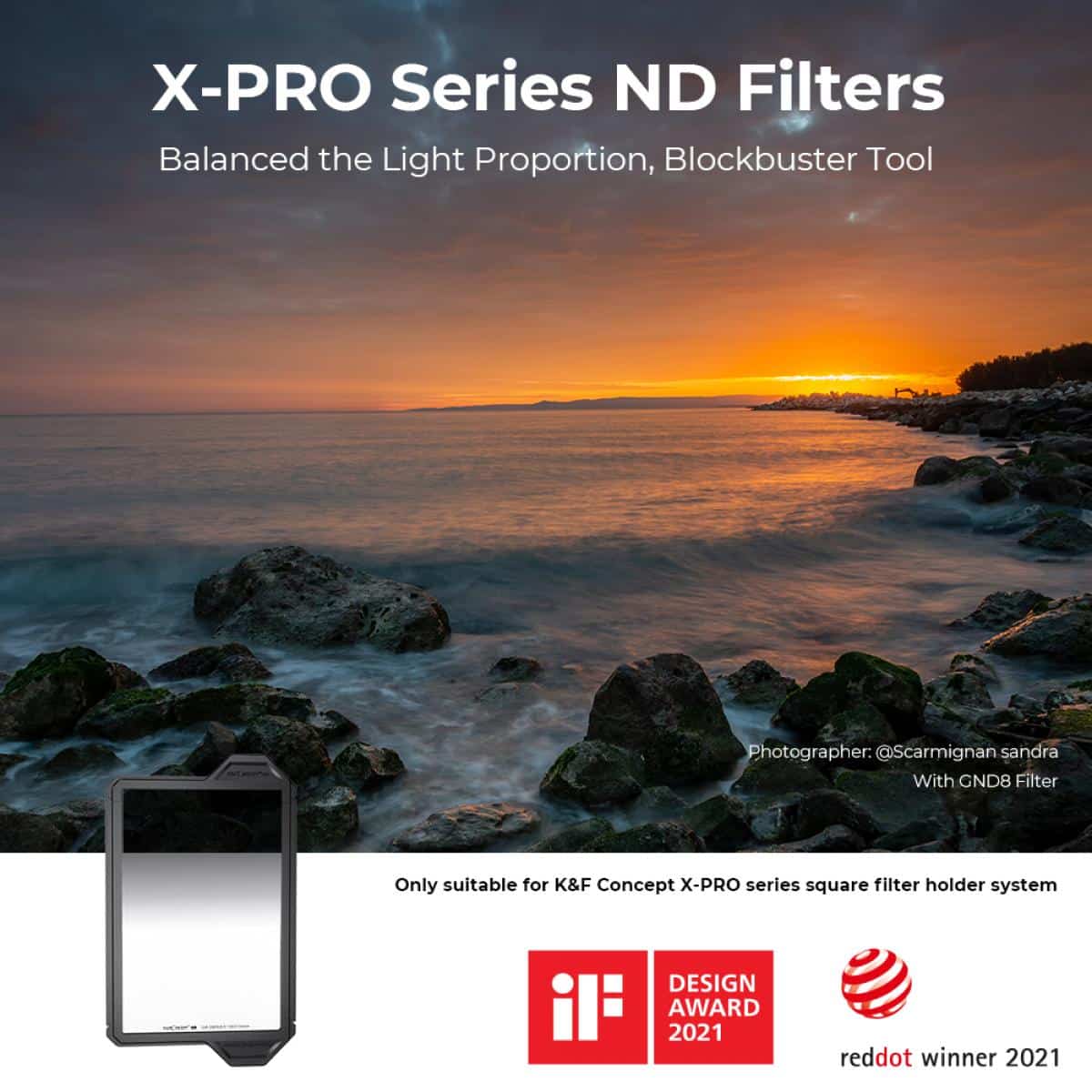
K&F Soft Graduated GND16 in Frame for X-PRO Filter System
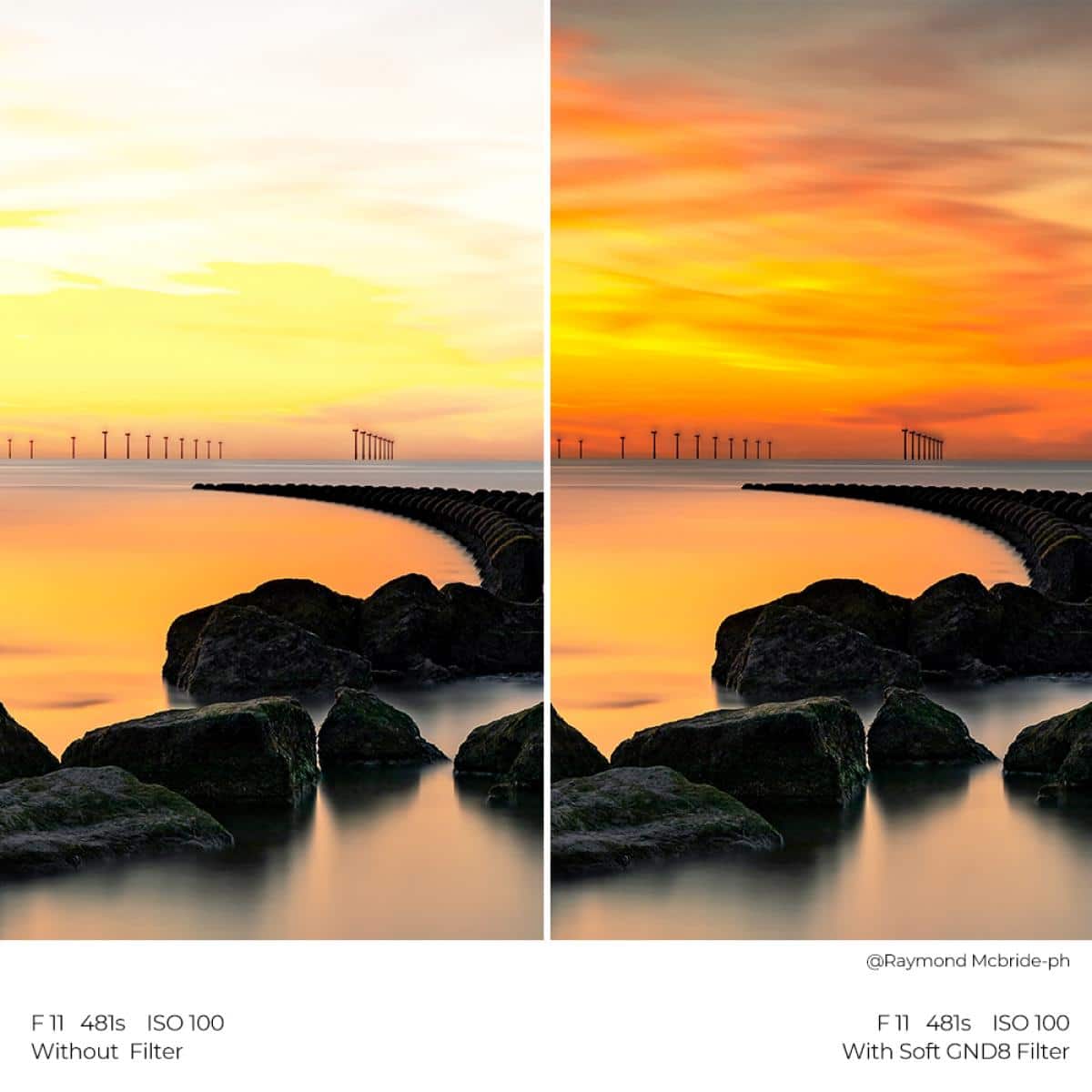
Balancing sky and foreground exposure has always been one of landscape photography's core technical challenges. When the upper portion of your frame is several stops brighter than the land or water below, you're forced to choose: expose for the sky and lose shadow detail, or expose for the ground and blow out the highlights above the horizon. A graduated neutral density filter solves that problem by darkening only the bright zone, letting you hold detail across the entire tonal range in a single exposure.
How a Graduated ND Works in Practice
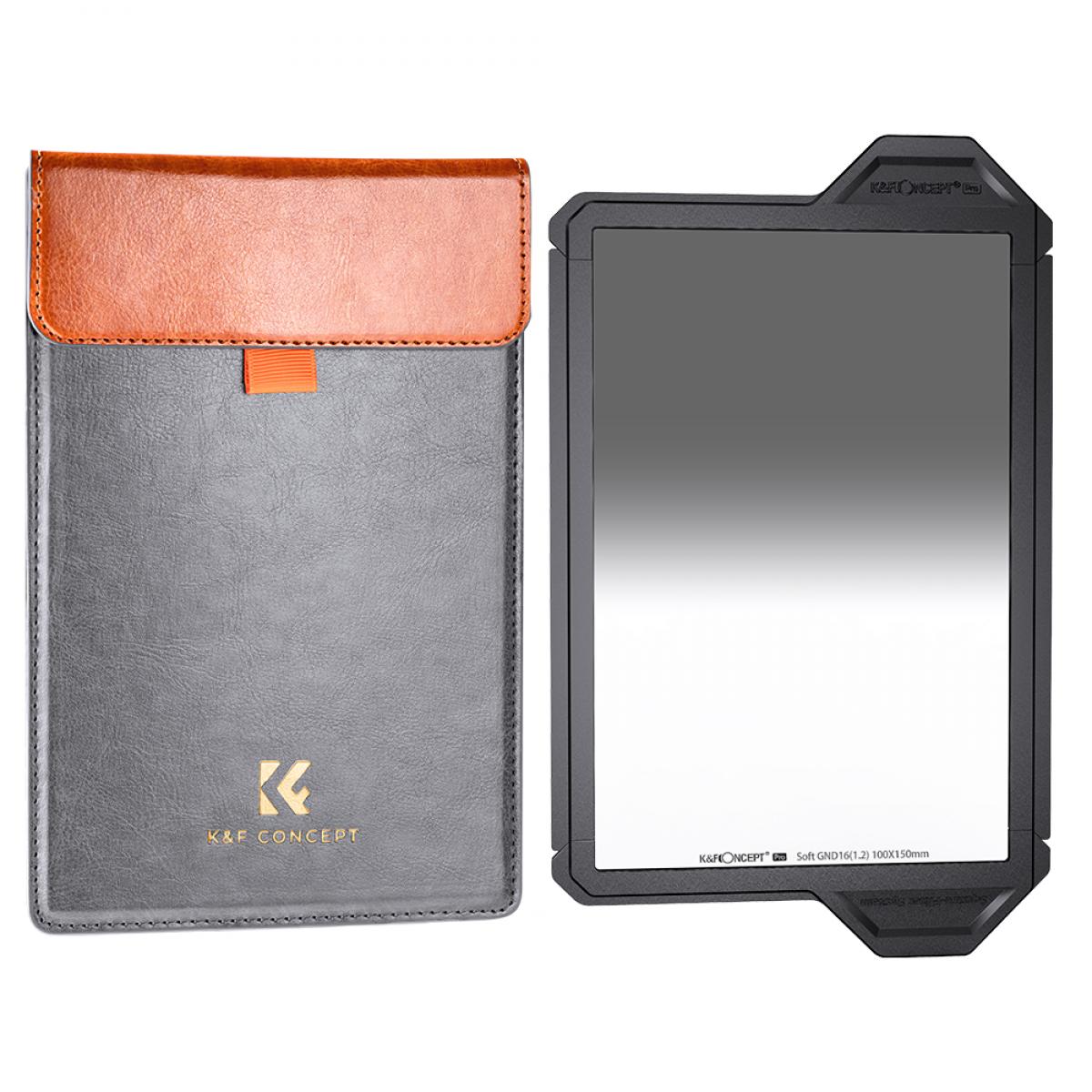
This rectangular filter transitions from ND16 density at the top edge to optically clear glass at the bottom. The ND16 zone cuts four stops of light, which means you can open up your overall exposure by four stops without clipping the sky. That brings the foreground up to a properly exposed midtone while the darker portion of the filter holds back the brighter upper register. The gradient between the two zones is gradual enough that it won't create a visible line across your image, even when the horizon sits in the middle of the frame.
Because the filter is rectangular and slides freely within the X-Pro mount, you position the transition exactly where your composition needs it. If you're framing with the horizon in the lower third, slide the filter down so the darkening effect starts just above that line. If the horizon sits higher, slide it up. That adjustability is what makes a graduated filter more useful than a fixed circular ND for scenes with a defined bright-to-dark split.
Optical Quality and Coating Technology
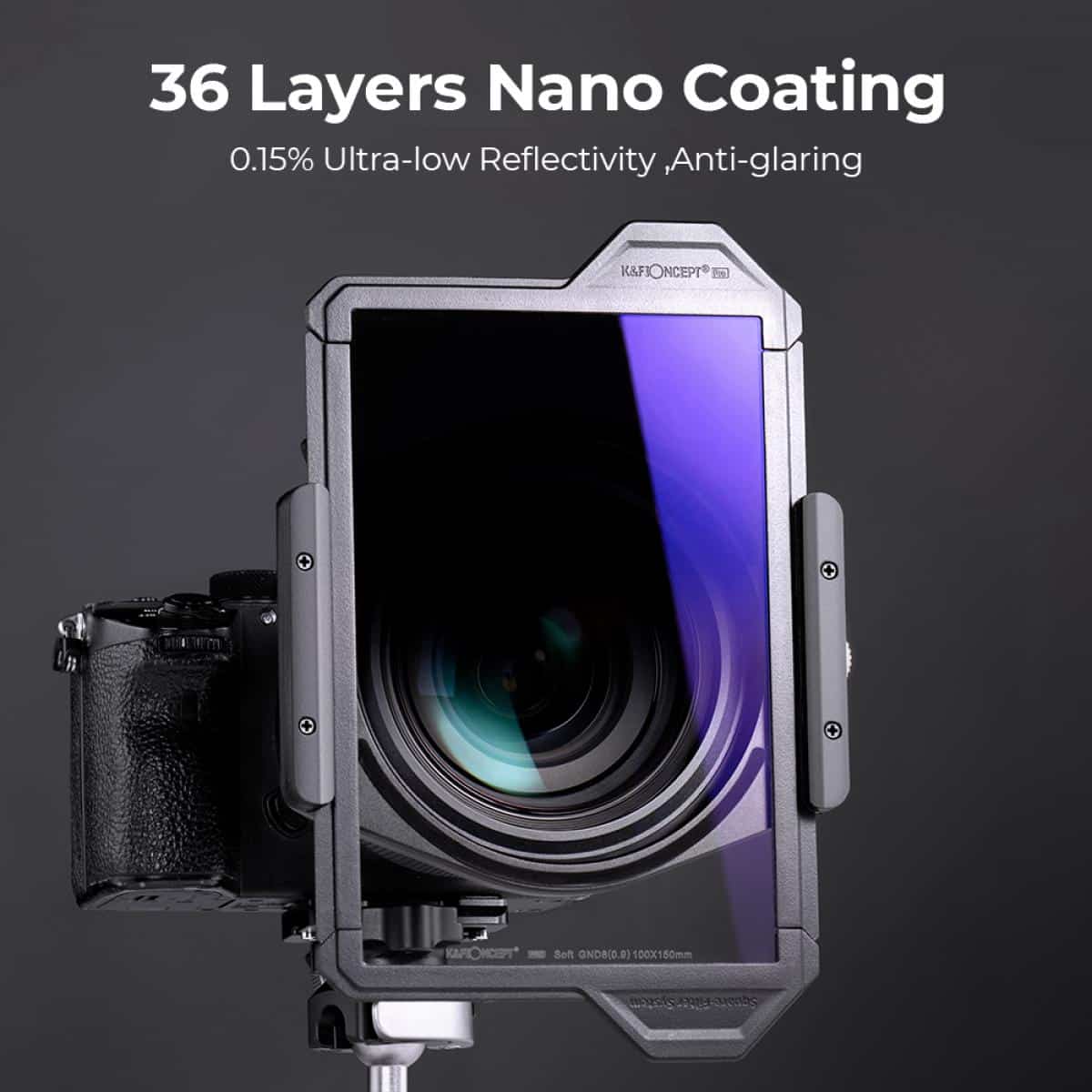
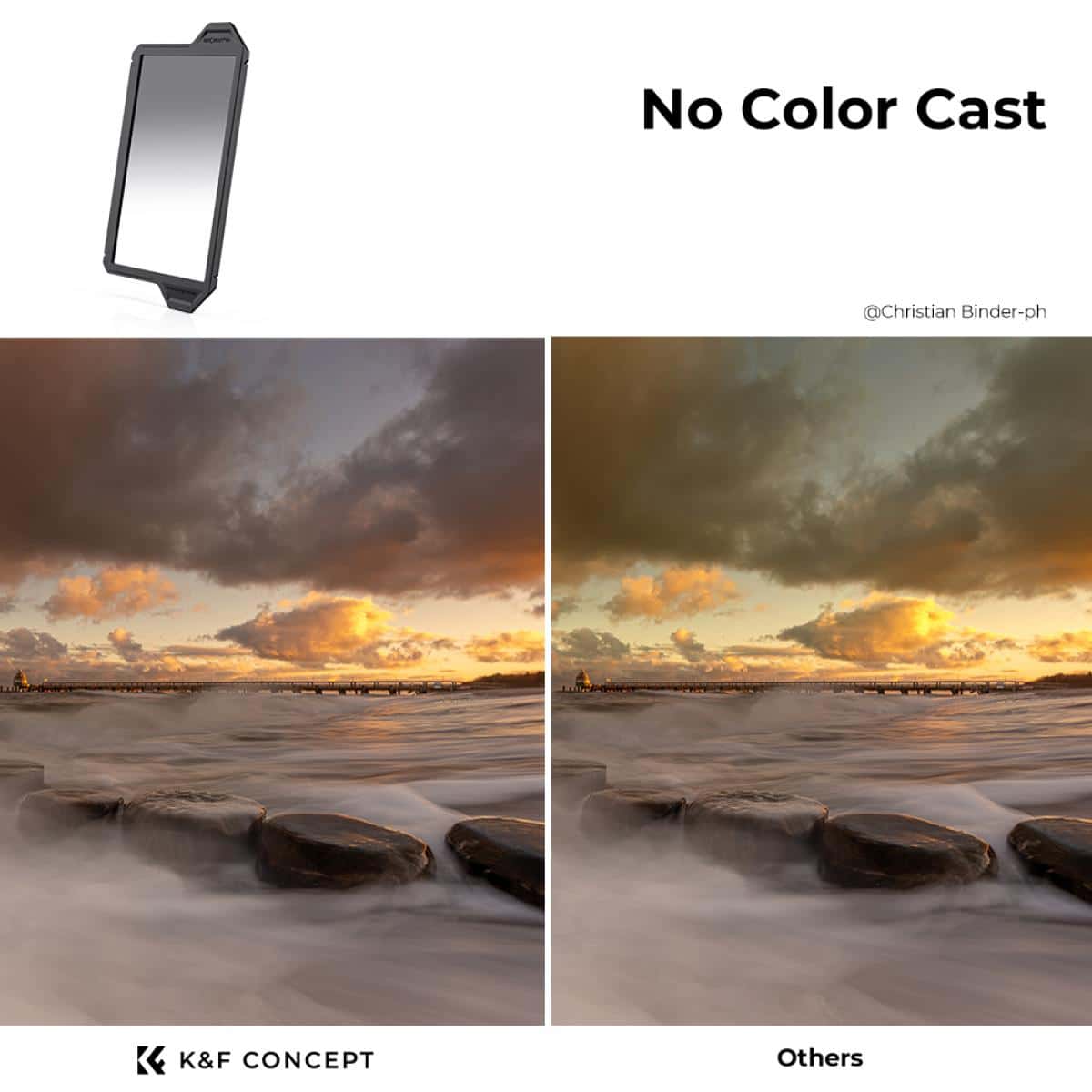
The filter blank is Japanese AGC optical glass, ground and double-polished to maintain edge-to-edge sharpness. Twenty-eight layers of multi-coating are applied to both surfaces. Those coatings serve three functions: they minimise reflections and flare when shooting into the light, they prevent colour casts that cheaper filters introduce, and they make the surface hydrophobic so water beads off rather than spreading into streaks. In practice, that means you can shoot in mist or light rain without constantly wiping the filter, and your images come out of camera with accurate colour that doesn't need correction in post.
The coatings also reduce internal reflections between the filter and your front element. When you're shooting a sunset or any scene with a strong light source in frame, uncoated or poorly coated glass can bounce light back and forth, creating ghost images or a veiling flare that kills contrast. The Nano-X coating stack suppresses that, so you retain punch and saturation even when the sun is just outside the frame edge.
Protective Frame Design
The filter glass is set into a rigid frame that runs around all four edges. That frame does two things: it stiffens the filter so it's less likely to flex and crack under pressure, and it provides a buffer if you drop it on flat ground. The frame won't save the glass from every impact, but it does improve survival odds from drops up to about 1.5 metres onto a hard surface, which is the typical height when a filter slips out of your hand while you're swapping it in or out of the mount.
Two raised tabs, one at the top and one at the bottom, give you a place to grip the filter without touching the glass itself. That keeps fingerprints and smudges off the optical surface, which matters because even a small smudge in the frame can scatter light and reduce contrast. The tabs also make it faster to slide the filter into position or pull it out when you need to swap to a different density.
Integration with the X-Pro System
This filter is designed to work with the K&F Concept X-Pro modular mount, which attaches to any lens via a threaded adapter ring. Once the mount is on your lens, you can slide this rectangular filter into the holder and adjust its vertical position without removing the mount. You can also stack a circular polariser or UV filter in the front thread of the mount at the same time, which is useful when you want to control reflections or cut haze in addition to managing exposure.
The X-Pro system is built around the idea that you buy one set of filters and use them across all your lenses, rather than buying a separate screw-in filter for every filter thread diameter you own. If you shoot with a 16-35mm, a 24-70mm, and an 85mm, you'd traditionally need three sets of filters. With the X-Pro mount and a set of adapter rings, you buy the filter once and move it between lenses as needed. That makes high-quality filters more accessible, because you're not multiplying the cost by the number of lenses in your kit.
Storage and Handling
The filter ships in a PU leather pouch with a magnetic closure. Inside, a fabric tab and an orange drawstring let you lift the filter out of the case without gripping the glass directly. That's a small detail, but it's the kind of thing that keeps your filter clean over hundreds of uses. The pouch is compact enough to fit in a jacket pocket or the top flap of a camera bag, so you can carry the filter without dedicating a padded divider to it.
When to Use a Graduated ND
This filter is most useful in scenes where there's a clear division between a bright zone and a darker zone, and that division runs roughly horizontally across the frame. Classic use cases include seascapes at sunrise or sunset, mountain ranges with a bright sky above the ridgeline, or any landscape where the sky is significantly brighter than the land. It's less useful in scenes where the bright and dark areas are mixed throughout the frame, like a forest canopy with patches of sky between branches, because the gradient will darken parts of the scene you don't want darkened.
If you're shooting in raw and you have a modern camera with good dynamic range, you can often recover a blown sky in post by pulling down the highlights slider. But that only works up to a point. If the sky is clipped to pure white, there's no data to recover. A graduated ND lets you capture the full tonal range in camera, which gives you more latitude in post and produces cleaner files with less noise in the recovered areas.
The 1.2 density (four stops) is a good middle ground. It's strong enough to handle the brightness difference in most sunrise and sunset conditions, but not so strong that you're forced to use a very slow shutter speed or wide aperture to compensate. If you're shooting in the middle of the day under harsh sun, you might need a stronger grad. If you're shooting in softer light, you might find this one too strong and prefer a lighter density. But for the majority of landscape work in the golden hour, four stops is about right.
Warranty and Serviceability
K&F Concept products purchased through authorised dealers in South Africa are covered against manufacturing defects. The local distributor also stocks spare parts, which matters if you damage a component through normal use. If the frame gets bent or a tab breaks off, you can get it repaired rather than replacing the entire filter. That's not common in the filter market, where most brands treat filters as disposable once damaged.
This graduated ND is an add-on for the X-Pro system, so you'll need the X-Pro mount and an adapter ring for your lens diameter to use it. If you already own the mount, this filter expands what you can shoot by giving you control over high-contrast scenes that would otherwise force you into bracketing and HDR blending. If you don't own the mount yet, the system is worth considering if you shoot across multiple lenses and want to avoid buying duplicate filters for each one. The upfront cost of the mount pays off quickly once you're using the same filters on three or four different lenses.