
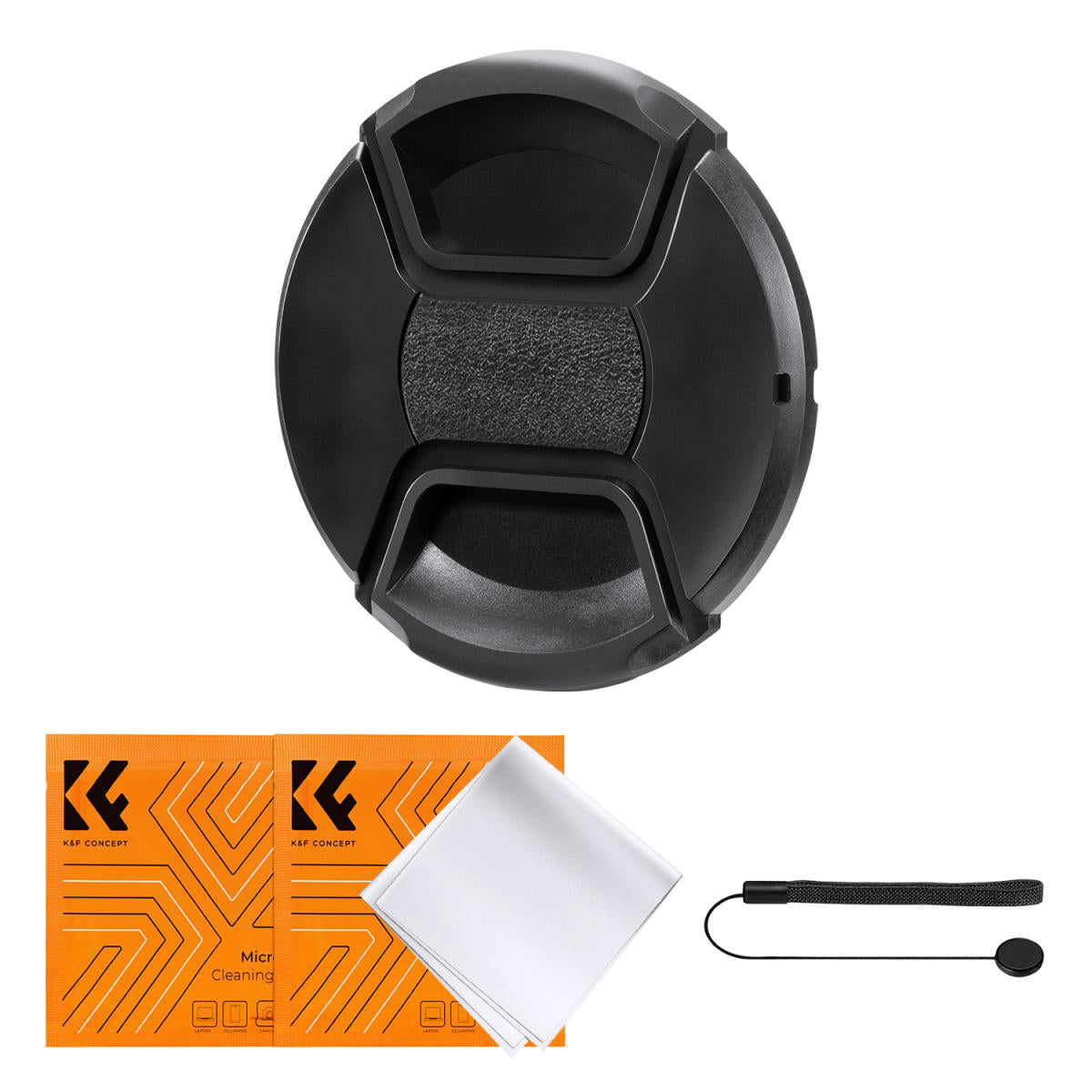






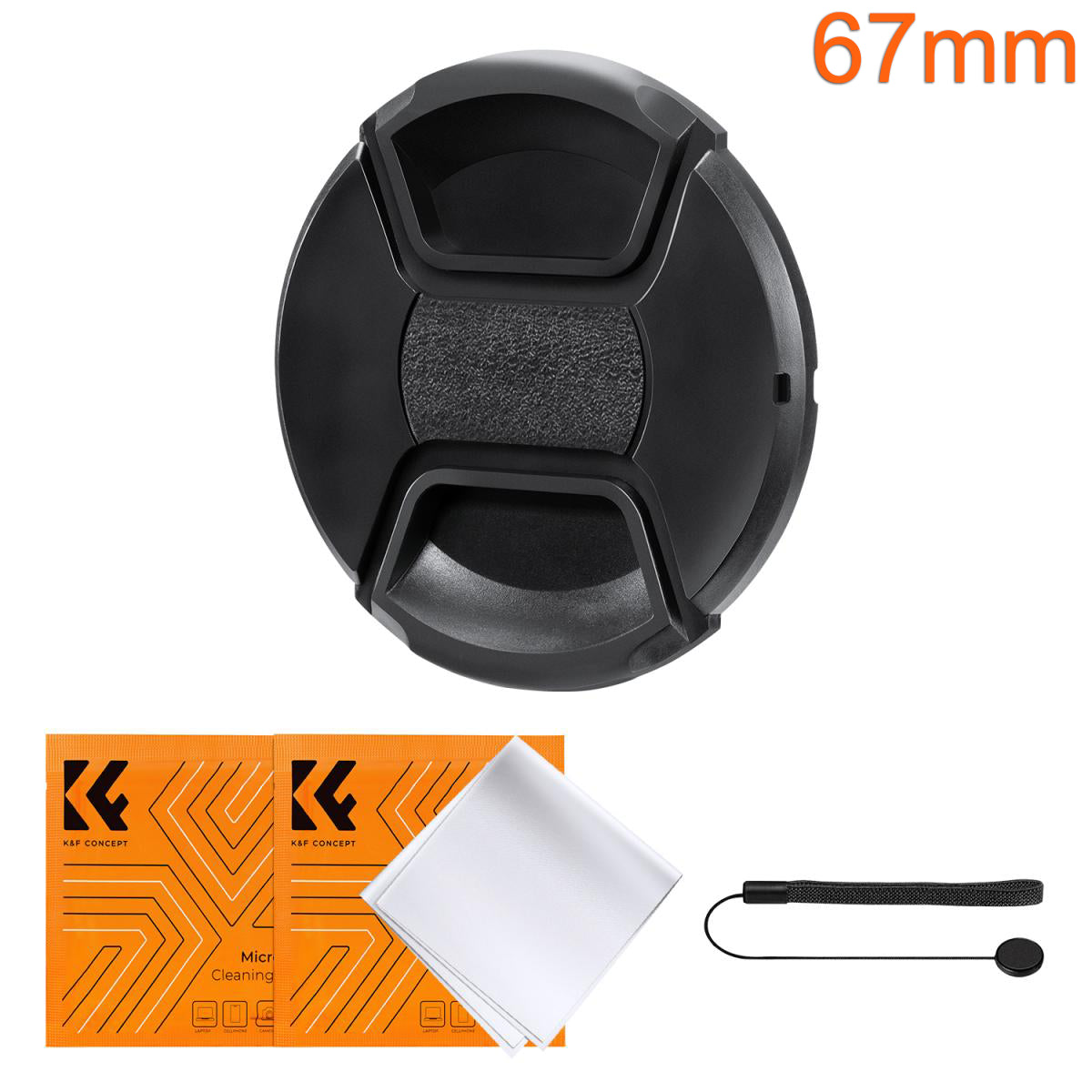

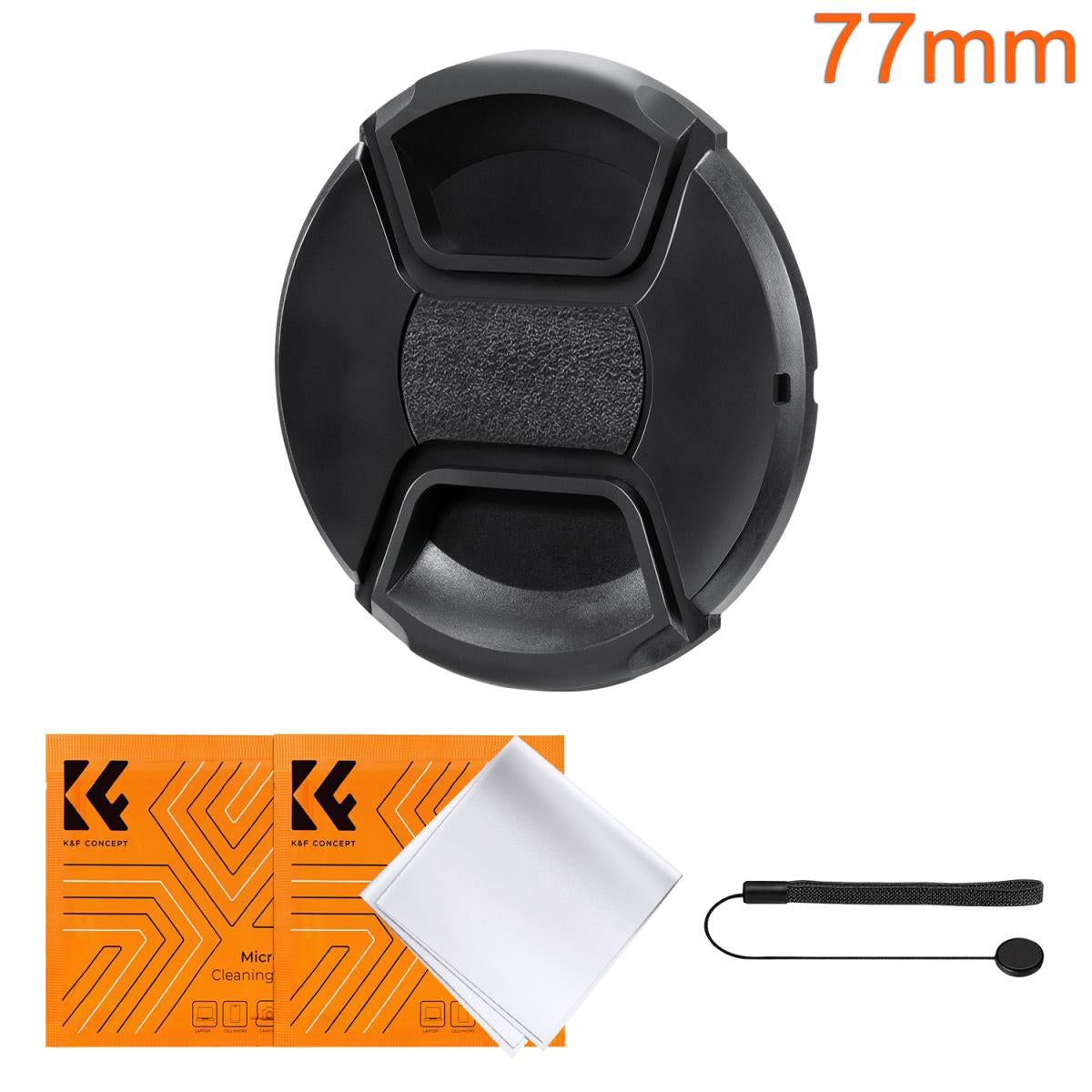

K&F Lens Cap Kit with 2x Lens Cloths and Attachment Strap
Protective front glass matters more than most photographers realise until something goes wrong. A single scratch across the front element degrades contrast and introduces flare that no amount of post-processing can fully reverse. Dust that settles into the lens barrel during a cap-off moment creates spots across every frame shot at narrow apertures. Moisture finds its way onto coatings and leaves residue that takes professional cleaning to shift. The front of your lens is the first surface light hits on its way to the sensor, keeping it pristine is not about being precious with gear, it is about maintaining optical performance across thousands of exposures.
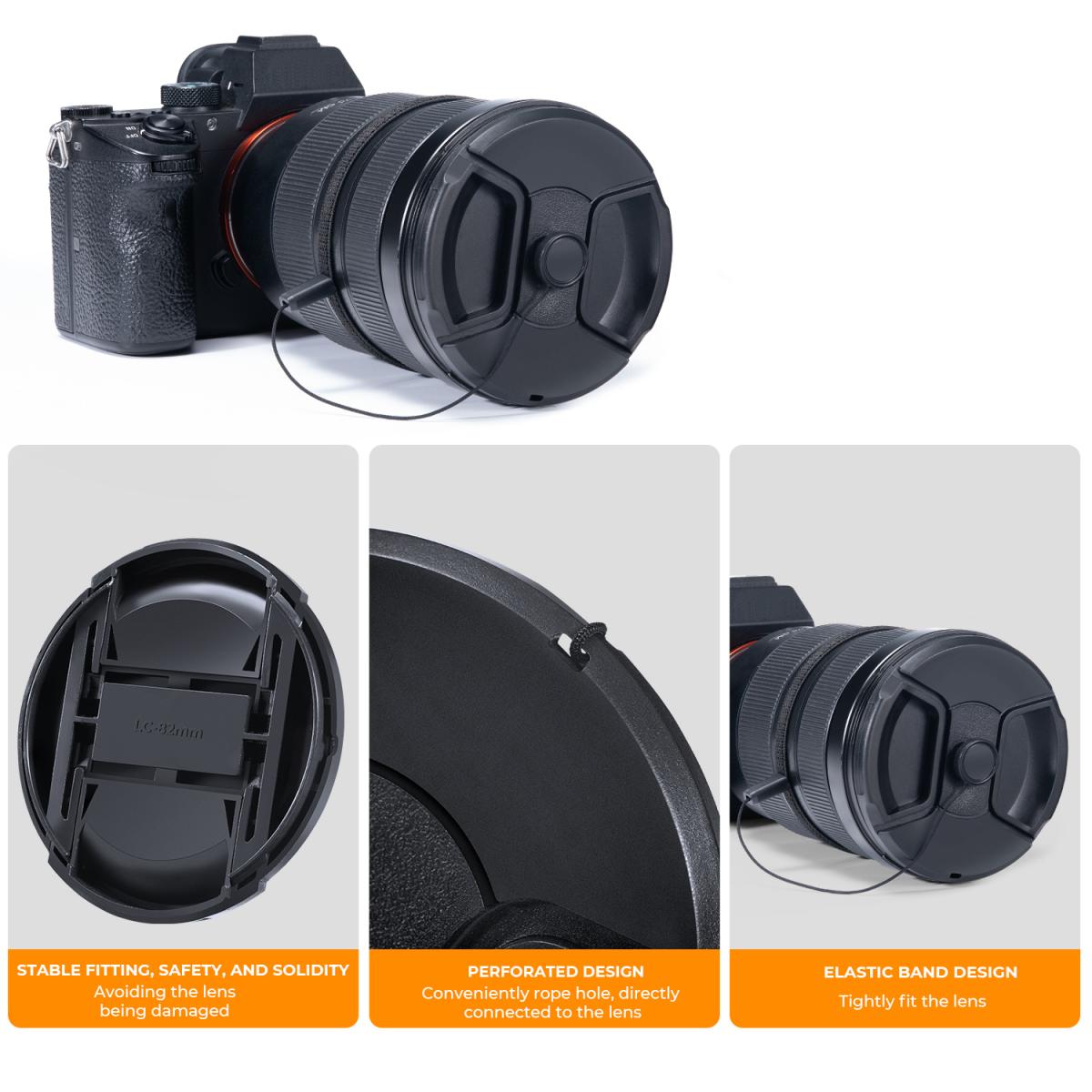
This kit addresses the two most common ways front elements get compromised: losing the cap mid-shoot, and having no way to clean the glass when you notice a smudge through the viewfinder. The cap itself uses a centre-pinch spring mechanism, squeeze the two paddles inward, position it over the lens, release, and the sprung sections grip the filter thread. Removal is equally fast: pinch and lift. The design ensures a snug fit without cross-threading, and the matte black ABS construction resists the kind of edge wear that eventually stops cheaper caps from seating properly.
What sets this apart from a simple replacement cap is the tether system. One end adheres to the cap with a 3M adhesive dot, the other carries an elastic loop that slides over the lens barrel. When you remove the cap to shoot, it hangs beneath the lens rather than going into a pocket, onto the ground, or onto a surface you will walk away from. Photographers who work quickly, event coverage, street, run-and-gun video, know the frustration of capping a lens between setups only to find the cap has vanished by the time the next opportunity arrives. The tether is not pre-installed, so if you prefer an unattached cap you can leave it off. If you are replacing a cap you have already lost, the value becomes immediately obvious.
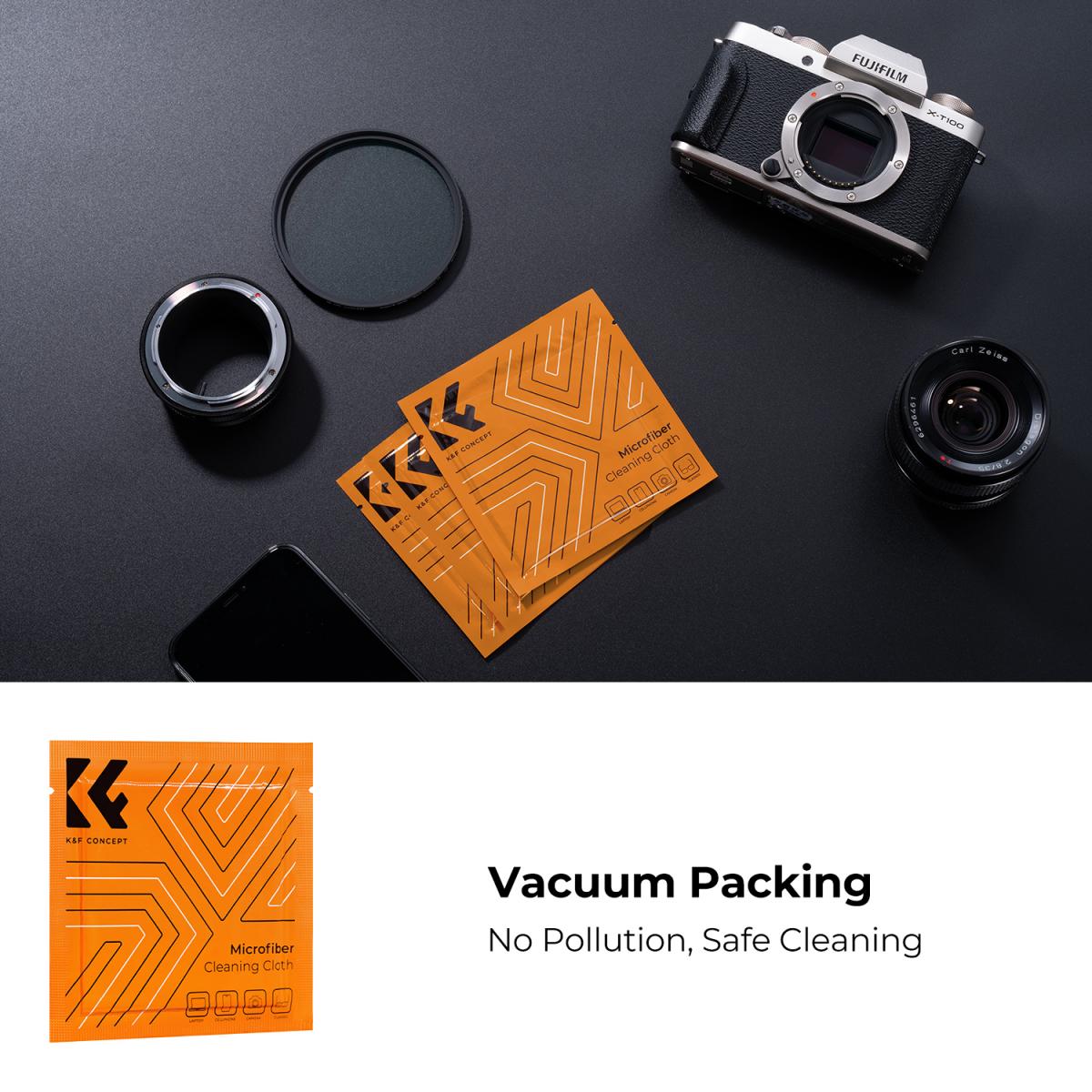
The two microfibre cloths handle the other half of front-element care. Optical-grade microfibre is woven from synthetic fibres fine enough to lift oils, dust and fingerprints without dragging abrasive particles across coatings. The material K&F uses here is densely woven and lint-free, which means it does not leave behind the kind of thread fragments that cheaper cloths shed onto glass. Each cloth is vacuum-sealed, so it arrives clean and ready to use, no need to wash it before first contact with a lens.
Microfibre works dry for dust and light smudges, or lightly dampened with lens cleaner for oils and stubborn marks. The white fabric makes it easy to see when the cloth has picked up dirt, which tells you when to stop wiping and either flip to a clean section or switch to the second cloth. Continuing to wipe with a dirty cloth risks grinding particles into the coating, which is exactly what you are trying to avoid. After use, wash the cloth before putting it back into rotation, this keeps old dirt from scratching glass the next time you clean.
Portability is straightforward. Each cloth is individually wrapped and small enough to slip into a jacket pocket, camera bag side pouch, or the small compartment most tripod bags include. Having one on location means you can address a smudge the moment you notice it, rather than shooting through it and spending time cloning spots in post. A single cloth has saved more than one shoot from a thumbprint that appeared on the front element halfway through a paid job.
The same cleaning capability extends beyond camera lenses. Binocular objectives, spotting scopes, eyeglasses, phone screens, laptop displays, any coated optical surface benefits from the same gentle, lint-free contact. If you carry optical instruments for work or recreation, a sealed microfibre cloth in the case is cheap insurance against the scratches that accumulate from using whatever fabric happens to be nearby.
ABS construction gives the cap itself enough rigidity to maintain its shape under the kind of rough handling that happens in a working camera bag. Matte black finish resists the edge scuffing that eventually turns glossy caps into rattling, loose-fitting nuisances. The spring mechanism inside the pinch paddles is metal, not plastic, so it retains tension across hundreds of removal cycles. Caps that lose their grip start falling off in the bag, which defeats the entire purpose of having one.
This kit makes sense for three scenarios. First, you have lost a cap and need a direct replacement that will not disappear again, the tether solves that. Second, you want a spare cap for a lens you use frequently, so you can leave one on the lens and keep another in a bag pocket for the inevitable moment when the primary cap is not where you thought it was. Third, you are setting up a new lens and want to add front-element protection and cleaning capability in one purchase rather than sourcing them separately.
The inclusion of two cloths rather than one is deliberate. One stays in the camera bag for field use, the other lives in the editing or storage space for pre-shoot and post-shoot cleaning. Alternatively, one cloth handles lenses and filters, the other takes care of the rear LCD and electronic viewfinder. Separating tasks reduces the chance of transferring grit from one surface to another.
Optical performance degrades incrementally. A lens does not suddenly become unusable after one dusty day or one fingerprint. It loses a fraction of contrast here, picks up a bit of flare there, and over months the cumulative effect becomes visible in side-by-side comparisons with earlier work. Keeping the front element clean is not about obsessive maintenance, it is about preserving the image quality you paid for when you bought the lens. A cap that stays attached and a cloth that does not scratch glass are the two simplest, lowest-cost tools in that process.
SKU.2013-2025 covers both. The cap protects when the lens is not in use, the tether ensures it remains attached when it is removed, and the cloths handle the cleaning that no amount of careful handling can entirely avoid. Together, they address the most common causes of degraded front-element condition without requiring any change to how you shoot or pack your gear.